
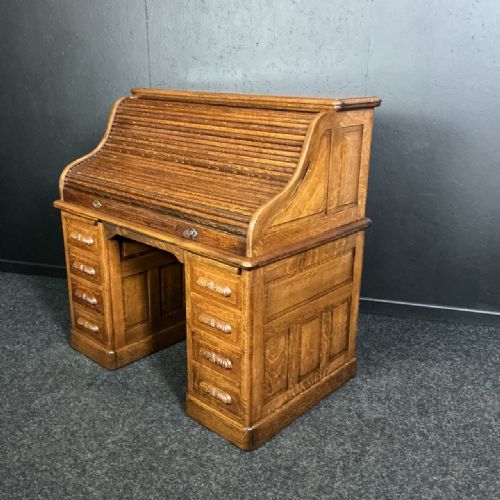


Wooden Rolltop Desk
These wooden rolltop desk pieces are sturdy writing furniture with slatted shutters, offering practical workspace storage that collectors prize.
Wooden Rolltop Desk
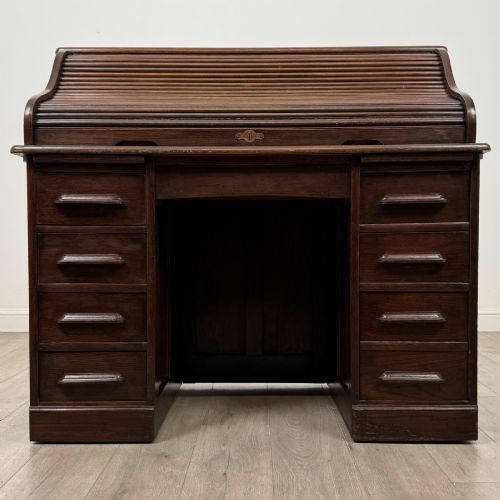
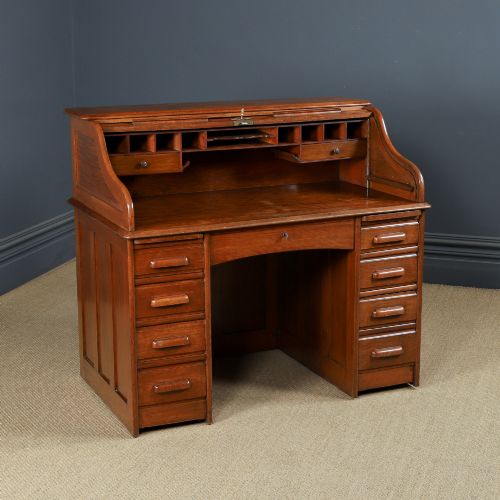
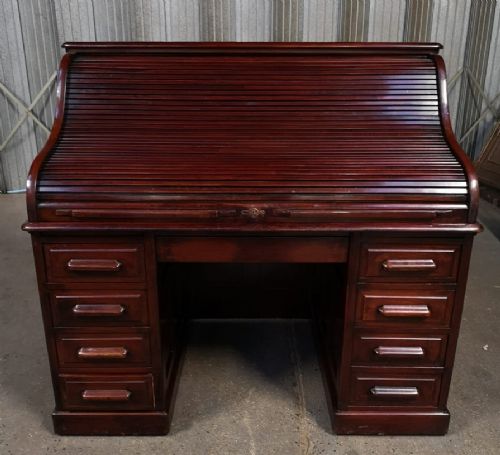
A wooden rolltop desk provides a practical workspace enclosed by a slatted shutter that slides down to conceal papers and stationery. These pieces appear frequently from the Edwardian and Victorian eras, alongside older Georgian examples.
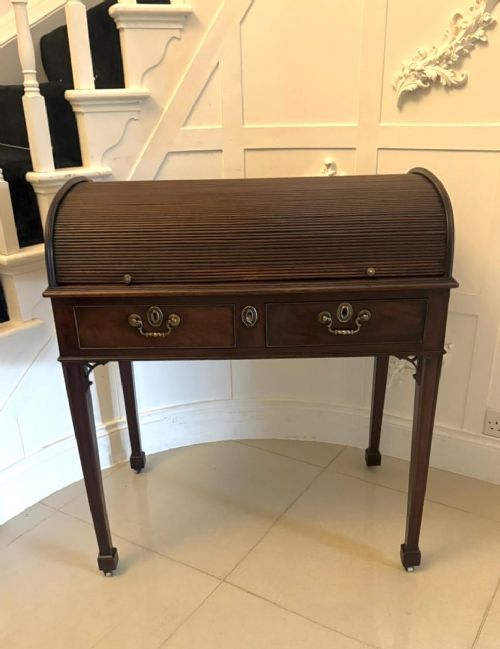
The selection here encompasses pedestal forms, cylinder desks, and tambour cabinets built from timbers such as oak and mahogany. Buyers encounter everything from compact home office models to large pedestal furniture.
How they were made
Joiners constructed these desks using solid timbers like oak and mahogany, often enhanced by satinwood, walnut, and boxwood inlay. Canvases sometimes supported the flexible tambour slats, while brass fittings provided structural and decorative hardware.
Craftsmen shaped curved cylinder fronts and individual slats to ensure smooth operation of the rolling mechanism. Marquetry and inlaid detailing added decorative finish to select mahogany and walnut surfaces.
Listings feature oak, mahogany, walnut, and satinwood, spanning Georgian, Victorian, and Edwardian periods.
What varies in quality
Quality rests in the precision of the slatted shutter mechanism and the selection of timber figure. Solid oak and figured mahogany examples demonstrate superior material choices compared to simpler constructions.
Refined marquetry, satinwood details, and intact brass hardware elevate the standard of a desk. The structural integrity of the pedestal housing and interior fittings distinguishes finer pieces.
Wiggers
The Wooden Rolltop Desk Glossary
- Tambour
- A flexible shutter formed of narrow wooden slats glued to canvas backing. This mechanism slides along a groove to enclose the desk interior.
- Pedestal desk
- A heavy piece of furniture supported by two pillars of drawers with a central opening for the user. These often incorporate large workspaces.
- Cylinder desk
- A desk featuring a quarter-circle solid or panelled wooden lid that rolls back to reveal the writing surface. This form contrasts with slatted tambour versions.
- Marquetry
- Inlaid patterns of wood veneer applied to furniture surfaces. Dutch examples often display complex floral designs.
Wooden Rolltop Desk: Frequently Asked Questions
What is a wooden rolltop desk?
A wooden rolltop desk is a workplace furniture item featuring a sliding slatted shutter that covers the writing surface and pigeonholes. It provides secure storage for documents while keeping papers organised out of sight.
The form gained popularity during the Victorian and Edwardian periods, evolving from earlier Georgian cylinder desks. Today they serve as functional workstations in home offices.
How do tambour and cylinder desks differ?
A tambour desk uses narrow wooden slats attached to canvas, allowing the shutter to curve around a track. A cylinder desk employs a single curved piece of solid wood or panel that rotates on pivots.
Tambour versions appear frequently in oak office furniture, whereas cylinder variants often showcase fine mahogany and marquetry work.
What woods were used for these desks?
Cabinet makers utilised oak and mahogany as primary timbers for these desks. Walnut, satinwood, and boxwood inlay provided contrast and decorative detail.
Regional preferences and periods dictated the timber choice, with Edwardian pieces frequently appearing in oak and Victorian examples in mahogany.
How do I care for a wooden rolltop desk?
Keep the desk away from direct heat sources and dramatic humidity changes to protect the wooden slats and runners. Regular dusting and occasional wax application maintain the finish.
Avoid forcing the tambour mechanism if it sticks, checking instead for alignment along the running tracks.