


Wooden Roll Top Desk
A wooden roll top desk conceals papers behind a sliding slatted curtain, combining practical storage with handsome period timber.
Wooden Roll Top Desk
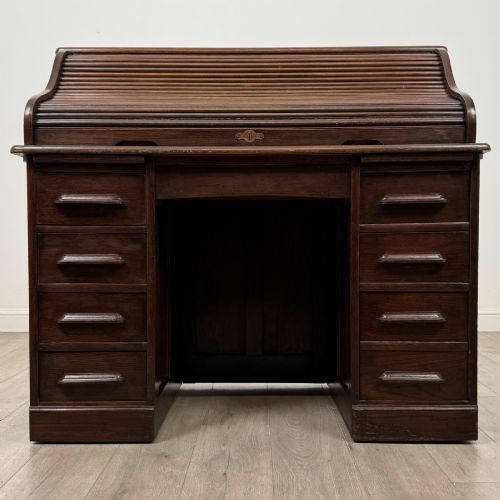
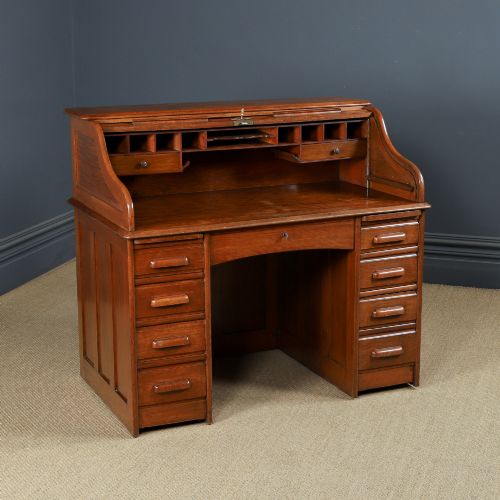
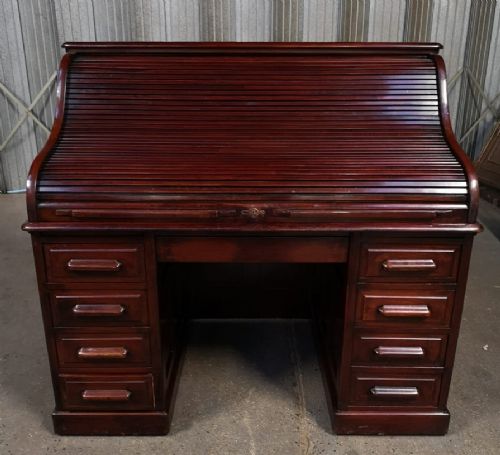
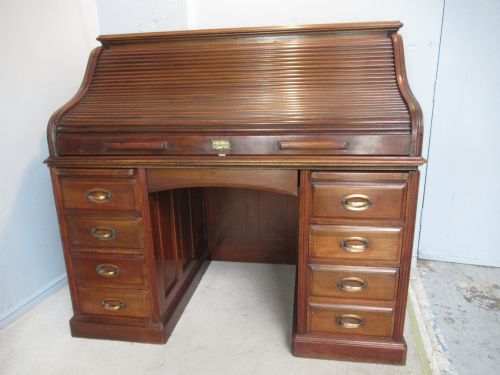
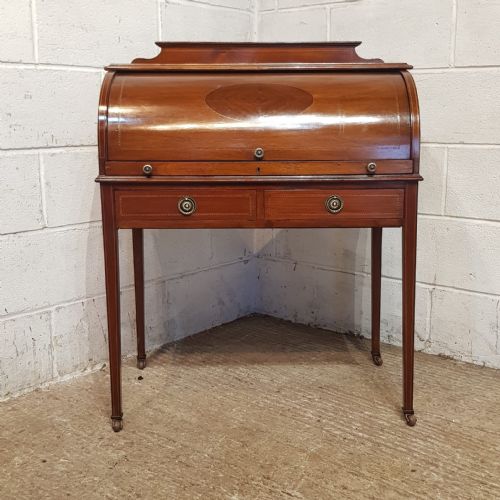
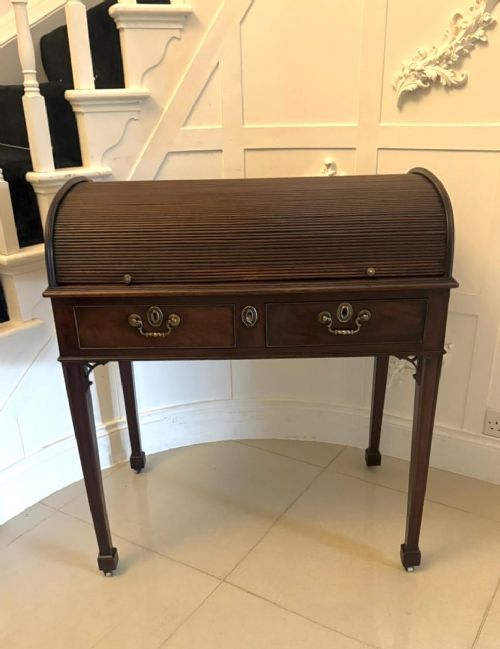
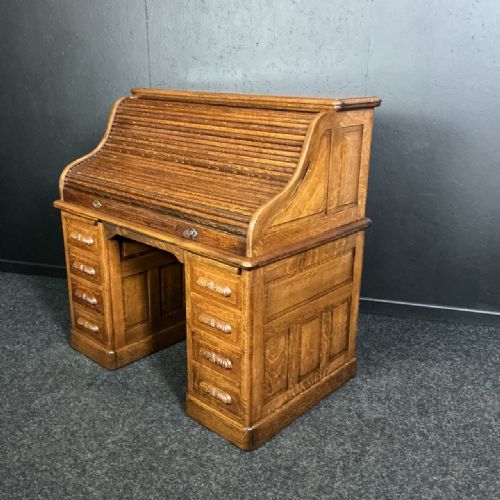
When you search for a wooden roll top desk, you encounter substantial working furniture designed for privacy and organisation in a study or office. These pieces range from substantial nineteenth-century pedestal forms to Edwardian oak examples featuring slatted tambour shutters.
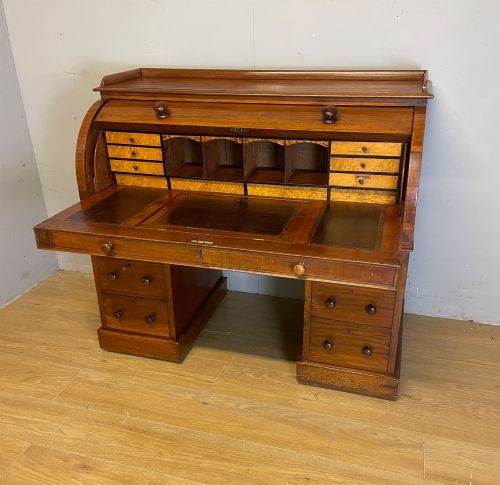
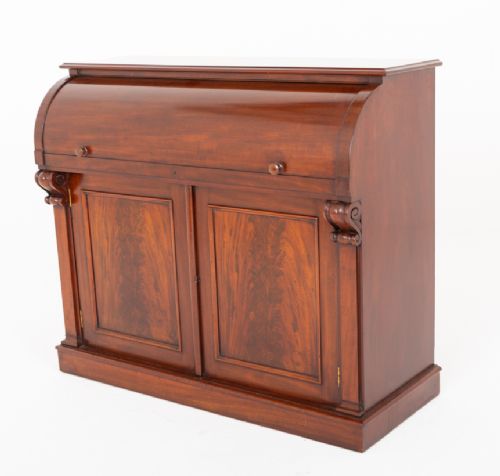
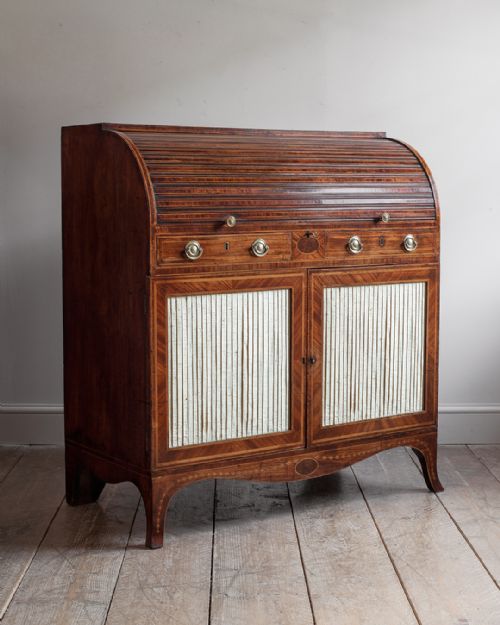
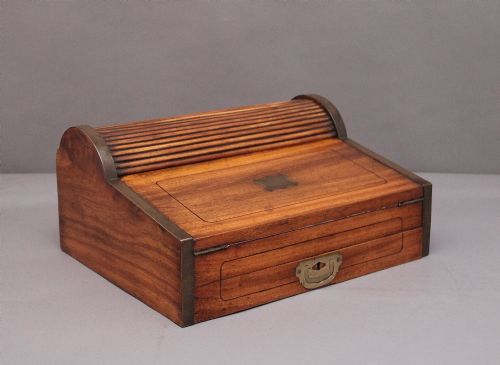
The selection also includes related writing furniture such as cylinder desks, tambour bureaux, and compact writing boxes in camphor wood and walnut. Each variation offers a method of concealing correspondence and stationery when not in use.
Quality and craftsmanship
The distinction between standard office furniture and superior examples lies in the selection of timber and the precision of the tambour mechanism. Finer desks display carefully matched wood grain across the curved top and drawer fronts, alongside robust internal pigeonhole construction.
Smooth operation of the sliding shutter without binding indicates careful initial joinery and subsequent maintenance. The quality of secondary timbers used in drawer linings and the presence of fine inlay work further separate utilitarian pieces from exhibition pieces.
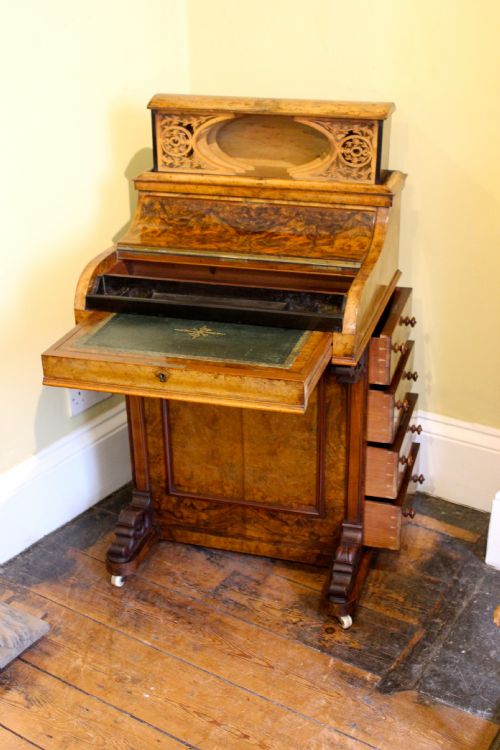
One extraordinary Japanese Yosegi cylinder desk demonstrates that even office furniture could double as a puzzle in marquetry.
The Wooden Roll Top Desk Glossary
- Tambour
- A flexible shutter formed of narrow wooden slats glued to fabric, allowing it to slide along a grooved track. This mechanism conceals the desk's pigeonholes when closed.
- Cylinder desk
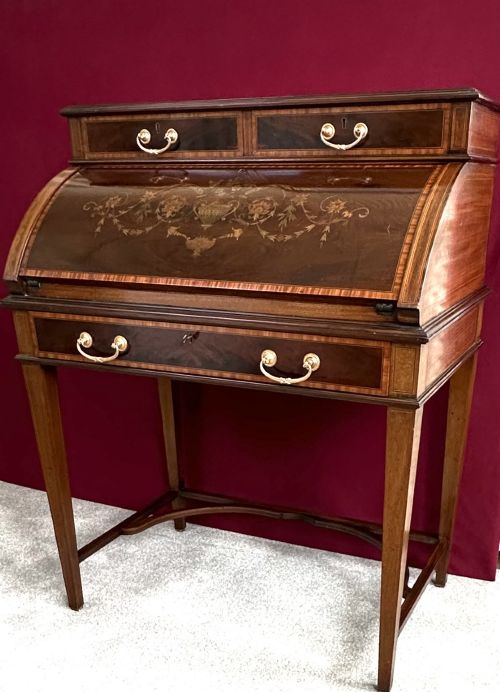
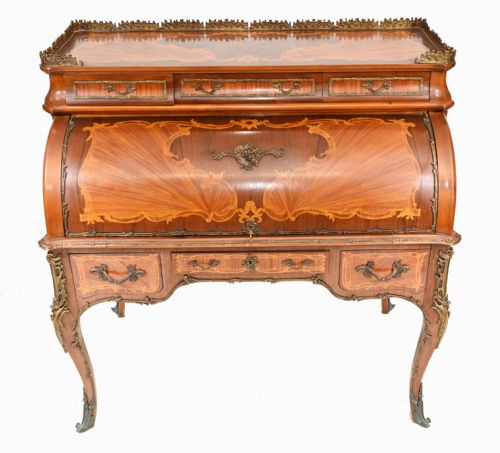
- A writing table featuring a quarter-circle solid wooden cylinder that rolls back to reveal the writing surface and interior drawers. It offers a smooth curved alternative to the slatted roll top.
- Pedestal desk
- A heavy piece of furniture supported by two banks of drawers or cupboards with a central kneehole space. Many larger roll top desks are built on this twin pedestal form.
- Writing slope
- A portable or table-top box with a hinged sloping lid that opens to reveal compartments for pens and paper. These often feature leather inserts for writing.
- Marquetry
- The art of applying decorative veneer pieces of different woods to a structure to form intricate patterns. This technique appears on finer revival and continental desks.
Wooden Roll Top Desk: Frequently Asked Questions
How do I operate the roll top?
The slatted wooden shutter runs within recessed tracks along the sides of the desk. Pulling the handle downwards guides the flexible curtain to cover the writing surface.
Many mechanisms connect to an automatic locking system that secures the pedestal drawers when the shutter reaches the bottom.
What is the difference between a roll top and a cylinder desk?
A roll top desk uses many narrow wooden strips known as tambour to form a flexible curtain that bends around a curve. A cylinder desk uses a single solid curved piece of wood that rotates on pivots.
Cylinder desks generally represent a more formal and earlier style of cabinetmaking compared to the slatted office desks.
Are these desks suitable for modern computers?
These pieces were designed for ledgers, correspondence, and stationery rather than modern technological equipment. Whilst the large writing surfaces accommodate laptops, the internal pigeonholes suit papers and files.
Careful measurement of the kneehole height and width ensures adequate space for a modern chair and seating position.
How do I care for the timber surface?
Maintain the wood by applying quality beeswax periodically to nourish the grain and preserve the polished finish. Avoid placing the desk near direct heat sources or strong sunlight to prevent timber warping.
Dust the tambour tracks gently with a soft brush to ensure the sliding shutter continues to move smoothly.