




Wooden Religious Panel
A wooden religious panel brings centuries of sacred devotion into a room, offering carved figures and painted icons for display.
Wooden Religious Panel
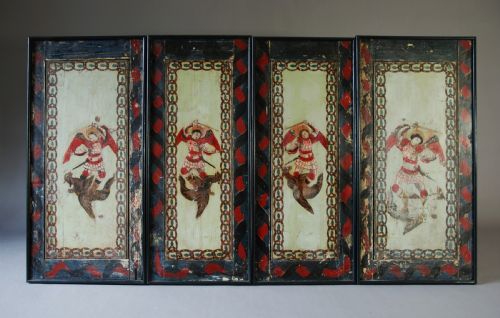
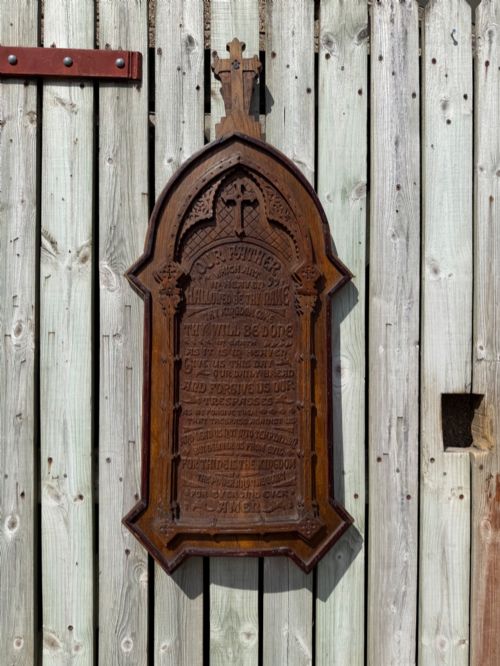
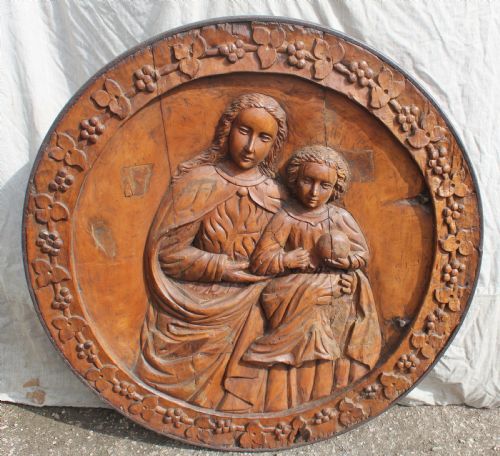
A wooden religious panel takes the form of wall reliefs, carved plaques, sculptures, and painted icons depicting saints, biblical scenes, and sacred text. These works emerge from domestic and ecclesiastical settings across Europe, spanning centuries of Christian tradition from the medieval period through the nineteenth century.
The version most commonly encountered on this page is the carved oak or pine panel from the seventeenth century, alongside nineteenth-century Russian icons painted in tempera on wood. Pieces range from small individual devotional plaques to monumental architectural fragments taken from altarpieces and church furnishings.
Buyers select these panels for display as wall art or wall sculptures, appreciating the tangible connection to historic craftsmanship and religious iconography. Each object carries the marks of its original liturgical or private devotional use.
How they were made
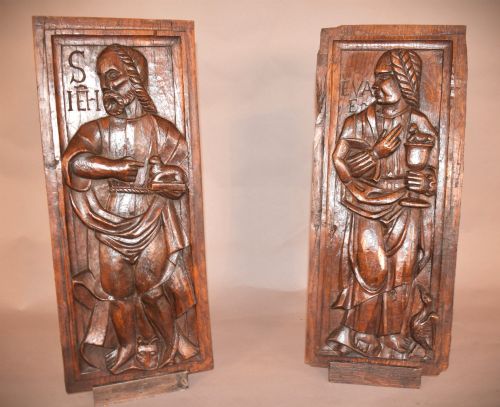
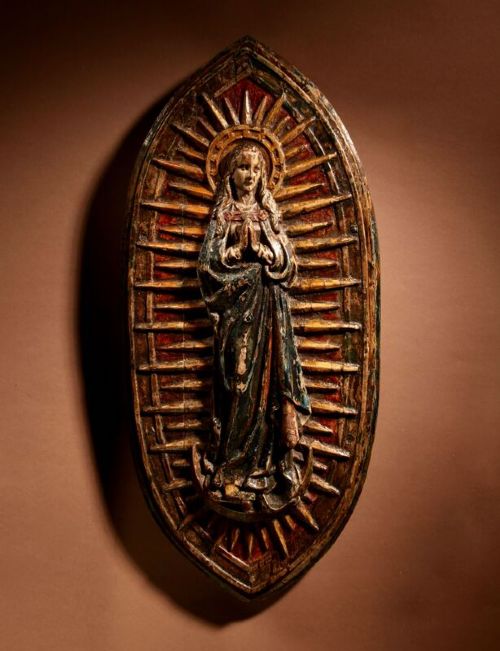
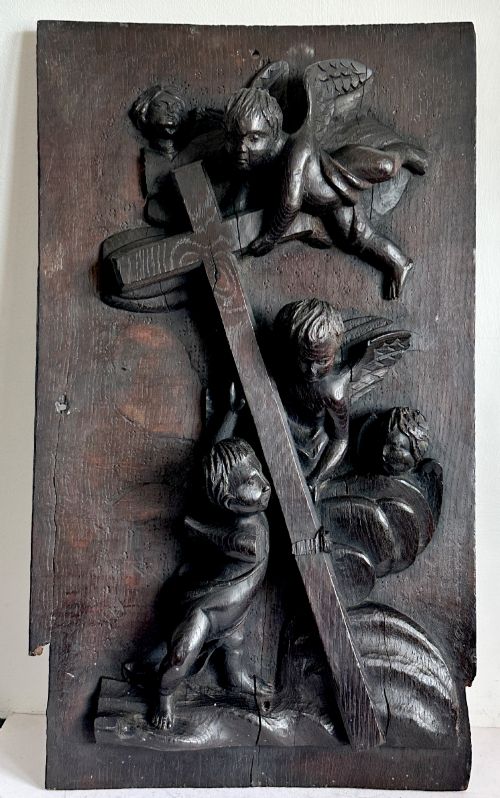
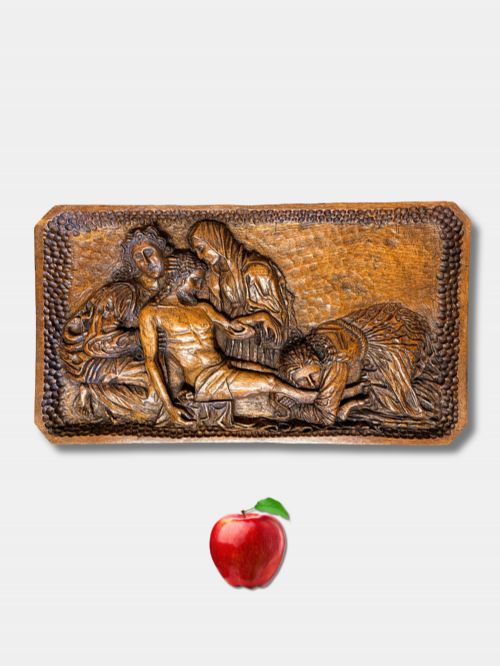
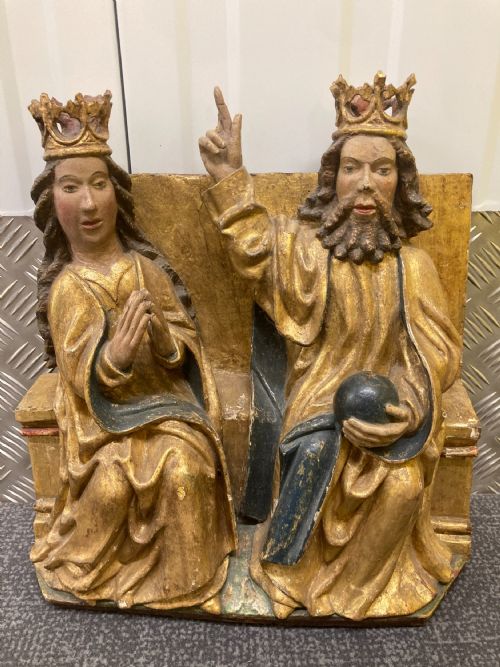
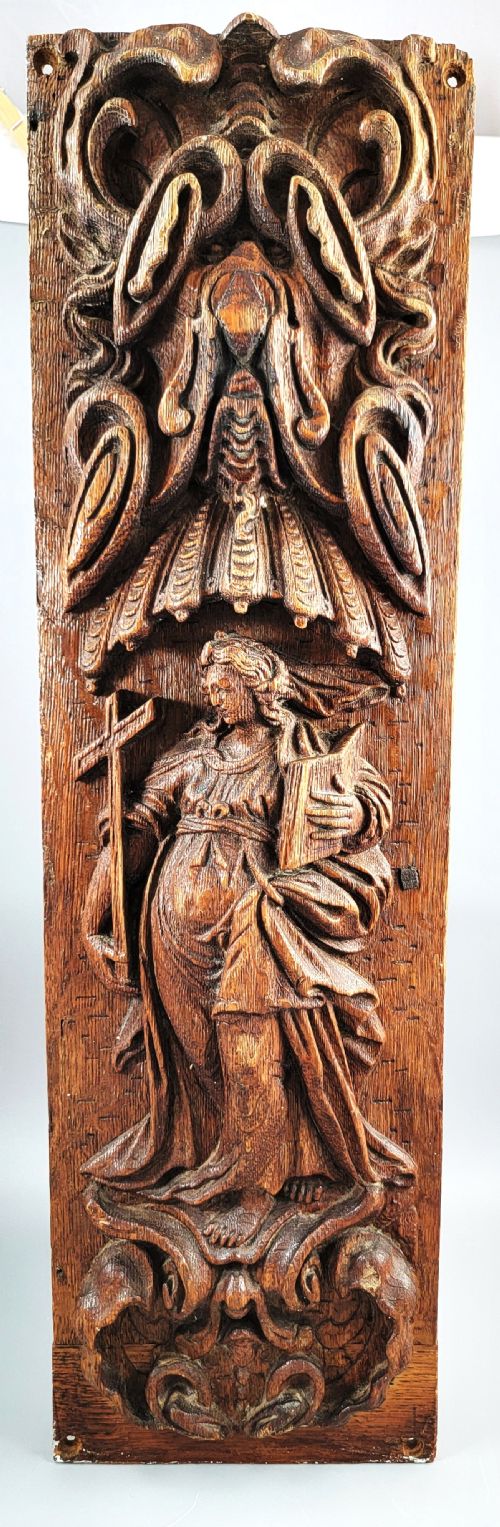
Wood serves as the primary substrate, with oak, pine, chestnut, walnut, and general wood providing the structural support for carvings and paintings. Carvers shaped the timber using hand chisels and gouges to create deep relief figures of angels, prophets, and scenes such as the Crucifixion or the Baptism of Christ.
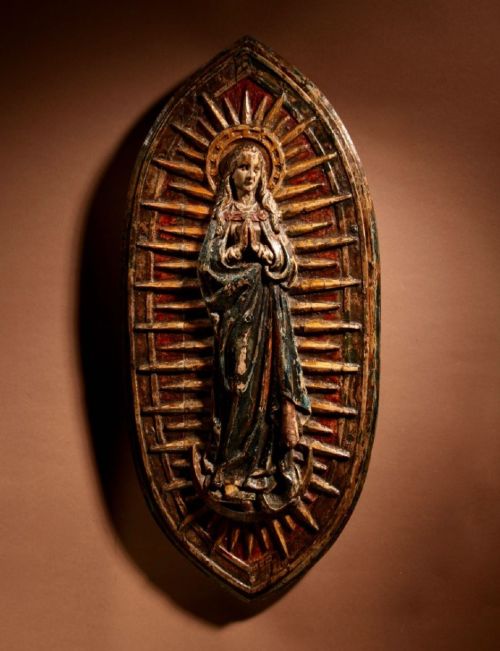
Surface decoration frequently involves polychrome paint, gold leaf, giltwood, and tempera paint applied directly to the wood panel. Some pieces incorporate specialised techniques such as pyrography or pokerwork to burn designs into the surface.
Panels often originate as central sections from larger altarpieces, church display signs, or framed icons built with panel construction methods designed to accommodate wood movement over centuries.
Listings feature oak, pine, walnut, and chestnut panels spanning the sixteenth through the nineteenth centuries, alongside Russian Orthodox icons.
What varies in quality
The depth and articulation of the wood carving separate standard decorative panels from exceptional sculptural works. Master carvers achieved anatomical precision and fluid drapery in figures like the Praying Virgin or Angels, whereas lesser pieces display stiffer, more naive execution.
The preservation of original surface treatments, including traces of polychrome paint and gold leaf, determines the visual impact of a panel. Pieces retaining their early pigment layers offer a more complete historic record than stripped or heavily restored wooden surfaces.
The complexity of the narrative iconography and the integration of the panel within its architectural or devotional context influence the significance of the object.
The Wooden Religious Panel Glossary
- Polychrome paint
- Decoration utilising multiple colours applied to wood sculpture or panels. This technique enhanced the lifelike appearance of religious figures in historic churches.
- Tempera
- A permanent, fast-drying painting medium consisting of coloured pigment mixed with a water-soluble binder, commonly egg yolk. Icons on wood panels frequently rely on this traditional method.
- Altarpiece
- A structured artwork placed behind or above an altar, often featuring central carved panels and wings depicting saints or biblical narratives.
- Icon
- A religious work of art, most commonly depicting Jesus Christ, his mother Mary, or saints, painted on a wooden panel within Eastern Orthodox traditions.
- Relief sculpture
- Sculptural elements that remain attached to a solid background of the same material, projecting outward from the wooden panel surface.
Wooden Religious Panel: Frequently Asked Questions
How should I hang a heavy wooden panel?
Heavy carved wooden panels require secure wall fixings suited to the weight of the timber and the plaster of the wall. Metal brackets or concealed French cleats provide stable support without damaging the antique structure.
Position the panel at eye level away from direct heat sources and strong sunlight to protect the wood and any remaining paint or gilt layers from cracking.
How do I care for antique painted wood?
Maintain stable indoor humidity and temperature levels to prevent the wood substrate from expanding, contracting, or splitting over time. Dust the surface gently with a soft, dry brush without applying liquid cleaners or polishes.
Avoid touching painted or gilded areas with bare hands, as natural skin oils can degrade fragile tempera and gold leaf over the centuries.
What is the difference between a carved panel and an icon?
A carved panel utilises three-dimensional wood carving techniques to depict figures and scenes in relief, often originating from European Gothic or Baroque church furnishings. These works rely on shadow and form shaped directly into oak, pine, or walnut.
An icon is primarily a painted image on a wooden board, following strict stylistic conventions within the Russian Orthodox tradition, utilising tempera paints often enhanced with metal rizas.
Where did these panels originally hang?
Many of these pieces originated inside churches, abbeys, and cathedrals as components of altarpieces, choir stalls, wall friezes, and ecclesiastical screens. Others served private devotional functions within domestic shrines or homes.
Later periods also saw the creation of decorative plaques and architectural fragments intended specifically for domestic interior display.