

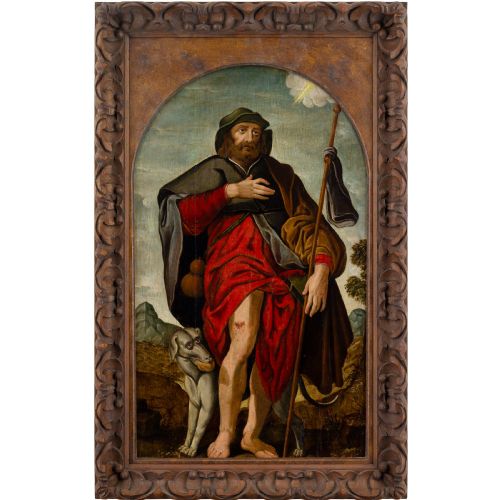
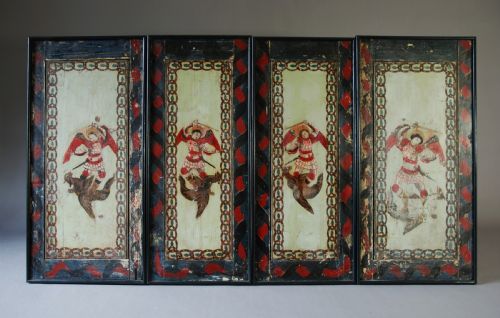


Painted Wood Icon
These painted wood icon pieces bring centuries of devotional craft into your home, offering rich colour and historic depth.
Painted Wood Icon
A painted wood icon is a devotional image rendered on a wooden panel, often associated with Orthodox or folk traditions. When you search for painted wood icon, you encounter formats ranging from Russian panels to Spanish folk altars and carved figures.
The selections span multiple eras, notably the seventeenth, eighteenth, and nineteenth centuries. You will find wall art, home altars, and framed panels depicting figures such as St Michael, St Roche, and scenes of the Passion.
Many of these works originate from Russian workshops or continental folk traditions, utilising timber supports beneath layers of pigment, gold leaf, and polychrome paint.
How they were made
Makers constructed these pieces using carved wood or pine panels as a primary structural base. Pigments and tempera or oil paint were then applied directly to the prepared wooden surface.
Gilding with gold leaf frequently highlights specific areas, while enamel or silver elements appear on select religious panels to add luminescence and detail.
Painted Wood Icon Retail Price Guide 2026
Typical asking prices for painted wood icon among the pieces listed under this phrase on Sellingantiques today, from the lower quarter to the upper quarter. They describe what is for sale here now, not the wider market.
Listings feature pine panels, copper details, and gold leaf applied across eighteenth and nineteenth century devotional works.
What varies in quality
Quality rests in the precision of the brushwork and the depth of the pigments used on the panel. Finer examples display confident lines and carefully rendered anatomical or devotional details.
The preservation of the original wood support and the applied surface layers also distinguishes superior pieces from more rustic or heavily restored items.
Volga Masters
The Painted Wood Icon Glossary
- Polychrome paint
- Pigments in multiple colours applied to wood or stone surfaces. This technique brings depth and visual narrative to carved altars and panels.
- Gold leaf
- Extremely thin sheets of beaten gold applied to surfaces for decorative enhancement. It often frames sacred figures within religious art.
- Tempera
- A permanent, fast-drying painting medium consisting of coloured pigment mixed with a water-binder. It was widely used for traditional panel paintings.
- Pine
- A common softwood timber utilised extensively for structural panels and folk carvings. Its availability made it a standard choice for regional makers.
Painted Wood Icon: Frequently Asked Questions
What is a painted wood icon?
A painted wood icon is a sacred artwork executed on a timber panel using pigments, tempera, or oil. These pieces serve as focal points for prayer and reflection.
They often incorporate gold leaf or polychrome paint, reflecting the artistic and spiritual traditions of their makers.
How were these icons used?
These pieces functioned as devotional objects in homes, domestic altars, and churches. Believers used them for daily prayer and contemplation.
Larger panels and framed saints decorated sacred spaces, while smaller home altars offered portable focal points for worship.
How do I live with a painted wood icon?
Display your piece on a stable wall or surface away from direct sunlight and excessive moisture. Wood and pigment react to drastic changes in room climate.
Allow the natural patina and historic character of the timber panel to complement your interior space without over-restoring.
How can I tell the period?
Dating relies on stylistic clues, framing techniques, and the preparation of the wood panel. Eighteenth-century pieces often display distinct naivety or classical continental baroque influences.
Later nineteenth-century examples show shifts in pigment use and framing styles, aligning with the broader decorative movements of their decade.