




Orthodox Religious Painting
Orthodox religious painting offers profound spiritual depth, capturing centuries of sacred tradition through intricate wood panels, gold leaf, and tempera.
Orthodox Religious Painting
When you search for orthodox religious painting, you enter a rich tradition of devotional panel paintings spanning multiple centuries. The pieces available here encompass religious icons and artworks originating primarily from Russian Orthodox traditions.
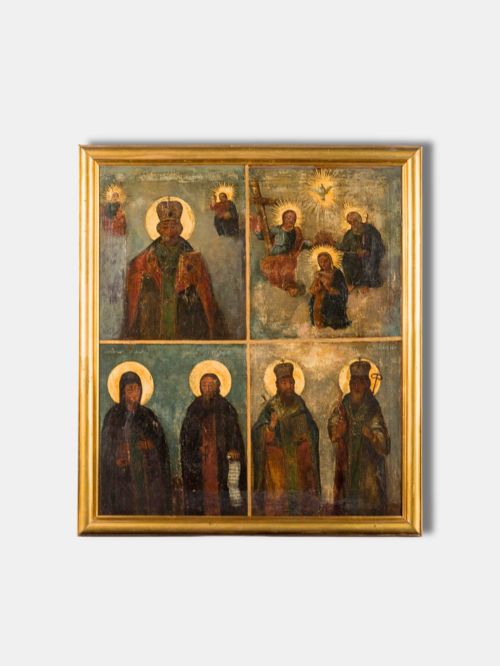
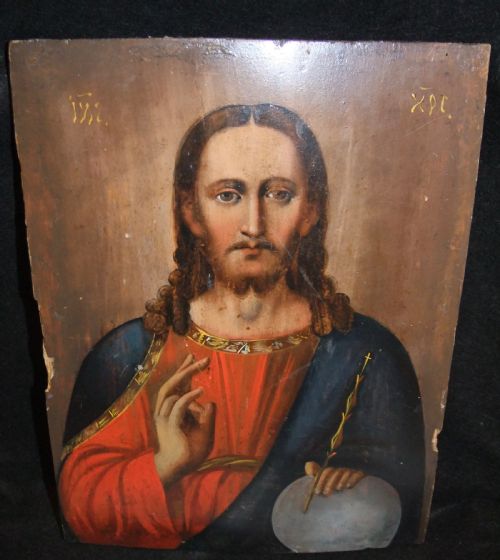
These sacred objects range from large hand-painted icons depicting figures like Christ Pantocrator to detailed panels featuring scenes such as Easter with the Passion of Christ or the Madonna of the Three Hands.
How they were made
The construction of these works relies fundamentally on prepared wood panels, which serve as the durable foundation for the sacred imagery. Artisans applied egg tempera and tempera paint directly onto the wood, sometimes utilising canvas as a base.
Gilding with gold leaf and silver added luminous haloes and backgrounds that enhanced the spiritual presence of the religious figures. Protective metal coverings known as oklads frequently accompanied these painted surfaces, while certain later examples incorporated oil paint on wood.
The listings here feature nineteenth-century Russian icons alongside eighteenth-century panel paintings executed in tempera, gold leaf, and oil.
What varies in quality
The refinement of the brushwork and the complexity of the theological narrative distinguish exceptional panels from simpler examples. Volga masters and regional workshops produced work of varying stylistic execution, where delicate facial expressions and precise lettering elevate the visual standard.
The integration of precious materials, such as heavy gold leaf application and intricate silver oklads, marks the upper tier of these devotional works. Preservation of the original tempera paint and the stability of the underlying wood panel also determine the standing of each piece.
The Orthodox Religious Painting Glossary
- Icon
- A sacred image representing Christ, saints, or biblical scenes, traditionally used for veneration in Orthodox Christian worship. These panels serve as windows to the divine.
- Tempera
- A permanent, fast-drying painting medium consisting of coloured pigment mixed with a water-soluble binder, usually egg yolk. It provides the characteristic matte finish seen on early panels.
- Gold Leaf
- Gold beaten into extremely thin sheets, applied to the background or haloes of paintings to create a reflective, heavenly glow. It underscores the sacred status of the depicted subject.
- Oklad
- A protective metal cover placed over an icon, leaving only the faces and hands of the figures visible. These coverings are often worked in silver or brass with detailed embossing.
- Christ Pantocrator
- An iconic depiction of Christ as ruler of all, typically shown holding a book of gospels and raising his right hand in blessing. It is a central motif in Orthodox panel painting.
Orthodox Religious Painting: Frequently Asked Questions
What is an orthodox religious painting?
An orthodox religious painting is a sacred devotional image, typically executed in tempera and gold leaf on a wood panel. These pieces follow strict iconographic traditions to portray Christ, the Virgin Mary, and various saints.
Originating largely from Russian workshops, these artworks served as focal points for prayer and contemplation within homes and churches.
How do I care for a wood panel painting?
Protecting these delicate panels requires maintaining a stable indoor environment away from direct sunlight and sudden temperature shifts. Excessive humidity changes can cause the historic wood and tempera to warp or crack.
Dusting should be done gently with a soft, dry cloth without applying any cleaning fluids or modern polishes to the surface.
How can I tell the age of an icon?
Dating an icon involves examining the preparation of the wood panel, the style of the painted figures, and the formulation of the pigments. Earlier works from the seventeenth and eighteenth centuries often display distinct regional characteristics and deeper patination.
Examinations of the reverse of the panel and any inscriptions can also provide helpful clues regarding the period of creation.