




Wooden Quilt Rack Stand
A wooden quilt rack stand provides sturdy, practical display for textiles using traditional timber and joinery.
Wooden Quilt Rack Stand
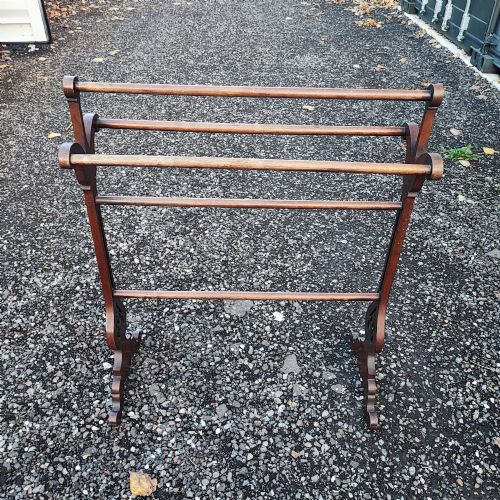
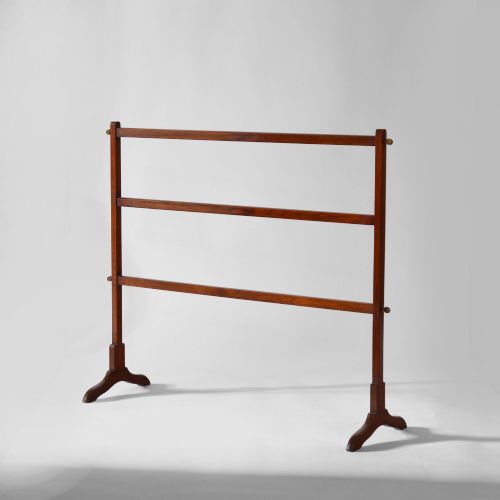
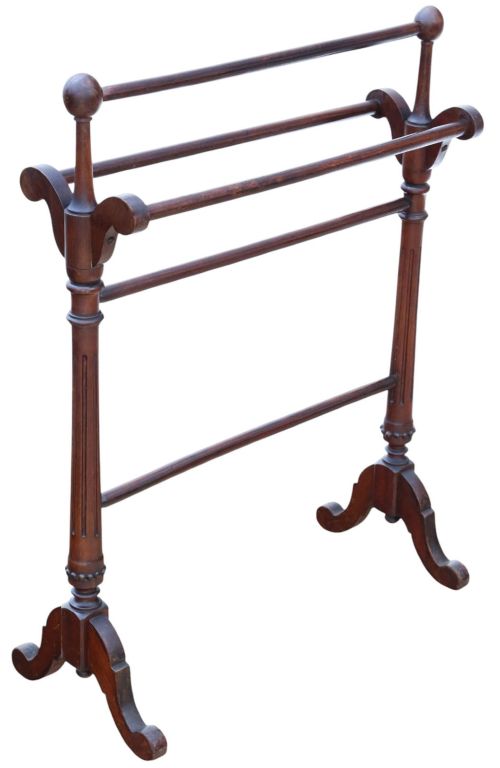
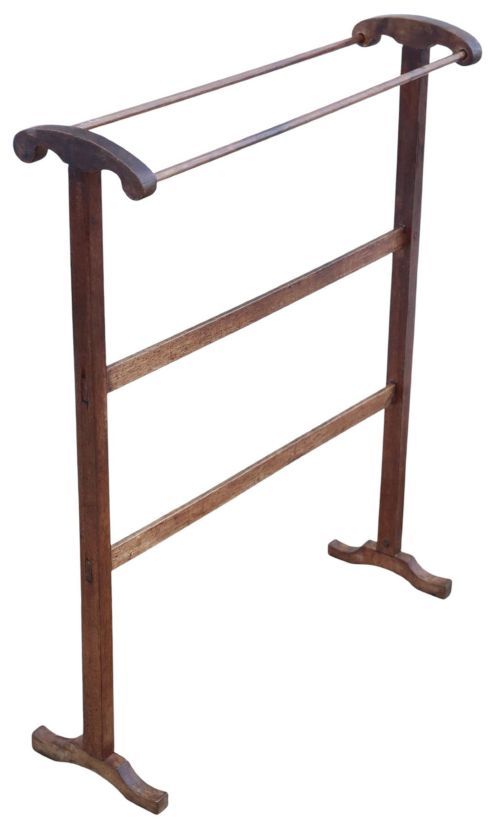
A wooden quilt rack stand primarily takes the form of a towel rail, towel rail stand, or clothes and robe rack. These pieces serve to hold and display fabrics across multiple horizontal bars or rails.
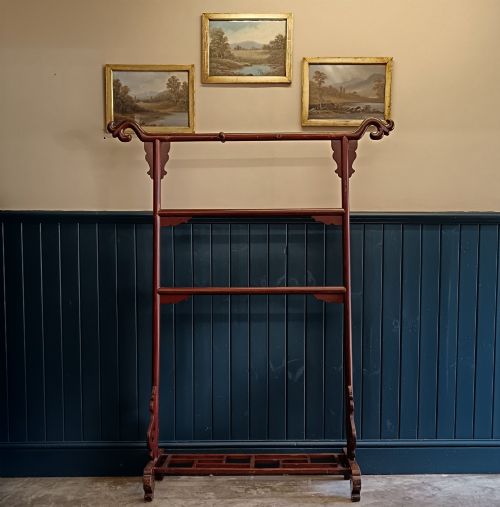
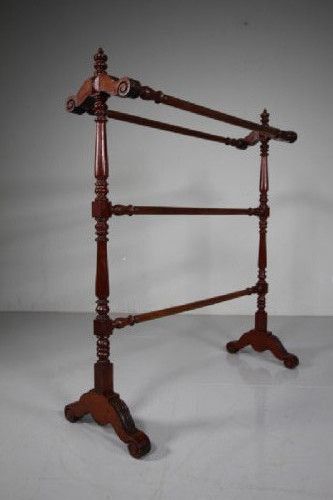
The selection ranges from Edwardian and Victorian examples to earlier Regency, William IV, and Qing Dynasty pieces. Mahogany, oak, pine, and lacquered wood dominate the forms seen on this page.
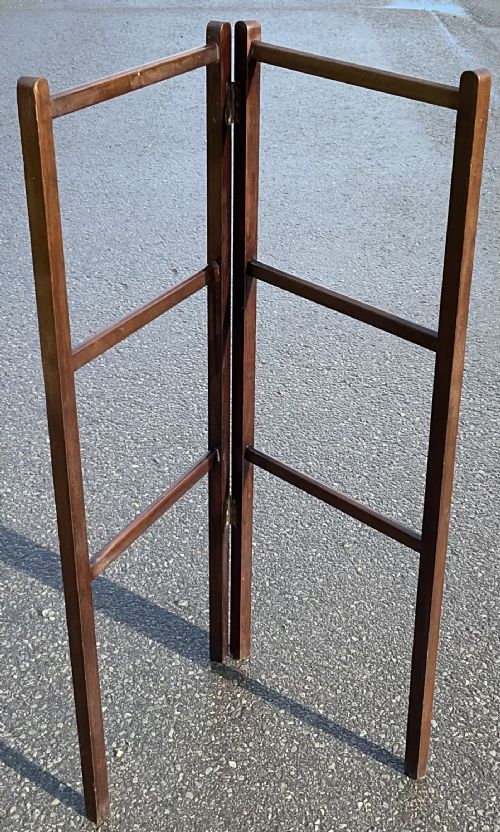
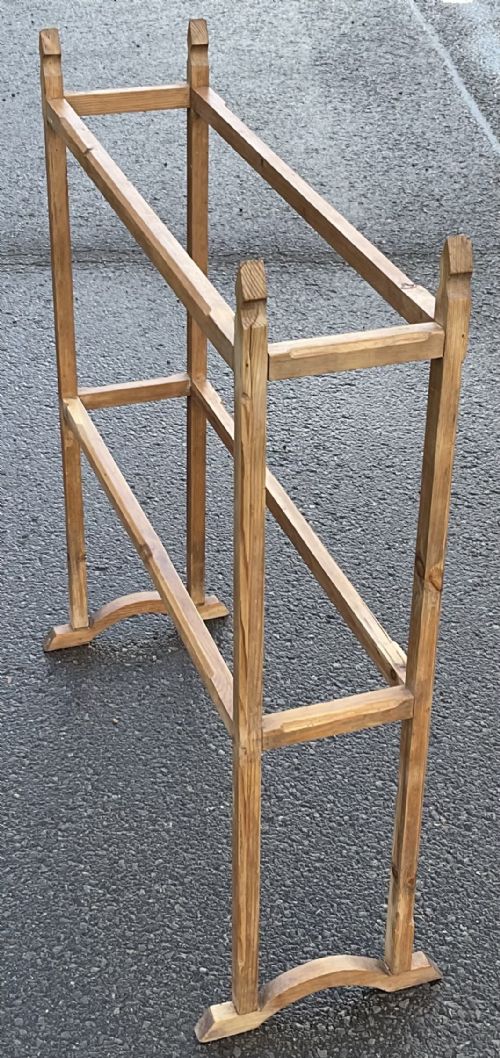
Makers shaped these stands for domestic utility, utilising folding designs, multi-bar configurations, and large oversized frames. Buyers often encounter Edwardian mahogany versions alongside nineteenth-century hardwood items.
How they were made
Cabinet makers utilised solid timbers such as mahogany, oak, and pine to build the structural frames of these stands. Turned or joined wooden bars support the textiles while brass and satinwood inlay provide decorative contrast.
Surface decoration includes traditional lacquer work and pigmented finishes applied to specific regional pieces. Joinery techniques connect the upright supports to the horizontal rails for everyday stability.
Wooden Quilt Rack Stand Retail Price Guide 2026
Typical asking prices for wooden quilt rack stand among the pieces listed under this phrase on Sellingantiques today, from the lower quarter to the upper quarter. They describe what is for sale here now, not the wider market.
Silouette towel rails prove that even nineteenth-century laundry could possess a distinct silhouette.
What varies in quality
The choice of primary timber dictates the visual weight and longevity of the stand, with dense hardwoods like mahogany and oak outlasting softer pine. Finer pieces incorporate decorative stringing, satinwood inlay, or brass fittings that elevate the standard of the woodwork.
Proportion and scale distinguish standard domestic items from large oversized examples or matched pairs. Superior construction appears in the rigidity of the multi-bar frames and the precision of the turning on the uprights.
The Wooden Quilt Rack Stand Glossary
- Mahogany
- A durable hardwood prized for its rich reddish-brown tone and smooth grain. Cabinet makers selected it for high-end domestic furniture throughout the nineteenth century.
- Satinwood inlay
- A decorative technique where contrasting light-coloured wood is inserted into recesses within the primary timber. It creates geometric or linear patterns on the surface.
- Regency
- An English design period spanning the early nineteenth century. Pieces from this era often feature classical architectural lines and refined proportions.
- Edwardian
- A period covering the start of the twentieth century up to the First World War. Furniture from this time frequently reinterprets earlier styles with lighter construction.
- William IV
- A British design era falling within the nineteenth century. Items typically display robust proportions and restrained classical ornamentation.
Wooden Quilt Rack Stand: Frequently Asked Questions
What is a wooden quilt rack stand used for?
These pieces function primarily as freestanding rails for hanging textiles, towels, and garments. Their multi-bar layouts allow fabrics to air and display properly in domestic rooms.
Historically, similar towel rails and robe stands served bedrooms and dressing rooms for daily clothing organisation. Today, collectors use them to display quilts and vintage linens without fixing anything to the wall.
How do I date a wooden quilt rack stand?
Dating relies on identifying the timber species, construction methods, and stylistic markers present in the frame. Edwardian pieces often utilise lighter mahogany frames, whereas nineteenth-century items show heavier proportions.
Reference points include period styles such as Regency, William IV, or Qing Dynasty construction details. Comparing the turning on the uprights and the presence of inlay helps narrow down the decade of manufacture.
Are these stands suitable for modern homes?
Their freestanding nature allows them to be placed in bathrooms, bedrooms, or hallways without permanent installation. They provide practical vertical storage for blankets and towels while adding traditional warmth to a room.
Different scales, from folding Edwardian versions to large oversized nineteenth-century rails, accommodate various room sizes. The natural wood tones blend easily with both contemporary and antique interiors.
What woods were used to make these stands?
Mahogany appears most frequently across the listed items, offering a strong and visually rich frame. Oak and pine also feature prominently, particularly in utilitarian or regional domestic pieces.
Satinwood inlay and brass elements add decorative detail to the primary timber structures. Certain specialised pieces incorporate lacquered wood and pigment finishes.