
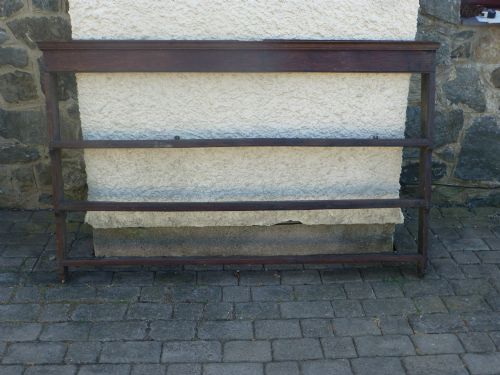
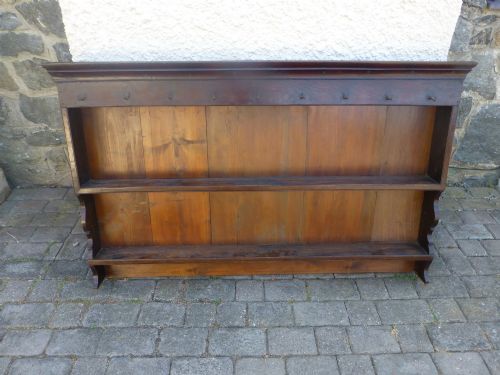
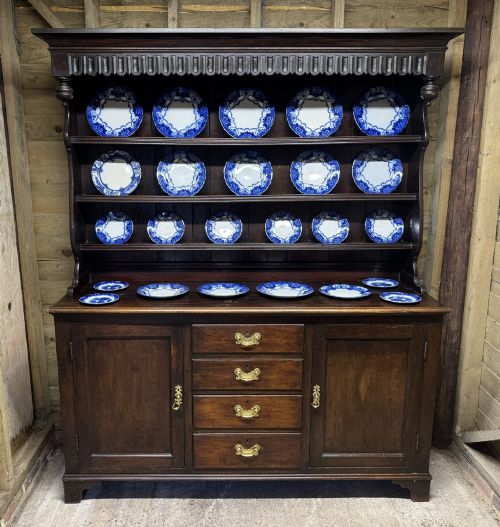
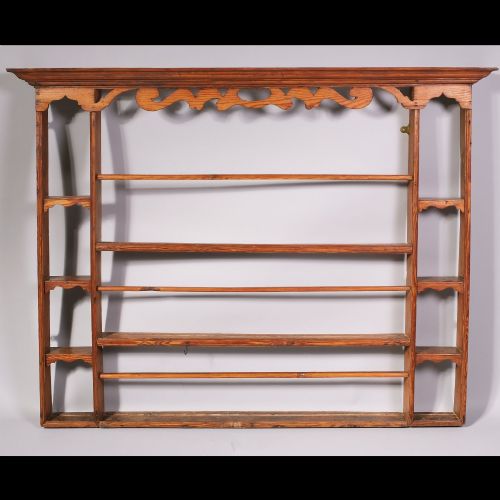


Wooden Plate Rack Shelves
These wooden plate rack shelves bring practical wall storage and traditional display space to any room, offering the sturdy utility of period timber.
Wooden Plate Rack Shelves
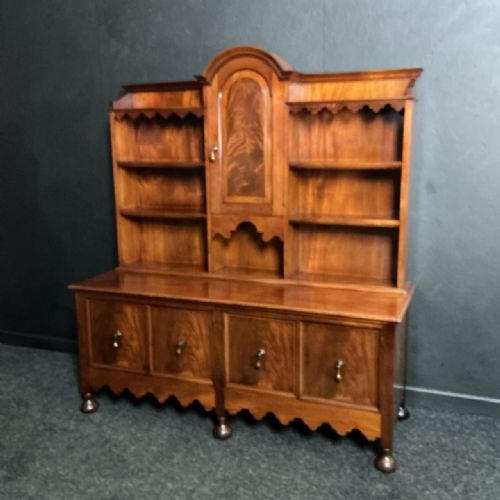
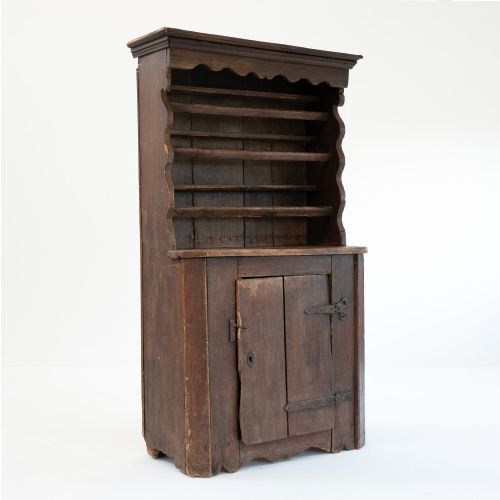
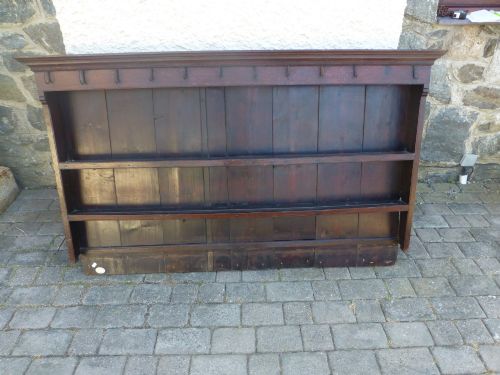
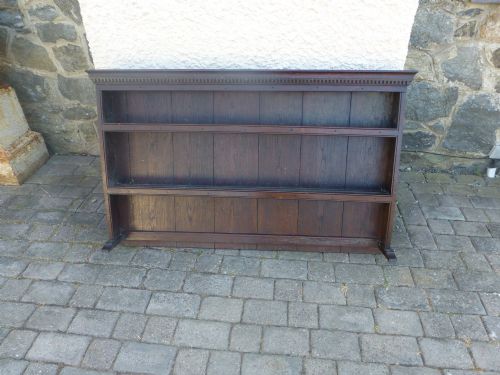
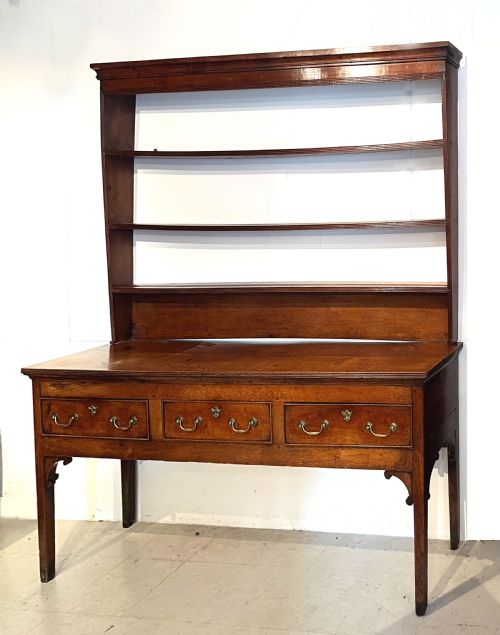
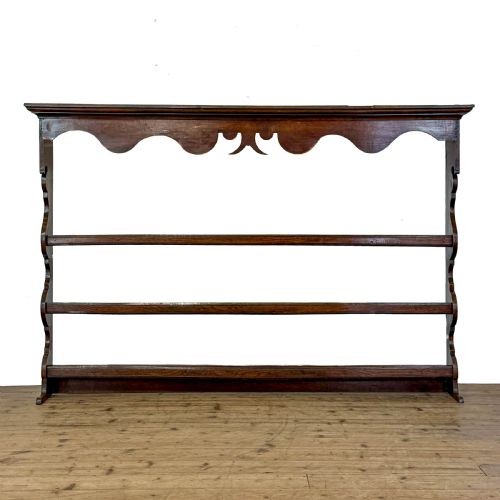
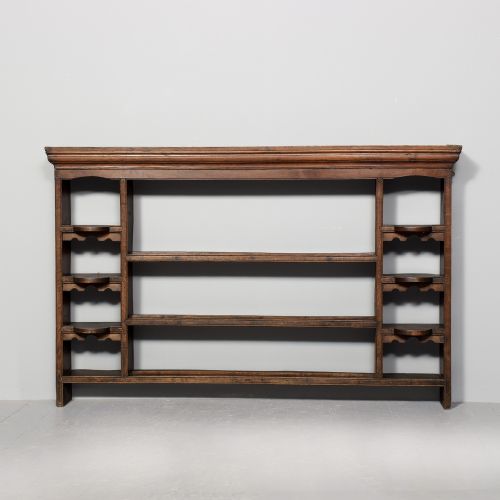
When you search for wooden plate rack shelves, you encounter wall-mounted racks, hanging shelves, and upper sections separated from larger kitchen dressers, primarily dating from the seventeenth, eighteenth, and nineteenth centuries. These pieces were built to store and display ceramic plates, platters, and kitchenware within domestic spaces.
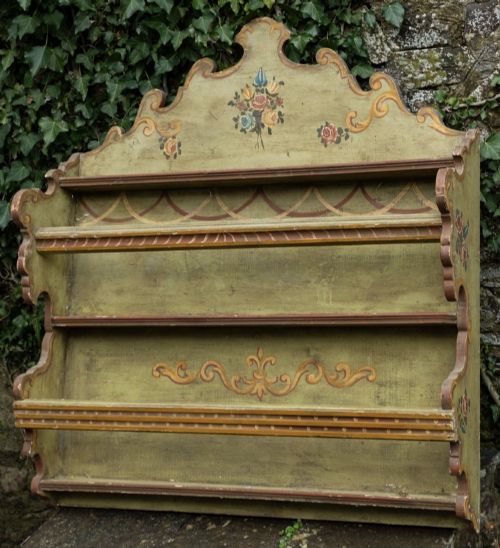
The pieces on this page span several distinct regional traditions, including English, Welsh, Irish, and French examples. You will frequently find country oak and pine formats alongside more finished Georgian mahogany or painted surfaces.
Forms range from simple slatted wall racks designed to hold plates vertically to multi-tiered display shelves and complete two-part dressers. The emphasis remains firmly on functional storage combined with vernacular decorative appeal.
Assessing quality and proportion
Quality in these wall racks rests on the integrity of the timber, the preservation of original surfaces, and the balance of proportions. Pieces that retain their original backboards, hanging fixings, and structural depth command greater respect.
Finer examples show considered detail in the moulding, such as carved decoration or slender columns, whereas simpler utilitarian items rely on straightforward plank construction. The depth of patina on the oak or pine surface also guides the overall character.
Some country oak racks still retain faint traces of historic kitchen grease beneath layers of old wax.
The Wooden Plate Rack Shelves Glossary
- Delft rack
- A wall-mounted wooden shelf specifically designed with wooden slats or guards to display ceramic plates upright. These shelves originated to showcase imported delftware and household pottery.
- Dresser base
- The lower cabinet component of a kitchen dresser, sometimes separated from the upper plate rack shelves listed here. Together or apart, they formed the primary storage furniture of the historic kitchen.
- Marquetry
- Decorative veneer work using various woods to create intricate patterns on the surface. This technique appears on select hanging shelves and dressers.
- Cornice
- The decorative moulded projection that crowns the top of a wall rack or dresser. It defines the architectural style of the piece, ranging from simple Georgian profiles to carved country work.
- Frieze
- The flat or decorated horizontal band situated beneath the cornice of a rack. Makers often shaped or carved this area for visual interest.
Wooden Plate Rack Shelves: Frequently Asked Questions
How were wooden plate racks used?
These racks served as everyday storage in historic kitchens and dining spaces, keeping ceramic plates safe and accessible while allowing them to dry after washing.
Over time, they evolved into display furniture where households could showcase their best pottery and decorative wares to visitors.
How do I hang a heavy oak rack safely?
Due to the substantial weight of old oak and pine timber combined with ceramics, these shelves require secure fixing directly into wall studs or masonry.
Using heavy-duty wall brackets or screwing through the internal structural battens ensures the piece supports heavy loads without pulling away from the wall.
How do I tell an 18th-century rack from a later one?
Eighteenth-century examples typically display hand-cut joinery, pegged joints, and timber surfaces with deep patination accumulated over generations of use.
Later nineteenth-century and Edwardian pieces often incorporate different saw marks, machine-made fixings, or softer pine construction beneath decorative painted finishes.