


Wooden Music Divider
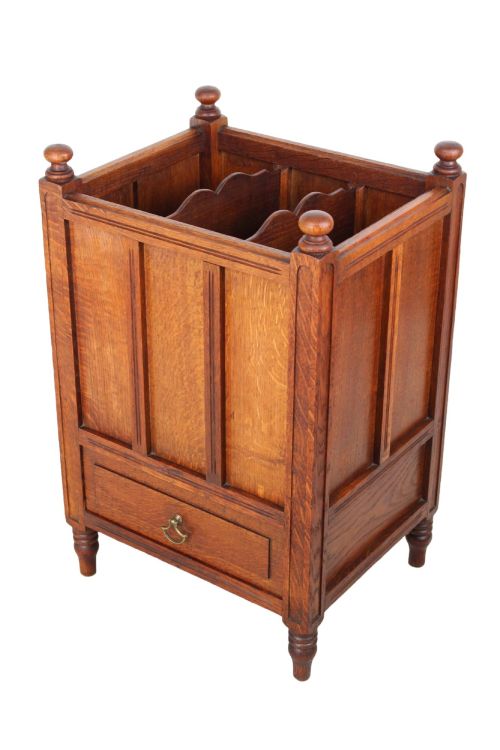
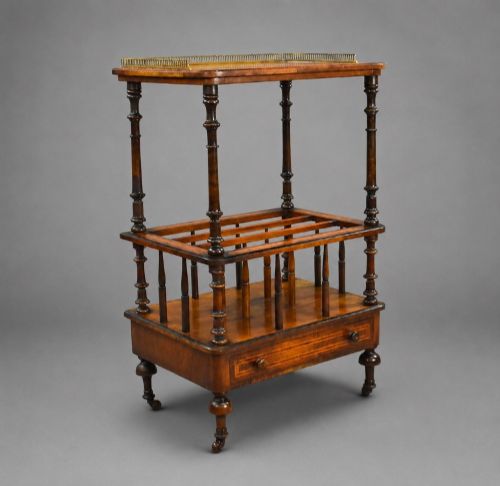
These wooden music divider pieces, commonly known as canterburys, hold sheet scores and periodicals with genuine period grace.
Wooden Music Divider
When you search for a wooden music divider, you encounter canterburys and magazine racks designed to keep scores and folios upright and organised. These items serve domestic spaces by combining compartmentalised upright storage with low frames, occasionally incorporating a drawer.
The versions most frequently met on this page span the Regency, Victorian, and Edwardian eras, constructed in forms that range from simple partitions to elaborate cabinet work. Makers employed diverse woods to suit the prevailing taste of each successive reign.
How they were made
Craftsmen built these pieces primarily using solid and veneered timbers such as mahogany, walnut, burr walnut, rosewood, and oak, often reinforced with boxwood stringing and brass details. These materials provided the structural integrity needed to support heavy bound music folios across multiple vertical partitions.
Joinery techniques relied on traditional framing to create sturdy dividers and slatted sides, while turning and inlay work added decorative refinement to the upright supports and legs. Cabinetmakers selected figured veneers to enhance the visual appeal of surfaces on Victorian and Regency examples.
Music partitions double as polite sorting devices for stubborn household post that refuses to stay flat.
What varies in quality
The distinction between standard examples and finer items rests upon the selection of timber and the sophistication of the decorative embellishments. Pieces featuring figured burr walnut, intricate boxwood inlay, or attributed to notable workshops like Gillows of Lancaster demonstrate superior craftsmanship.
Structural refinement also separates the tiers, where well-turned legs, robust brass castors, and cleanly integrated lower drawers indicate higher workshop standards. Simpler pieces rely on plain mahogany or oak construction without the decorative detailing found on top-range specimens.
The Wooden Music Divider Glossary
- Canterbury
- A low piece of furniture with vertical partitions designed for holding sheet music, folios, and periodicals. It originated in the late eighteenth century and often includes a small drawer beneath.
- Burr Walnut
- A specialised timber veneer taken from the warted growths on walnut trees, prized for its swirling grain patterns. Cabinetmakers utilised this material on high-end Victorian furniture.
- Boxwood
- A dense, pale yellow wood frequently employed for fine stringing inlay and contrasting geometric borders on mahogany and walnut surfaces. It creates crisp linear definition on the woodwork.
- Regency
- An English design period spanning the early nineteenth century, characterised by classical restraint and neoclassical motifs. Pieces from this era often feature clean architectural lines and refined proportions.
Wooden Music Divider: Frequently Asked Questions
What is a wooden music divider?
A wooden music divider is a traditional piece of furniture, commonly styled as a canterbury, used to organise and display sheet music or periodicals.
These items feature vertical slots or partitions that keep bound folios upright and accessible near a piano or seating area.
How were canterburys used historically?
Historically, households placed these stands in music rooms and parlours to store daily sheet music and reading materials close to instruments.
The lower drawer often held smaller musical accessories, while the compartments kept scores sorted by composer or type.
How do I identify a Regency canterbury?
Regency examples date from around the early nineteenth century and typically exhibit classical proportions and restrained ornament. They are often constructed from mahogany and reflect the neoclassical tastes of the period.
Some exceptional pieces from this era bear attribution to known workshops such as Gillows of Lancaster.
What woods were used for these pieces?
Maker workshops utilised a variety of hardwoods depending on the prevailing fashion of the decade. Mahogany and oak appear across multiple nineteenth-century periods.
Victorian cabinetmakers frequently employed walnut, burr walnut, and rosewood, sometimes accented with boxwood stringing and brass components.