





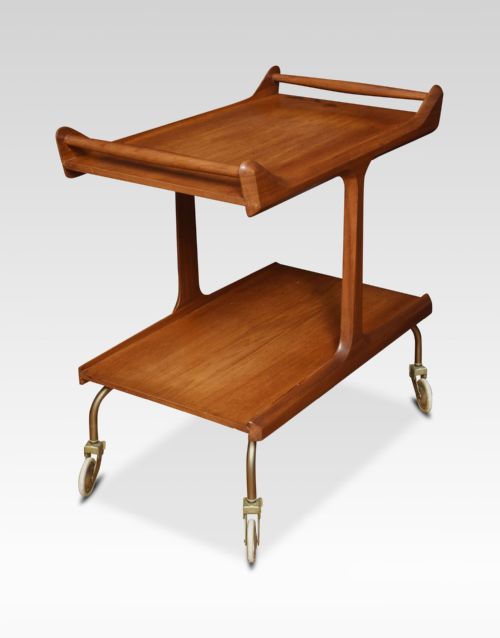

Wooden Mobile Tea Trolley
A wooden mobile tea trolley brings practical wheeled service and period character to a room, offering tier upon tier of timber surface for drinks and hosting.
Wooden Mobile Tea Trolley
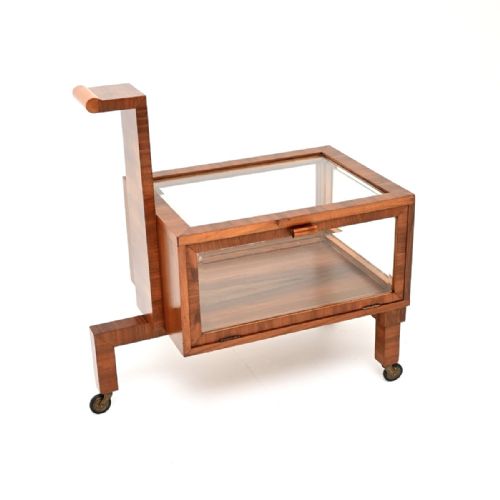
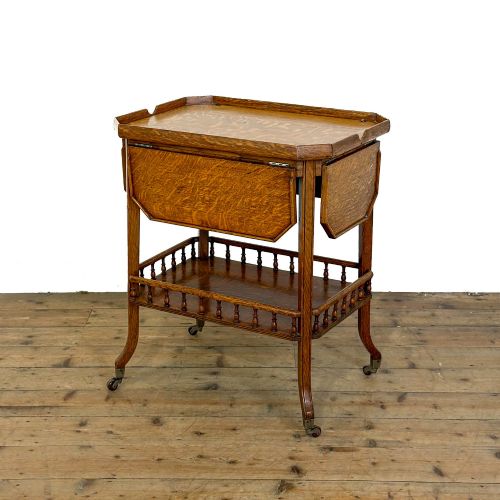
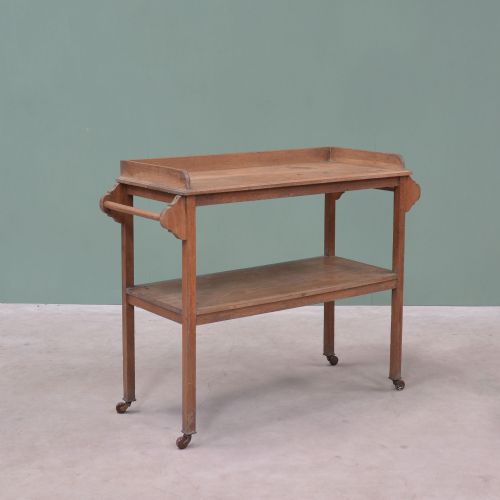
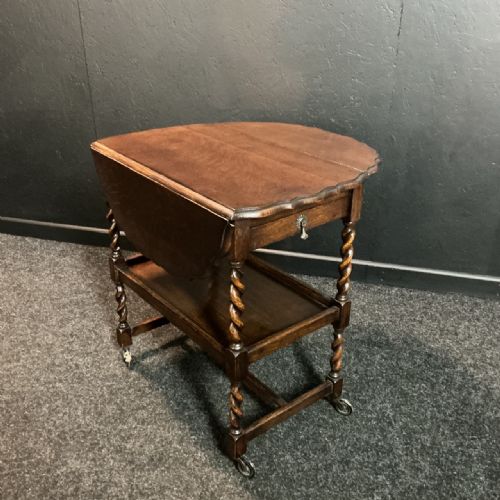
A wooden mobile tea trolley is typically encountered in Edwardian designs as well as pieces from the 1910s, 1920s, and 1930s. These examples span simple oak side tables on wheels to drop-leaf serving trolleys and streamlined Art Deco bar carts.
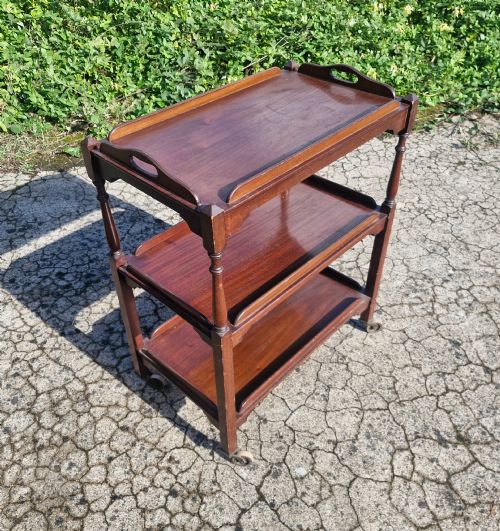
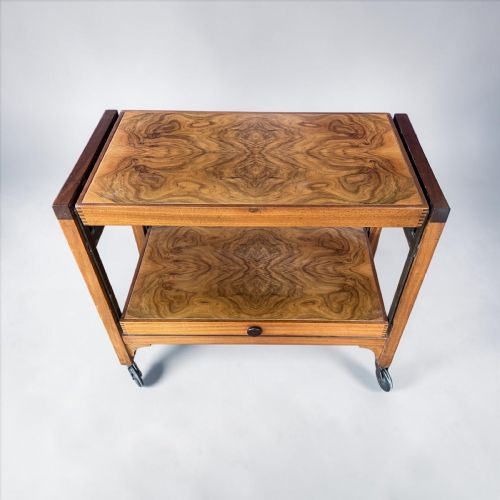
Most pieces provide two tiers for carrying plates, cups, and bottles around the home. Many versions also incorporate a removable carrying tray set directly into the top surface for easy service.
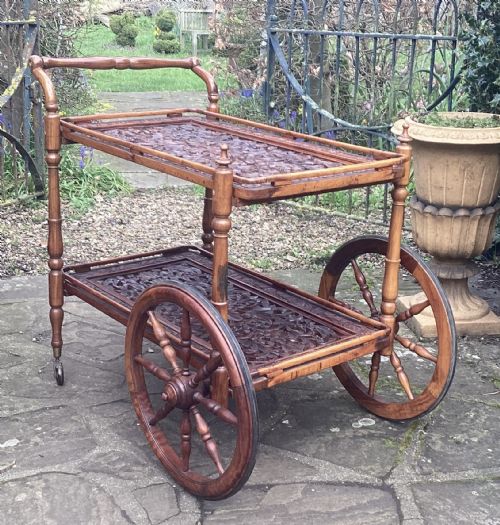
Styles range from Jacobean Revival oak and traditional mahogany to cane-bound beech and carved Anglo-Indian hardwood. The overarching form remains consistently practical, designed for afternoon tea and household entertaining.
Materials and construction methods
Makers utilised solid timbers and veneers such as oak, mahogany, walnut, and beech for the primary frames and shelves. Selected models feature intricate hand carving or woven cane binding to add texture to the wooden structure.
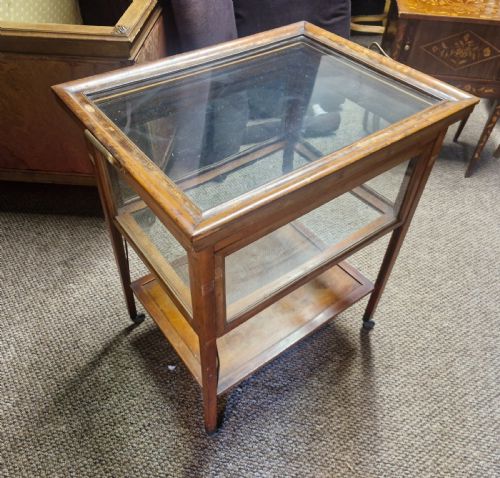
Wheels and castors were fashioned from metal, brass, and iron to ensure smooth mobility across floors. Glass inserts occasionally protect wooden surfaces, while removable trays rely on sturdy wooden ledges or drop-side mechanisms.
Wooden Mobile Tea Trolley Retail Price Guide 2026
Typical asking prices for wooden mobile tea trolley among the pieces listed under this phrase on Sellingantiques today, from the lower quarter to the upper quarter. They describe what is for sale here now, not the wider market.
Listings feature wooden mobile tea trolleys spanning the Edwardian era through the 1910s, 1920s, and 1930s, constructed in oak, mahogany, walnut, and beech.
Distinguishing quality in construction and design
Quality rests upon the selection of timber and the precision of the joinery within the frame and tiers. Finer pieces demonstrate careful attention to wood grain, solid timber construction rather than basic laminates, and robust wheel mounts that turn truly.
The sophistication of the mechanism also marks the difference between standard items and superior examples. Smoothly operating drop-sides, metamorphic folding actions, and securely fitted lift-off trays indicate thoughtful cabinet making.
Lusty of Leicester
The Wooden Mobile Tea Trolley Glossary
- Drop-side
- A table leaf hinged to lower when not in use. This mechanism allows the trolley to save space against a wall.
- Metamorphic
- Describing furniture that transforms from one function to another. In trolleys, this often involves expanding surface areas or altering tier heights.
- Castor
- A small wheel mounted on a swivel attached to the base of each leg. It enables the trolley to move smoothly across a room in any direction.
- Tier
- A single horizontal shelf or surface positioned above the floor. Tea trolleys predominantly feature two or three distinct tiers for storage.
- Lift-off tray
- A removable upper section equipped with handles. It permits the user to carry items away from the main trolley structure.
Wooden Mobile Tea Trolley: Frequently Asked Questions
What is a wooden mobile tea trolley used for?
These pieces were originally designed to transport afternoon tea, cakes, and serving dishes from the kitchen to the drawing room without manual carrying. Today they function equally well as mobile drinks bars, side tables, or display surfaces in living spaces.
The wheeled design and multiple tiers make it simple to clear plates or present bottles during gatherings while maintaining a distinct period aesthetic.
How do I date an Edwardian tea trolley?
Edwardian tea trolleys generally display characteristic woodwork from the early twentieth century, leaning towards heavier oak frames and traditional joinery techniques. Examining the specific turnings of the legs and the style of the metal castors helps pinpoint the era.
Comparing the timber finish and hardware against known examples from the 1910s and 1920s further clarifies the exact manufacturing period.
Are these trolleys sturdy enough for daily use?
Constructed from hardwoods like oak, mahogany, and walnut, these trolleys are built to bear the weight of heavy ceramics and glassware. The original metal and brass castors are engineered to support the structure during movement across floorboards.
Routine domestic use requires only standard care for antique timber and periodic checking of the castor fixings to ensure smooth rolling.
What styles are available in wooden tea trolleys?
The selection encompasses straightforward Edwardian oak utility pieces, decorative 1920s drop-leaf designs, and geometric 1930s Art Deco streamline creations. You will also encounter specialised variations such as cane-bound beech frames and carved Anglo-Indian hardwoods.
Each style reflects the prevailing interior tastes of its decade, ranging from revivalist Jacobean influences to clean modernism.