




Dark Wood Serving Trolley
A dark wood serving trolley is a practical mobile piece designed for hospitality, bringing period character and multi-tier utility to any room.
Dark Wood Serving Trolley
When searching for a dark wood serving trolley, buyers encounter a variety of multi-tiered mobile furniture designed for hospitality and display. These items span periods from the Georgian era through the Victorian, Edwardian, and Art Deco decades, reflecting changing social habits in British homes.
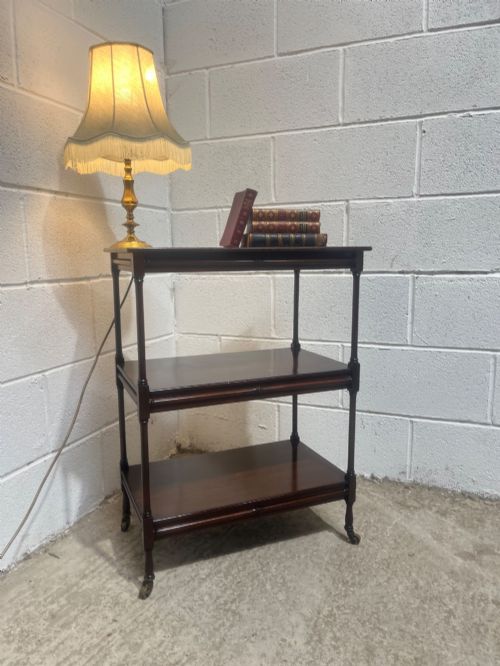
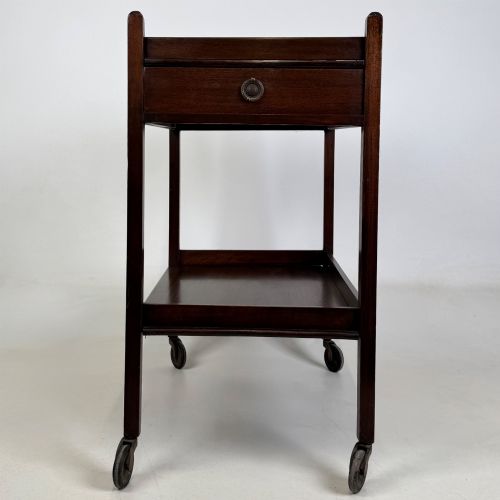
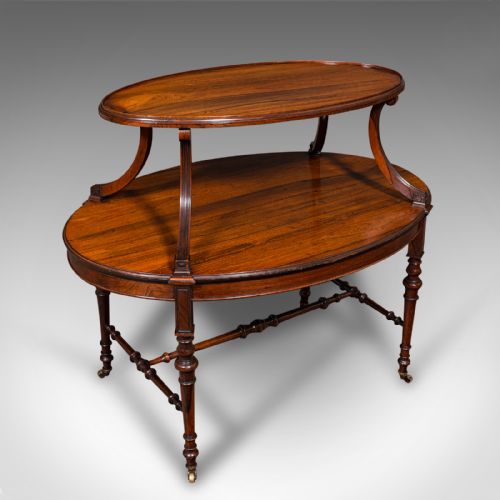
The versions most frequently met on this page include mahogany tea trolleys, folding oak butler's trays, and tiered dumb waiters. Materials range from traditional hardwoods like mahogany, oak, and rosewood to functional additions such as brass fittings and glass surfaces.
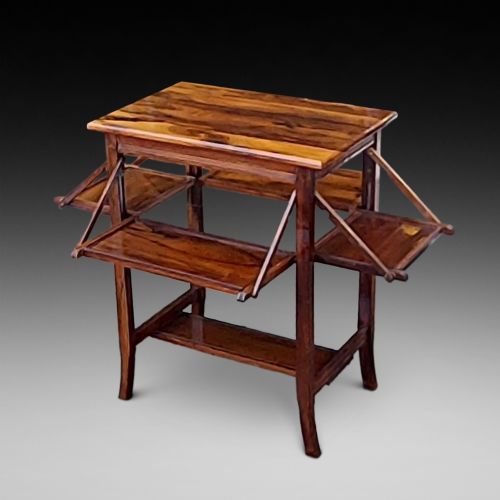
Forms vary from simple two-tier folding designs to elaborate three-tier Chinese hardwood structures and rise-and-fall buffet stands. English country and Regency styles predominate, offering both static serving tables and mobile trolleys fitted with wheels or castors.
How they were made
Cabinetmakers constructed these pieces primarily using dense hardwoods such as mahogany, oak, and rosewood, selected for both durability and rich natural grain. Timber surfaces were frequently polished to a deep lustre, highlighting the figuring of the wood.
Functional metal elements were integrated into the design, including brass castors for mobility, iron mechanisms for folding trays, and rise-and-fall columns. Glass panels occasionally served as upper display surfaces, while intricate carving appeared on supports and borders.
Listings feature items spanning the 19th century, Victorian, Edwardian, and 1930s periods, constructed from mahogany, oak, rosewood, and walnut.
What varies in quality
The quality of a dark wood serving trolley rests in the selection of the timber and the precision of its joinery. Superior examples display finely figured mahogany or rosewood, solid brass hardware, and smoothly operating folding or rise-and-fall mechanisms.
Decoration also distinguishes the range, moving from plain utilitarian tea trolleys to pieces featuring hand-carved details or stamped maker signatures. Construction methods, such as mortise and tenon joints, determine the structural integrity of multi-tiered stands over decades of use.
Gillows
The Dark Wood Serving Trolley Glossary
- Dumb waiter
- A multi-tiered piece of dining room furniture designed to hold dishes, bottles, or glassware without the need for a servant. These items often feature graduating shelves supported by a central column or upright legs.
- Butler's tray
- A portable wooden tray with hinged or fixed sides, traditionally used for carrying refreshments and set upon a folding wooden stand. They appear in oak and mahogany across nineteenth-century listings.
- Tea trolley
- A wheeled serving vehicle with two or three levels, popular during the Edwardian period and the early twentieth century for moving tea services between rooms. Many include folding leaves to expand their surface area.
- Rise and fall
- A mechanical feature allowing sections of a dumb waiter or buffet stand to be adjusted in height via a central screw or ratchet mechanism. This innovation provided flexible service options for dining rooms.
- Castor
- A small wheel mounted on a swivel assembly attached to the legs of mobile serving tables and trolleys. They allow heavy hardwood pieces to be repositioned easily across carpets and wooden floors.
Dark Wood Serving Trolley: Frequently Asked Questions
What is a dark wood serving trolley used for?
These pieces were originally designed to transport food, tea, and drinks between rooms or to hold dishes near a dining table. Today, they serve equally well as mobile cocktail bars, side tables, or display surfaces for plants and books.
The multiple tiers provide practical storage while maintaining a compact footprint in modern living spaces.
Are these trolleys suitable for daily use?
Solid hardwood construction and sturdy brass castors make these pieces durable enough for everyday living. Regular polishing and careful handling of moving parts, such as folding trays or rise-and-fall mechanisms, ensure longevity.
Treating surfaces with appropriate wood care prevents moisture rings from glasses.
What woods were commonly used?
Mahogany is the most frequent material seen across these listings, prized for its rich tone and strength. Oak and rosewood also appear regularly, alongside Chinese hardwood and walnut in later twentieth-century pieces.
Metal components like brass and cast iron were routinely added for structural support and mobility.