


Wooden Marble Top Bedside
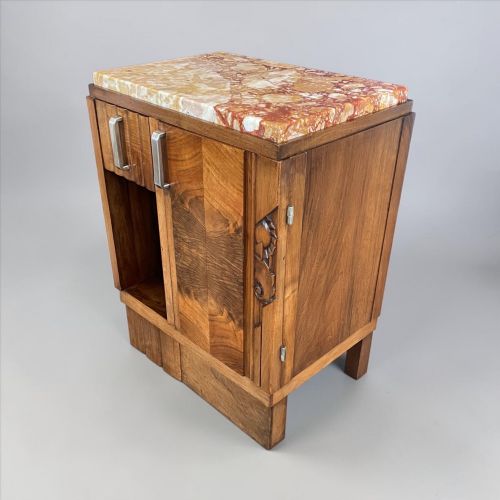
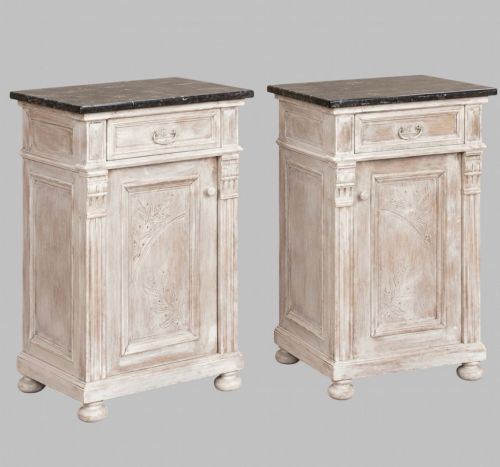
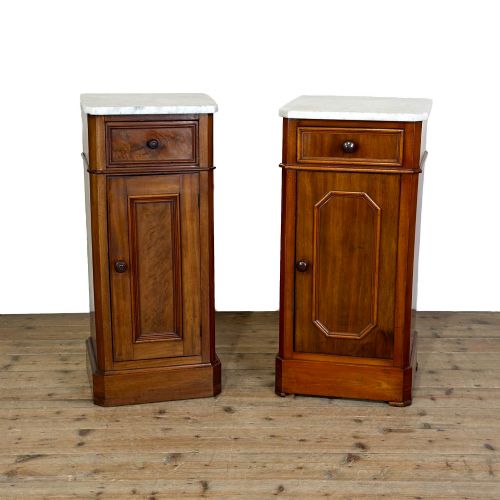
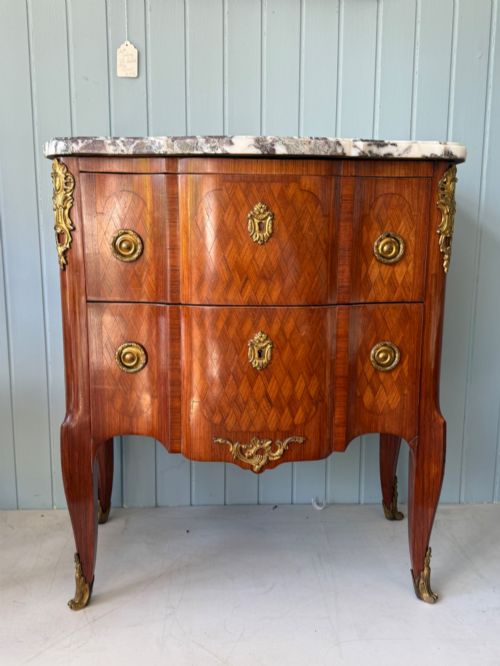
These wooden marble top bedside tables combine robust stone slabs with timber frames across French, Victorian and Italian designs.
Wooden Marble Top Bedside
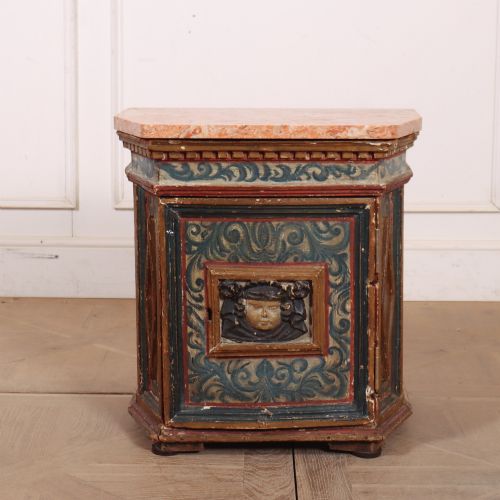
A wooden marble top bedside search leads to compact nightstands, cylindrical cabinets and small commodes designed to hold water jugs, lamps and nighttime essentials. These practical pieces range from simple painted softwood stands to elaborate veneered walnut and mahogany cabinets.
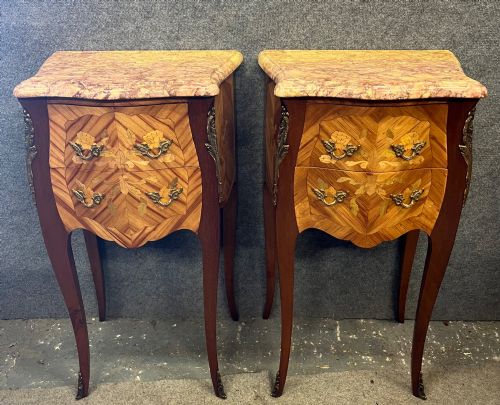
Most examples encountered here originate from the nineteenth and early twentieth centuries, spanning Victorian English workshops and French provincial cabinetmakers. Buyers often find matching pairs featuring inset stone surfaces alongside single cylindrical pedestals and bombe commodes.
Construction and materials
Cabinetmakers constructed the structural carcasses using native and exotic timbers including mahogany, walnut, fruitwood and kingwood, frequently applying decorative veneers and marquetry inlay. Skilled joiners built sturdy frames to support heavy inset marble slabs without warping the underlying wood.
Surfaces often incorporate brass mounts, ormolu details and hand-painted finishes to complement the polished stone tops. Cabinet doors conceal internal shelving or storage space, while cylindrical bodies utilise curved wooden staves bound together.
Some cylindrical cabinets double as lamp or figure stands, originally tasked with holding midnight illumination rather than books.
Judging quality in bedside tables
Quality rests in the precision of the timber marquetry, the richness of the wood grain and the thickness of the marble slab. Superior examples display tight veneer matching, crisp hand-carved details and harmonious proportions between the stone top and wooden base.
Lesser pieces rely on simpler construction methods, painted finishes over plain woods or replacement stone tops that lack the age and integration of original fittings. Finer cabinets show careful attention to internal joinery and well-fitted doors that operate smoothly.
The Wooden Marble Top Bedside Glossary
- Marquetry
- Decorative veneer work arranged in geometric or pictorial patterns using various coloured woods. This technique adorns the drawer fronts and cabinet doors of many French pieces.
- Ormolu
- Gilded bronze ornamentation applied to furniture mounts and feet. It provides metallic contrast against dark mahogany and walnut timbers.
- Commode
- A low chest of drawers or cabinet with doors, frequently fitted with a marble top. These serve as larger bedside storage units or side tables.
- Bombe
- A swelling, outward-curved commode shape popular in continental furniture design. This undulating contour requires specialised carpentry to fit stone tops accurately.
- Flame mahogany
- Timber cut to reveal a fiery, flickering grain pattern. Cabinetmakers selected these choice boards for prominent drawer fronts and top surfaces.
Wooden Marble Top Bedside: Frequently Asked Questions
Are these bedside tables sold in pairs?
Many listings feature matching pairs of bedside cabinets, particularly among French and twentieth-century examples.
Single tables also appear frequently, allowing buyers to select individual pieces for smaller bedrooms or alternative placement.
What fits inside these cabinets?
Most bedside cabinets contain an internal wooden shelf behind a hinged door, designed for chamber pots, books or personal items.
Cylindrical variations provide vertical storage within a rounded wooden chamber accessed via a curved door.
How do I care for the marble top?
Stone surfaces require gentle cleaning with damp cloths and neutral soaps to protect the polished finish from acidic spills.
Avoiding harsh chemical cleaners preserves the natural veining and historical patina of the antique marble.
How do I identify the period?
Stylistic clues such as Louis XV curves, Victorian proportions or specific wood veneers point toward particular decades and regions.
Construction methods inside the cabinet drawers and backboards further indicate whether a piece originates from the eighteenth, nineteenth or twentieth century.