


Wooden Locking Chest Drawers
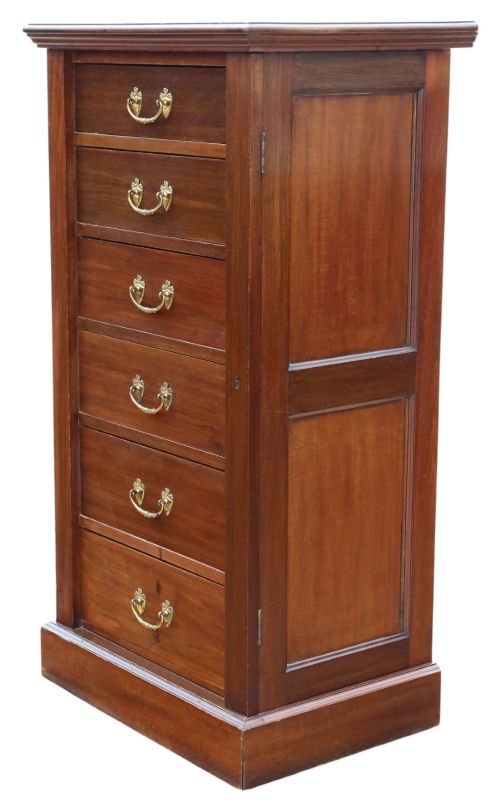
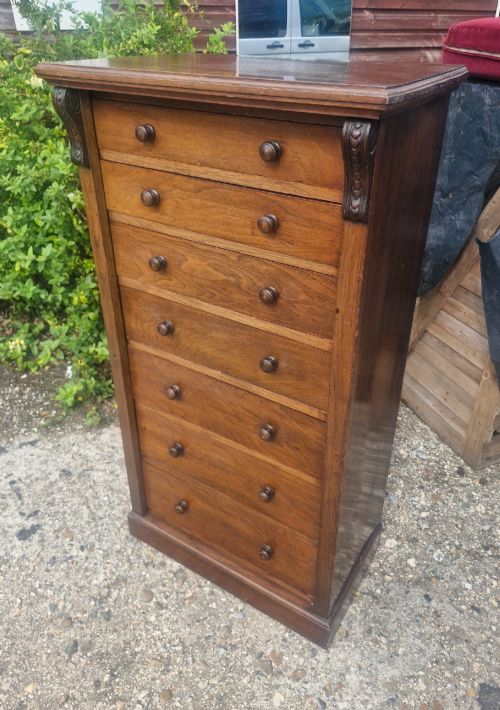
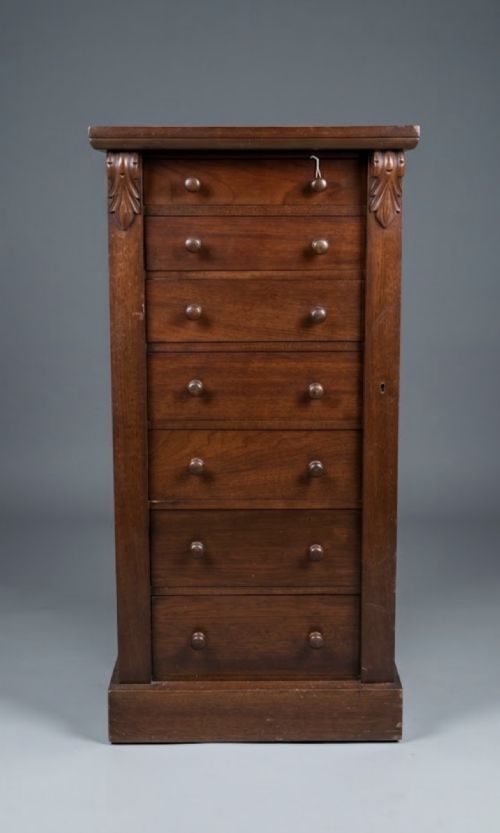
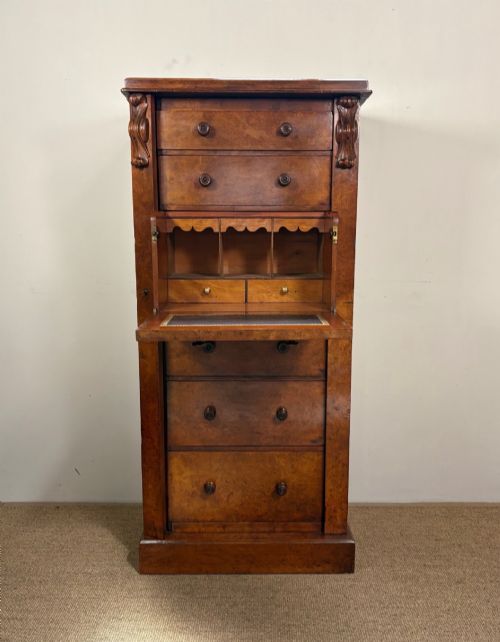
Wooden locking chest drawers are secure storage units, most frequently encountered as tall Wellington chests equipped with locking mechanisms designed to safeguard valuables.
Wooden Locking Chest Drawers
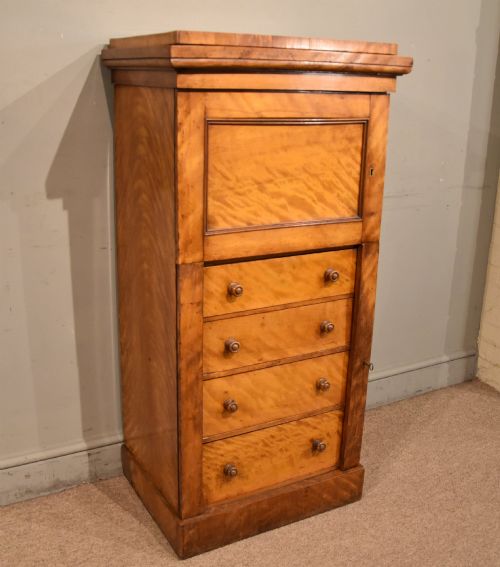
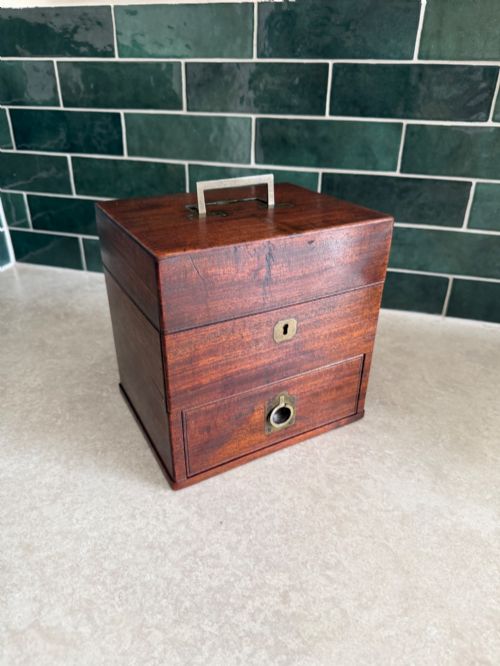
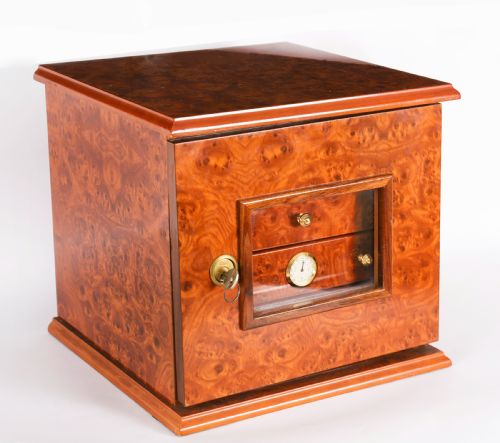
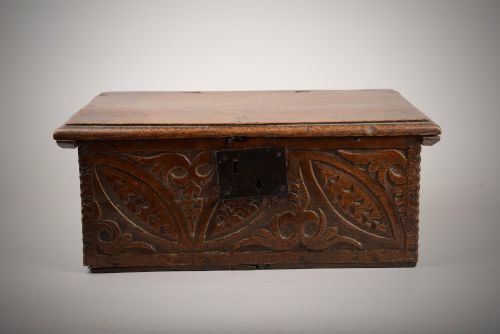
Wooden locking chest drawers primarily manifest as narrow Wellington chests, alongside select apothecary boxes, collector cabinets, and tea caddies equipped with secure locking mechanisms. These pieces emerge predominantly from Victorian and nineteenth-century periods, with occasional seventeenth-century table boxes and twentieth-century humidors appearing in the selection.
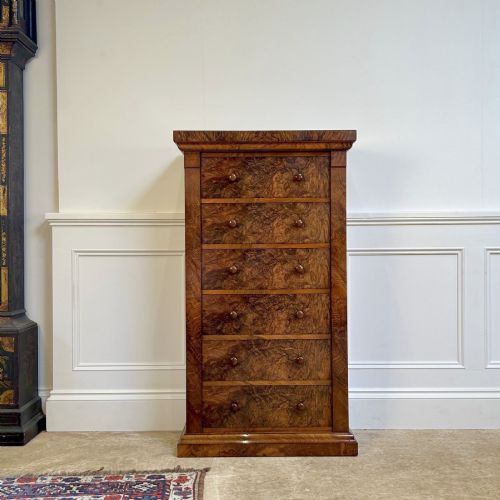
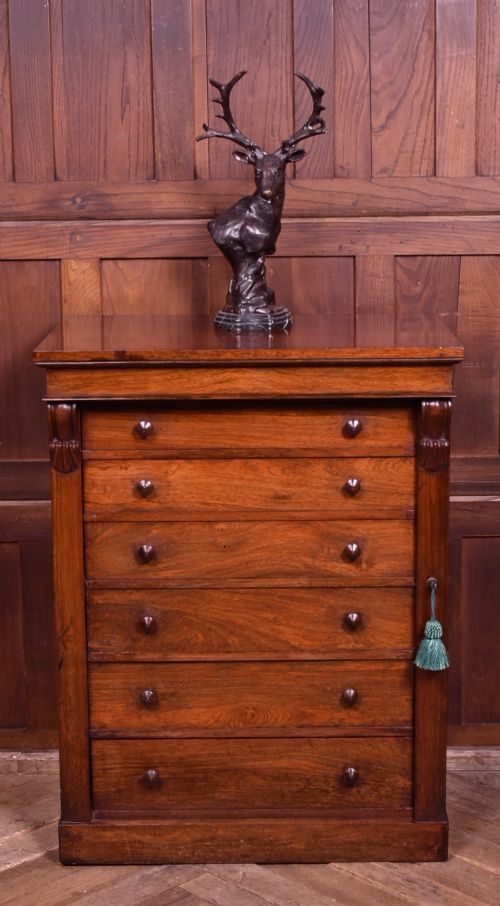
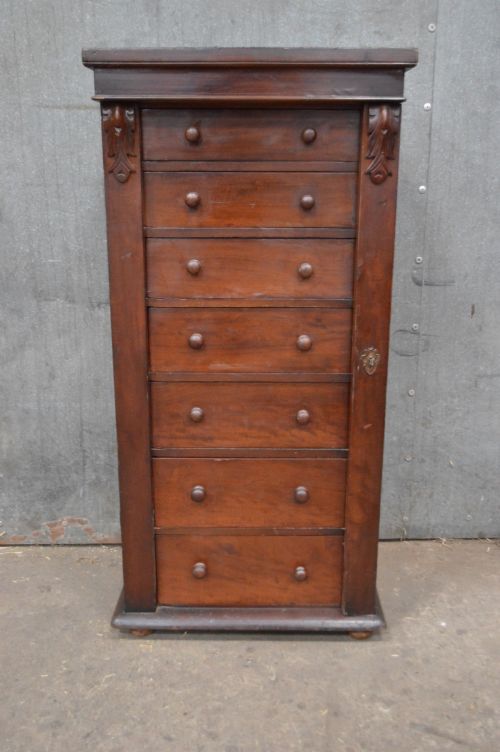
The dominant form is the tall, slender chest of drawers featuring a locking side stile that secures all drawers simultaneously. Buyers frequently encounter mahogany and walnut versions, alongside examples rendered in satin birch, burr walnut, and oak.
Materials and construction
Cabinet makers utilised dense hardwoods such as mahogany, walnut, and oak as the structural foundation for these chests, often applying figured veneers like burr walnut and satin birch to primary surfaces. Brass hardware appears frequently for handles, escutcheons, and internal locking mechanisms.
Construction relies on traditional joinery to support the tall, narrow proportions typical of Wellington chests. Internal locking bars operate via a hinged stile secured by a working key, preventing drawer access when closed.
The listings span from the seventeenth century through to the mid-twentieth century, dominated by Victorian mahogany and walnut Wellington chests.
Factors determining quality
Quality rests heavily upon the selection of timber figure, with highly figured burr walnut, mahogany, and satin birch commanding attention over plain grain timbers. The crispness of the drawer linings and the integration of the locking stile reflect the original maker's skill.
Maker attribution elevates certain pieces significantly, particularly those bearing stamps or signatures from established firms like Gillows or S. Mordan & Co. Original working keys and intact locking mechanisms also distinguish superior examples from altered pieces.
Gillows of Lancaster·S. Mordan & Co·Maple & Co
The Wooden Locking Chest Drawers Glossary
- Wellington chest
- A tall, narrow chest of drawers featuring a hinged locking flap or stile on one side that secures the drawers when locked.
- Secret lock
- A concealed locking mechanism or hidden release catch designed to secure specific drawers or compartments within a cabinet.
- Stile
- A vertical framing member of a cabinet or door, which in these chests often functions as the locking bar.
- Escutcheon
- A flat plate of brass surrounding a keyhole, protecting the surrounding wood from wear.
Wooden Locking Chest Drawers: Frequently Asked Questions
What is a Wellington chest?
A Wellington chest is a tall, narrow style of drawer unit characterised by a hinged locking stile on the right side. This locking bar swings away once the top drawer is unlocked, allowing all the lower drawers to open.
Cabinet makers designed these pieces during the nineteenth century to store garments, documents, or valuables securely in limited floor spaces.
How do the locking mechanisms work?
The mechanism relies on a vertical wooden bar hinged to the side of the carcase, which catches the edges of the drawer fronts when closed. Turning a key in the top drawer or the locking stile engages this bar, preventing any drawer from pulling out.
Original keys are frequently preserved with these pieces, though replacement locks are common in antique examples.
What timbers were commonly used?
Mahogany and walnut form the majority of the carcases, accompanied by rich veneers such as burr walnut, satin birch, and burr elm. Oak and ash also appear in select regional or utilitarian pieces.
Cabinet makers selected these hardwoods for their stability and grain pattern, often enhancing the visual impact with highly figured veneers.
How can I tell a Victorian chest from earlier periods?
Victorian pieces usually display the characteristic tall, narrow proportions of the Wellington design, utilising dense mahogany or walnut. Earlier eighteenth-century examples tend to be smaller accessory boxes, tea caddies, or table boxes with internal drawers.
Examining the internal drawer construction and secondary timbers helps determine the exact period of manufacture.