
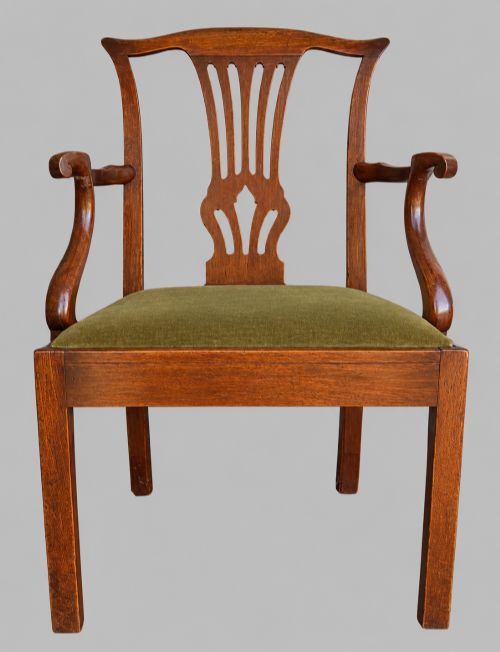
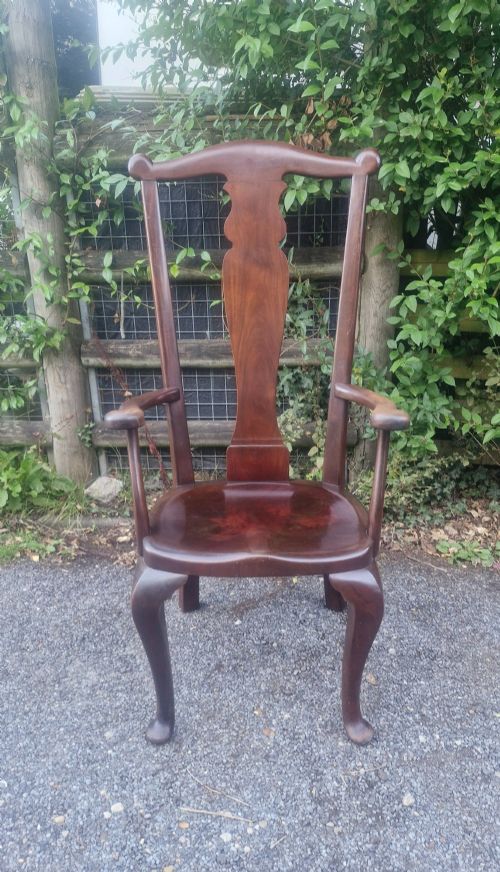
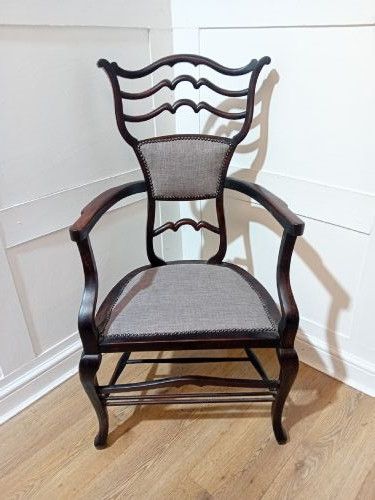
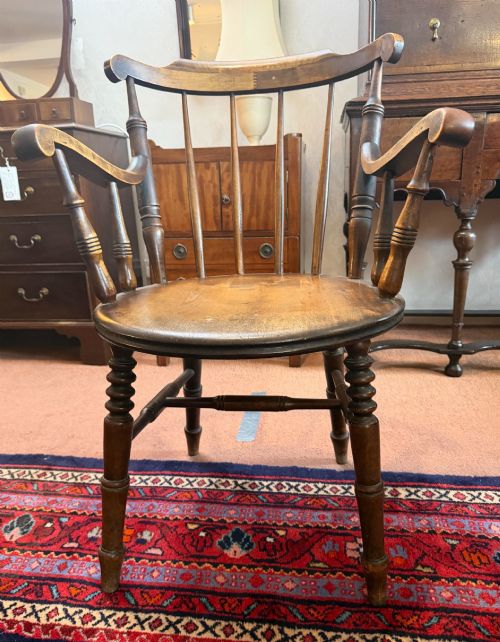
Wooden Library Chair
A wooden library chair offers solid comfort at the desk, bringing enduring mahogany, oak, and walnut to reading spaces.
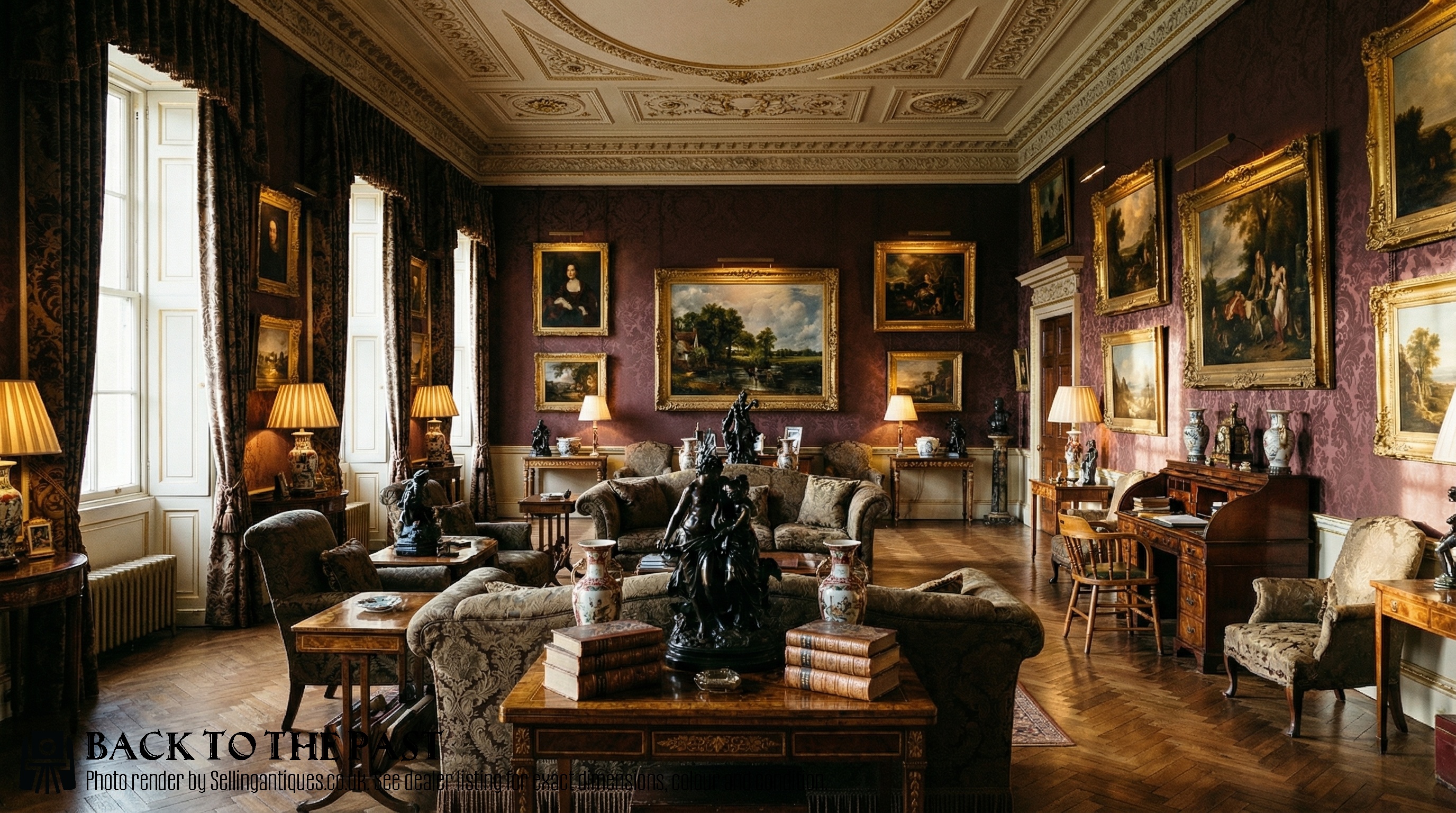
Wooden Library Chair
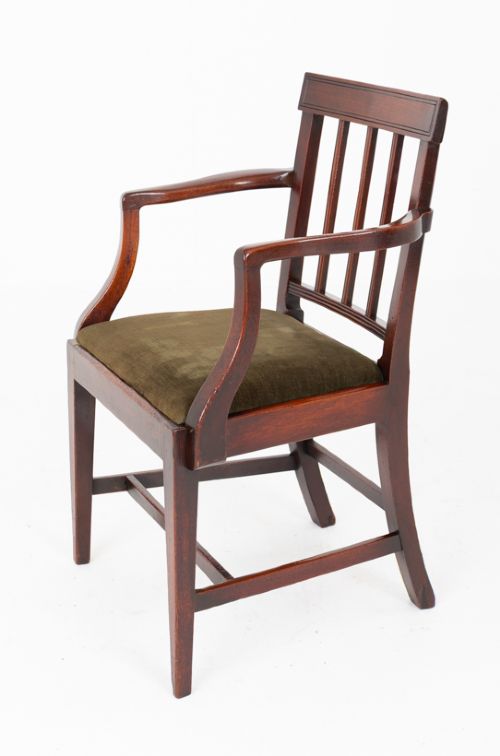
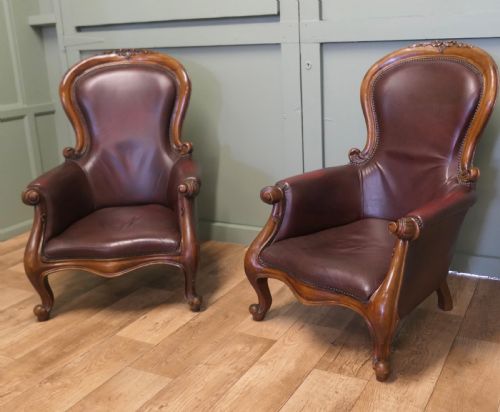
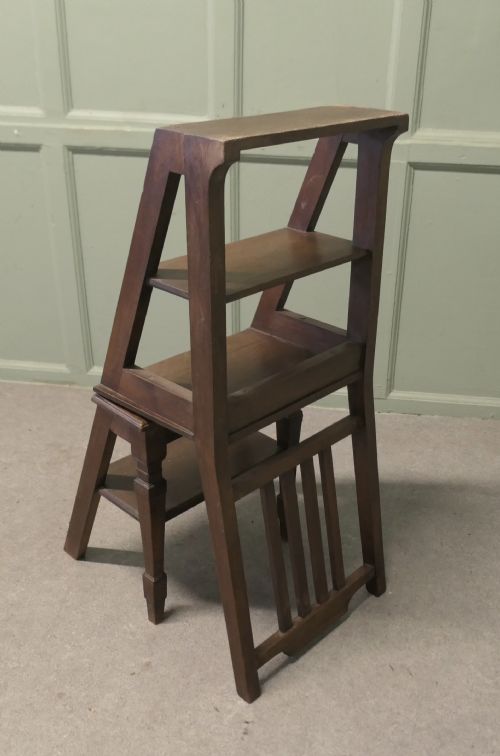
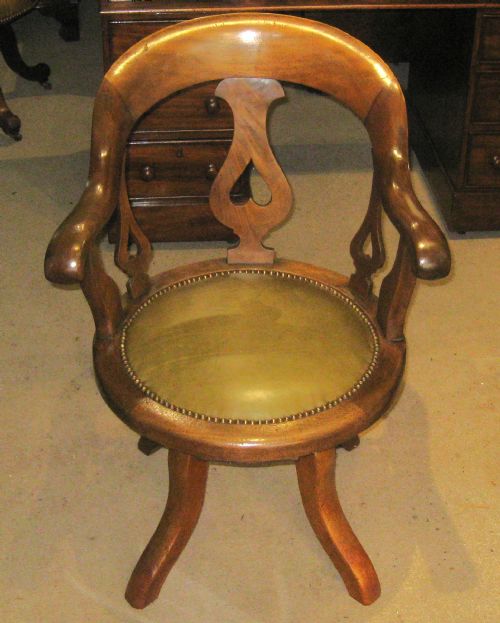
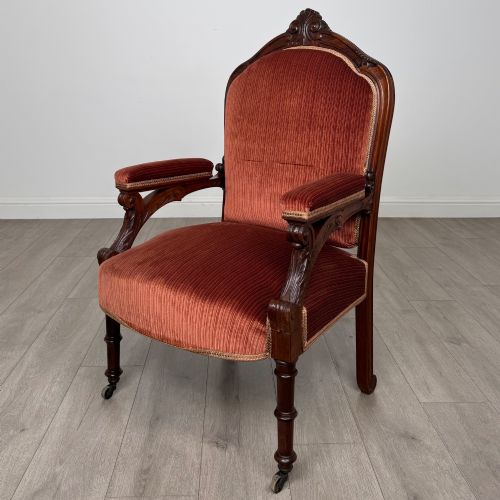
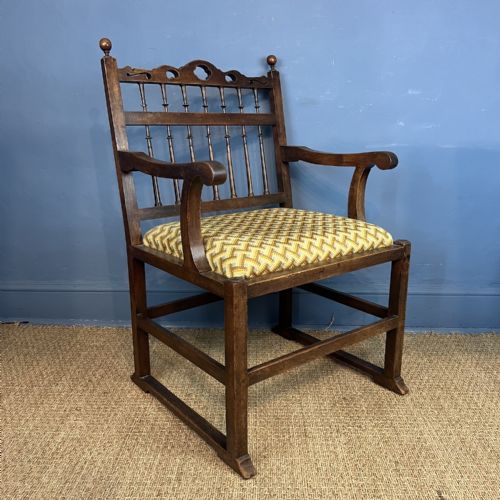
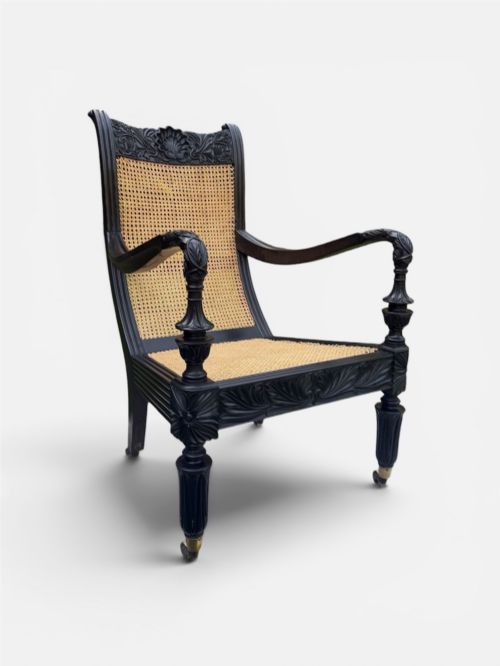
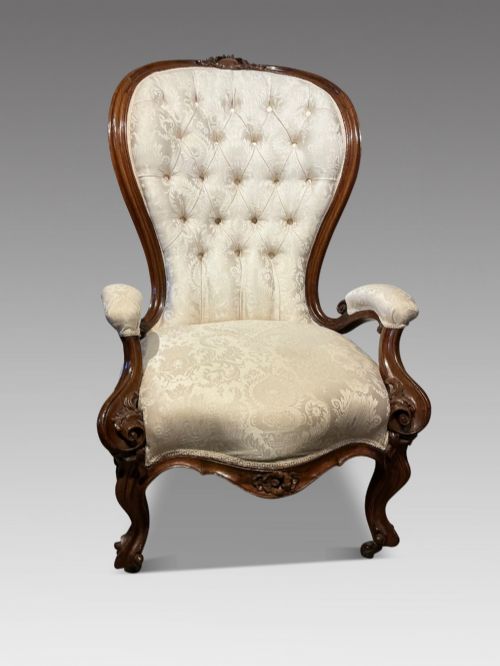
A wooden library chair encompasses sturdy desk armchairs, swivel office seats, captain chairs, and clever metamorphic library steps that convert into seating. You will frequently encounter Victorian and Edwardian examples fashioned for study and reading rooms.
The selection ranges from Georgian mahogany designs and Regency armchairs to solid oak Victorian Gothic Revival seating and Arts and Crafts folding forms. Many pieces serve specifically as desk chairs, smoker bows, or high-backed reading seats upholstered in leather, fabric, or tapestry.
How they were made
Cabinetmakers utilised dense timbers such as mahogany, oak, walnut, ash, elm, and burr elm to build durable frames capable of supporting daily use. Joinery techniques relied on traditional framing and turning, often incorporating brass castors and pivoting mechanisms on revolving desk chairs.
Comfort came from upholstery materials including leather, velvet, fabric, and tapestry, secured with brass detailing. Folding campaign designs and metamorphic library steps employed clever hinges and pivoting wooden joints to transform their utility.
Some nineteenth-century drinkers required a dedicated chair with extra-wide arms for balancing tankards while they read.
What varies in quality
The distinction between ordinary and exceptional seating lies in the selection of timber and the crispness of carved details on the arms and rails. Figured veneers like burr elm and birds-eye maple elevate the visual weight of a desk chair.
Construction solidity and the retention of original upholstery materials, such as tan hide or leather, influence the overall integrity. Pieces featuring secondary woods of high grade and integrated revolving or metamorphic mechanisms demonstrate superior workshop execution.
Hindley & Sons
The Wooden Library Chair Glossary
- Metamorphic chair
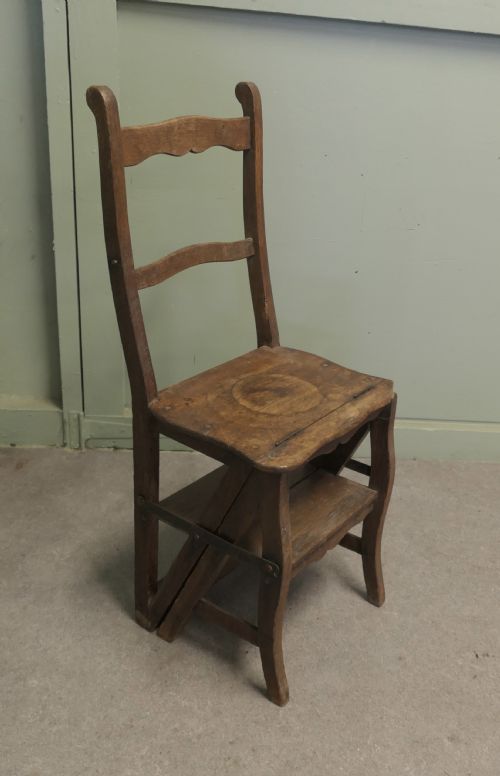
- A dual-purpose piece of furniture designed to transform from a chair into library steps. This clever engineering allowed readers to reach high bookshelves before folding back down into a stable seat.
- Smoker's bow
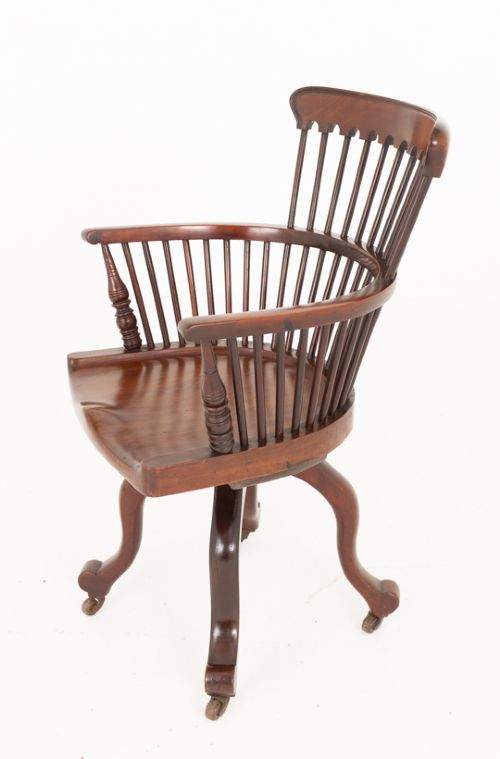
- A sturdy, low-backed Windsor-style armchair featuring a continuous curved wooden rail forming the armrests and back. These practical seats were common in studies and smoking rooms.
- Captain's chair
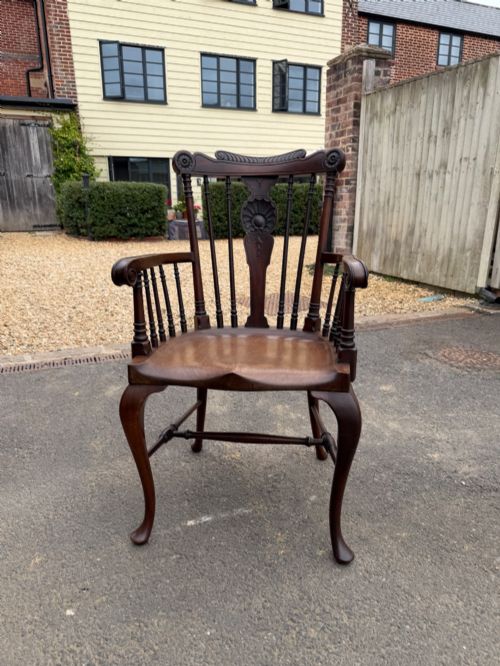
- A robust wooden armchair with a rounded spindle back designed for office and desk use. They frequently appear in oak and elm across the Victorian and Edwardian periods.
- Gainsborough chair
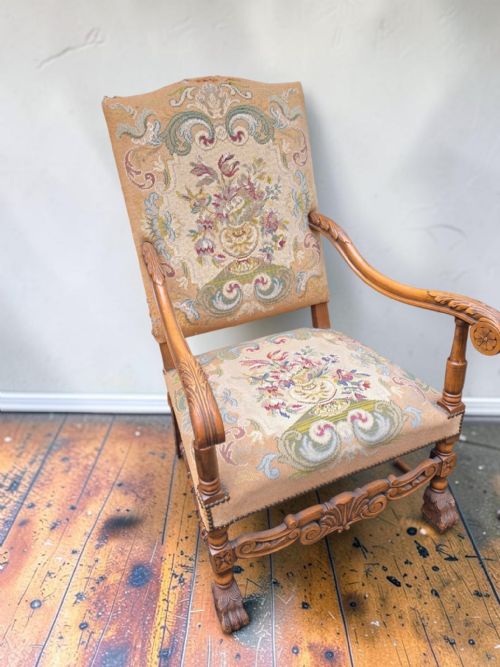
- A wide, upholstered armchair with open padded arms and short legs, developed in the eighteenth century. Later revival versions continued this comfortable form for library desks.
- Campaign chair
- A portable, folding piece of furniture designed for travel and military use. They were built from durable woods with folding X-frames and metal fittings.
Wooden Library Chair: Frequently Asked Questions
What is a metamorphic library chair?
A metamorphic library chair is a dual-purpose piece designed to convert safely from a standard seating position into a set of sturdy wooden steps.
Cabinetmakers engineered these items with hidden hinges and pivoting frames so users could reach high bookshelves without fetching separate ladders.
How do I identify a Victorian desk chair?
Victorian desk chairs typically feature robust timber frames in mahogany, oak, or walnut, often fitted with revolving mechanisms or brass castors.
They frequently incorporate curved spindle backs, leather pads, or solid wooden saddles shaped for extended periods of sitting at a partner desk.
What is a smoker's bow?
A smoker's bow is a sturdy wooden armchair with a low, continuous curved back rail and turned spindles.
Built from timbers like elm and oak, these comfortable seats were traditionally placed in libraries, offices, and smoking rooms for everyday reading.
Are these chairs suitable for daily desk use?
Many of these chairs were originally constructed for nineteenth-century offices, studies, and libraries, making them well-suited for modern desk work.
Solid timber frames and supportive armrests provide reliable ergonomics, though antique revolving mechanisms should be operated with care.
How do I tell Edwardian chairs apart from Victorian ones?
Edwardian chairs generally display lighter proportions and simpler decorative lines compared to the heavier, more carved output of the Victorian era.
Makers of the Edwardian period frequently utilised oak, beech, and mahogany, often pairing them with tan hide seats or simpler spindle arrangements.