
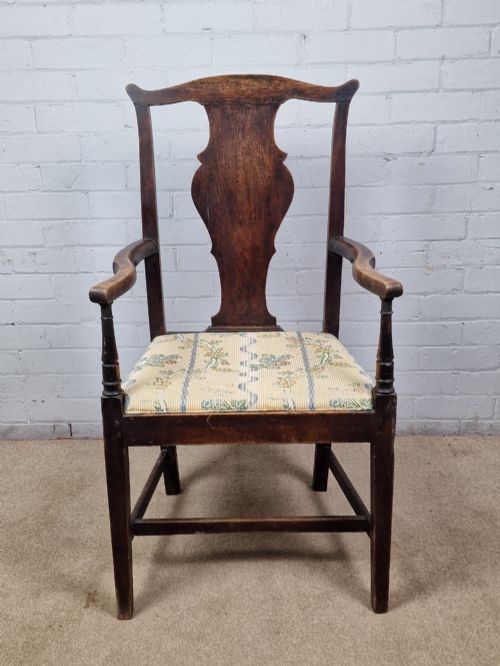
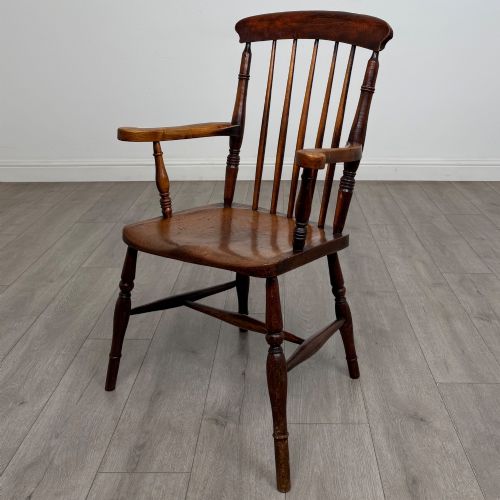


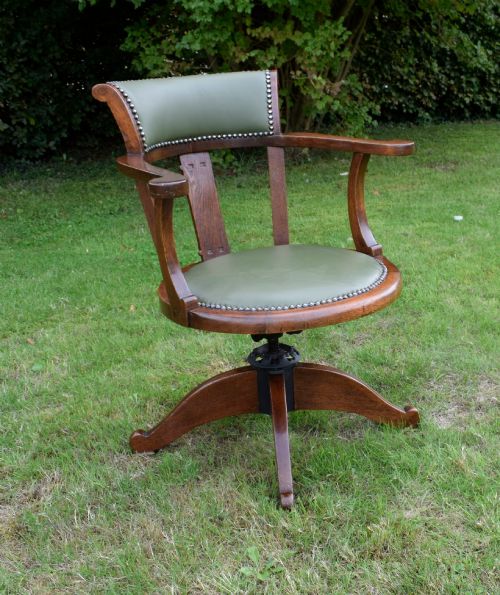
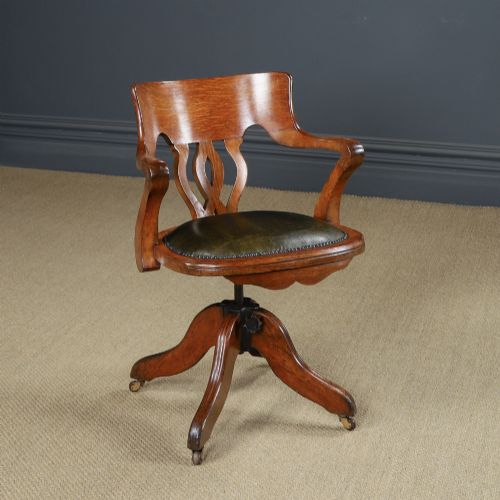
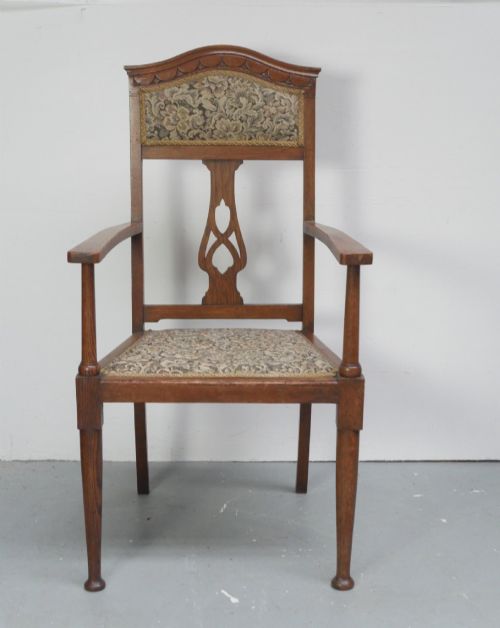
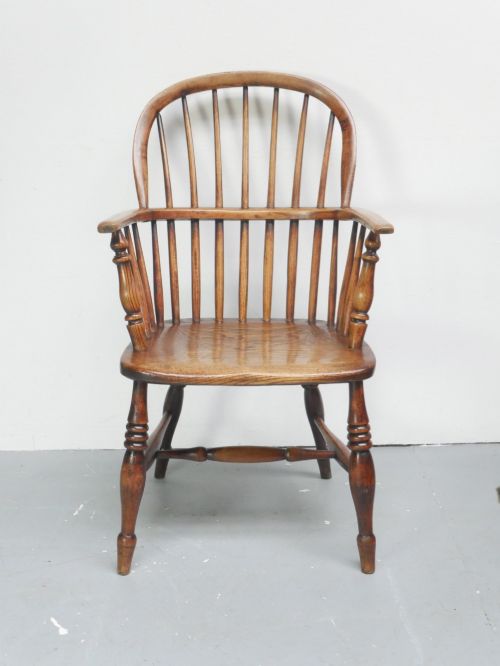
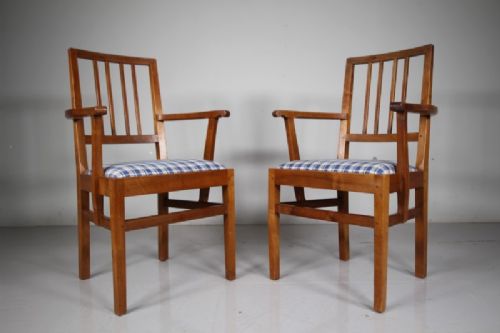
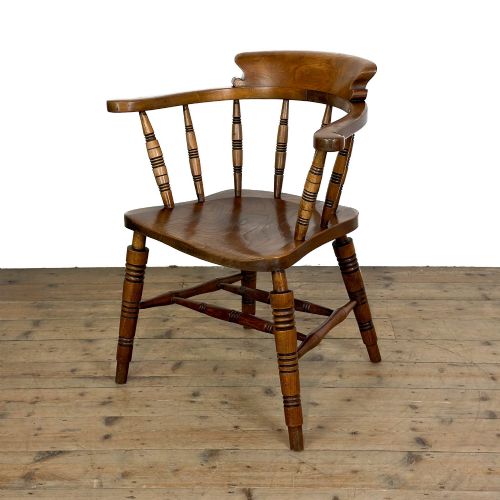
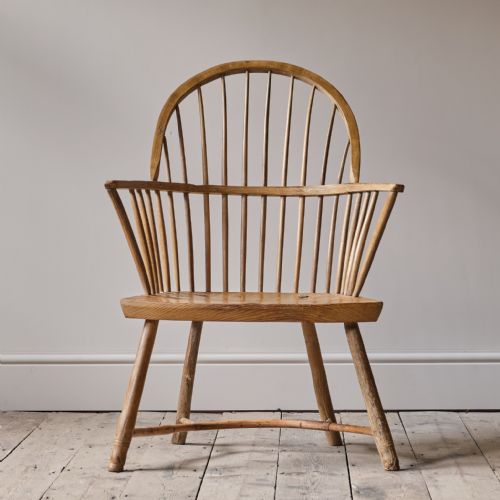
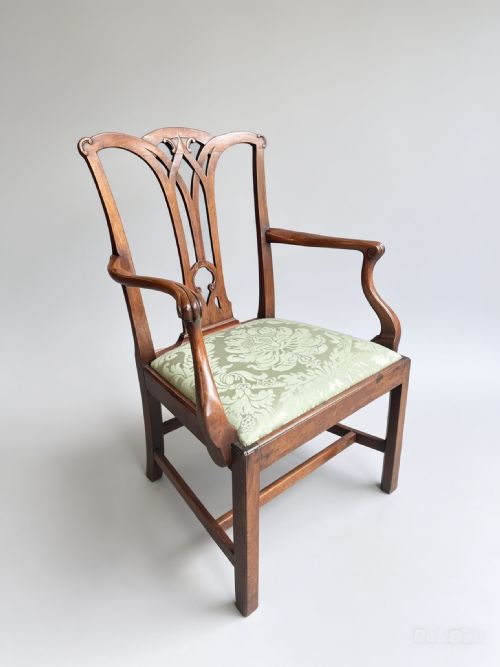
Vintage Oak Desk Armchair
A vintage oak desk armchair is a sturdy work seat that brings character and history to a study, and these pieces are built to last.
Vintage Oak Desk Armchair
A vintage oak desk armchair combines the robust utility of a working seat with the rich warmth of seasoned timber. When you search for this phrase, you find pieces designed for offices, studies, and libraries, often featuring swivel mechanisms, castors, or solid timber frames.
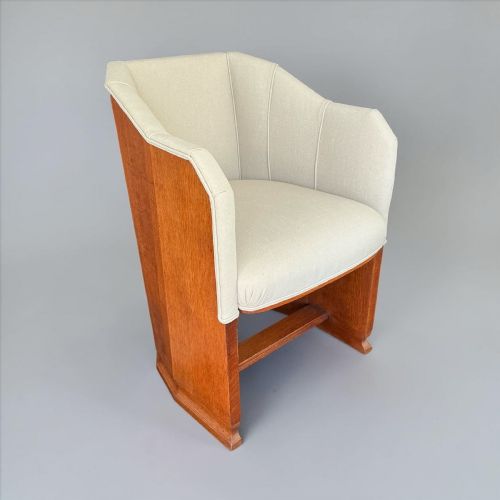
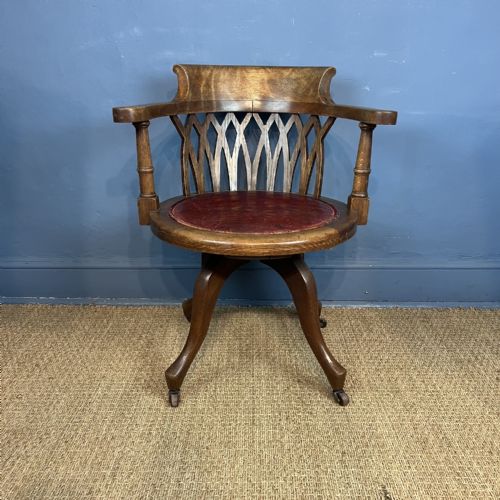
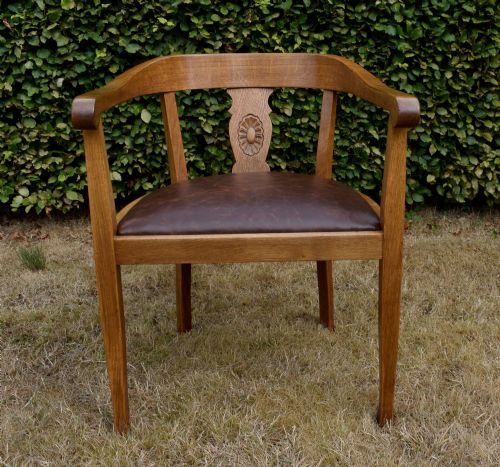
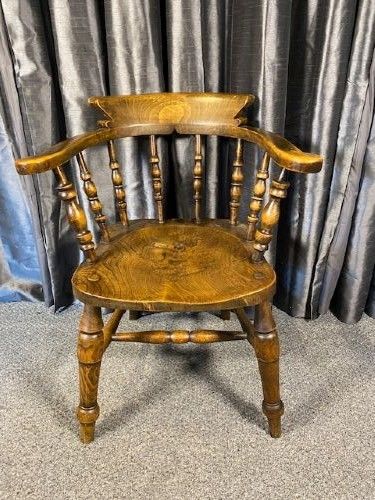
The selections available span from late Victorian and Edwardian examples to 1930s designs, reflecting changes in office comfort and domestic workspace. You will frequently encounter revolving office chairs, smoker's bows, and sturdy captains chairs originating from English workshops.
Many of these armchairs retain their original working hardware, such as iron spindle columns or brass castors, while others show the simpler lines of Arts and Crafts production. Their forms are dictated by function, offering supportive curved backs and generous elbow room for daily use.
Materials and construction
Solid oak forms the primary structural timber across these listings, valued for its durability and prominent grain pattern. Makers frequently combined this with secondary woods like elm, ash, and beech for bentwood components or spindle backs.
Upholstery materials include supple leather, durable fabric, and woven cane, fixed with traditional brass studding or cord work. Metal components in iron and brass appear in the swivel and tilt mechanisms of early twentieth-century office chairs.
Joinery methods rely on sturdy pegged mortise and tenon joints, steam bending for curved hoop backs, and turned spindles. These techniques ensure the frames remain rigid despite the twisting forces of swivel bases and regular daily sitting.
A pair of revolving armchairs originating from P & O passenger ships proves that early twentieth-century travellers expected proper desk seating at sea.
Distinctions in quality
The distinction between standard utility seating and finer workshop production lies in the handling of the timber and the sophistication of the mechanical elements. Higher quality examples feature carefully selected quarter-sawn oak with prominent medullary rays and finely turned spindles.
Mechanical complexity separates mass-produced office seating from superior designs, with smooth-operating swivel and tilt mechanisms indicating higher grade manufacture. Maker attribution, such as stamps from notable cabinetmakers, elevates the standing of an individual piece.
The integrity of the original construction and the preservation of authentic surface patination dictate the desirability of each chair. Unaltered frames with deep, natural wax finishes sit at the top of the range compared to heavily restored examples.
Edward Barnsley·S&H Jewell
The Vintage Oak Desk Armchair Glossary
- Smoker's Bow
- A low-backed Windsor-style armchair with a turned spindle gallery, frequently used in country houses and offices. These chairs offer a comfortable, rounded elbow rest for seated tasks.
- Swivel Chair
- A seat mounted on a central pivot column that allows the user to turn through a full circle. Early twentieth-century versions often incorporate a tilting mechanism operated by a central screw.
- Captains Chair
- A sturdy wooden armchair featuring a rounded continuous backrail supported by vertical spindles. The design provides robust support for long hours at a desk or table.
- Hoop Back
- A single piece of timber steam-bent into a continuous curve to form the back and armrests of a chair. This technique provides inherent structural strength and a smooth line.
- Arts and Crafts
- A design movement prioritising traditional craftsmanship, visible construction, and simple forms over mass-produced ornamentation. Pieces from this tradition often display exposed joinery and hand-finished timber.
Vintage Oak Desk Armchair: Frequently Asked Questions
Are these chairs comfortable for daily computer work?
Many vintage oak desk armchairs are surprisingly supportive due to their generously proportioned seats and ergonomic curved backrails. Models with swivel and tilt actions offer added flexibility for modern workspaces.
However, seat heights on older chairs can sit lower than contemporary standards, so checking measurements against your desk is advisable before regular use.
How do I care for the leather upholstery?
Original leather benefits from occasional treatment with a neutral leather balm or wax to prevent drying and cracking. Keeping the surface clean from dust preserves the natural finish accumulated over decades.
Avoid placing these chairs near direct heat sources or in strong sunlight, which can cause the hide and timber to dry out prematurely.
How can I tell a Victorian chair from an Edwardian one?
Victorian examples tend to feature heavier proportions, darker finishes, and more elaborate turned members or Gothic Revival influences. They often prioritise solid mass and traditional framing.
Edwardian and early twentieth-century designs frequently introduce lighter oak tones, simpler lines, and more complex mechanical hardware for office environments.
Can I use a swivel desk chair on wooden floors?
Original metal or brass castors on vintage swivel chairs can mark delicate wooden flooring if rolled frequently. Using a discreet protective mat beneath the chair prevents potential scratching.
Alternatively, ensure the castors are clean and free from grit that might damage polished surfaces during movement.