



Wooden Letter Organiser
A wooden letter organiser sorts your daily post with period charm, bringing nineteenth-century utility directly to the modern desktop.
Wooden Letter Organiser
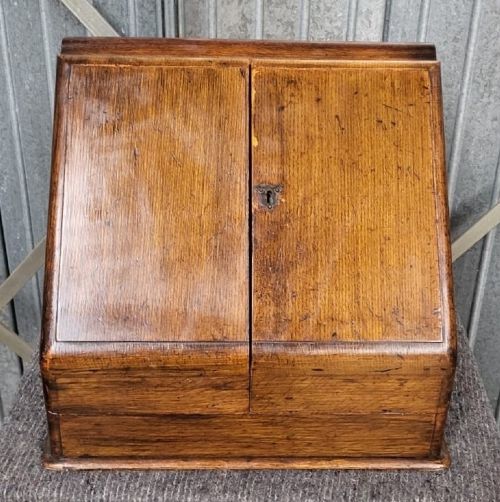
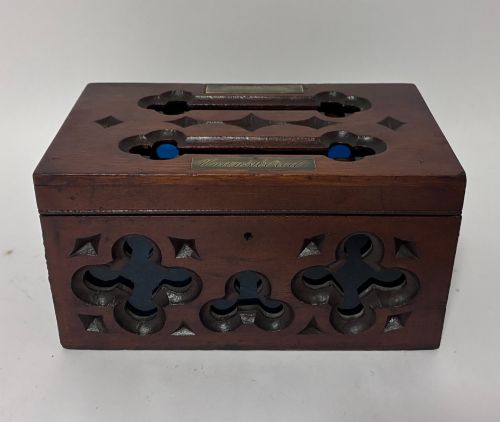
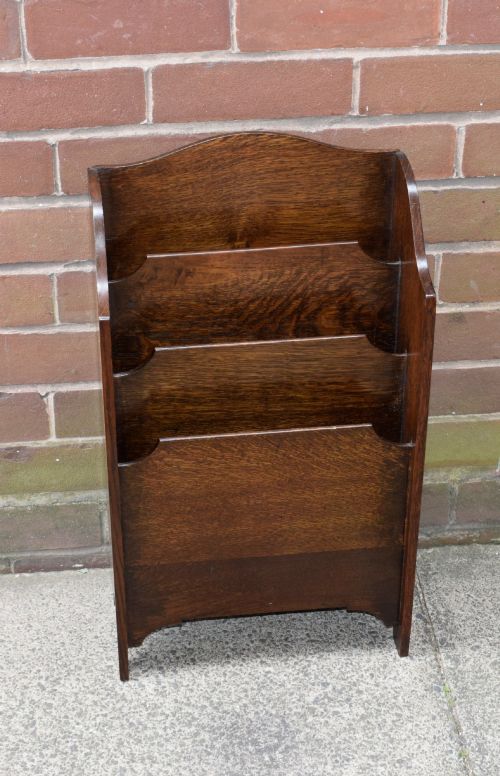
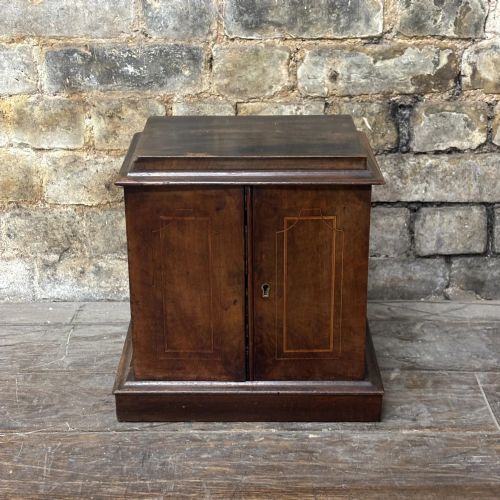
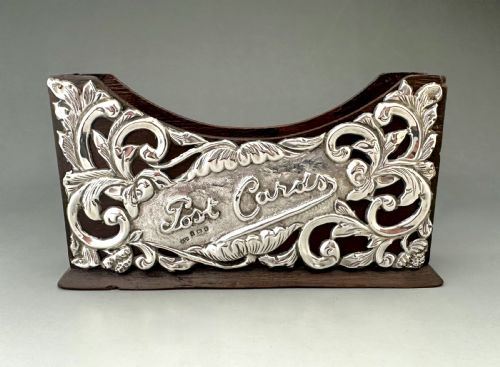
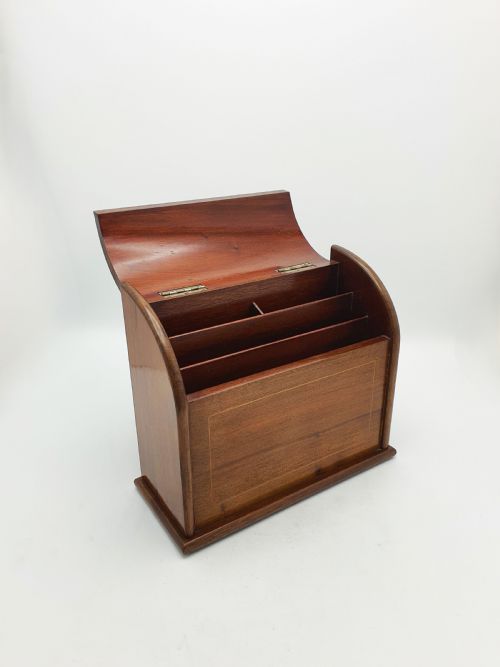
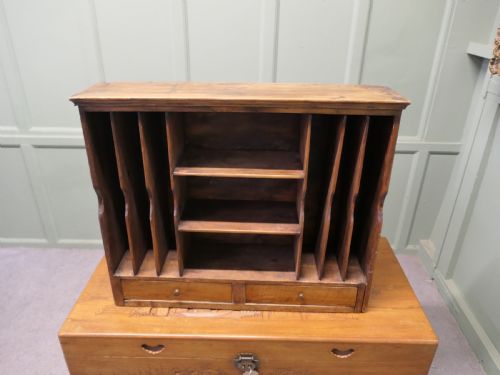
A wooden letter organiser stands on the desk or mounts to the wall to keep correspondence and papers neatly sorted. Buyers seeking a wooden letter organiser encounter various period desk accessories, from stationery cabinets and correspondence boxes to simple letter racks and desk tidies.
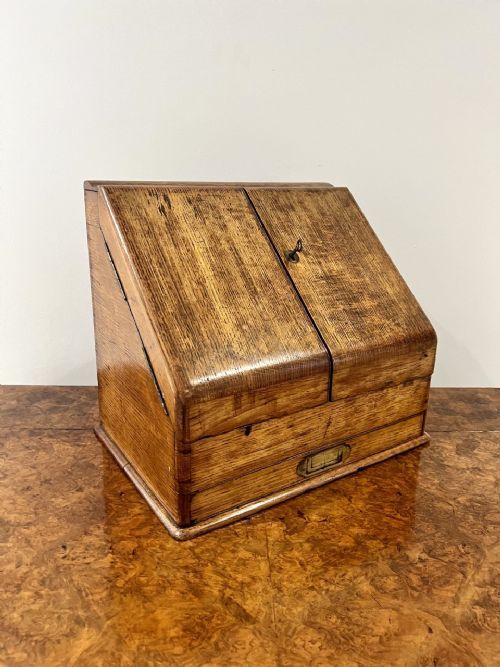
The pieces on this page span the nineteenth and early twentieth centuries, covering the Victorian and Edwardian eras. Oak and mahogany appear most frequently, shaped into hinged boxes, sloping cabinets, and open racks designed for domestic and office use.
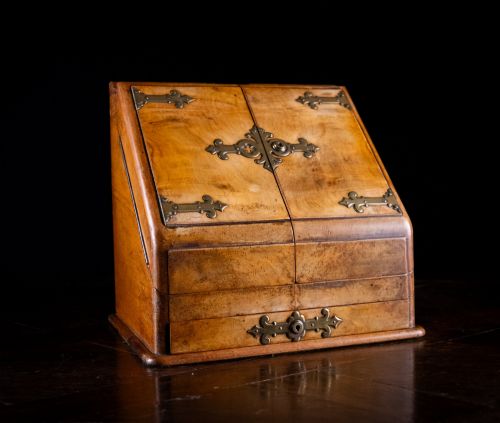
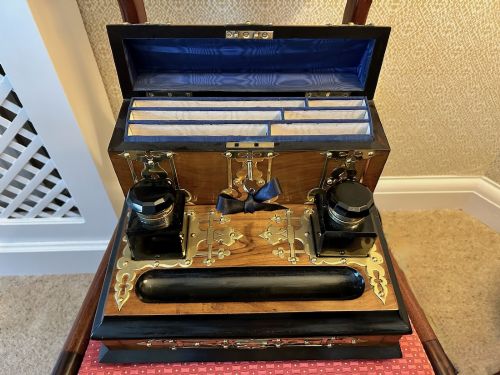
Makers produced these desktop pieces to handle the growing volume of mail and paperwork in period homes and businesses. Surviving examples range from plain utilitarian country house boxes to highly decorative cabinets fitted with glass ink bottles and brass mounts.
Materials and construction
Cabinet makers utilised hardwoods such as oak, mahogany, walnut, and rosewood to build these organisers, often selecting quartersawn oak for its durability and prominent grain. Decorative details include boxwood stringing, marquetry inlay, and carved motifs characteristic of the Arts and Crafts movement.
Wooden Letter Organiser Retail Price Guide 2026
Typical asking prices for wooden letter organiser among the pieces listed under this phrase on Sellingantiques today, from the lower quarter to the upper quarter. They describe what is for sale here now, not the wider market.
Some Victorian letter boxes amusingly feature dual slots marked Answered and Unanswered to shame the disorganised correspondent.
Distinctions in quality
The division between standard office furniture and high-end desk accessories rests on timber selection and joinery refinement. Superior examples employ choice veneers, finely figured walnut or coromandel, and precise dovetail joints rather than simple glued or nailed construction.
Detailing sets the finest items apart, seen in hand-cut marquetry, bespoke brass mounts, and fully fitted interiors complete with original glass inkwells and working locks. Maker labels or attribution to established workshops elevate an organiser from a workshop piece to a collectable object.
Edmund Nye·Gillows of Lancaster·F Waller
The Wooden Letter Organiser Glossary
- Correspondence box
- A lidded box specifically designed to hold writing paper, envelopes, and incoming letters upon a desk.
- Standish
- A heavy desk stand that combines an inkwell, pen tray, and letter holder or sand box in a single piece.
- Pigeon holes
- Internal vertical compartments within a cabinet or desk used for sorting documents and letters into categories.
- Marquetry
- The art of applying decorative pieces of veneer to a structure to form intricate geometric or floral patterns.
- Tunbridge ware
- Small wooden items decorated with precise mosaic patterns formed from thousands of tiny tinted wood blocks.
Wooden Letter Organiser: Frequently Asked Questions
What is a wooden letter organiser used for?
These pieces were originally created to hold incoming correspondence, envelopes, and writing paper in an orderly fashion on a desk or table.
Today, they serve the exact same function for modern post, bills, and stationery, keeping flat surfaces tidy while adding historic character to a room.
How do I date a wooden letter organiser?
Dating relies on observing the combination of timber, style, and hardware, such as the heavy brass mounts typical of the Victorian period or the simpler geometric lines of the Arts and Crafts movement.
Internal fittings like adjustable dates, ceramic inkwells, and maker labels also help narrow down the decade of manufacture.
Are these organisers meant for desks or walls?
Most examples sit freely upon a desk, table, or sideboard as freestanding boxes, cabinets, or open racks.
Certain models feature integrated hanging brackets specifically designed for wall mounting in hallways or studies.