



Antique Mahogany Stationery Holder
An antique mahogany stationery holder keeps correspondence organised with timeless style.
Antique Mahogany Stationery Holder
An antique mahogany stationery holder encompasses desk tidies, letter racks, and stationery cabinets designed to keep correspondence orderly. These pieces serve as practical desk accessories that bring period character to a workspace.
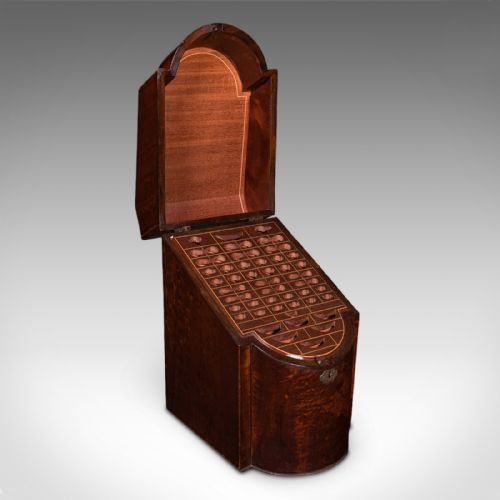
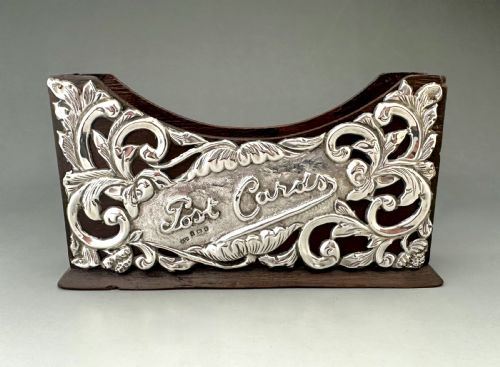
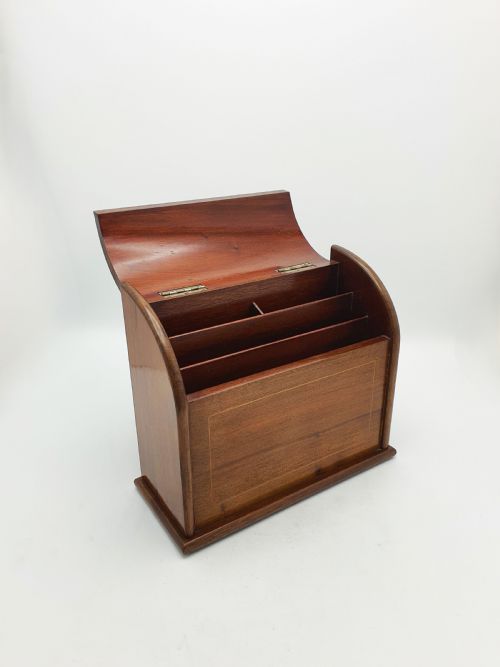
The pieces appearing on this page span several eras including Georgian, Victorian, and Edwardian periods. Examples range from hinged-lid desk tidies to larger stationery cabinets and converted knife boxes.
Origins include English and French workshops, utilising rich timber and thoughtful compartments for letters and papers.
How they were made
Cabinetmakers constructed these pieces primarily from solid mahogany and hardwood, sometimes incorporating boxwood or wood inlay for decorative contrast. Surfaces often feature polished finishes that highlight the natural grain of the timber.
Antique Mahogany Stationery Holder Retail Price Guide 2026
Typical asking prices for mahogany stationery holder among the pieces listed under this phrase on Sellingantiques today, from the lower quarter to the upper quarter. They describe what is for sale here now, not the wider market.
Listings feature items spanning the Georgian, Victorian, and Edwardian periods, constructed from mahogany, hardwood, brass, and bone.
What varies in quality
Quality in an antique mahogany stationery holder depends largely on the crispness of the inlaid detail and the selection of timber figures. Superior pieces display thoughtful proportions and harmonious integration of brass or silver mounts.
Construction methods also distinguish standard utility pieces from finer items, particularly in the smoothness of hinged mechanisms and the precision of internal dividers for letters.
The Antique Mahogany Stationery Holder Glossary
- Mahogany
- A durable hardwood prized for its rich reddish-brown colour and fine grain. Cabinetmakers utilised this timber extensively for quality desk accessories throughout the eighteenth and nineteenth centuries.
- Stationery holder
- A desktop receptacle designed to hold letters, envelopes, and paper supplies. Forms range from open letter racks to enclosed boxes and cabinets.
- Desk tidy
- A compartmentalised desk accessory used to organise writing implements and correspondence. These pieces often feature tiered sections or hinged lids.
- Inlay
- A decorative technique where contrasting materials such as boxwood are fitted into the surface of the primary wood. This method creates geometric patterns or pictorial motifs.
- Letter rack
- An open framework designed to display mail upright for easy sorting. They frequently incorporate brass mounts and dividers.
Antique Mahogany Stationery Holder: Frequently Asked Questions
What is an antique mahogany stationery holder used for?
These pieces were designed to organise letters, envelopes, and writing paper on a desk or table. They keep correspondence sorted and upright for daily use.
Today, they serve the same practical purpose while adding traditional character to modern workspaces and studies.
How do I tell a Georgian stationery holder apart from an Edwardian one?
Georgian pieces often originate from converted knife boxes or simple utilitarian forms with deep mahogany tones and minimal embellishment. Edwardian examples tend to feature lighter inlaid details, delicate brass mounts, and varied compartment layouts.
Examining the internal construction and joinery helps determine the manufacturing period of each desk accessory.
Were all stationery holders made in England?
While many pieces originate from English workshops, a significant number come from French makers. French examples frequently incorporate distinctive brass gallery rails and mounts.
Both English and French pieces utilise high-grade mahogany and hardwood construction.
Can I use a knife box as a stationery holder?
Georgian knife boxes were frequently adapted or repurposed as stationery boxes and letter holders due to their suitable sloping lids and compartmentalised interiors. These converted items function effectively for holding modern correspondence.
Such dual-purpose pieces reflect the resourceful nature of period storage solutions.