




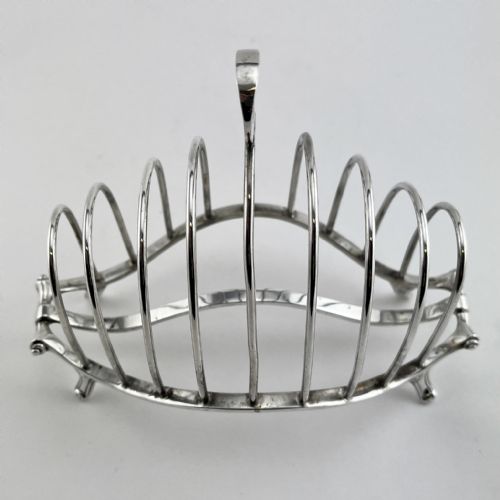

Edwardian Letter Holder
An edwardian letter holder keeps correspondence orderly on a desk, combining practical utility with the fine craftsmanship of the period.
Edwardian Letter Holder
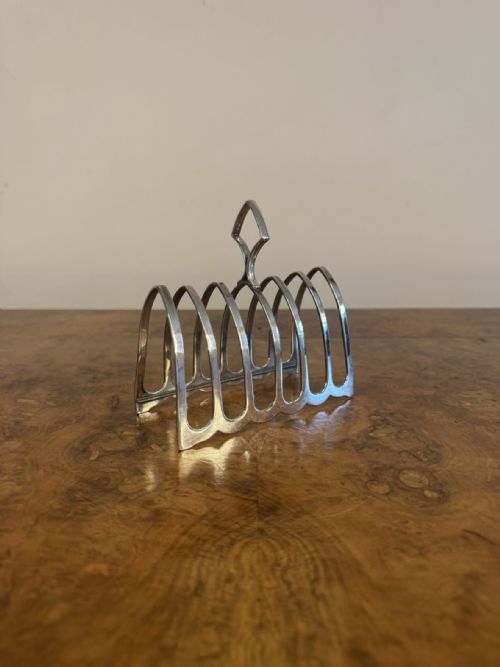
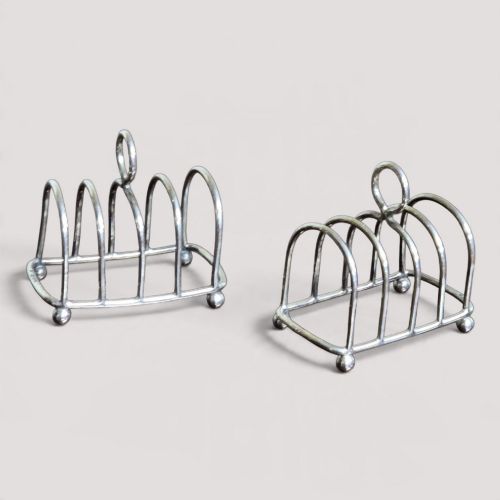
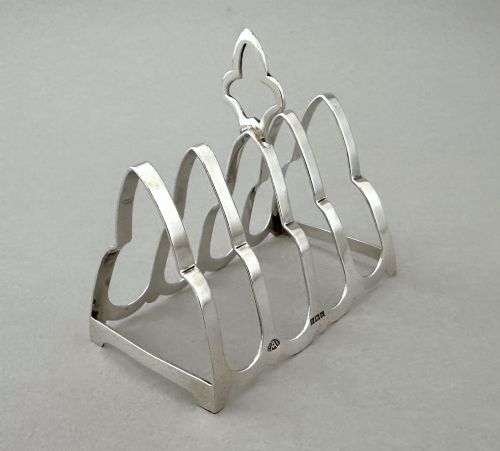
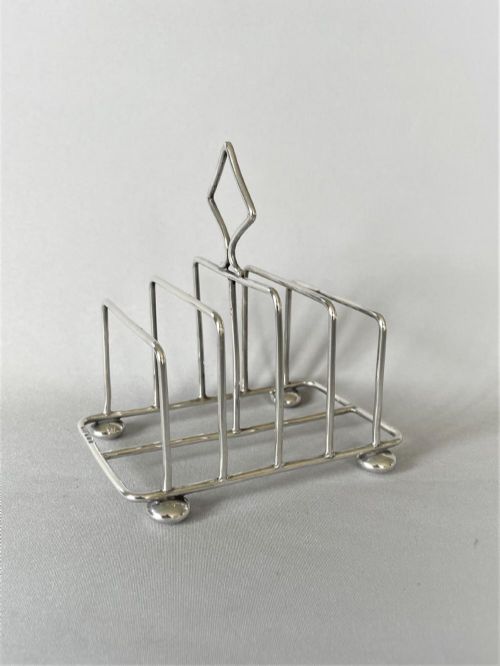
An edwardian letter holder is a desk accessory designed to sort and display correspondence, incoming mail, and notes. The pieces found on this page span several forms, including desktop clips, stationery cabinets, and tiered racks, originating predominantly from the Edwardian period alongside Victorian and later twentieth century examples.
Beyond standard upright racks, the inventory includes novelty pieces shaped like gloves, figures, and sports equipment, reflecting the playful design tastes of the era. Desk tidies and standishes also appear, combining letter storage with compartments for inkwells and pens.
How they were made
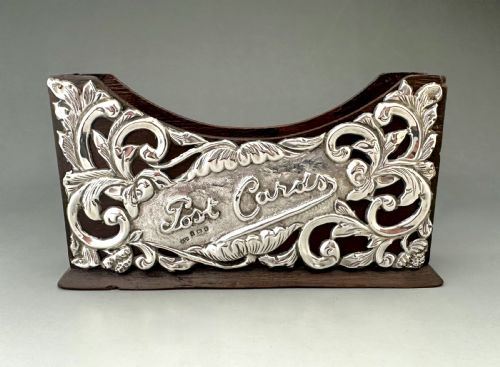
Metals such as sterling silver, brass, and copper were cast, pierced, and soldered to form rigid frames, clips, and mounts. Silversmiths utilised hallmarks to record assay offices and dates, while brass and copper components often received polished or patinated finishes.
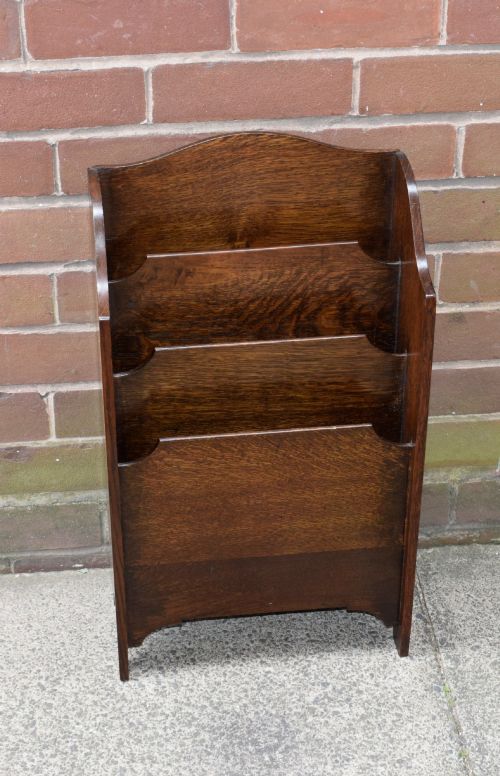
Woods including oak, mahogany, and satinwood were selected for cabinetry, then carved, inlaid, and polished to create stationery boxes and tiered racks. Artisans also incorporated organic materials like tortoiseshell and papier-mâché, securing them to metal bases or wooden carcasses with traditional adhesives and tiny pins.
Edwardian Letter Holder Retail Price Guide 2026
Typical asking prices for edwardian letter holder among the pieces listed under this phrase on Sellingantiques today, from the lower quarter to the upper quarter. They describe what is for sale here now, not the wider market.
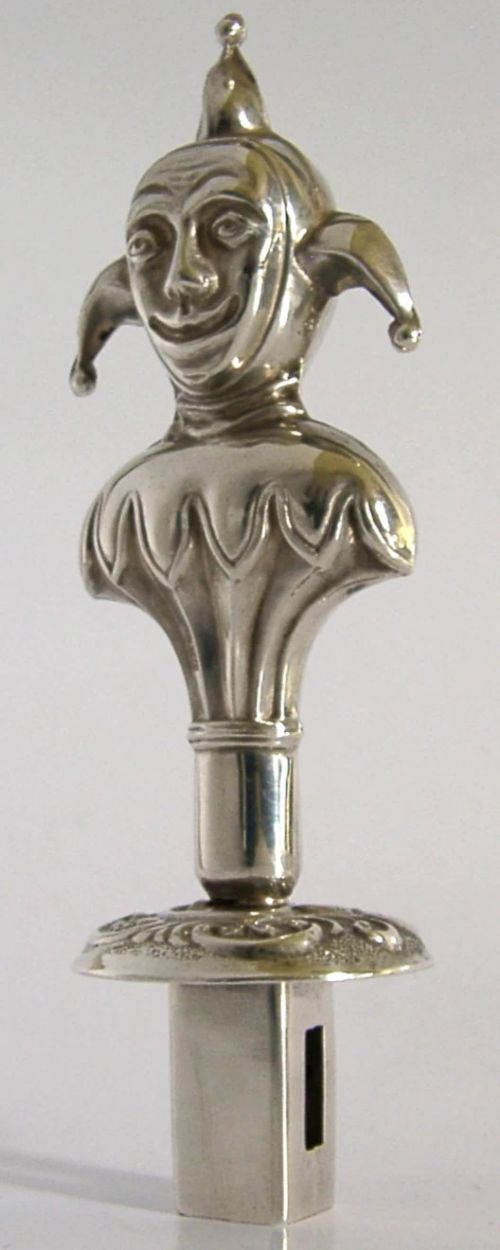
A jester sits on a silver wax sealing holder from 1908, ready to stamp correspondence with a touch of theatrical mischief.
What varies in quality
The standard of an edwardian letter holder rests upon the crispness of its metal casting, the precision of its woodwork, and the integrity of applied decorative elements. Pieces featuring hand-pierced silver, detailed novelty subjects, or intricate marquetry display a higher grade of workshop execution than mass-produced utilitarian items.
Material combination also distinguishes finer examples, particularly where translucent tortoiseshell is backed with metallic foil or where multiple timber species are utilised in a single desk tidy. Preservation of original surface finishes and complete mounts elevates the standing of any piece encountered on the page.
Mappin and Webb·Sampson Mordan·Christopher Dresser·Hukin and Heath
The Edwardian Letter Holder Glossary
- Standish
- A desk set or tray designed to hold writing materials such as inkwells, sanders, and pens alongside correspondence. These ink and paper holders sat centrally on writing tables in formal libraries.
- Stationery cabinet
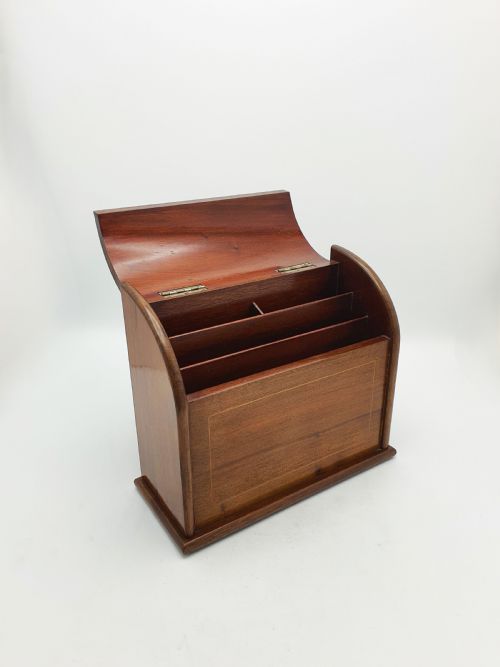
- An enclosed wooden box with hinged doors or lids, opening to reveal pigeonholes and slots for paper and envelopes. They protect writing paper from dust and light.
- Letter clip
- A spring-loaded desktop device utilising a hinged lever to secure notes and incoming mail. Silver and brass examples often feature decorative novelty motifs.
- Hallmark
- A series of stamped marks on precious metals indicating the maker, assay office, standard of purity, and year of testing. British silver items frequently display these official symbols.
- Papier-mâché
- A composite material made from paper pulp or layers of paper mixed with glue, then moulded and lacquered. It provided a smooth, dark surface suited to painted or inlaid decoration.
Edwardian Letter Holder: Frequently Asked Questions
What is an edwardian letter holder?
An edwardian letter holder is a desktop accessory designed to hold mail and stationery upright. These pieces include clips, wooden racks, and compartmentalised boxes made during the early twentieth century.
They reflect the formal correspondence habits of the period, keeping incoming letters organised and accessible on a writing desk or library table.
How were silver letter clips used?
Silver letter clips sat on writing desks to secure daily post, bills, and important notes beneath a spring-loaded metal jaw. The mechanism allowed quick insertion and removal of single sheets.
Many incorporated novelty designs, such as hands, animals, or sporting equipment, adding decorative character to the functional office desk.
What materials are common?
The listings show a frequent combination of sterling silver, brass, and oak, alongside mahogany, tortoiseshell, and silver plate. Metal components were often paired with wooden bases or leather panels.
Craftsmen also utilised copper, satinwood, and lacquered papier-mâché to create varied textures and visual contrasts across different desk accessories.
How do I care for wooden desk tidies?
Wooden desk tidies and stationery cabinets require stable room humidity and protection from direct sunlight to prevent timber splitting or fading. Gentle dusting with a dry cloth preserves the polished surface.
Avoid applying modern liquid polishes directly onto antique wood or tortoiseshell surfaces, as traditional finishes can be sensitive to chemical treatments.