

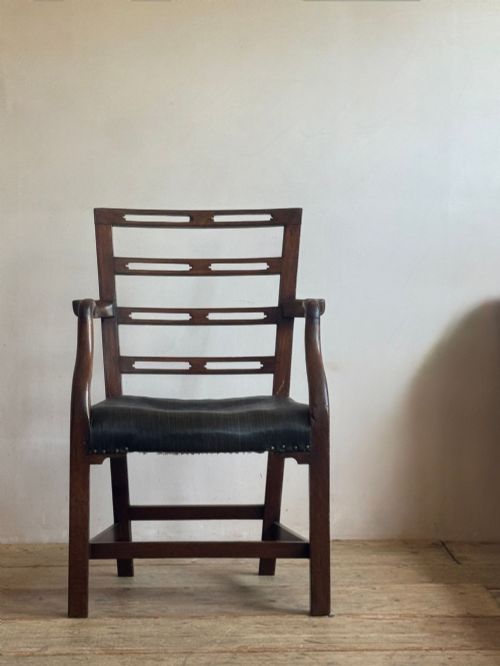
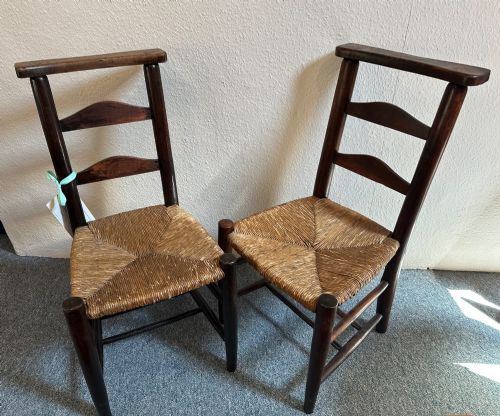


Wooden Ladder Chair
A wooden ladder chair brings centuries of vernacular seating craft into modern rooms through ladderbacks, rush seats and sturdy timber frames.
Wooden Ladder Chair
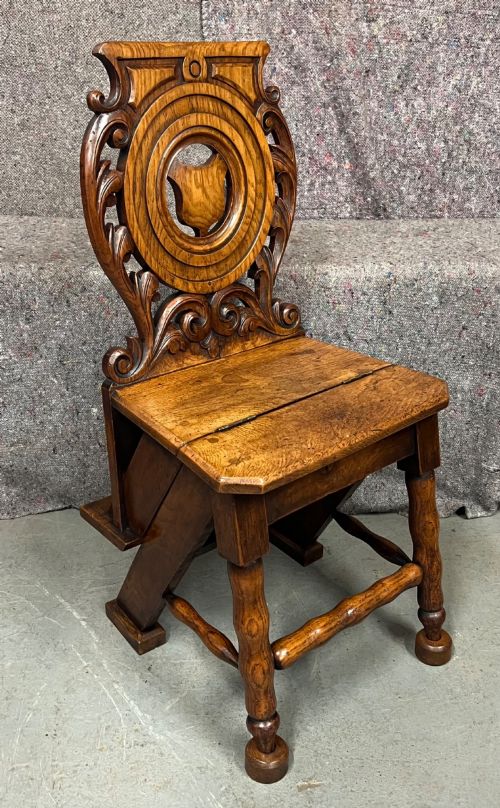
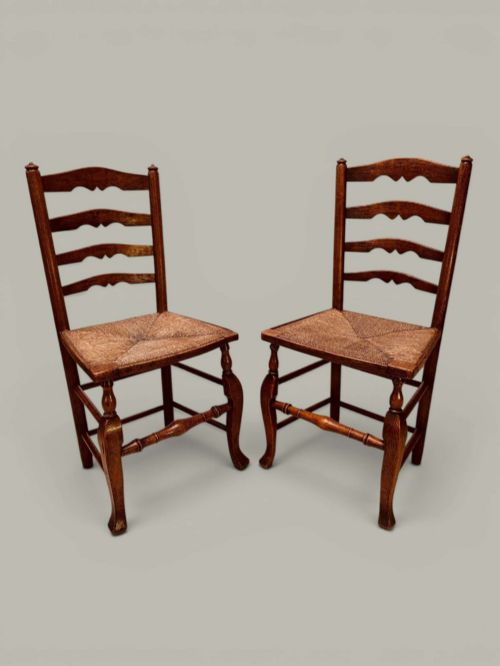
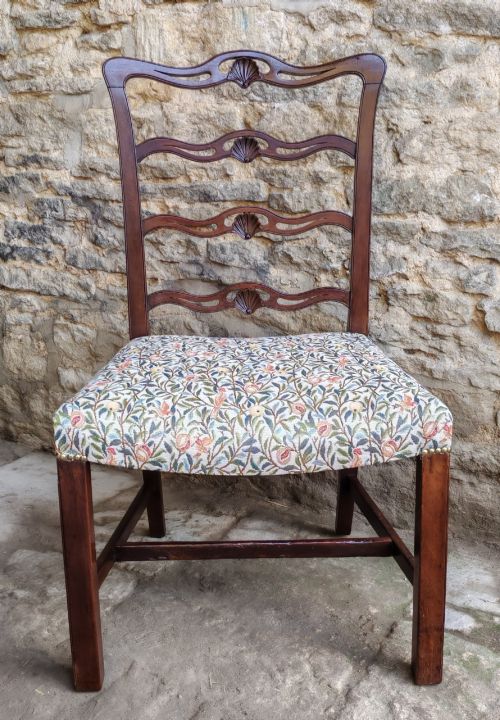
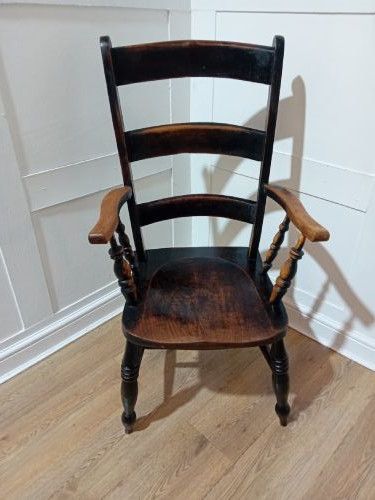
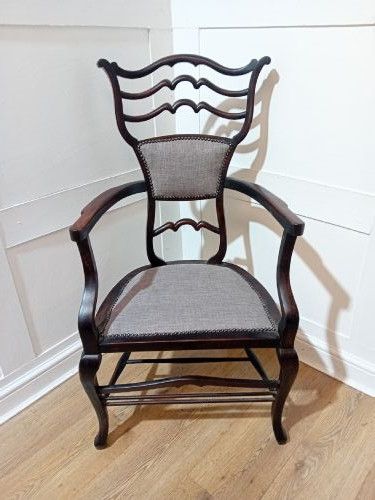
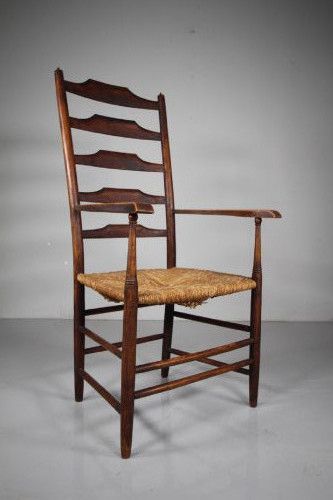
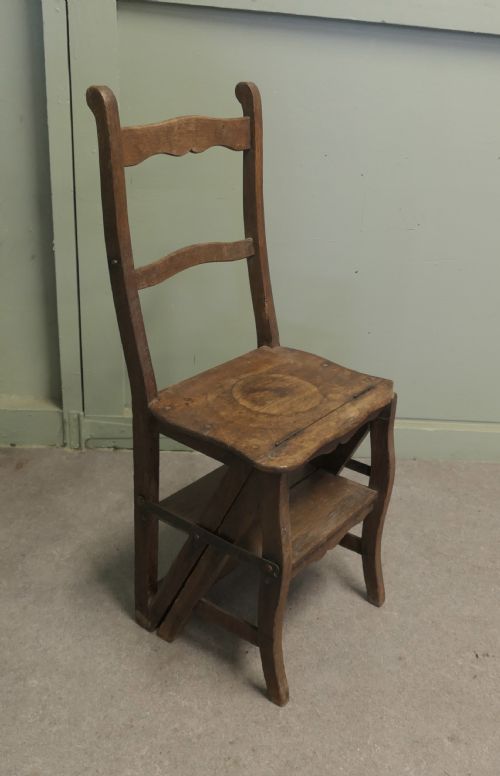
A wooden ladder chair is defined by horizontal slats forming the backrest above a woven or solid seat, spanning forms from country dining chairs to metamorphic library steps. These pieces range from simple regional ash and oak vernacular chairs to formal mahogany Georgian designs and Arts and Crafts workshop productions.
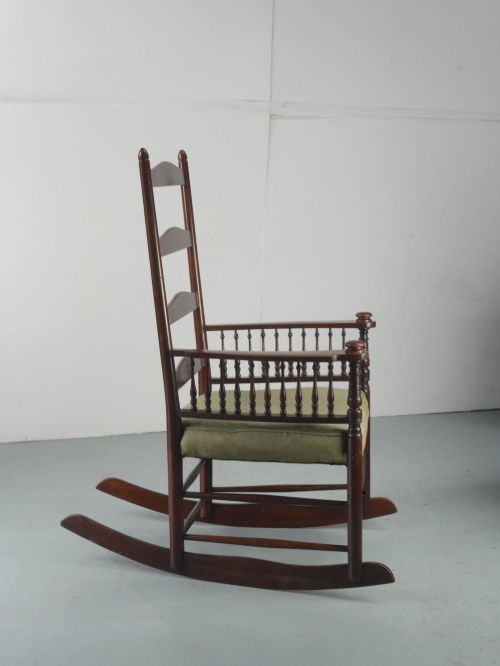
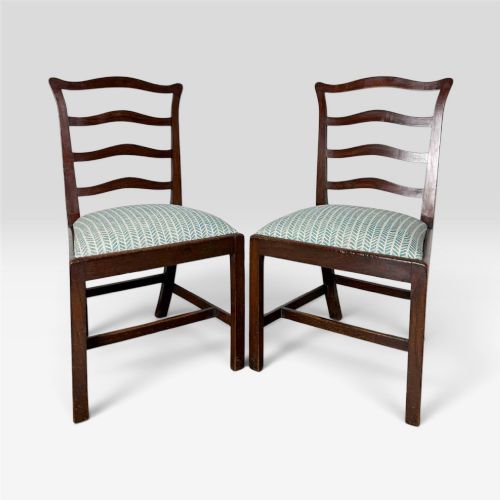
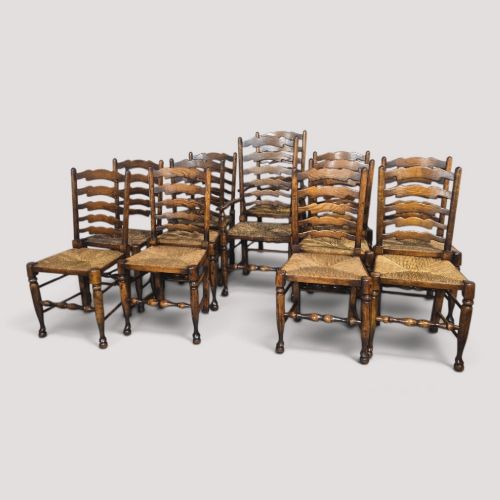
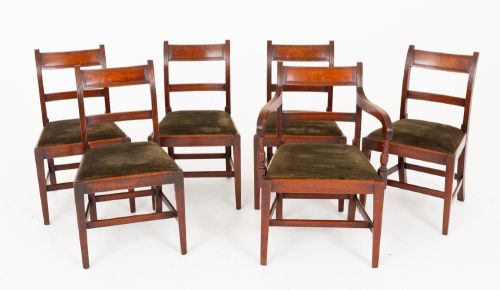
The selections on this page concentrate heavily on 19th-century country ladderbacks alongside Georgian mahogany seating and early 20th-century Arts and Crafts examples. Buyers frequently encounter rush-seated dining sets, rocking chairs, and metamorphic step chairs that convert for library use.
Regional variations appear across English country styles, French provincial models, and American slat backs, showing how local timber dictated rural furniture production. Forms stretch from single side chairs to large dining sets and children's high chairs.
How they were made
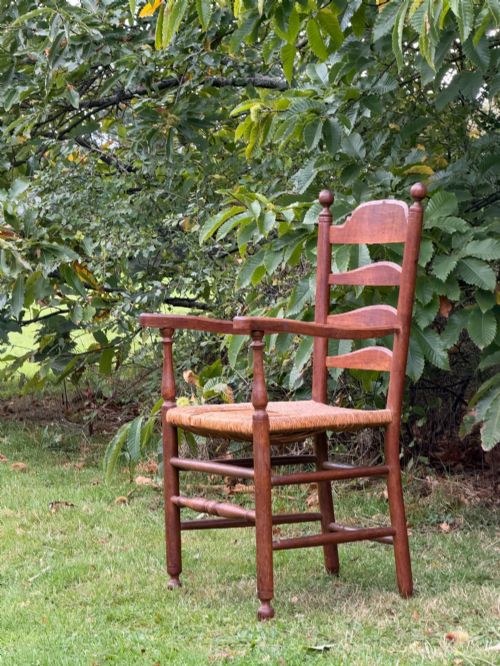
Makers utilised native timbers like oak, ash, elm, and mahogany for the structural frames, turning spindles on lathes and shaping slats by hand. Rush seating forms the primary woven element, dried and twisted into cord before being hand-threaded across chair rails.
Joinery relied on traditional mortise and tenon joints secured with pegs, allowing chairs to withstand daily domestic strain without metal fasteners. Painted finishes in regional workshops frequently protected softer woods like ash and elm from damp farm environments.
Wooden Ladder Chair Retail Price Guide 2026
Typical asking prices for wooden ladder chair among the pieces listed under this phrase on Sellingantiques today, from the lower quarter to the upper quarter. They describe what is for sale here now, not the wider market.
Listings feature oak, ash, elm, and mahogany frames alongside traditional rush and fabric seating across multiple centuries.
What varies in quality
The integrity of the frame construction and the tightness of the rush weaving determine the baseline quality of a wooden ladder chair. Original surface finishes, whether aged patina or early paint, separate untouched vernacular pieces from heavily altered examples.
Proportion and wood selection elevate formal Georgian mahogany chairs above standard utility furniture, while maker attribution adds distinction to Arts and Crafts workshop pieces. Even within utilitarian country sets, uniform slat shaping and balanced proportions indicate superior regional carpentry.
Philip Clissett·Lawrence Neal·Liberty and Co
The Wooden Ladder Chair Glossary
- Ladderback
- A chair back featuring multiple horizontal wooden slats resembling the rungs of a ladder. These slats are often curved to fit the sitter's spine.
- Rush seat
- A woven seat made from dried marsh grasses twisted into cords and wrapped around the seat rails. This technique creates a resilient and flexible surface.
- Vernacular furniture
- Everyday domestic items built by local craftsmen using regional materials and traditional styles. These pieces prioritize function and local utility over high-style court design.
- Metamorphic furniture
- Pieces designed to transform into alternative objects, such as a chair that unfolds into library steps. This ingenious double-purpose design was popular in larger Georgian and Victorian homes.
- Slat back
- A regional American variant of the ladderback chair featuring wide horizontal wooden slats. These chairs typically utilise turned posts and split-oak seats.
Wooden Ladder Chair: Frequently Asked Questions
How do I date a wooden ladder chair?
Dating relies on examining wood species, turning styles on the upright posts, and the method of construction in the joints. Regional variations and tool marks left by hand planes offer further clues to the decade of manufacture.
Earlier pieces often display pegged mortise and tenon joints and native woods like ash or oak, while later 19th-century examples may incorporate machine-turned components.
Are rush seats durable for daily use?
Traditional rush seating is surprisingly tough and flexible, handling everyday sitting comfortably for decades when kept away from excessive moisture. The twisted marsh grass tightens under weight and supports the body well.
To preserve the weave, avoid placing these chairs in damp rooms or exposing them to direct liquid spills that weaken the dried plant fibres.
Can I use these chairs around a modern dining table?
Country ladderbacks and mahogany dining chairs fit easily into contemporary dining spaces, offering strong vertical lines and natural textures. Mixing different regional styles creates an eclectic dining arrangement.
Check the seat height against your table clearance before purchasing sets, as older chairs can occasionally sit slightly lower than modern standards.
What is a metamorphic step chair?
A metamorphic step chair is a dual-purpose piece that folds or pivots from a standard armchair into a set of library steps. This ingenious design allowed homeowners to reach high bookshelves without storing a separate ladder.
These pieces were especially popular in Georgian and Victorian libraries where floor space and functionality needed careful balancing.