







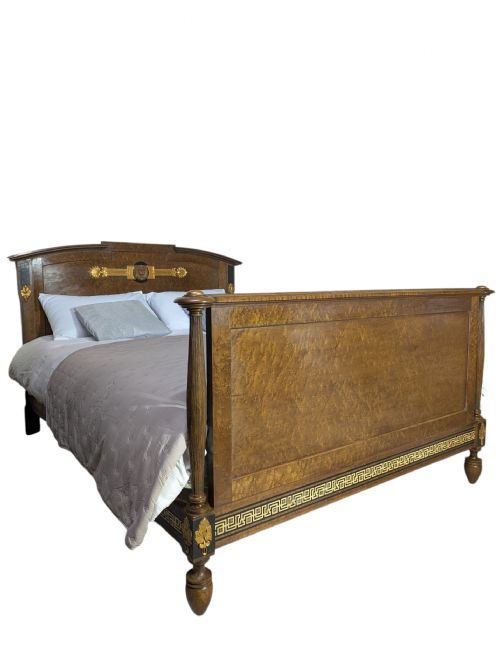

Wooden King Bed Frame
A wooden king bed frame anchors a bedroom with substantial proportions and period character, bringing warmth to a large sleeping space.
Wooden King Bed Frame
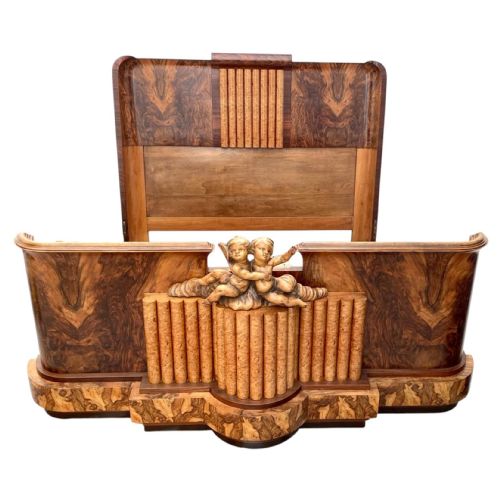
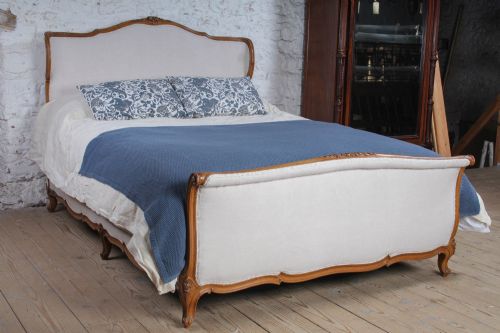
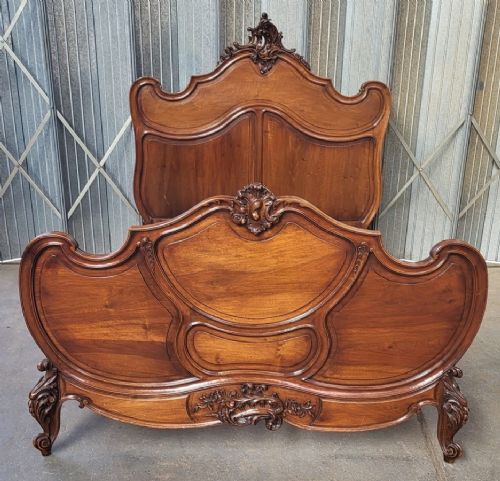
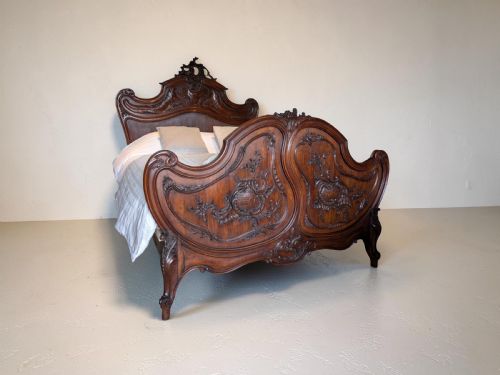
When you search for a wooden king bed frame, you encounter substantial sleeping furniture spanning the late nineteenth century into the early decades of the twentieth century. These pieces draw heavily on continental aesthetics, with French Chateau, Louis XV, Louis XVI, and Empire styles appearing frequently alongside Art Deco interpretations.
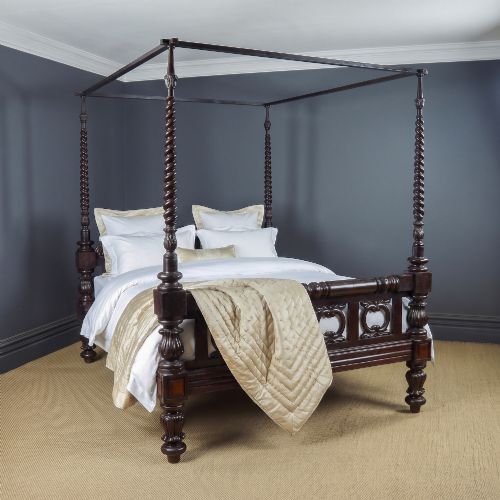
The selection here includes standard bedsteads, four poster beds, and complete bedroom suites that incorporate matching bedside cabinets. Many examples originate from French workshops, offering carved details and generous proportions suited to contemporary mattresses.
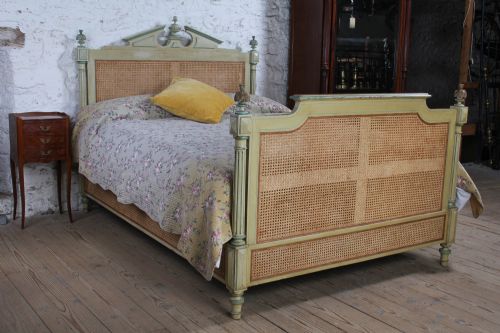
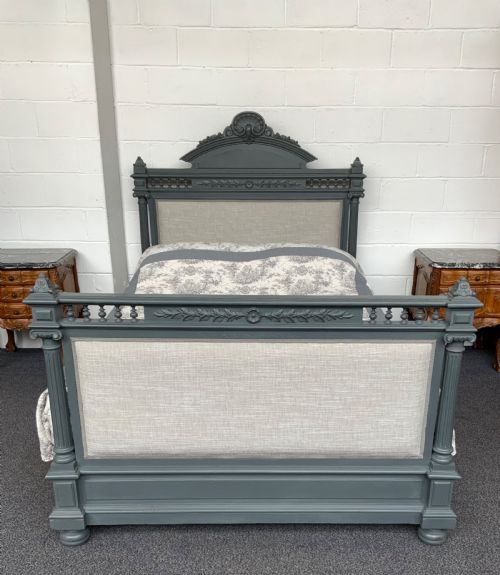
Makers utilised various timbers to achieve both rustic charm and formal elegance, resulting in frames that range from heavily carved walnut to painted finishes and cane panels. The physical scale of these items defines the bedroom, creating an immediate focal point.
Materials and construction methods
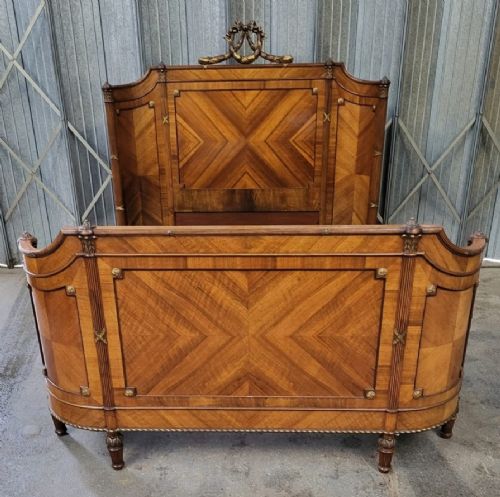
Cabinetmakers constructed these frames using solid hardwoods like walnut, mahogany, and fruitwood, often applying quarter veneers to create geometric patterns on headboards and footboards. Parquetry work also appears on select mahogany examples, demonstrating precise carpentry skills.
Decorative metal accents such as brass detailing and ormolu mounts complement the woodwork on specific continental frames. Other variations incorporate cane panelling, fabric upholstery, and painted surfaces to soften the visual impact of the timber.
Wooden King Bed Frame Retail Price Guide 2026
Typical asking prices for wooden king bed frame among the pieces listed under this phrase on Sellingantiques today, from the lower quarter to the upper quarter. They describe what is for sale here now, not the wider market.
Distinctions in construction and design
The distinction between standard production and exceptional craftsmanship rests in the depth and execution of the carving. Hand-carved walnut and detailed fruitwood parquetry require considerable labour compared to simpler moulded surfaces.
Integration of matching elements, such as bedside cabinets accompanying a main bedstead, elevates the coherence of a suite. Furthermore, the selection of secondary timbers and the precision of veneer matching reveal the original workshop standards.
The Wooden King Bed Frame Glossary
- Bedstead
- The framework of a bed, comprising the headboard, footboard, and side rails designed to support a mattress and base.
- Parquetry
- A geometric mosaic of wood pieces used for decorative effect on furniture surfaces, such as headboards.
- Ormolu
- Gilded bronze applications used as decorative mounts on fine furniture from the eighteenth century onwards.
- Caning
- Woven rattan material used to create light, open panels within headboards or footboards.
- Veneer
- A thin slice of superior wood glued to a base panel to provide a decorative exterior grain.
Wooden King Bed Frame: Frequently Asked Questions
How do I choose the right period style?
Consider the architectural background of your home when selecting between ornate Louis styles and cleaner Art Deco lines.
Heavily carved walnut pieces suit traditional spaces, while simpler painted or bleached oak versions fit neutral, contemporary interiors.
Do antique bed frames fit modern mattresses?
Many listings conform to standard king size dimensions, though older European measurements can vary slightly from contemporary standards.
Check the internal rail lengths and widths provided in individual descriptions to ensure your mattress sits securely within the wooden frame.
How do I care for antique wood?
Maintain timber surfaces by dusting with a soft cloth and avoiding direct exposure to strong sunlight or radiator heat.
Periodic application of appropriate wax preserves the patina on walnut and mahogany without building up heavy residues.
Can I dismantle these bed frames for transport?
Most antique wooden bedsteads dismantle into individual headboards, footboards, and side rails for straightforward movement and installation.
Traditional metal bolts and wooden tenons typically secure the sections together without requiring permanent adhesives.