


Wooden Home Bar Cabinet
A wooden home bar cabinet offers a proper place for spirits, bringing character and function to a room.
Wooden Home Bar Cabinet
A wooden home bar cabinet is designed for entertaining and storing drinks, appearing across several distinct periods on this page. The selection includes items ranging from the nineteenth century to the mid-twentieth century.
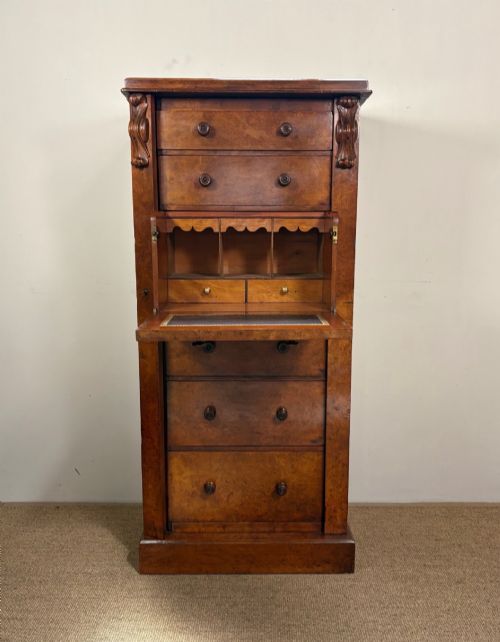
Buyers will encounter forms such as dedicated cocktail cabinets, home bars, and secretary chests adapted for service. These pieces bridge the gap between practical furniture and social focal points.
Stylistic influences span from Victorian and Gothic Revival to Queen Anne Revival and Jacobean Revival. Woods like mahogany, oak, and burr walnut dominate the construction of these items.
How they were made
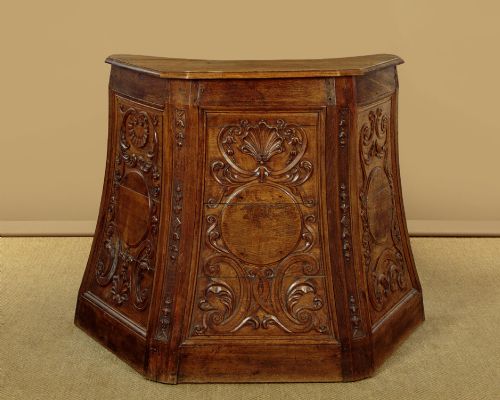
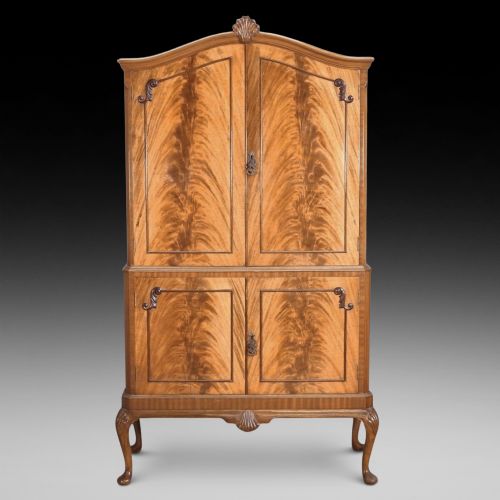
Cabinet makers utilised dense timbers such as mahogany and oak, often applying decorative veneers like burr walnut or flame walnut to the exterior surfaces. These figured veneers provided striking visual patterns on the main doors and lids.
Construction frequently incorporated carved details, particularly in revival styles like the Gothic and Jacobean interpretations. Internal fittings often included glass elements, leather surfaces, and brass hardware to complete the functional drinking space.
Listings feature oak, mahogany, and burr walnut across pieces spanning the nineteenth and twentieth centuries.
What varies in quality
Quality rests in the selection of the timber and the precision of the cabinet work, particularly in the figuring of walnut veneers. Pieces that display continuous grain patterns across the front doors show a higher level of craftsmanship.
The sophistication of the internal fittings, from original brass mounts to fitted glass shelves, separates standard items from finer examples. The integration of period revival styling also influences the overall character of the piece.
Waring & Gillows
The Wooden Home Bar Cabinet Glossary
- Burr walnut
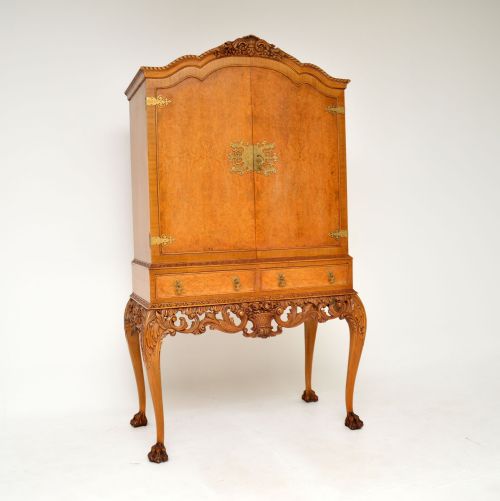
- A prized timber veneer taken from the wart-like growths on walnut trees, creating a swirling, highly decorative grain pattern. It is frequently found on the doors of twentieth-century cocktail cabinets.
- Flame walnut veneer
- A cut of walnut timber that exhibits a fiery, flame-like grain pattern across the surface. This technique highlights the natural beauty of the wood on prominent exterior panels.
- Gothic Revival
- An architectural and decorative style drawing inspiration from medieval forms, characterised by pointed arches and heavy carved details. Pieces from this movement often feature dramatic structural lines.
- Queen Anne Revival
- A style popular in furniture design referencing the early eighteenth century, typically featuring cabriole legs and pad feet. Cabinets in this style combine curved walnut surfaces with traditional proportions.
Wooden Home Bar Cabinet: Frequently Asked Questions
What is a wooden home bar cabinet?
A wooden home bar cabinet is a piece of furniture built specifically to house bottles, glassware, and mixing equipment for entertaining guests.
These items range from mid-century cocktail cabinets to nineteenth-century front and back bars, combining storage with a dedicated surface for pouring drinks.
How do I identify the period?
Dating these cabinets involves looking at the timber choices, construction methods, and stylistic revival details present in the woodwork.
Pieces from the Victorian era often feature solid mahogany or carved oak, whereas twentieth-century examples frequently showcase burr walnut veneers and streamline proportions.
Where should I place a bar cabinet?
These cabinets work best in a living room, dining room, or entertaining space where bottles and glassware are easily accessed.
Ensure there is sufficient clearance around the doors or drop-front panels so they can be opened fully without obstruction.
What woods are commonly used?
Mahogany, oak, and walnut are the primary timbers utilised in the construction of these drinking cabinets and home bars.
Many twentieth-century pieces also incorporate decorative veneers such as burr walnut and flame walnut to create striking visual patterns on the exterior.