



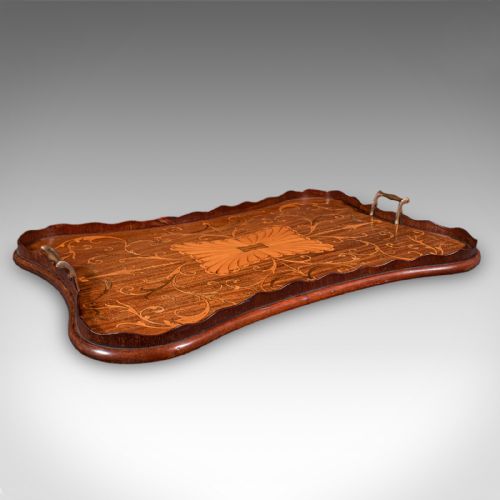
Wooden Handle Serving Tray
A wooden handle serving tray brings practical utility and tactile warmth to hosting, spanning centuries of refined design from Georgian craftsmanship to Art Deco modernism.
Wooden Handle Serving Tray
A wooden handle serving tray combines structural timber forms with functional grips designed for carrying drinks, afternoon tea, or serving dishes. When exploring this selection, buyers frequently encounter Edwardian and Victorian pieces alongside Georgian and 1930s examples.
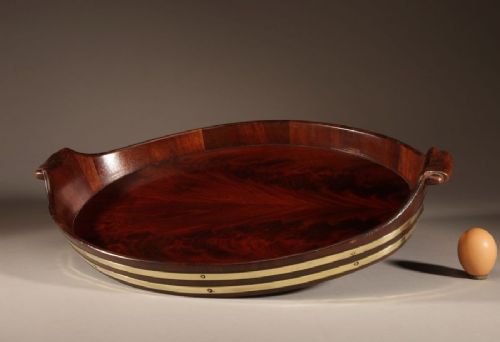
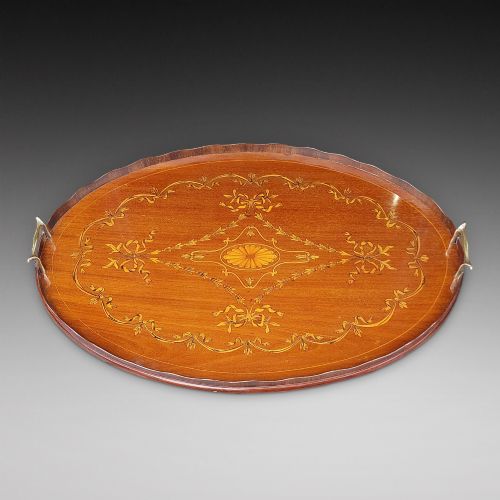
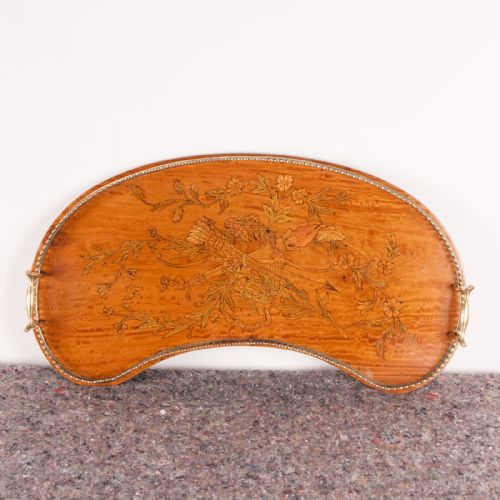
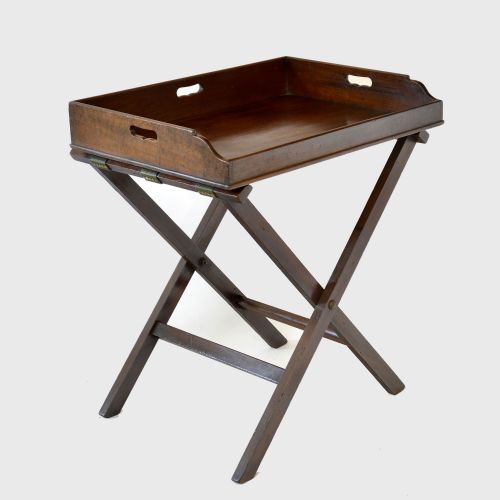
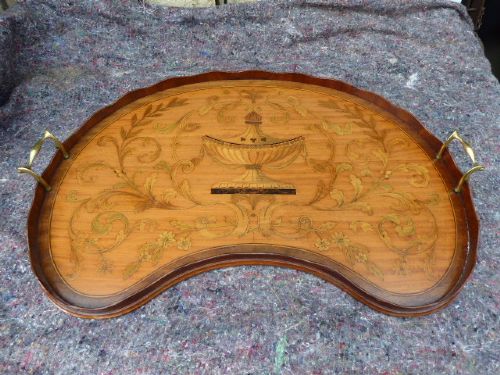
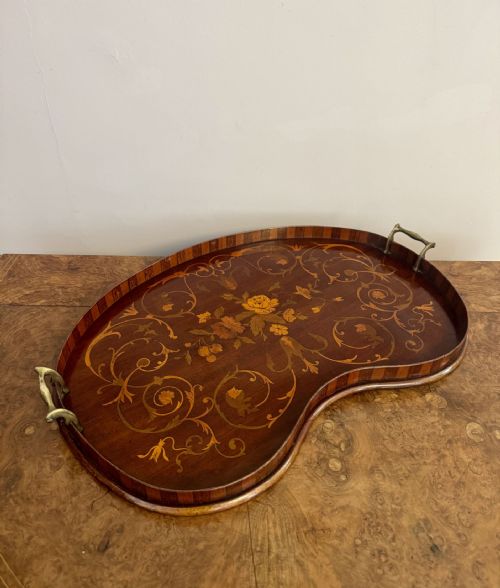
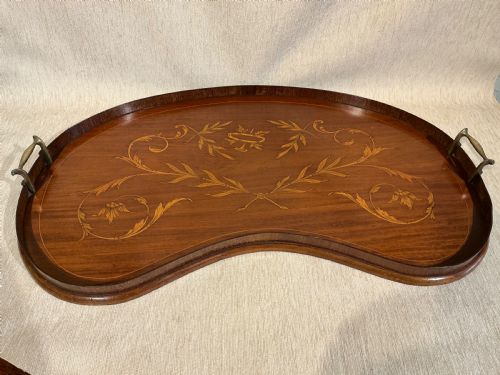
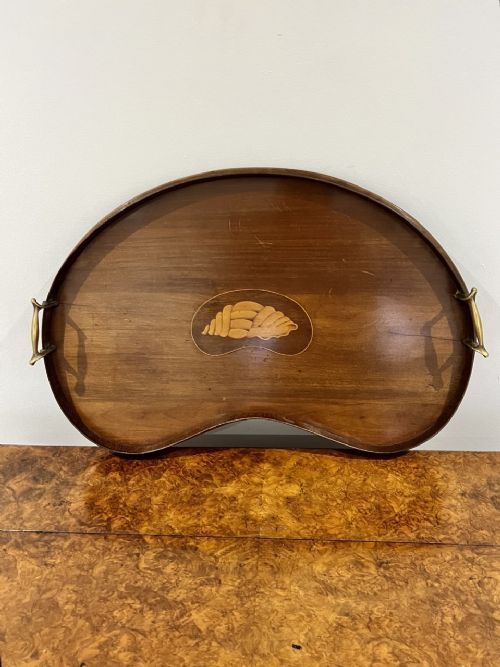
The assortment on this page ranges from oval mahogany tea trays and kidney-shaped satinwood platters to occasional tables fitted with folding stands. These domestic accessories reflect diverse historical revivals, including Sheraton, Neoclassical, and Arts and Crafts movements.
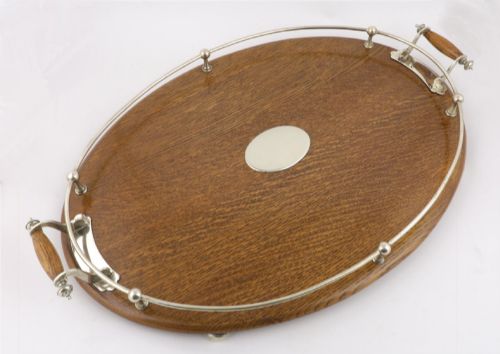
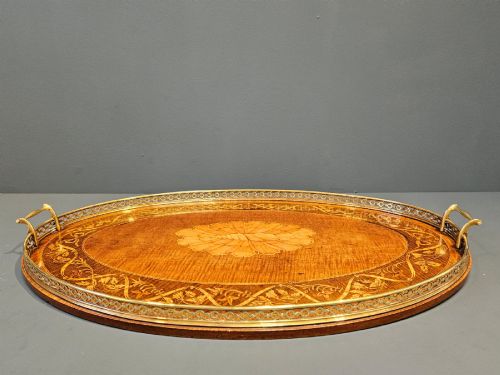
Most entries utilise solid woods or veneers such as mahogany, satinwood, and oak, often enhanced by brass galleries or silver-plated mounts. The formats span simple rectangular boards, coopered vessels, and elaborate marquetry inlaid display surfaces.
How they were made
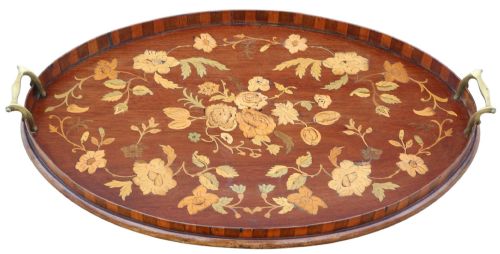
Cabinetmakers constructed these pieces using dense hardwoods like mahogany, oak, and satinwood, frequently applying intricate marquetry inlay to create pictorial or geometric surface patterns. Burr yew, rosewood, and ebonised finishes further diversify the visible timber palette across different periods.
Metal elements such as brass galleries, coopered bands, and silver plate mounts provide structural reinforcement and decorative contrast against the timber bases. Glass inserts and cartographer maps also appear behind protective surfaces in specific serving tray variants.
Wooden Handle Serving Tray Retail Price Guide 2026
Typical asking prices for wooden handle serving tray among the pieces listed under this phrase on Sellingantiques today, from the lower quarter to the upper quarter. They describe what is for sale here now, not the wider market.
Listings span multiple eras from 18th century Georgian up to 1930s Art Deco, highlighting mahogany, satinwood, and silver plate.
What varies in quality
The standard of a tray rests upon the precision of its marquetry inlay and the depth of figure within the chosen mahogany, satinwood, or burr timbers. Superior examples exhibit seamless integration between wooden handles, brass galleries, and the main body.
Richer visual balance comes from refined proportions, such as the graceful curve of a kidney-shaped platter or the crisp execution of Sheraton Revival details. Finer pieces demonstrate meticulous hand-finishing that preserves the natural grain while ensuring sturdy daily utility.
Edwards and Roberts
The Wooden Handle Serving Tray Glossary
- Marquetry Inlay
- Decorative patterns formed by fitting contrasting veneer slices into a prepared timber base. This technique defines the ornate surface detailing found on many Edwardian and Victorian pieces.
- Brass Gallery
- A perforated or wirework metal rim fitted around the edge of a tray to prevent items from sliding off. These fixtures add both structural rigidity and visual contrast to the wood.
- Coopered Tray
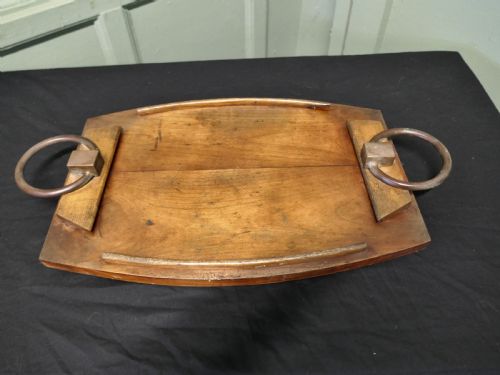
- An item constructed using narrow wooden staves joined edge to edge and bound with metal hoops, mimicking traditional barrel-making techniques. This method provides unusual curved strength.
- Kidney Shaped
- An asymmetrical curved outline resembling a bean, popular in decorative serving trays from the Edwardian period. This contour sits comfortably against the body when carried.
Wooden Handle Serving Tray: Frequently Asked Questions
How were serving trays used historically?
These trays served primarily for carrying afternoon tea, beverages, and food items between rooms in domestic households. They functioned both as portable serving platters and as decorative display surfaces on side tables.
Finer examples remained in drawing rooms for formal entertaining, while sturdier butler's trays and ship's trays managed heavy daily service duties. Many could be mounted onto folding stands to create temporary occasional tables.
How do I identify an Edwardian tray?
Edwardian trays frequently showcase light satinwood timbers, delicate marquetry inlay, and kidney-shaped or oval formats influenced by Sheraton Revival styles. They often incorporate brass handles or low galleries.
By contrast, earlier Georgian and Victorian pieces tend to utilise heavier dark mahogany solids with deeper hand-carved or coopered details. Art Deco examples from the 1930s introduce modernist French Macassar woods and novelty themes.
Can these trays be used daily?
Many solid wood and metal-plated examples remain sturdy enough for light modern hospitality use, provided they receive appropriate care. Protective surfaces help guard antique timbers against moisture and heat.
However, pieces featuring delicate marquetry inlay or aged silver plating are better suited for gentle display or careful handling. Regular waxing preserves the dry vintage finish without damaging the historical patina.