

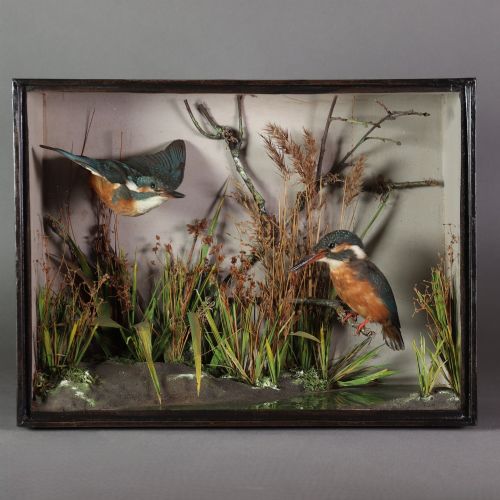


Wooden Glass Display Case
When you search for a wooden glass display case, you are looking at cabinets, domes and showcases designed to protect and exhibit valued objects.
Wooden Glass Display Case
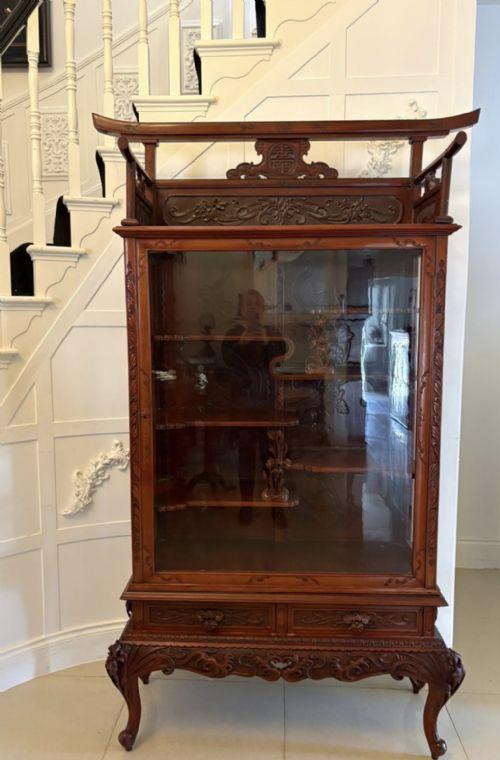
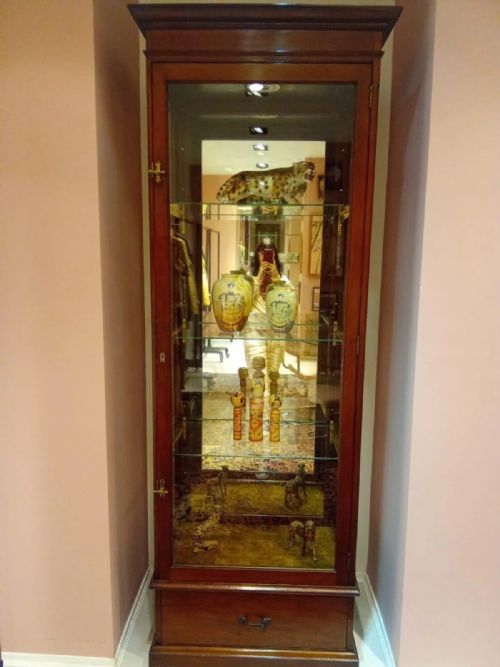
A wooden glass display case brings together timber frames and transparent panels to exhibit objects safely while keeping dust away. When searching for a wooden glass display case, buyers encounter items ranging from floor-standing cabinets to countertop shop vitrines and enclosed glass domes.
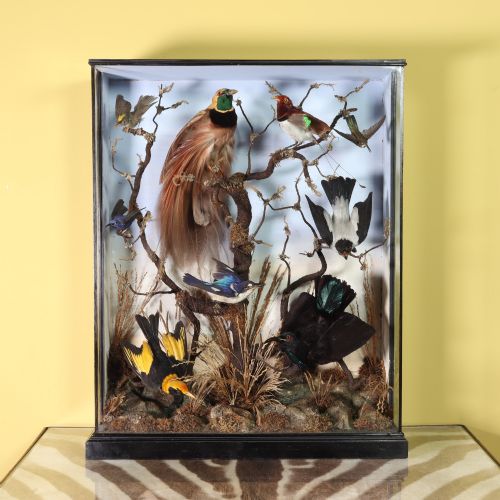
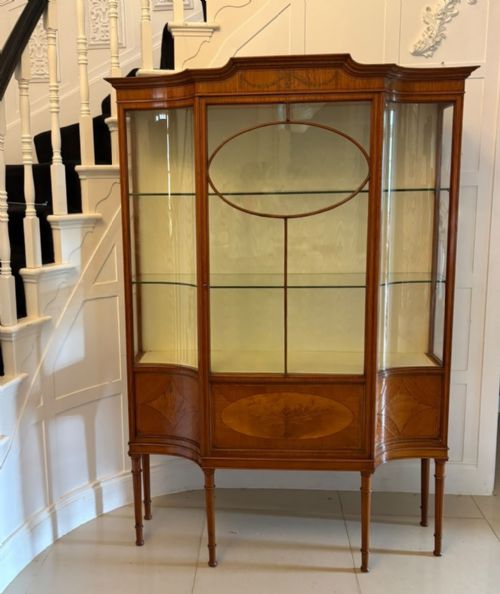
The pieces on this page span the Victorian and Edwardian eras through to the 1930s, encompassing domestic furniture, commercial shop fittings and specialised taxidermy enclosures. Cabinets often feature adjustable shelving, glazed doors and inlaid woodwork, while smaller cases protect delicate models, specimens and dioramas.
Origins vary from English workshops to French salons and Japanese revival pieces, reflecting diverse uses from home libraries to apothecary counters. Whether housing literature, ceramics, stuffed birds or maritime models, each wooden glass display case serves to frame its contents for careful inspection.
How they were made
Construction relies primarily on timbers such as mahogany, oak, walnut and satinwood, frequently shaped into slender frames to maximise the viewing area of the glass panels. Cabinetmakers joined these woods using traditional joinery, often adding brass hardware, ormolu mounts and delicate string inlay.
Glazing techniques involve fitted panes held securely within wooden rebates, sometimes complemented by fabric linings or painted wooden bases inside domes and display cases. Commercial counters and wall cabinets incorporate sturdy shelving brackets and glazed sliding or hinged doors designed for daily access.
A night porter's lined key cupboard stands ready to safeguard an entire hotel's worth of lost doors.
What varies in quality
Quality in a wooden glass display case lies in the selection of timber veneers, the crispness of any inlay work and the structural integrity of the glazed frame. Finer examples display balanced proportions, polished brass fittings and well-fitted doors that close true.
The clarity and thickness of the original glass, the finesse of internal fabric linings and the execution of carved or polished details distinguish standard commercial joinery from master cabinet work. Well-preserved internal shelving systems and original hardware elevate the standing of any piece.
T. E. Gunn·S. King·Saml. Elliott & Sons·Rowland Ward of London
The Wooden Glass Display Case Glossary
- Vitrine
- A glass display cabinet used principally for porcelain, curiosities and small decorative objects. These glazed enclosures often stand on slender legs or rest upon matching bases.
- Diorama
- A three-dimensional scene featuring models or preserved specimens arranged in a naturalistic setting. They are typically viewed through a curved or flat glass front.
- Ormolu
- Gilded bronze mounts applied to furniture and display cases for decorative effect. This technique was favoured in high-status 19th-century cabinet making.
- Inlay
- Pieces of contrasting timber, such as satinwood, fitted into the primary wood surface to form decorative patterns. Sheraton revival pieces make frequent use of this technique.
- Cloche
- A bell-shaped glass cover set upon a wooden or fabric-covered base to protect delicate objects. They are commonly seen housing taxidermy specimens and botanical displays.
Wooden Glass Display Case: Frequently Asked Questions
What is a wooden glass display case used for?
These enclosures were built to display and protect fragile or prized possessions from dust and handling. Common contents include books, ceramics, botanical specimens and taxidermy.
In commercial settings, similar glazed counters and wall cabinets served to present shop goods securely to customers while maintaining visibility.
How do I date a wooden glass display case?
Dating relies on identifying the prevailing timber choices, construction methods and stylistic markers such as Victorian heavy moulding or Edwardian satinwood inlay. Cabinet hardware, glass clarity and joinery techniques also provide clues to the period of manufacture.
Makers' marks, paper labels or architectural styles help narrow down the decade a piece was produced.
How do I care for antique glass and wood?
Maintain the timber by dusting regularly with a soft cloth and applying appropriate wax polish sparingly to preserve the finish. Avoid placing cabinets in direct sunlight or near heat sources to prevent wood splitting.
Clean the glass panels gently with a mild glass cleaner applied to a cloth rather than sprayed directly onto the surface near the wood.