

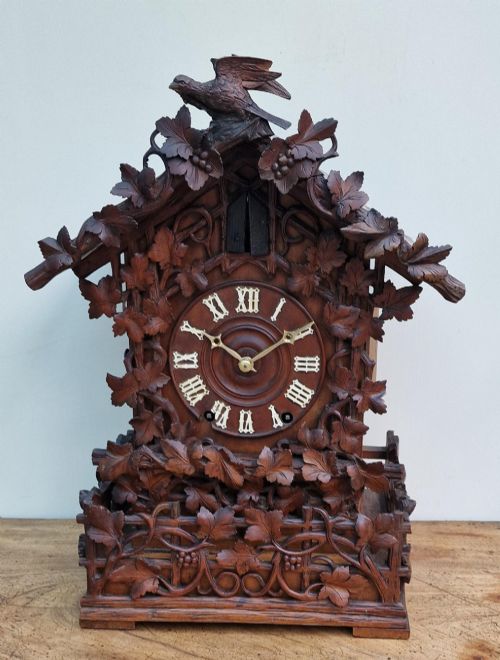
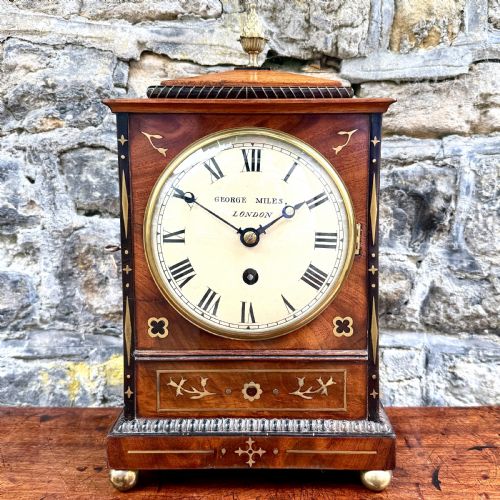
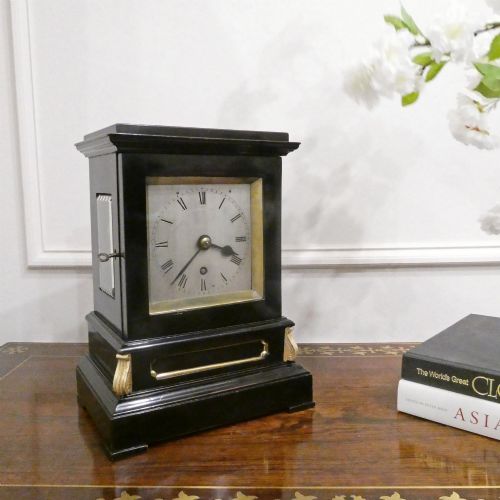
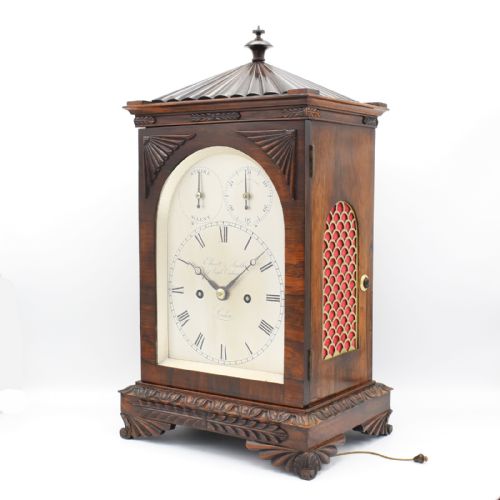
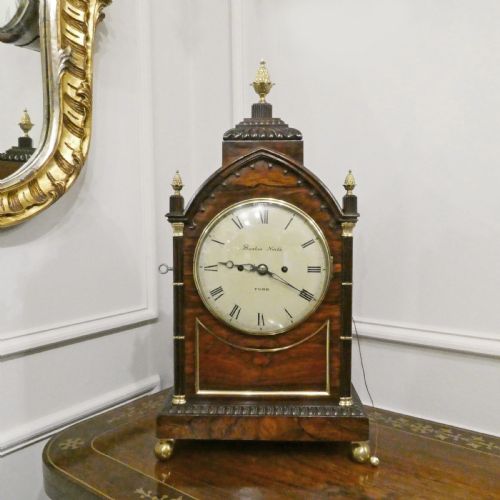


Wooden Fusee Bracket Clock
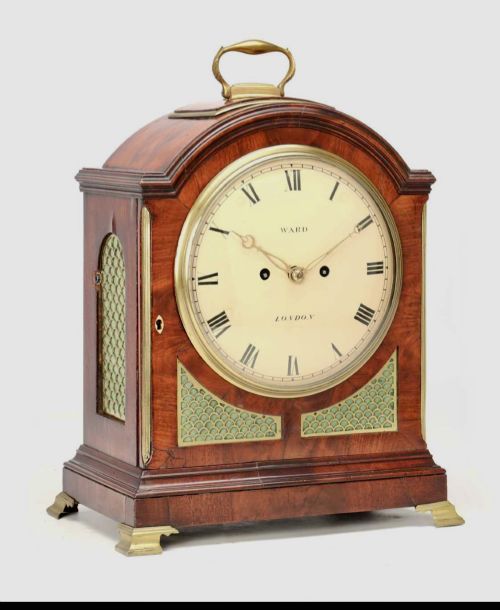
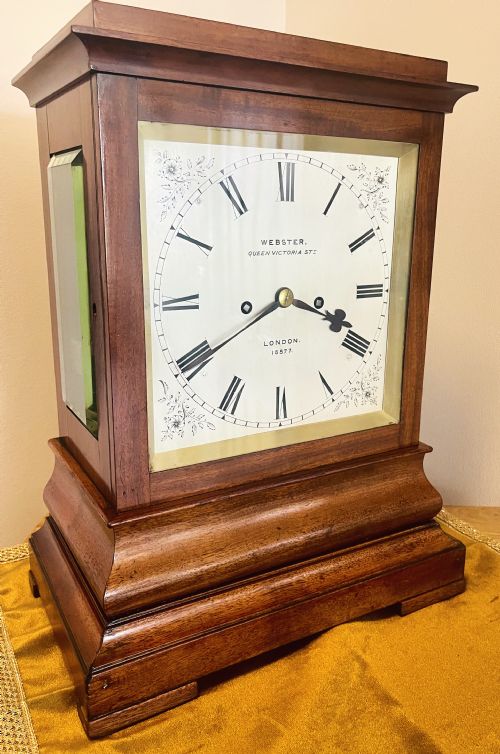
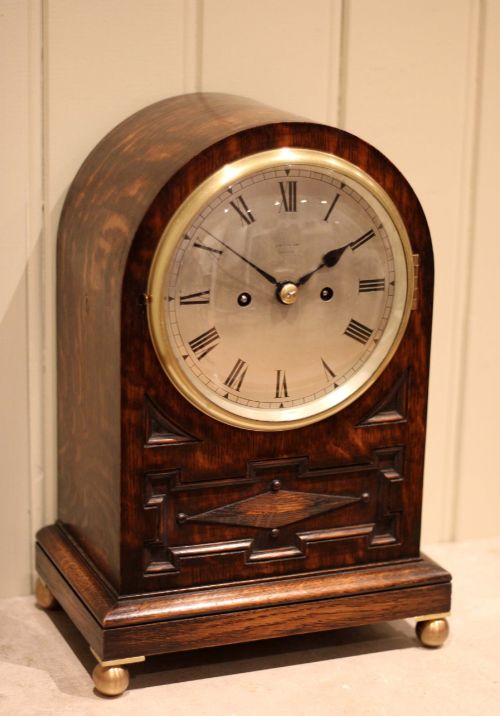
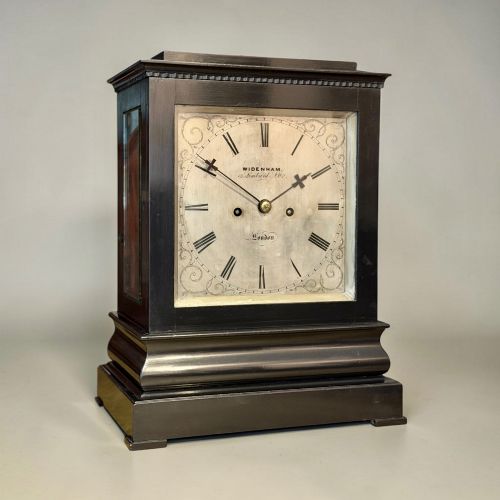
A wooden fusee bracket clock is a precision timepiece housed in a cabinet of mahogany, rosewood or oak, designed to sit firmly on a table, shelf or bracket.
Wooden Fusee Bracket Clock
A wooden fusee bracket clock brings together fine cabinetmaking and intricate mechanical engineering, representing the height of British horology from the Georgian, Regency and Victorian eras. These pieces take the form of mantel clocks, library clocks and table clocks, often featuring architectural cases with arch tops, chamfer tops or pad tops.
The version most commonly encountered on this page is housed in mahogany or ebonised wood, driven by a fusee movement that ensures even power delivery to the gear train as the mainspring unwinds. Such clocks were built to serve as reliable timekeepers for wealthy households, combining aesthetic presence with mechanical reliability.
Materials and Construction
Wooden Fusee Bracket Clock Retail Price Guide 2026
Typical asking prices for wooden fusee bracket clock among the pieces listed under this phrase on Sellingantiques today, from the lower quarter to the upper quarter. They describe what is for sale here now, not the wider market.
Listings feature wooden fusee bracket clocks spanning the Georgian, Regency and Victorian periods, housed in mahogany, rosewood and oak.
Evaluating Quality and Craftsmanship
Quality in these timepieces rests heavily on the crispness of the case carving and the original matching of the timber veneers, where superior examples display symmetrical grain and meticulous joinery. The sophistication of the movement further separates exceptional pieces from standard ones, particularly when complex trains such as twin fusee striking mechanisms or musical chimes are involved.
Signatures inscribed on the dial or movement backplate by notable makers add a layer of distinction, reflecting the workshop standards of London and provincial centres. The integration of high-grade glass, fine silvered metal dials and intact brass fittings completes the picture of a superior clock.
Widenham of London·Barber and North of York·Webster Cornhill London·Ellicott and Smith·Mappin and Webb·Dent·Cording of London·Geo Carter Hackney·Wilkinson Leicester·J Kingerley Manchester·W Burton·J A Wheatley Carlisle·Pennington of Camberwell London·Funnell of Brighton·McCabe London·Chater and Son London·J W Benson·John Leroux London·Plumbly and Tupman London
The Wooden Fusee Bracket Clock Glossary
- Fusee
- A conical pulley used in a clock movement to equalise the torque of the mainspring as it winds down. This ensures the driving force remains constant throughout the running period.
- Bracket clock
- A portable timekeeper originally designed to sit on a wall bracket to aid sound projection and visibility. Over time, the term expanded to include larger table and mantel clocks.
- Library clock
- A compact timepiece, often featuring a glass-heavy case or carrying handles, intended for use in private studies and reading rooms.
- Twin fusee
- A movement incorporating two separate fusee cones, one driving the timekeeping train and the second powering the striking or chiming mechanism.
- Silvered metal
- A brass dial plate treated with a silver compound to produce a matte white, reflective surface for engraved black numerals.
Wooden Fusee Bracket Clock: Frequently Asked Questions
What is a fusee movement?
A fusee is a conical pulley connected to the mainspring by a fine chain or cord, designed to pull against the spring's varying tension. As the spring unwinds and loses power, the chain moves to a wider part of the cone to maintain steady force.
This ingenious mechanism ensures that the clock maintains consistent amplitude in the pendulum or balance wheel, resulting in much more accurate timekeeping throughout the duration of the wind.
How do I wind my bracket clock?
Most fusee clocks require a specific winding key inserted into the dial holes to tension the mainspring via the fusee chain. Care must be taken not to overwind the movement, stopping as soon as resistance is felt.
For twin fusee models, both the time train and the strike train need separate winding. Regular maintenance and professional oiling every few years keep the brass gears and steel pivots functioning smoothly.
Where should I place a bracket clock?
These clocks are designed to sit on sturdy, level surfaces such as mantelpieces, sideboards, library tables or dedicated wall brackets. A stable foundation prevents vibrations that can disrupt the beat of the escapement.
Positioning the clock away from direct sunlight, damp areas and extreme temperature fluctuations protects the wood veneer and prevents the internal oils from drying out too quickly.