






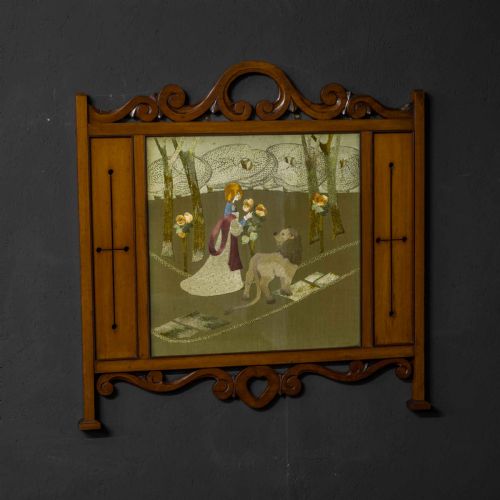
Wooden Framed Needlework
These wooden framed needlework pieces span centuries of stitchcraft, offering tactile snapshots of domestic history.
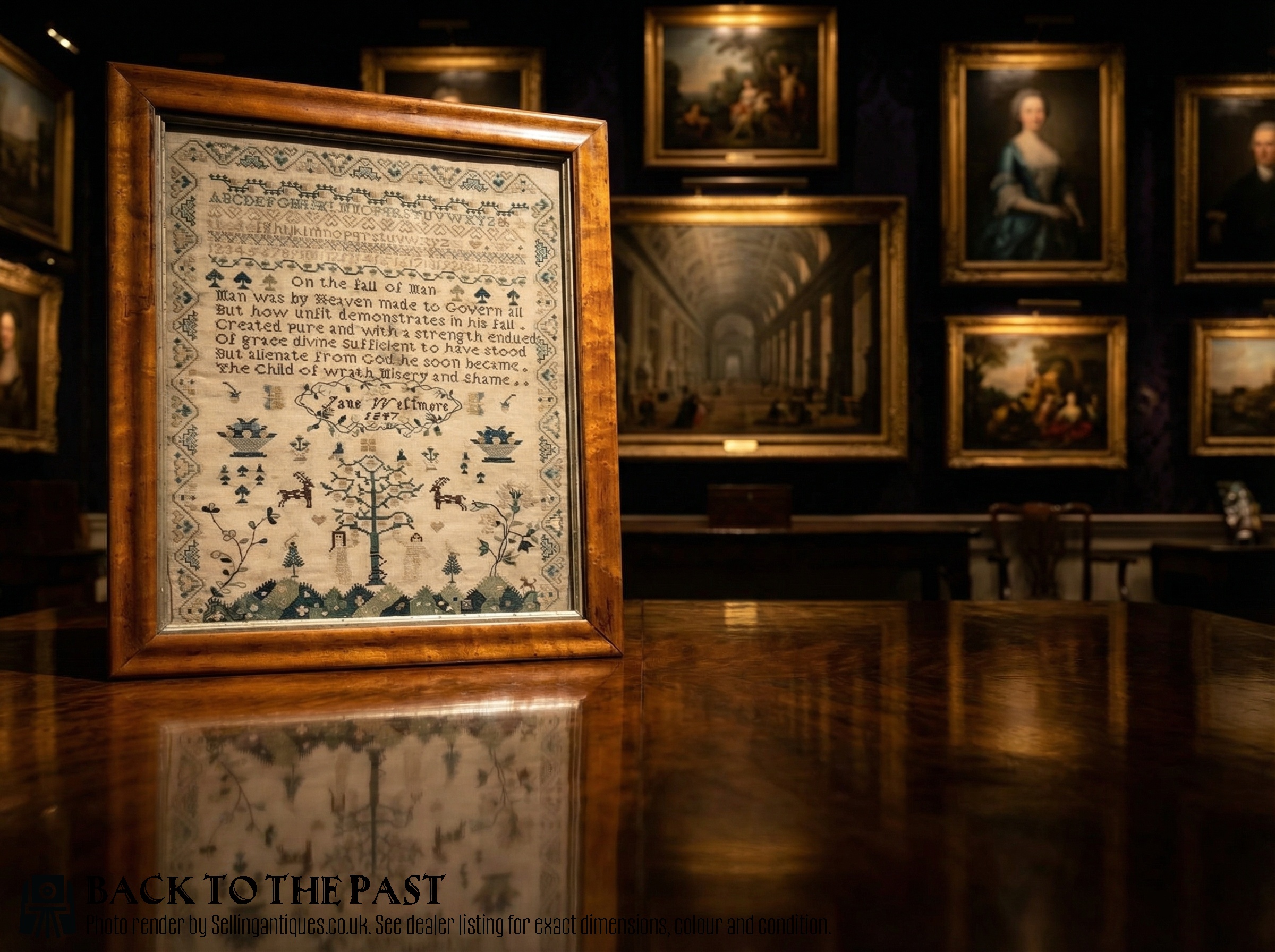
Wooden Framed Needlework
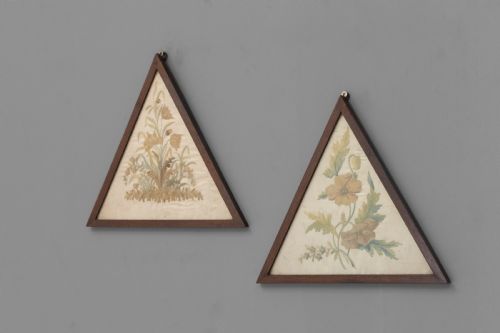
When you search for wooden framed needlework, you encounter framed textile pieces, samplers, and upholstered furniture spanning the Georgian, Victorian, and Edwardian eras. These domestic items capture centuries of painstaking stitchwork preserved behind glass or mounted into timber surrounds.
Makers ranged from young girls practising alphabet stitches to sailors creating woolies at sea, as well as skilled artisans working in English country house styles. Each surviving example offers a distinct window into historical textile arts.
How they were made
Makers utilised canvas, silk, wool, and linen grounds, working colourful threads into intricate pictorial or typographic designs. These textiles were then mounted into wooden frames, often constructed from mahogany or other timbers, and protected beneath glass.
Stretching techniques varied from simple pins on timber stretchers to adjustable tapestry frames used during the creation process itself. Sailors at sea used wool yarns on canvas to produce naive maritime woolies, while formal samplers relied on precise linen counting threads.
Wooden Framed Needlework Retail Price Guide 2026
Typical asking prices for wooden framed needlework among the pieces listed under this phrase on Sellingantiques today, from the lower quarter to the upper quarter. They describe what is for sale here now, not the wider market.
Object forms span wall art, textile art, armchairs, framed embroidery, and adjustable tapestry stretchers.
What varies in quality
Quality rests upon the fineness of the stitching and the harmony of the remaining wool or silk colours. Pieces retaining vibrant hues and tight, even stitches stand apart from those with faded threads or loose canvas foundations.
The timber frame contributes significantly to the overall merit, with carved mahogany surrounds or period frames holding greater presence than later replacements. The complexity of the subject matter, from simple alphabet samplers to detailed gros point pictorial scenes, also defines the tier of the piece.
The Wooden Framed Needlework Glossary
- Sampler
- A piece of needlework produced as a demonstration or test of skill in various stitches, frequently featuring alphabets and dates.
- Woolie
- A type of embroidery created by nineteenth century sailors using coloured wool yarns, typically depicting naval ships.
- Gros point
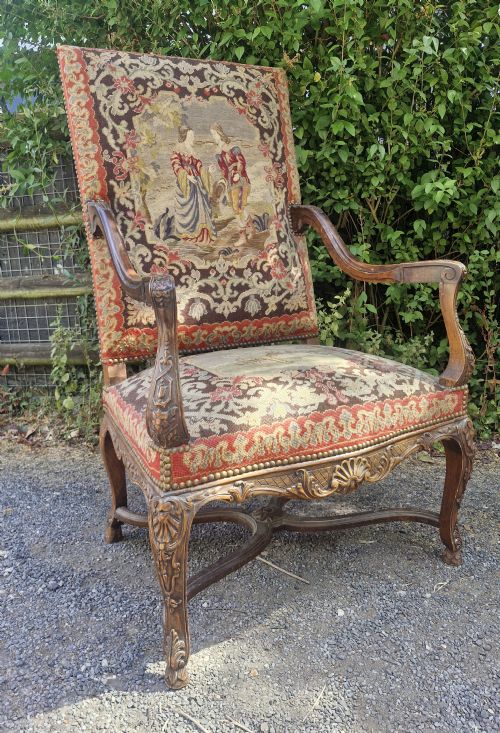
- A coarse type of needlepoint stitch worked on canvas, often utilised for pictorial wall hangings and upholstery.
- Tapestry frame
- A wooden stretcher used to keep needlework taut while the maker stitches the design.
Wooden Framed Needlework: Frequently Asked Questions
How old are these needlework pieces?
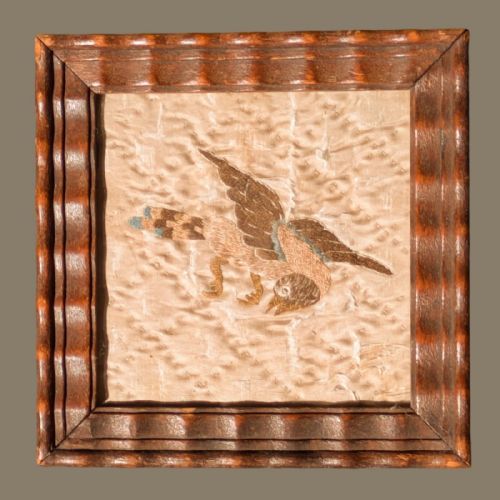
The pieces span multiple periods, ranging from eighteenth century framed bird embroideries to Victorian samplers and Edwardian items. Most examples date from the nineteenth century.
Dates are often recorded directly onto samplers by the maker, or indicated by the timber frame and stitching style.
Were these always framed?
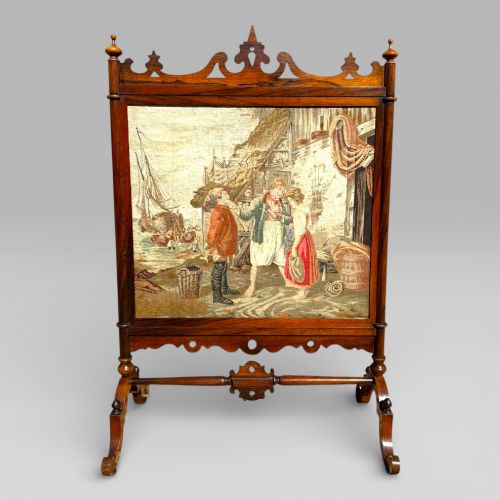
Not all items began as wall art, as some pieces served as firescreen panels, chair upholstery, or working tapestry stretches.
Many flat textiles were framed later in their lifespans to protect the delicate silk and wool threads from dust and handling.
How do I care for antique needlework?
Antique textiles require protection from direct sunlight to prevent the silk and wool threads from fading and losing their original colour.
Keeping pieces behind glass prevents dust accumulation while maintaining a stable environment away from excessive moisture.