
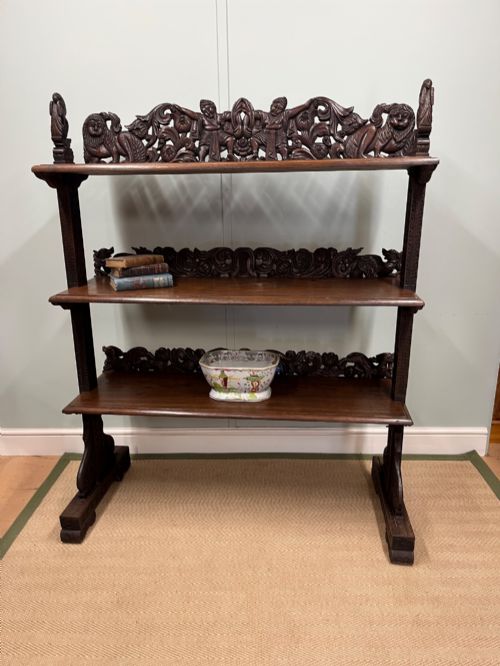


Wooden Etagere Display Shelf
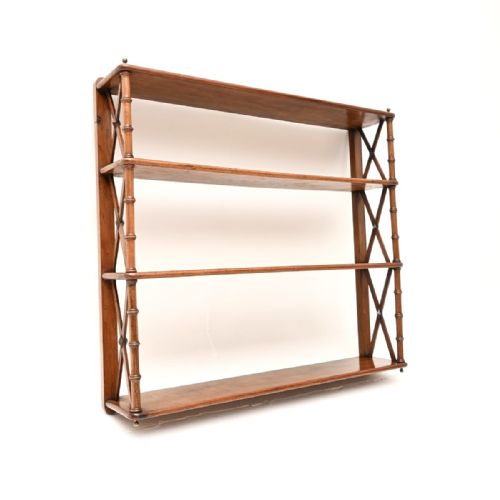
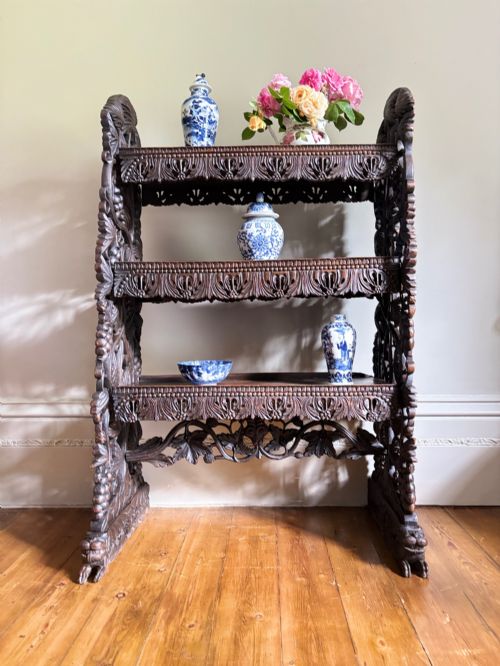
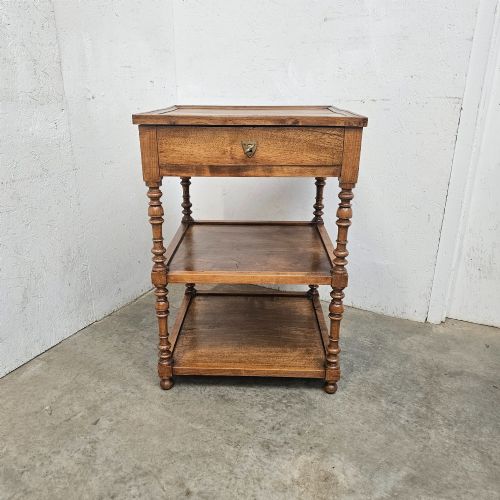
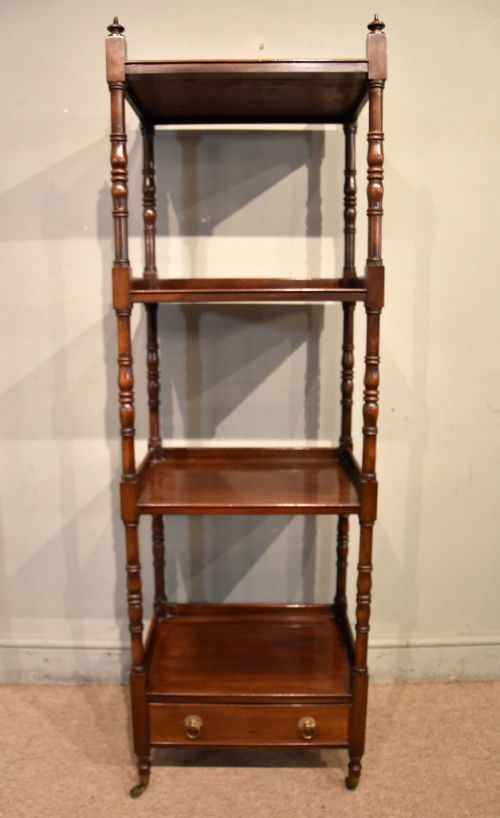
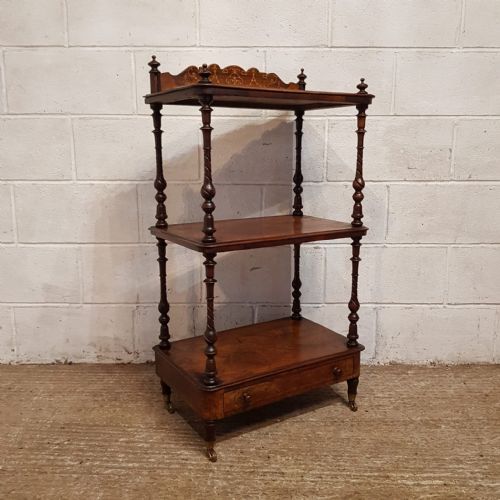
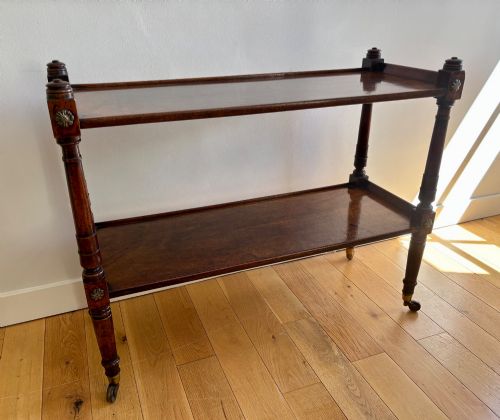
A wooden etagere display shelf brings open tier storage and display space to a room, offering multiple tiers for books and ornaments.
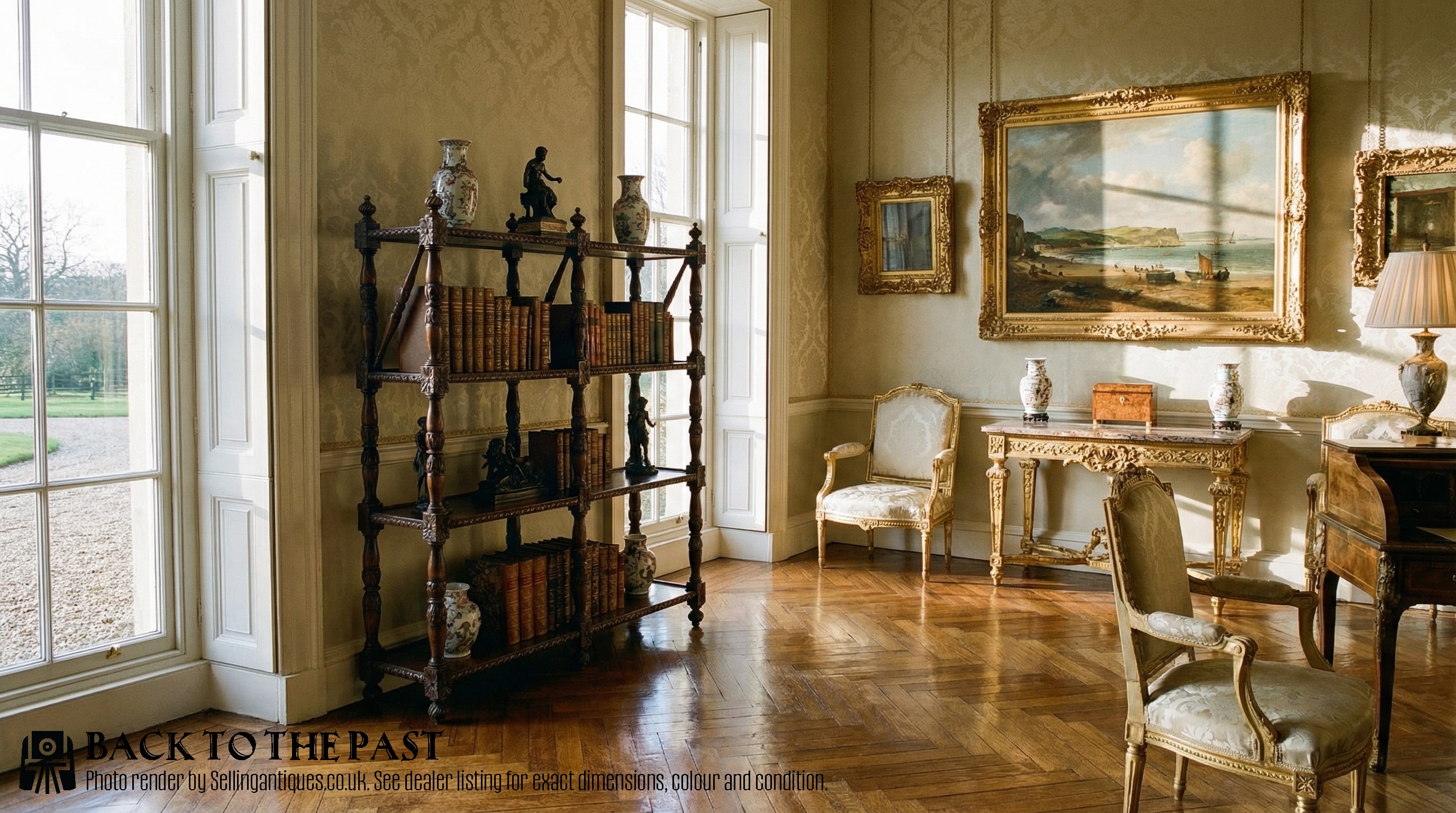
Wooden Etagere Display Shelf
A wooden etagere display shelf serves as a multi-tiered freestanding or wall-mounted stand designed to hold books, cabinets, and decorative items. These pieces appear across Georgian, Regency, and Victorian periods, often taking the form of whatnots, corner units, and open bookcases.
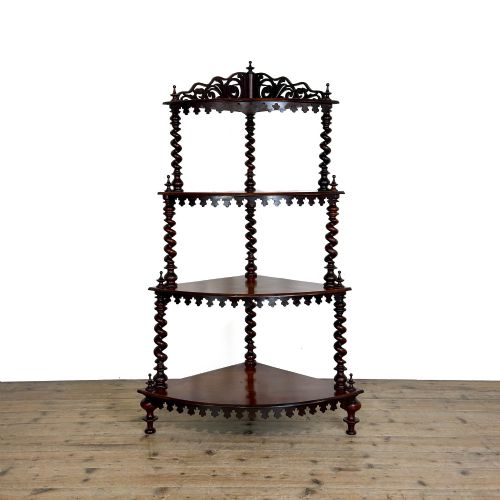
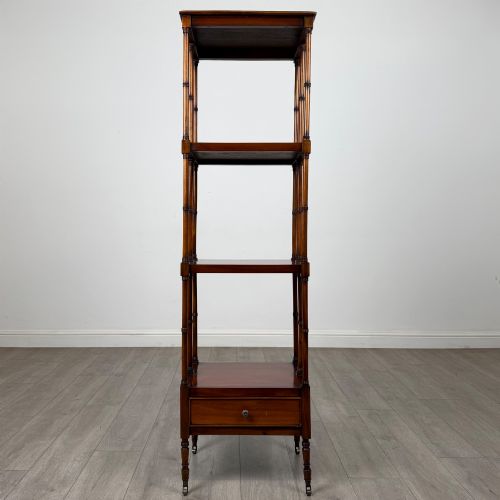
The most common version met on this page is the tiered mahogany or walnut whatnot, featuring three or four open shelves supported by turned uprights. Many examples incorporate lower drawers, mirrors, or small cupboards, while corner variants make efficient use of room layouts.
Origins range from English workshops to French provincial makers and Anglo-Indian production using padauk wood. Pieces span the early nineteenth century through the late Victorian era, reflecting shifts in domestic display habits.
Materials and construction methods
Cabinet makers utilised dense hardwoods including mahogany, walnut, burr walnut, rosewood, and satin birch to build the upright supports and shelves. Finer examples display figured burr veneers and intricate marquetry inlay across the surfaces.
Structural elements rely on turned legs, delicate spindle galleries, and brass fittings to secure the stacked tiers. Certain pieces integrate glass panels, mirrored backs, or single drawers fitted beneath the main shelving.
Some Victorian whatnots doubled as jewellery cabinets, hiding small drawers behind open shelves for secret storage.
Distinctions in construction and material standard
Quality rests upon the selection of timber veneers and the crispness of turned woodwork on the uprights. Dense, heavily figured burr walnut or richly grained mahogany indicate a higher standard of cabinet work than plain secondary woods.
The integration of secondary functions, such as built-in drawers, mirrors, or marquetry panels, separates standard utilitarian shelving from exhibition pieces. Joinery precision in the tier joints and the stability of stacked uprights determine the structural integrity.
The Wooden Etagere Display Shelf Glossary
- Etagere
- An open piece of furniture with multiple tiers for displaying small objects and ornaments.
- Whatnot
- A freestanding set of open shelves used for books or ornaments, popular throughout the nineteenth century.
- Burr walnut
- A prized timber harvested from the warted growths of walnut trees, displaying swirling grain patterns.
- Marquetry
- Decorative veneer work arranged in pictorial or geometric patterns using various coloured woods.
- Canterbury
- A low stand with partitioned sections, frequently combined with whatnot tiers for holding music or folios.
Wooden Etagere Display Shelf: Frequently Asked Questions
What is an etagere?
An etagere is a piece of furniture composed of several stacked open shelves designed for displaying ornaments and small objects.
These pieces function as decorative storage units that keep collections visible from multiple angles.
How were whatnots used?
Whatnots served as versatile display and storage furniture in nineteenth-century drawing rooms and parlours.
Households placed books, ceramics, and ornaments on the open tiers for daily access and decoration.
What woods were used?
Cabinet makers built these pieces using dense hardwoods including mahogany, walnut, rosewood, and satin birch.
Many examples feature decorative burr walnut veneers or contrasting marquetry inlay on the shelves and panels.
Are corner whatnots common?
Corner whatnots and wall shelves appear frequently among nineteenth-century domestic furnishings.
These designs allowed rooms to utilise awkward wall junctions for open display shelving without crowding floor space.