


Dark Oak Wall Brackets
Dark oak wall brackets bring architectural substance and rich, historic timber to a room, offering both functional support and deep sculptural interest.
Dark Oak Wall Brackets
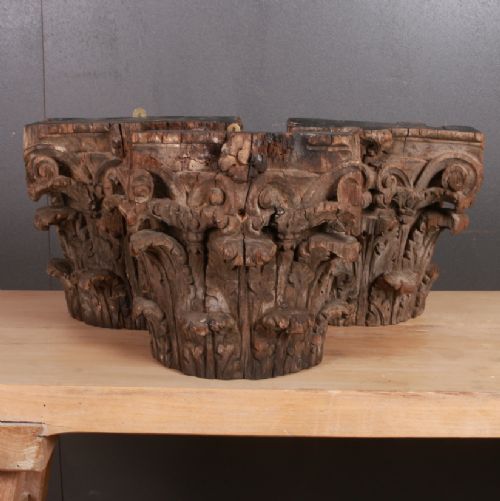
Dark oak wall brackets encompass architectural salvage, structural corbels, and decorative wall supports spanning from the seventeenth century through to the early twentieth century. When exploring dark oak wall brackets, a buyer encounters carved timber pieces originally designed to bear weight or ornament interiors in styles ranging from Gothic Revival and Baroque to Victorian and Edwardian.
What varies in quality
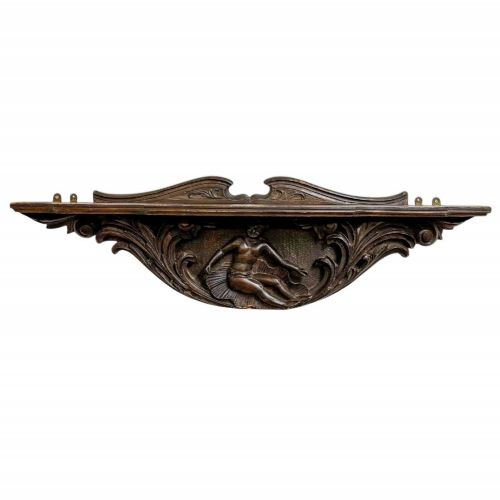
Quality in these carvings is determined by the depth, fluidity, and ambition of the hand-carved detail, distinguishing master craftsmanship from simpler production. Pieces featuring intricate figural work, such as representations of medieval men or complex Baroque scrolls, demonstrate a superior level of sculptural capability.
The integrity of the timber and the preservation of the original historic surface over centuries also dictate distinction. Surviving pairs with matching grain patterns and unified patination command greater appreciation than isolated fragments or later assembled components.
The listings span from the seventeenth century through to the twentieth century, incorporating oak, iron, glass, gold leaf, and ceramic materials.
The Dark Oak Wall Brackets Glossary
- Corbel
- A structural piece of stone, wood, or metal jutting from a wall to carry a superincumbent weight. In these listings, they function as substantial decorative wall brackets.
- Architectural salvage
- Building elements rescued from demolition or alteration for reuse in interior decoration. These pieces often originate from dismantled historic properties.
- Gothic revival
- An architectural and decorative style that draws inspiration from medieval design. It frequently incorporates pointed arches, heavy tracery, and dark carved wood.
- Baroque
- A flamboyant artistic style characterised by exaggerated motion and clear detail used to produce drama. In woodwork, this manifests in exuberant scrolls and rich relief carving.
- Pricket
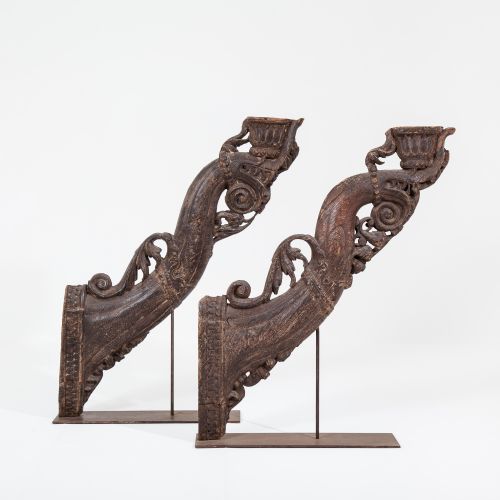
- A sharp metal spike in a candlestick or light fitting designed to hold a candle. Paired examples in carved oak serve as historic wall-mounted illumination supports.
Dark Oak Wall Brackets: Frequently Asked Questions
How were dark oak wall brackets used historically?
Historically, these pieces served as structural supports for heavy beams, overmantels, or projections within domestic and ecclesiastical interiors. They also functioned independently as decorative brackets for displaying sculptures, ceramics, or lighting.
Over time, many were repurposed or salvaged from older buildings to add architectural gravity and historic character to later interior schemes.
How do I date a carved oak bracket?
Dating relies on stylistic markers, tool marks left by the maker, and the depth of the timber's patina. Seventeenth-century examples often display deep hand-tooling and distinct figurative motifs like medieval characters, while Victorian pieces may reflect Gothic Revival or Black Forest influences.
Comparing the joinery, wear patterns, and regional carving characteristics helps narrow down whether a piece originates from the 1600s or later centuries.
Can these wall brackets support heavy weight?
While many were originally engineered to bear significant structural loads, their current load-bearing capacity depends on their age, material integrity, and how securely they are mounted to the wall.
Buyers intending to place heavy objects on them should consult a professional restorer or installer to evaluate the timber strength and hanging fixings.
What is the difference between a corbel and a wall bracket?
A corbel is specifically a structural block projecting from a wall to support weight, traditionally functioning as an architectural member. A wall bracket is a broader term that includes corbels but also encompasses lighter decorative shelves and sconces.
In historic interiors, the two terms often overlap depending on whether the piece was integrated into the building fabric or mounted as a fixture.
How do I care for antique carved oak?
Care involves keeping the timber away from direct heat sources and sudden humidity changes to prevent the oak from splitting. Regular dusting with a soft, dry cloth preserves the historic surface without stripping the accumulated patina.
Application of specialist waxes should be done sparingly and only when the wood appears dry, maintaining the natural finish acquired over centuries.