





Baroque Wooden Corbels
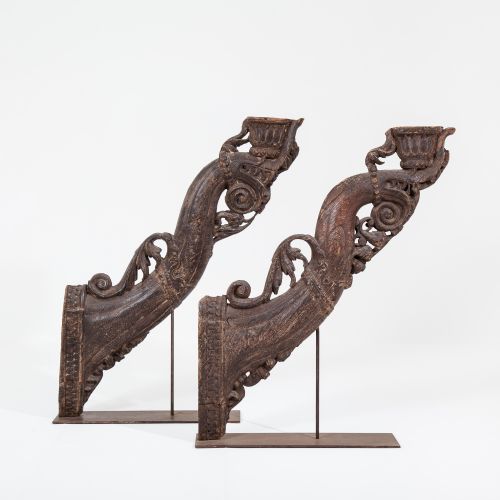
Baroque wooden corbels are architectural supports and wall brackets carved from oak, walnut, and limewood that bring sculptural depth to an interior.
Baroque Wooden Corbels
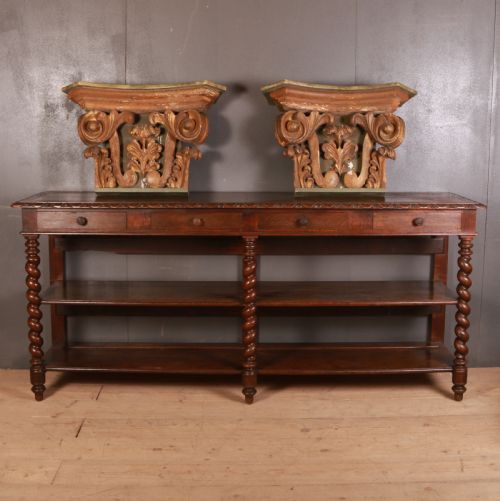
Baroque wooden corbels encompass carved brackets, wall sculptures, and architectural salvage produced across the seventeenth, eighteenth, and nineteenth centuries. Buyers searching for baroque wooden corbels encounter wall brackets and capitals styled in Continental, Georgian, and Rococo traditions.
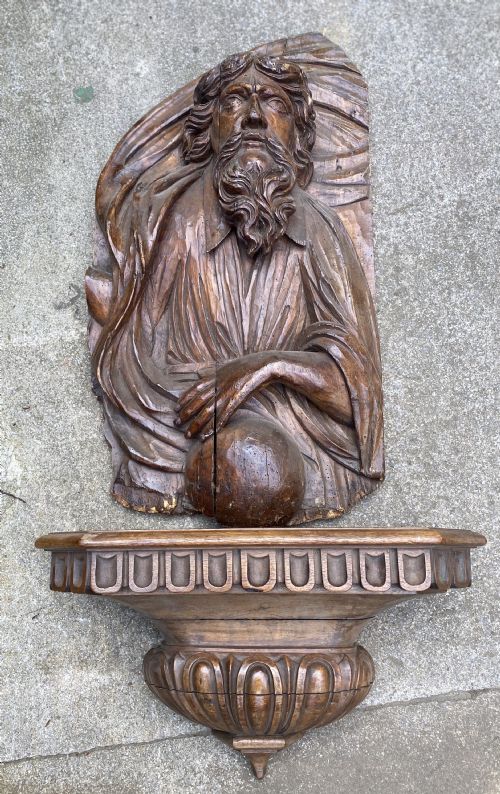
The pieces appearing on this page span several distinct periods, including seventeenth-century German work, eighteenth-century Italian gilding, and later nineteenth-century revivals. Forms range from figurative cherubs and lion heads to structural oak blocks and giltwood brackets.
How they were made
Carvers shaped these architectural elements from solid timbers of oak, walnut, and limewood, utilising deep relief carving to create dramatic shadow and movement. Many pieces received a surface treatment of gesso before being finished with gold leaf.
Makers constructed these supports to bear weight while serving a decorative function on walls and lintels. The joinery and timber selection reflected the regional practices of English, Italian, and German workshops.
Listings feature materials such as carved wood, gesso, gold leaf, carved oak, walnut, iron, and limewood across multiple centuries.
What varies in quality
Quality rests in the crispness of the chisel work and the depth of the carving across figures like cherubs and lion heads. Finer examples display anatomical conviction and confident handling of the timber.
The integrity of the original surface finish, whether bare walnut or aged gold leaf over gesso, determines the visual power of the bracket. Earlier pieces retain patination that later revival work often lacks.
The Baroque Wooden Corbels Glossary
- Corbel
- A structural piece of stone or wood projecting from a wall to bear a weight. In this context, it functions as a decorative wall bracket.
- Giltwood
- Wood that has been covered with gold leaf or gold paint. This finish was common on Italian wall brackets of the eighteenth century.
- Limewood
- A pale timber favoured by carvers for its fine grain and lack of prominent growth rings. It permits intricate undercut details.
- Capital
- The topmost member of a column or pilaster, often carved with acanthus leaves or figurative elements. Large examples are adapted as wall supports.
- Gesso
- A plaster mixture applied to wood as a base for gilding or painting. It provides a smooth ground for gold leaf application.
Baroque Wooden Corbels: Frequently Asked Questions
Where should I mount these wall brackets?
These pieces suit placement beneath shelves, mantels, or as standalone wall sculptures in living spaces. Ensure the wall structure can support the weight of dense timbers like oak and walnut.
Because they project into the room, position them at a height where the carved details and any gilding catch the ambient light effectively.
How do I date a wooden corbel?
Dating relies on the tool marks left by the carver, the choice of timber, and stylistic cues from periods such as the seventeenth or eighteenth century. Oak and walnut indicate earlier craftsmanship, while limewood and gesso finishes often point to specific revival eras.
Examine the back of the bracket for old fixing holes, seasoning splits, and the general oxidation of the wood to gauge its true age.
Are these brackets structurally load-bearing?
While originally carved as architectural supports, many surviving pieces function primarily as decorative wall brackets or display consoles. Check the mounting points and timber condition before placing heavy objects upon them.
Some architectural salvage pieces retain their inherent strength, whereas others are intended purely for visual display.
How do I clean gilded and carved wood?
Dust the carvings gently with a soft, dry brush to prevent dirt accumulation in the recessed areas. Avoid water, harsh chemical cleaners, or polishes that might damage fragile gesso and gold leaf.
Limewood and bare oak require minimal intervention, preserving the natural patina accumulated over centuries of existence.