




Brown Oak Carvings
These brown oak carvings unite centuries of timber craftsmanship, offering the collector substantial architectural salvage, relief panels, and sculptural figures.
Brown Oak Carvings
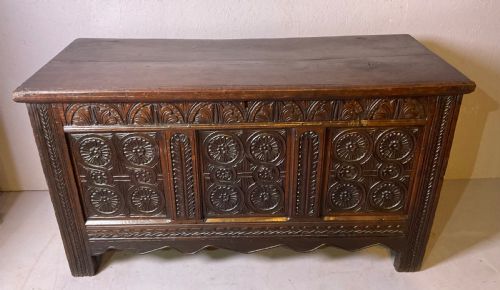
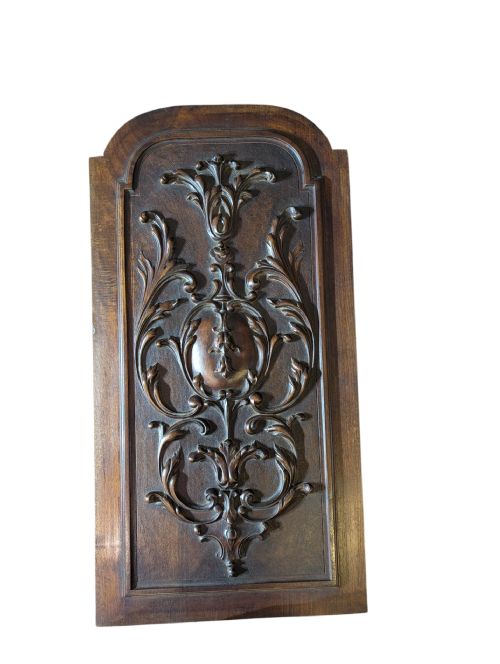
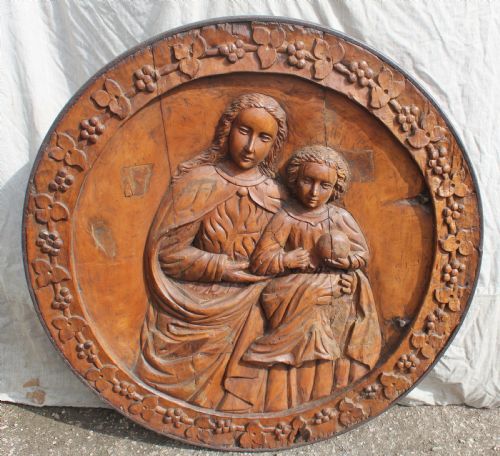
When you search for brown oak carvings, you encounter architectural salvage, wall panels, and sculptural figures spanning from the pre-sixteenth century through the Victorian era. The material ranges across oak, hardwood, and assorted carved wood, reflecting centuries of utilitarian and decorative woodworking.
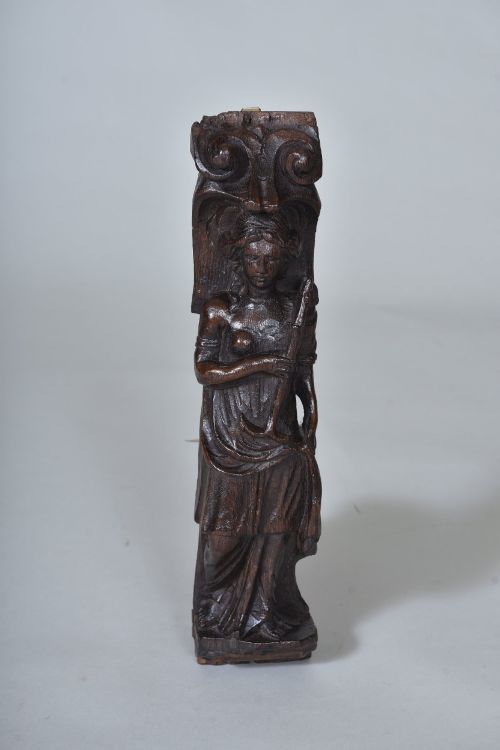
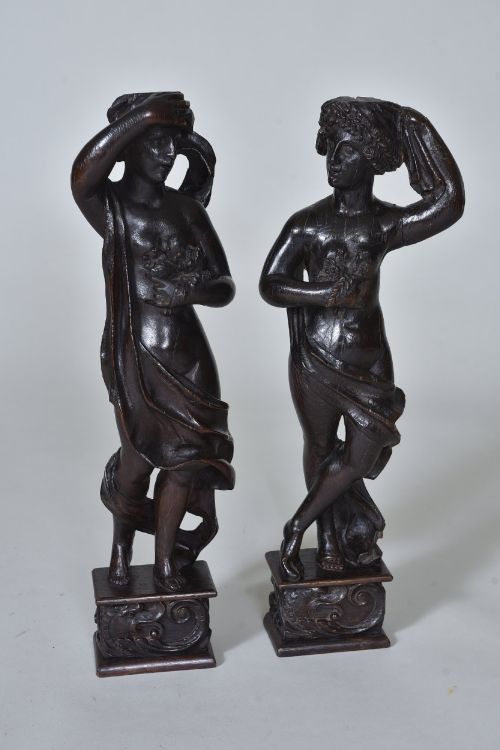
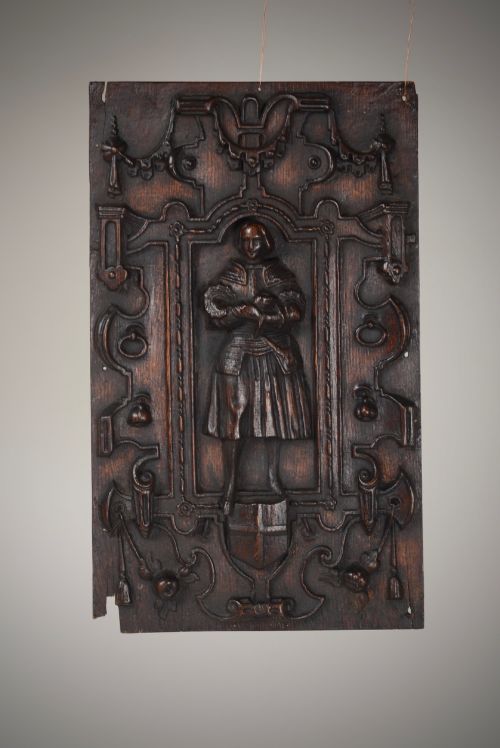
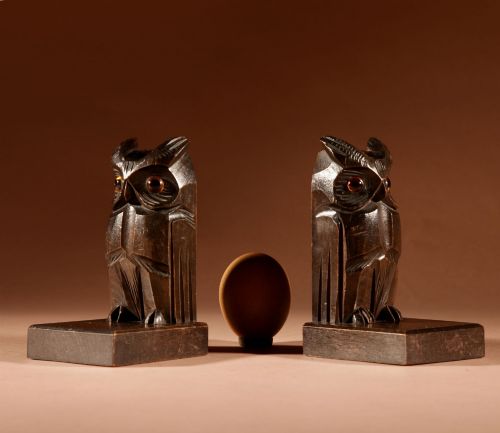
You are most likely to meet seventeenth-century panels, nineteenth-century decorative ornaments, and Black Forest animal subjects on this page. Forms extend from ceiling bosses and corbels to religious statues, bookends, and library bookcases.
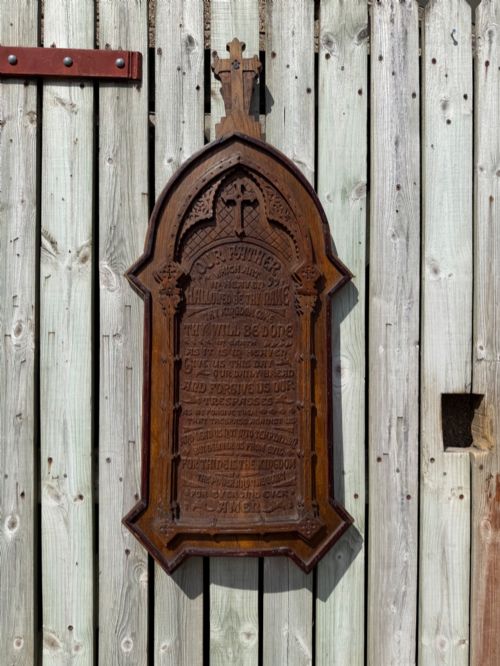
Origin points vary widely, taking in English, Italian, Croatian, German, Flemish, and Low Country workshops. The assortment covers Gothic Revival, Baroque, and folk art styles, showing how carvers interpreted religious, heraldic, and natural motifs.
Materials and methods
Carvers shaped these pieces primarily from solid oak and related hardwoods, employing hand chisels and gouges to build relief panels and three-dimensional figures. Structural elements occasionally integrate iron hardware or glass components, particularly in functional items like stick stands and bookends.
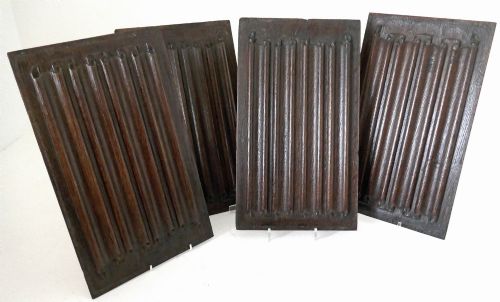
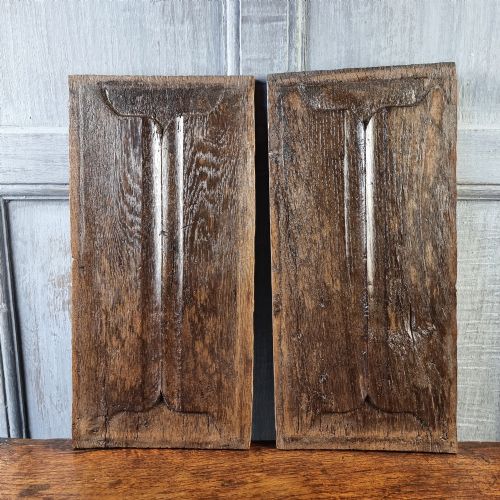
Surface treatments rely on the natural grain of the wood, sometimes enhanced with parcel gilt highlights or left in a raw, patinated state. Chip carving and linenfold techniques dominate the earlier panels, while later Victorian and Black Forest pieces utilise deep undercutting and pierced carving.
The listings span from pre-sixteenth century ecclesiastical fragments to twentieth-century Black Forest animal sculptures, worked in oak, hardwood, and fruitwood.
Assessing quality
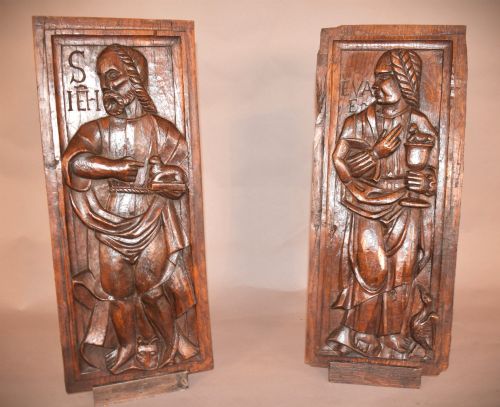
Quality rests upon the depth of the undercutting, the crispness of the chisel work, and the fidelity of the anatomical or architectural form. A master carver achieves three-dimensional vitality in figures such as lions, saints, and cherubs, whereas lesser work remains flat and stiff.
The integrity of the original wood surface and the retention of crisp detail across centuries separate the finest examples from heavily worn pieces. Attribution to documented makers or specific regional schools elevates historical interest.
Edward Pearce·Franz Keller
The Brown Oak Carvings Glossary
- Linenfold
- A style of wood carving representing folded linen, frequently seen on sixteenth-century panels. This motif became popular for domestic wall paneling.
- Ceiling Boss
- A projecting block of wood at the intersection of ribs in a ceiling, often carved with leaves or geometric patterns. These structural elements double as decorative focal points.
- Corbel
- A structural piece of stone or wood jutting from a wall to carry a superincumbent weight. In wood, these often take the form of carved figures or scrollwork.
- Coffer
- A large chest used for storing valuables, typically constructed from heavy oak. Early examples feature extensive chip or relief carving across the front boards.
- Chip carving
- A style of carving where small chips are removed from a flat surface with a knife or chisel. This technique appears frequently on smaller domestic objects like snuff boxes.
Brown Oak Carvings: Frequently Asked Questions
What are brown oak carvings?
Brown oak carvings encompass architectural salvage, wall panels, corbels, and figural sculptures produced from hardwood over several centuries. They include both structural elements from historic buildings and decorative items created for domestic interiors.
Craftsmen utilised seasoned oak to build items ranging from simple linenfold panels to elaborate Baroque plaques and Black Forest animal studies.
How were antique oak panels used?
Historic oak panels served primarily as interior wall cladding, decorative inserts for furniture, and architectural embellishments in secular and ecclesiastical buildings. They provided both insulation and visual grandeur to rooms.
Over time, many panels were salvaged from older structures and mounted independently as decorative wall art for collectors.
How do I date an oak carving?
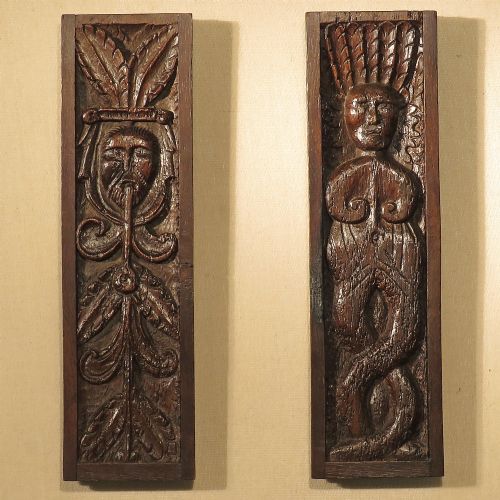
Dating relies on stylistic markers such as linenfold motifs for sixteenth-century work, acanthus scrolls for seventeenth-century Baroque pieces, and gothic revival influences in the nineteenth century. Tool marks and the natural ageing of the hardwood also provide key indicators.
Comparing construction joints and the specific character of the carving helps separate early medieval and Tudor pieces from later revival items.
How do I care for antique wood carvings?
Preserve antique carvings by keeping them away from direct sunlight, heating vents, and rapid humidity fluctuations which can split the hardwood. Regular dusting with a soft, dry cloth prevents grime accumulation.
Avoid modern liquid polishes or silicone treatments, applying traditional beeswax sparingly only when the wood appears dry.