



Wooden Entryway Stand
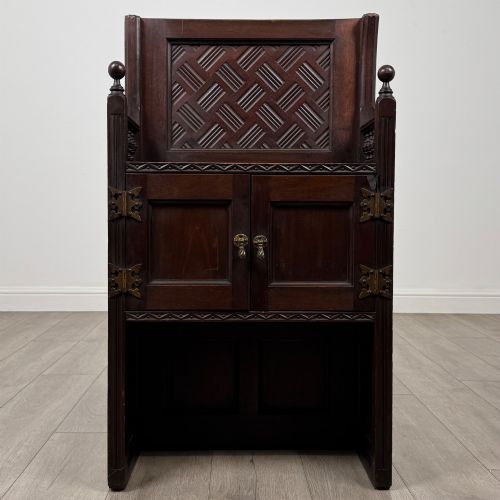
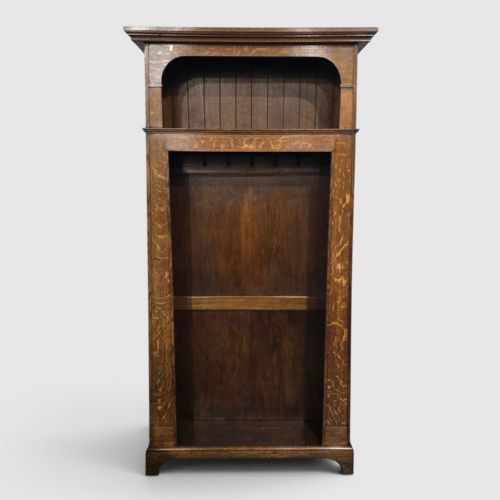
A wooden entryway stand greets visitors with practical charm, holding hats, coats, and umbrellas while grounding the hall.

Wooden Entryway Stand
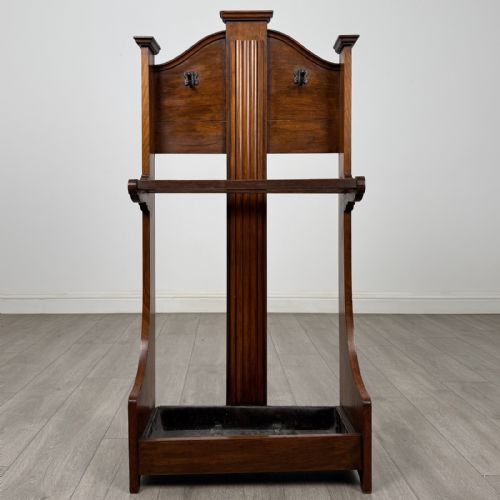
A wooden entryway stand encompasses multi-functional hall furniture designed to organise garments and walking aids near a doorway. Pieces answering to this description range from compact wall racks to substantial hall trees featuring integrated seats and umbrella wells.
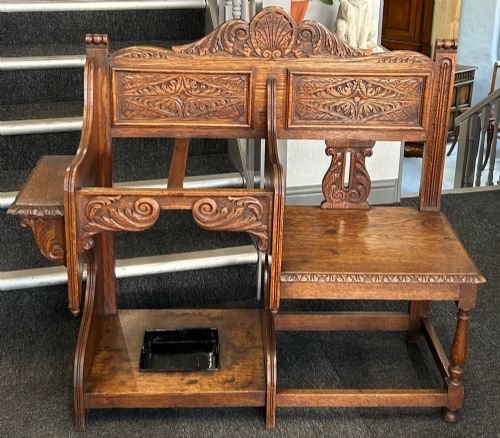
The selections here span the Victorian, Edwardian, and Arts and Crafts periods, alongside 19th-century and early 20th-century iterations. Oak and walnut predominate as the primary timbers, frequently augmented by mirrors, brass hooks, and cast iron drip pans.
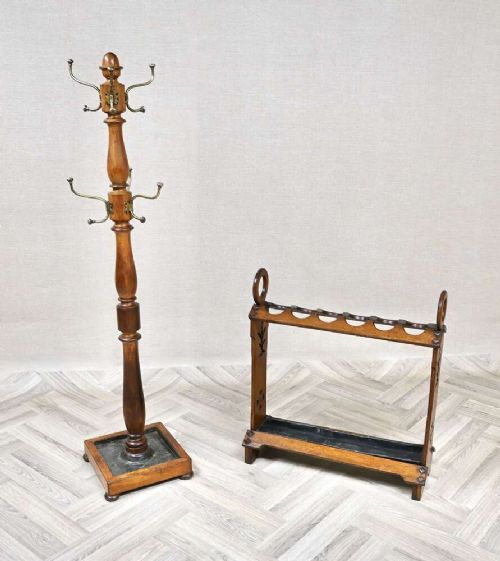
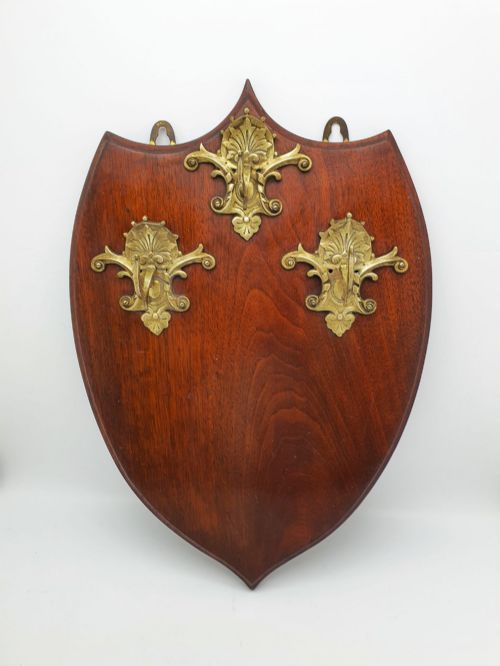
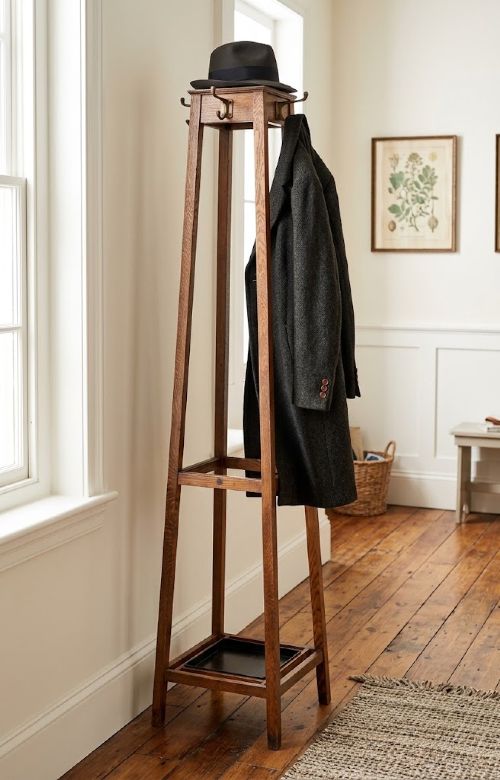
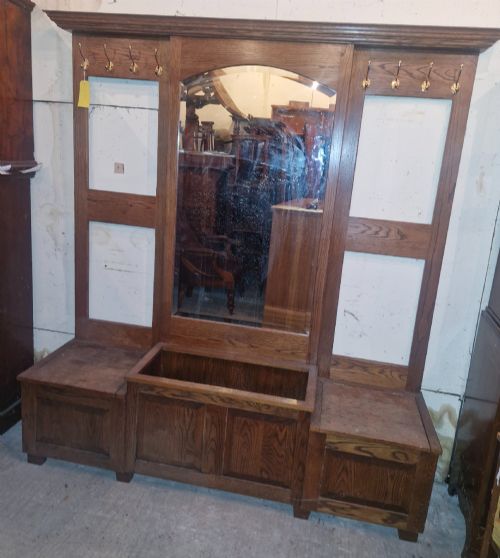
Buyers will frequently encounter tall freestanding coat stands, mirrored hall stands with storage benches, and wall-mounted plaques fitted with metal hooks. These forms reflect the domestic rituals of past households, where outerwear required immediate storage upon entry.
Assessing craftsmanship and finish
Structural integrity separates robust examples from lesser pieces, particularly where heavy mirror frames and coat hooks place sustained stress on vertical timbers. Joinery methods, from hand-cut tenons to simpler mechanical fasteners, indicate the standard of workshop production.
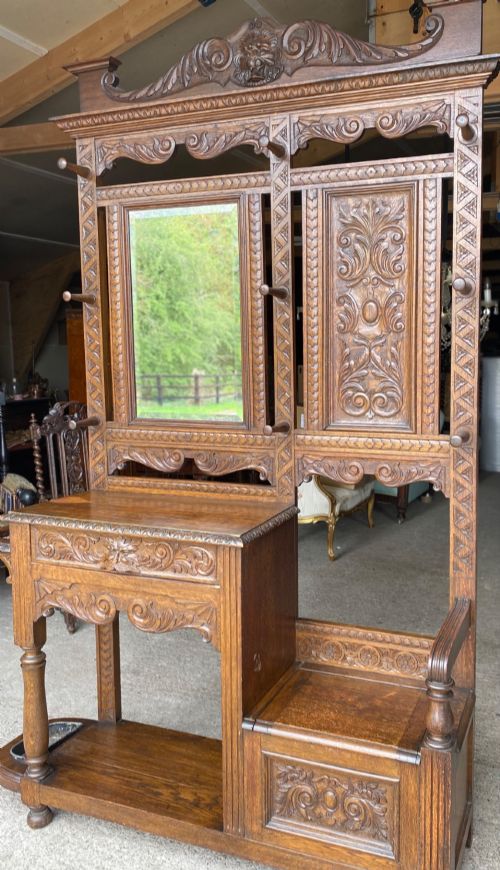
The presence of original hardware, such as stamped brass hooks, matching drip pans, and intact mirror glass, elevates the integrity of an object. Carved detail, whether geometric strapwork or figural ornamentation, reflects the ambition of the original design.
Wooden Entryway Stand Retail Price Guide 2026
Typical asking prices for wooden entryway stand among the pieces listed under this phrase on Sellingantiques today, from the lower quarter to the upper quarter. They describe what is for sale here now, not the wider market.
A carved Black Forest bear stands ready to hold your walking sticks.
Thonet·Christopher Dresser·Astrola
The Wooden Entryway Stand Glossary
- Hall stand
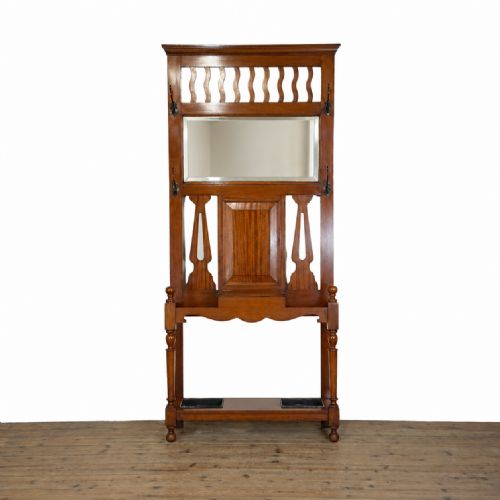
- A tall piece of hall furniture combining coat hooks, a mirror, glove drawers, and umbrella storage. Many Victorian and Edwardian examples also integrate a bench seat.
- Bentwood
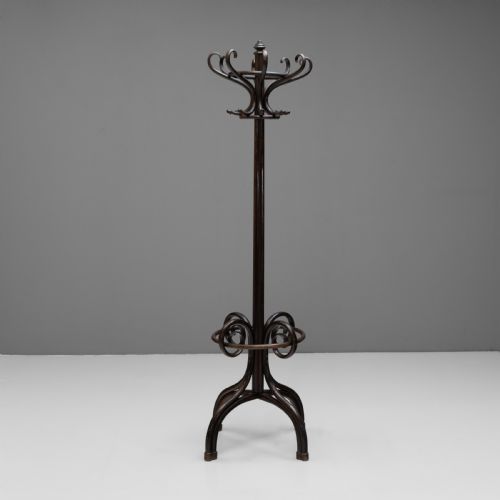
- Wood softened by steam and bent into curved structural forms. This technique created lightweight, resilient coat and umbrella stands popular around nineteen hundred.
- Hall tree
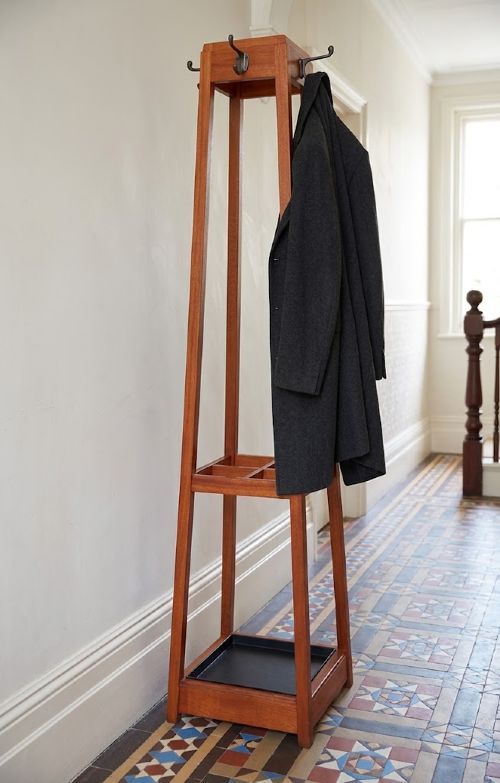
- A freestanding vertical post with multiple branches for hats and coats. These items often include a weighted base or lower ring for sticks.
- Arts and Crafts
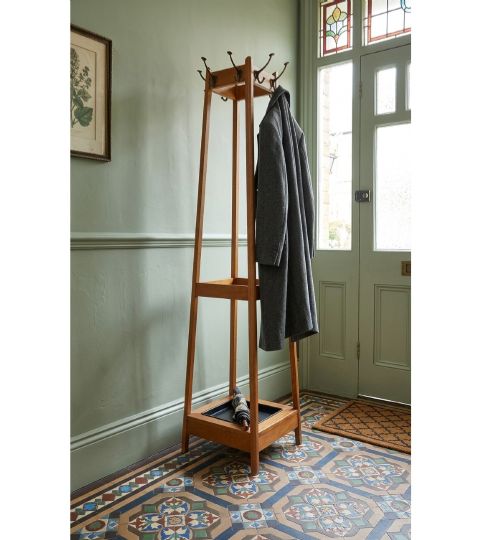
- A design movement prioritising visible construction, honest materials, and plain surfaces. Pieces from this aesthetic favour golden oak and minimal ornamentation.
- Stick stand
- A designated receptacle for umbrellas and walking sticks, often incorporating a metal tray at the base to catch rainwater. They appear both as standalone items and integrated into larger hall furniture.
Wooden Entryway Stand: Frequently Asked Questions
What is the difference between a hall stand and a coat tree?
A hall stand typically combines multiple functions into one large piece of furniture, incorporating mirrors, storage compartments, and benches alongside coat hooks. A coat tree is generally a simpler, vertical post with branching arms designed solely for hanging garments and hats.
While both serve the same spatial purpose, hall stands offer a more architectural presence in an entrance hall. They provide dedicated spots for sitting down and concealing smaller items out of sight.
How do I care for antique oak furniture?
Maintain antique oak by dusting regularly with a dry, soft cloth and avoiding silicone-based polishes that build up over time. Natural wax applied sparingly helps nourish the timber and preserve the historic finish.
Keep wooden pieces away from direct heat sources and strong sunlight to prevent the grain from drying out or splitting. Stable room temperatures ensure the timber and any glued joints remain secure.
How do I distinguish Edwardian hall furniture from Victorian pieces?
Victorian hall stands tend to be heavier, featuring darker woods, elaborate carvings, and dense ornamentation that reflects 19th-century tastes. Edwardian designs often appear lighter in scale, favouring simpler lines and brighter golden oak or mahogany finishes.
Arts and Crafts influences during the Edwardian period brought forward unpretentious forms with exposed joinery. Looking at the overall mass and decorative restraint helps clarify the likely period of manufacture.