


Antique Glove Box Stand
These antique glove box stand pieces bring practical oak and mahogany structure to an entranceway, offering a tidy spot for hats, coats, sticks and gloves.
Antique Glove Box Stand
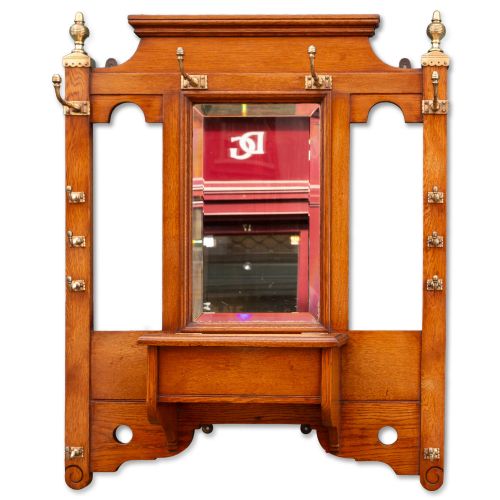
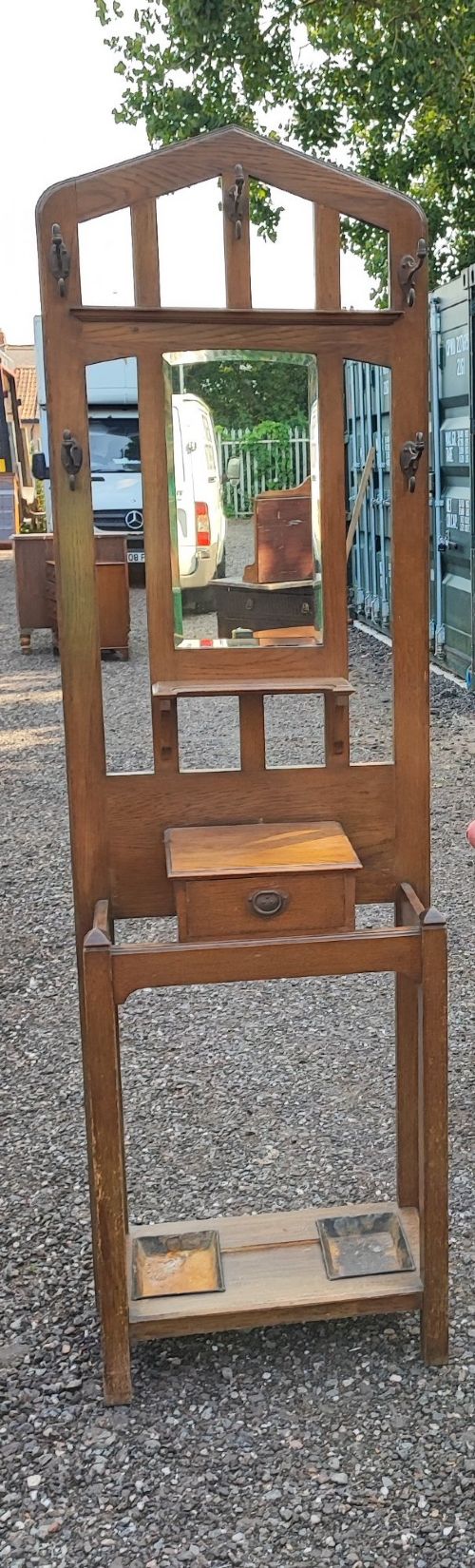
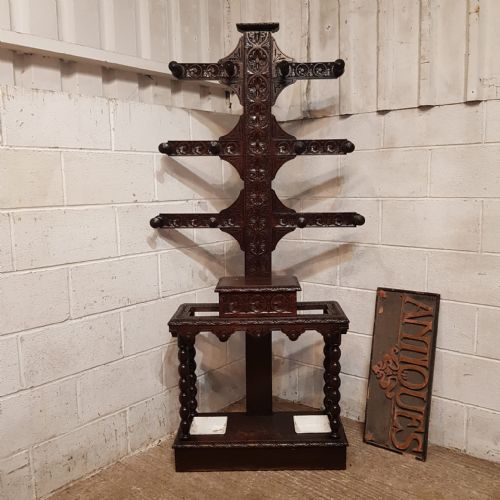
When you search for an antique glove box stand, you are looking at entranceway furniture designed to hold garments, walking sticks and small accessories. The pieces on this page primarily take the form of hall stands, hallstands, coat racks, umbrella stands and stick stands. They serve to organise the hallway while offering carved detailing or integrated compartments for daily items.
The examples gathered here span the Victorian, Edwardian and late nineteenth-century periods, alongside pieces dated around nineteen-ten. You will meet wall-mounted coat racks alongside larger floor-standing pieces. Oak is the most frequent wood you encounter, joined by walnut and mahogany.
Stylistic variations range from standard Victorian and Edwardian iterations to specific revivals including Jacobean Revival and Gothic Revival. Arts and Crafts examples also appear, showing lighter oak treatments and simpler lines. Most floor-standing versions combine coat hooks with mirror panels, umbrella wells and stick compartments.
How they were made
Construction relies heavily on solid timber frames, with oak, walnut and mahogany forming the primary structure. Workshops employed traditional joinery to withstand the daily weight of heavy coats and damp umbrellas.
Recorded styles include Victorian Gothic Revival alongside Arts and Crafts and Jacobean Revival variants.
What varies in quality
The depth and crispness of the carved detailing set standard production apart from finer examples. More accomplished workshops invested time in intricate fretted panels, substantial mouldings and balanced proportions.
The choice of timber and the quality of the hardware dictate the overall substance of the piece. Selected walnut and golden oak with heavy brass or copper mounts command greater presence than simpler utility pieces.
The Antique Glove Box Stand Glossary
- Hallstand
- A combined piece of hallway furniture typically incorporating coat hooks, a mirror, umbrella wells and a glove compartment or shelf. These items formed the central storage unit of a traditional entrance hall.
- Jacobean Revival
- A nineteenth-century design style drawing on seventeenth-century motifs, featuring heavy turned spindles, strapwork and dark oak timbers. It imparts a severe and solid architectural character.
- Gothic Revival
- An architectural and decorative movement reviving medieval forms, characterised by pointed arches, trefoils and deep chamfering. In hall furniture, this style manifests in austere, ecclesiastical lines.
- Arts and Crafts
- A movement prioritising visible construction, honest materials and simple form over mass-produced ornamentation. Light oak and subtle hand-working typify this approach in entrance furniture.
- Drip tray
- A metal liner, often formed from brass or copper, positioned at the base of stick and umbrella stands to catch moisture. It protects the surrounding wooden floorboards from water damage.
Antique Glove Box Stand: Frequently Asked Questions
What is an antique hall stand used for?
These pieces function as dedicated storage hubs situated near the front entrance of a home. They provide hanging space for outerwear alongside designated holders for walking sticks and umbrellas.
Many incorporate small compartments or surfaces for resting gloves, keys and letters upon entering the house. The inclusion of a mirror allowed occupants to check their appearance before stepping outside.
How do I identify a Victorian hall stand?
Victorian examples generally rely on dark timbers such as walnut and heavy carved oak, often featuring deep mouldings and turned spindle work. Stylistic cues include Gothic or Jacobean revival motifs combined with bevelled mirror glass and cast metal hardware.
Later Victorian and Edwardian pieces tend to lighten in tone, sometimes adopting Arts and Crafts principles with simpler lines and lighter oak finishes. The presence of carved floral or geometric panels remains consistent across the nineteenth-century period.
Where should I place a hall stand at home?
These items suit entrance halls, boot rooms and wide corridors where coat and umbrella storage is required. Floor-standing versions need adequate wall clearance to secure them safely and to utilise the coat hooks effectively.
Wall-mounted coat racks work well in narrower passages where floor space is limited. Positioning them near the primary doorway ensures practicality for everyday arrivals and departures.
What materials are common in these stands?
Solid woods form the primary structure, with various grades of oak, walnut and mahogany appearing across the different periods. Light and golden oak feature prominently in Arts and Crafts and Edwardian iterations.
Metal components appear as functional elements, including brass, iron and copper for coat hooks and umbrella drip pans. Glass is utilised primarily for central mirror panels set into the wooden backboards.