
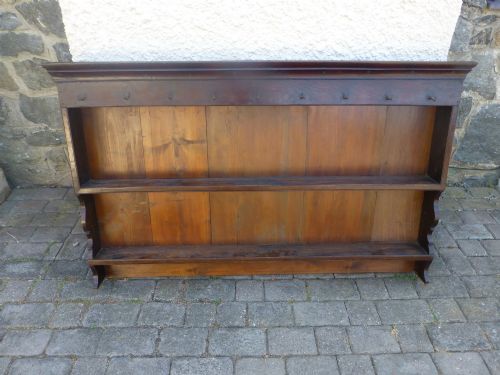
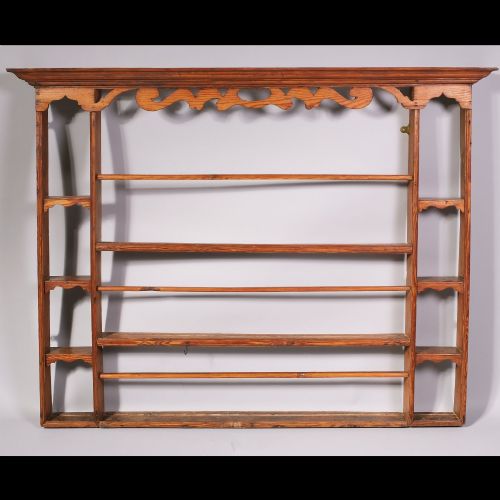
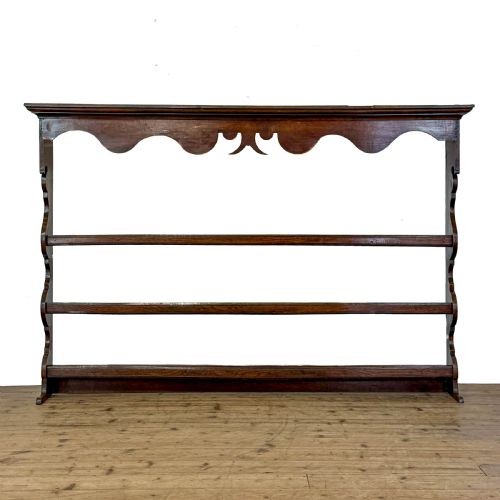
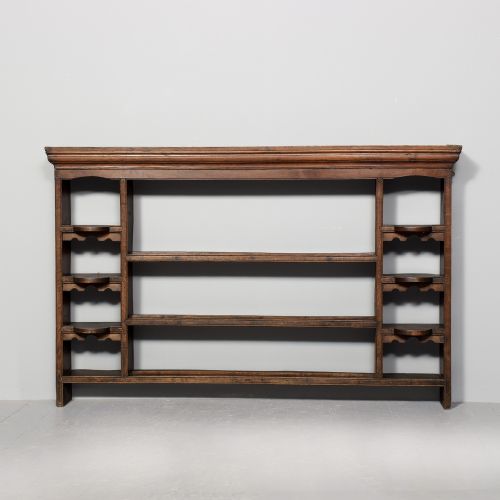


Wooden Dresser Top Rack
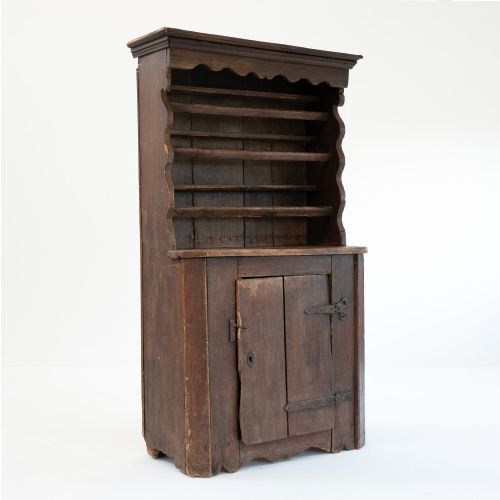
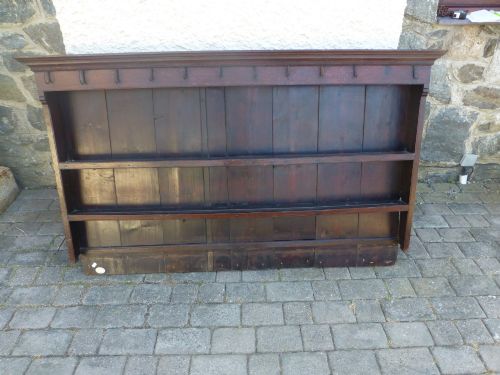
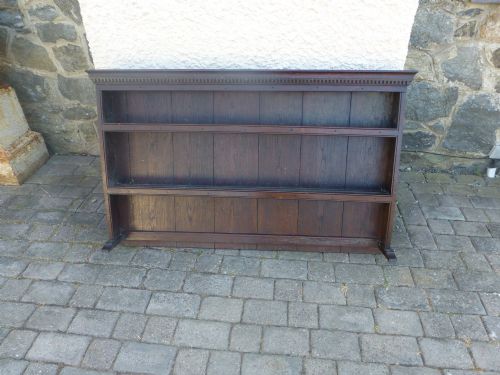
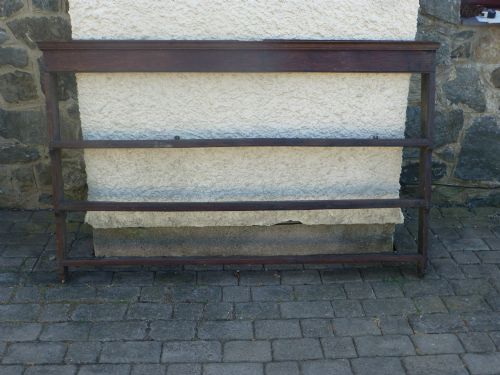
A wooden dresser top rack brings honest utility and timeless display space to a room, perfect for showcasing earthenware plates.
Wooden Dresser Top Rack
A wooden dresser top rack provides open shelving designed to sit atop a base or mount directly to a wall for plate display. When searching for a wooden dresser top rack, buyers encounter examples primarily spanning the eighteenth and nineteenth centuries.
The prevailing forms originate from Georgian, George III, and country traditions, reflecting English, Irish, and Welsh domestic utility. Most surviving examples are constructed to hold delftware and ceramic plates securely within traditional kitchen and dining spaces.
Pieces range from simple pine wall shelves to substantial oak frameworks associated with larger country dressers. Collectors find both standalone wall-mounted racks and upper sections separated from their original dresser bases.
Materials and construction methods
Constructed predominantly from native timbers, these racks rely heavily on solid oak and pine for their structural integrity. Carpenters utilised sturdy boards to build plate rails, plate slots, and backing panels capable of supporting heavy earthenware.
Iron and brass fittings appear as original hanging brackets, strap hinges, or hooks used for securing the rack to the wall or suspending utensils. Simple pegged joints and handmade fixings denote the traditional joinery techniques of the period.
Assessing quality and proportion
Quality rests upon the proportion of the timber, the depth of the plate slots, and the retention of original surfaces. Finer examples display well-figured oak boards with mellow patination developed through generations of domestic use.
The integrity of the structural rails and the presence of original brass or iron hardware distinguish superior items from later adaptations. Pieces that retain their untouched dry surfaces hold greater visual appeal than heavily restored equivalents.
The Wooden Dresser Top Rack Glossary
- Delft rack
- A specialised shelving unit designed specifically for displaying tin-glazed earthenware plates upright against a wall. These racks feature deep grooves or protective front rails to prevent slip.
- George III
- The stylistic period spanning from seventeen sixty to eighteen twenty, characterised by sturdy proportions and traditional country joinery. Pieces from this era often utilise dense native oak.
- Wall rack
- A hanging shelving unit fastened directly to plaster or wood panelling rather than resting upon a furniture base. They save floor space while providing accessible storage.
- Patina
- The surface sheen and colour acquired by wood over centuries through handling, polishing, and exposure to light. It serves as an indicator of age and honest preservation.
Wooden Dresser Top Rack: Frequently Asked Questions
How do I hang a heavy wooden rack safely?
Secure the frame directly into wall studs using appropriate steel brackets or screw fixings positioned behind the upper and lower rails. The weight of heavy ceramic plates requires robust support to prevent pulling away from old plaster.
Distribute the weight evenly across the fixing points and verify the stability of the timber backing boards before loading plates onto the shelves.
Were these racks always attached to dressers?
Many racks were originally built as upper components for kitchen dressers, while others functioned as independent wall-mounted units. Survival evidence shows both integrated setups and standalone hanging shelves produced across the eighteenth century.
Separated racks often bear mounting holes or fixing marks that indicate their original configuration in domestic kitchens.
How should I clean antique pine and oak?
Dust the surfaces regularly with a dry, soft cloth to prevent grime accumulation in the carved details and plate grooves. Avoid harsh chemical cleaners or modern polishes that can strip the dry historic finish from the wood.
Occasional application of traditional beeswax helps nourish dry timber without altering the authentic patination.
How do I tell an eighteenth century rack apart from a later copy?
Examine the timber shrinkage, the tool marks left by hand planes, and the composition of the iron or brass fixings. Eighteenth-century examples display irregular hand-cut peg placement and native oak or pine boards showing genuine age.
Machine-sawn timber, uniform modern screws, and artificial distressing usually indicate a twentieth-century reproduction rather than a Georgian original.