


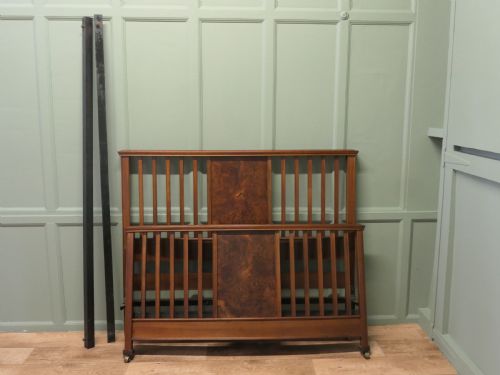
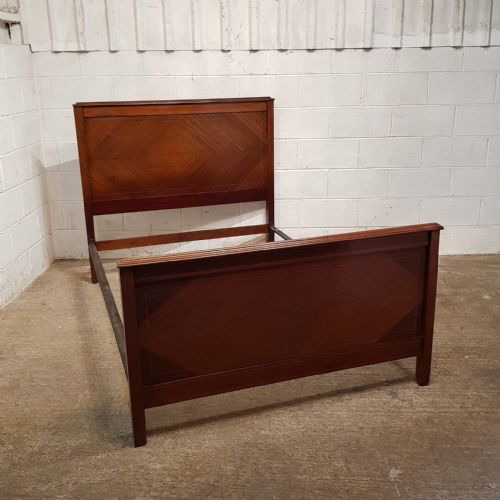
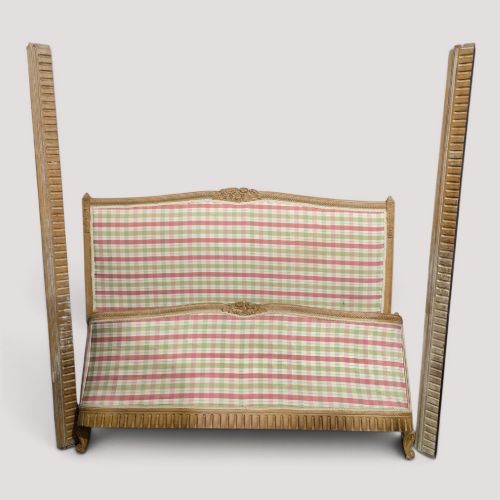
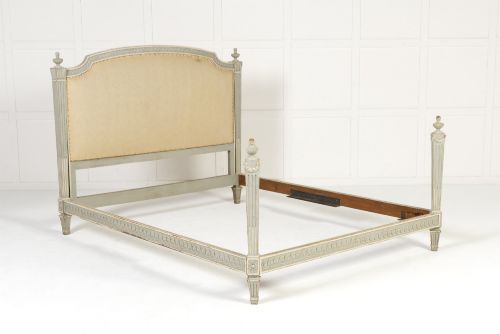
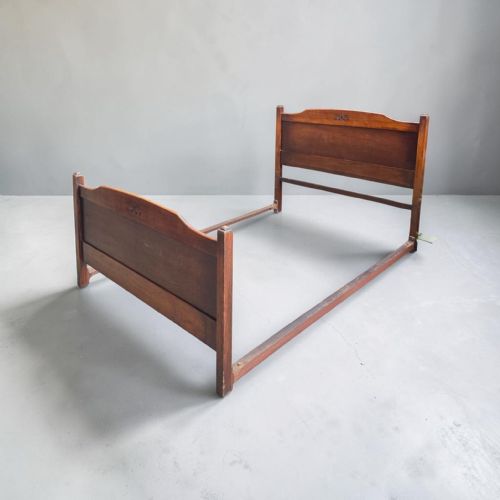
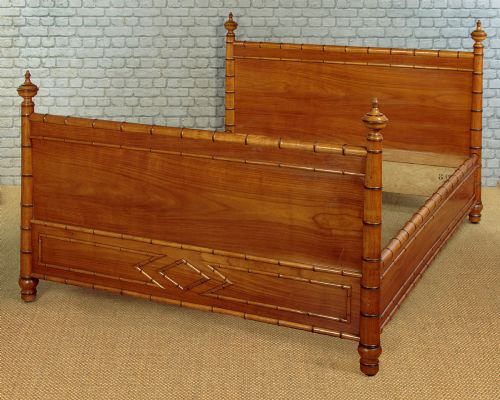
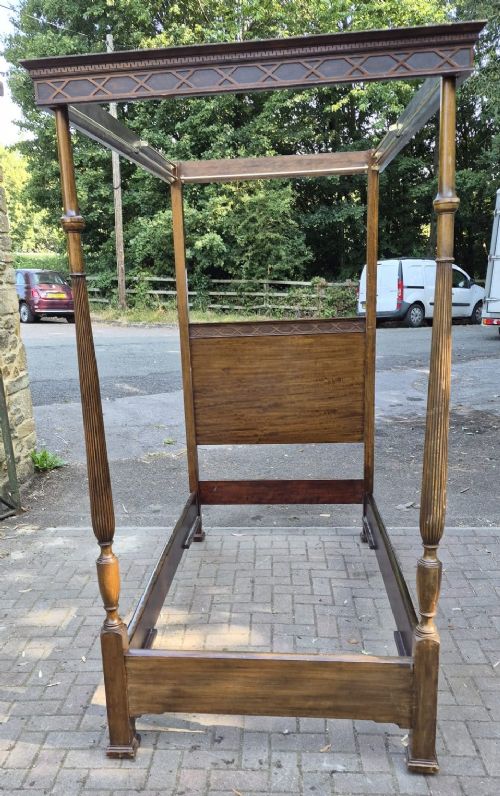
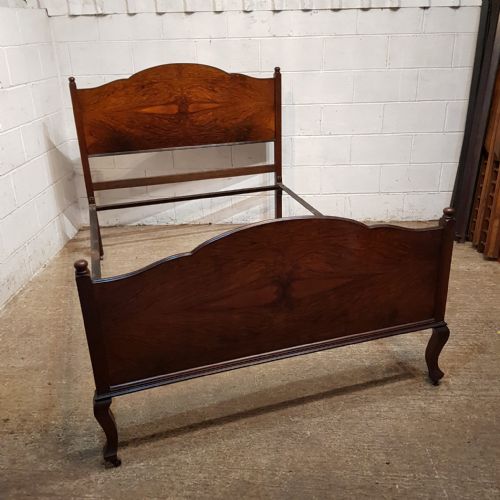
Wooden Double Bedstead
A wooden double bedstead offers solid construction and period character, bringing warmth and presence to a bedroom.
Wooden Double Bedstead
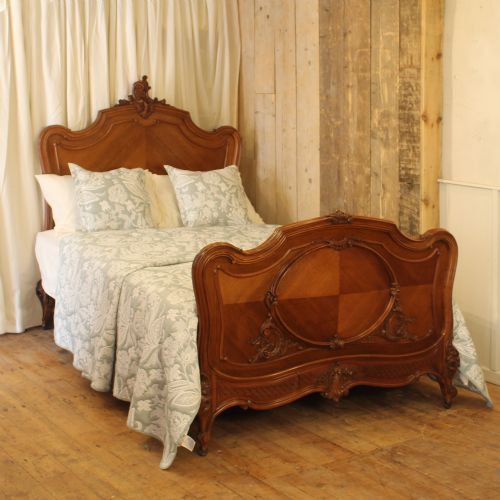
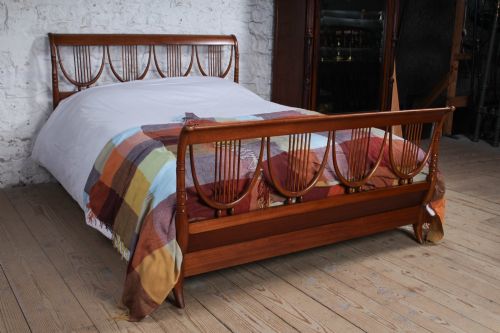
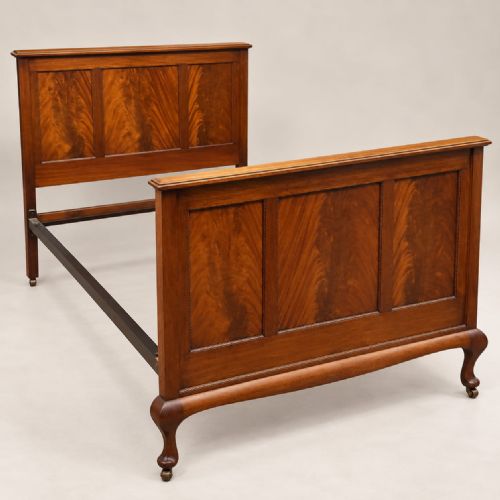
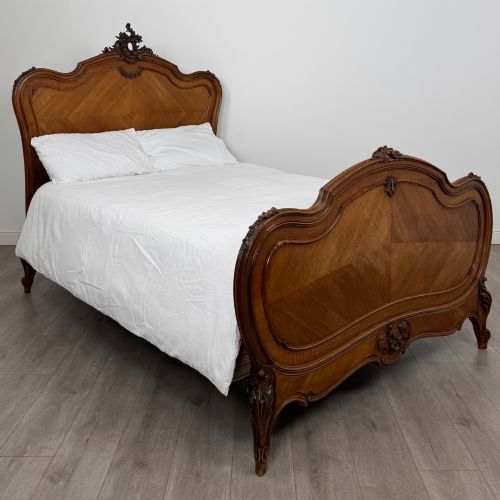
Buyers seeking a wooden double bedstead encounter various regional interpretations, with French walnut and painted finishes appearing alongside British Edwardian and Victorian examples. The selection spans straightforward timber rails and panelled headboards to elaborate four-poster and Louis XVI revival constructions.
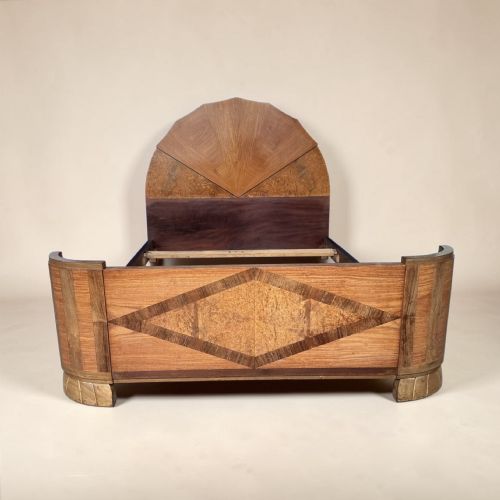
The form developed across centuries, shifting from heavy seventeenth-century tester beds to lighter Edwardian frames and streamlined 1930s geometric shapes. Walnut and mahogany dominate the offerings, frequently enhanced by marquetry, burr veneers, or cane panels.
How they were made
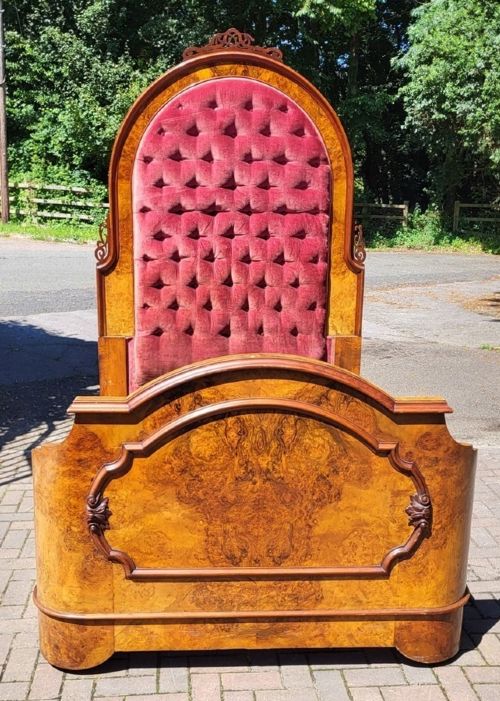
Cabinetmakers utilised solid timbers such as oak, mahogany, and walnut for the primary structural members, ensuring rigidity across the span of the bedstead. Veneers of burr walnut, birdseye maple, and macassar added decorative grain patterns to prominent headboards and footboards during the Edwardian and Art Deco periods.
Construction techniques combined traditional joinery with bolted iron brackets to allow easy dismantling and transport. Surface decoration involved hand-carving, liming, French polishing, and marquetry inlay, matching the stylistic demands of French provincial, neoclassical, or Arts and Crafts aesthetics.
Several beds feature faux bamboo turned wood, proving that Victorian makers loved tropical botanical imitation just as much as we do.
What varies in quality
The sophistication of the timber selection and veneer matching defines the visual hierarchy among these bedsteads. Highly figured burr walnut, satinwood, and master-carved oak details indicate workshops operating at a higher standard than plain timber utilitarian frames.
Structural integrity relies on the retention of original mounting hardware and the stability of the wood joints over decades of use. Pieces displaying refined proportions, delicate parquetry, and integrated canework reflect superior craftsmanship compared to simpler regional vernacular builds.
Stanley Webb Davies·Maple and Co
The Wooden Double Bedstead Glossary
- Bedstead
- A framework of wood or metal supporting a mattress and bedclothes. It includes headboards, footboards, and side rails.
- Burr Walnut
- Timber taken from a tree growth featuring intricate, swirling grain patterns. This material was sliced into decorative veneers for prominent furniture surfaces.
- Four Poster
- A bed with four vertical columns supporting an upper canopy or tester. These grand structures often feature substantial oak or mahogany carving.
- Marquetry
- Decorative patterns formed by inserting pieces of coloured wood, shell, or ivory into a veneered surface. This technique creates detailed pictorial designs on headboards.
- Caning
- Woven rattan or split reed stretched within a wooden frame. It provides a lightweight, decorative panel insert for headboards and footboards.
Wooden Double Bedstead: Frequently Asked Questions
How do I choose the right period style?
Consider the architectural period of your home and existing furniture when selecting a style. Edwardian mahogany frames offer clean traditional lines, while Art Deco walnut designs introduce geometric warmth and bolder grain patterns.
French provincial and Louis XVI revival pieces bring carved ornamentation and lighter painted finishes. Matching the wood tone to surrounding wardrobes and chests helps integrate the bedstead into the room.
Will an antique bedstead fit modern mattresses?
Many older bedframes were built to nineteenth or early twentieth-century sizing conventions that differ slightly from current standards. Measuring the internal rail length and width carefully before purchase ensures a proper fit for standard modern mattresses.
Some bedsteads may require custom mattress ordering or minor internal adjustments to slats and support rails. Consulting with the dealer about internal dimensions prevents sizing complications upon delivery.
How should I care for polished wood finishes?
Maintain wooden surfaces by dusting regularly with a soft, dry cloth to prevent abrasive particle buildup. Avoid placing the bedstead near direct heat sources or strong sunlight to protect natural timber veneers from drying and fading.
Occasional application of appropriate beeswax or quality furniture polish preserves the lustre of French polished mahogany and walnut. Avoid silicone-based sprays that can penetrate old finishes and damage the timber.
Are these beds easy to dismantle and move?
Most antique wooden bedsteads utilise bolt-together side rails connecting the headboard and footboard into three main sections. This knock-down construction was designed to facilitate transport between rooms and houses.
Exercise care when tightening metal bolts into older wood threads to prevent stripping. Having an extra pair of hands assists greatly during the assembly and positioning process.