


Traditional Mahogany Double Bed
These traditional mahogany double bed options combine solid timber frames with period character, offering enduring style and practical proportions for a bedroom.
Traditional Mahogany Double Bed
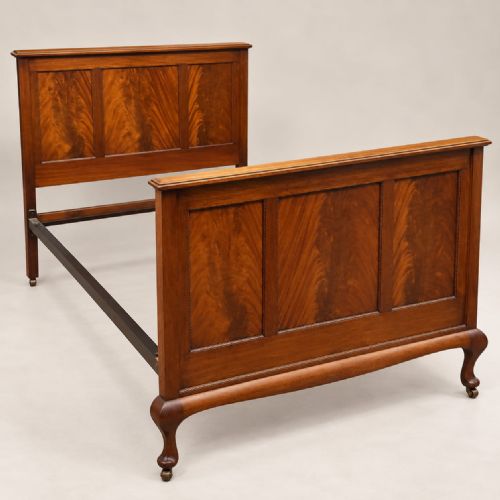
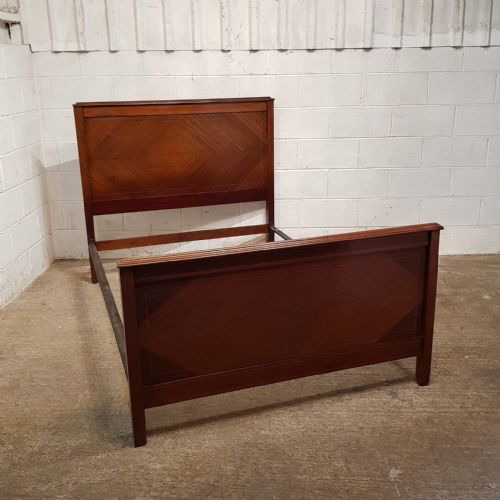
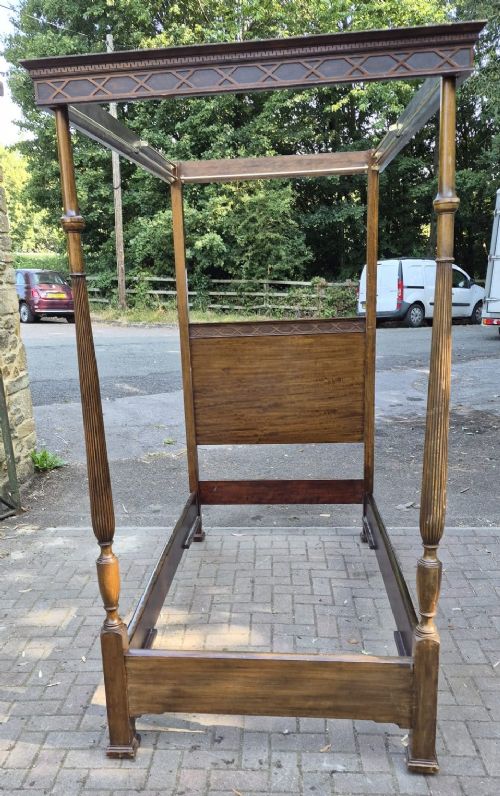
When you search for a traditional mahogany double bed, you encounter larger sleeping furniture frames primarily originating from the Edwardian and Victorian eras. These pieces include standard bedsteads, headboards, and four-poster variations built to accommodate two sleepers.
The versions most frequently met on this page date from the Edwardian period around nineteen hundred, alongside Victorian examples. Makers built these using timber, veneer, and occasional contrasting woods like satinwood and boxwood inlay.
Forms range from simple rail and panel designs to high back upholstered frames and Georgian revival styles. Brass details and marquetry appear on select pieces to add decorative contrast to the dark wood.
How they were made
Cabinet makers constructed these bedframes using solid mahogany and mahogany veneers over secondary timbers. They applied boxwood inlay, satinwood details, and marquetry to enrich the plain wood surfaces.
Structural strength relied on sturdy timber joinery, sometimes supplemented by iron components for stability. Upholstered panels appeared on high back Victorian designs, adding padded comfort to the wooden headboards.
Selected Edwardian frames incorporate subtle brass details and marquetry to delight those who appreciate quiet decorative touches.
What varies in quality
The refinement of the timber and the subtlety of the decorative inlay distinguish finer examples. Crisp carving in Chippendale revival styles and precise boxwood stringing indicate skilled workshop execution.
Proportion and scale determine the visual presence of the bedstead in a room. Well-balanced rail and panel constructions maintain structural integrity while displaying the rich grain of the mahogany.
The Traditional Mahogany Double Bed Glossary
- Bedstead
- A framework of a bed holding the mattress and springs. These traditional examples use wood and metal components.
- Marquetry
- Decorative veneer work formed by small pieces of wood fitted together to create pictorial patterns. This technique appears on select Edwardian frames.
- Inlay
- Material embedded into a contrasting background to form a design. Boxwood and satinwood serve this purpose on mahogany surfaces.
- Four poster
- A bed with four vertical columns supporting a tester or canopy. Edwardian makers occasionally built these in historical revival styles.
Traditional Mahogany Double Bed: Frequently Asked Questions
How do I fit a modern mattress?
Many older bedframes require careful measurement to ensure standard modern mattress sizes fit the internal dimensions. Slatted bedsteads often provide straightforward support for contemporary mattresses.
Adjustment or custom support slats may be necessary for older frames that were originally designed for wire springs or feather mattresses.
Are these beds easy to assemble?
Most period bedsteads utilise standard bolt-together side rails and head and footboard slots. This dismantling design made transport practical during the Victorian and Edwardian eras.
Careful handling of the heavy mahogany components ensures the antique joinery remains undamaged during assembly.
How do I care for mahogany?
Regular dusting with a soft, dry cloth protects the polished wood surface from abrasive particles. Avoid placing wooden furniture near direct heat sources to prevent the timber from splitting.
Occasional application of appropriate wax polish maintains the natural lustre of the mahogany grain without building up heavy residues.
What is Chippendale style?
Chippendale style draws inspiration from the eighteenth-century cabinet maker Thomas Chippendale and his published designs. Edwardian makers reproduced these classic proportions and carved details.
Pieces in this style feature refined woodwork that emphasises the natural qualities of the timber.