




Period Mahogany Bed Frame
A period mahogany bed frame anchors a bedroom with rich timber and historic presence.
Period Mahogany Bed Frame
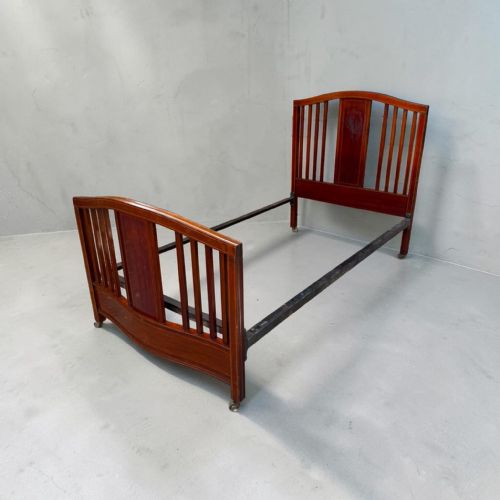
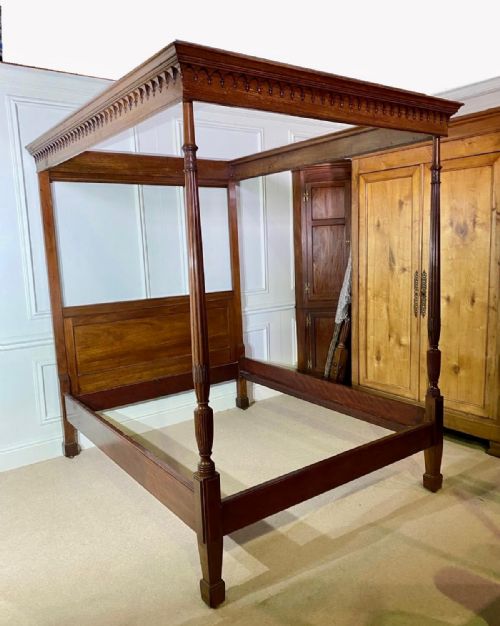
A period mahogany bed frame brings substantial timber construction into the bedroom, drawing from centuries of design from the eighteenth century through to the Edwardian era. You meet grand architectural four poster beds alongside simpler single and double bedsteads.
The selection here encompasses diverse regional interpretations, including Victorian designs and Anglo-Indian Colonial pieces. Mahogany forms the primary visual language, supported by flame mahogany veneer and carved details.
Makers utilised various scales ranging from single sleeping berths to king size proportions. Styles extend from Regency elegance and Chippendale carving to Louis XVI ornamentation.
How they were made
Joiners built these bed frames using solid timber alongside flame mahogany veneer to achieve rich surface figures. Secondary woods like pine appear in structural components, while iron and brass provide robust internal fastenings and decorative accents.
Some antique beds arrive with posts substantial enough to hold up the ceiling all on their own.
What varies in quality
The depth of hand carving and the selection of timber grain dictate the distinction between standard production and exceptional examples. Highly figured flame veneer and crisp mouldings elevate the visual weight of a frame.
Proportion and scale play significant roles, where grander four poster editions command greater presence than modest single bedsteads. The integrity of the original construction and surviving timber surfaces determine the lasting character of the piece.
The Period Mahogany Bed Frame Glossary
- Flame mahogany veneer
- A thin slice of timber cut from the fork of the mahogany tree to create a distinctive, flamy grain pattern. This decorative surface appears on prominent parts of select bed frames.
- Four poster bed
- A bed featuring four vertical columns that support an upper tester or canopy frame. These architectural pieces often showcase significant carved woodwork.
- Anglo-Indian Colonial
- A design style produced in India during the British Raj, often translating European forms into native timbers. These frames display distinct regional carving techniques.
- Chippendale
- A style derived from the eighteenth-century cabinet maker Thomas Chippendale, characterised by elaborate carving and classical motifs. Frames in this tradition exhibit refined ornamentation.
Period Mahogany Bed Frame: Frequently Asked Questions
What periods do these bed frames come from?
The listings span several eras, including the eighteenth century, the Regency period, the Victorian era, and the Edwardian period.
Each era contributes distinct design characteristics, from monumental four poster structures to inlaid single bedsteads.
What materials are used in these frames?
Mahogany serves as the primary wood, frequently enhanced by flame mahogany veneer and detailed inlay work. Secondary materials include pine for internal framing, alongside brass and iron hardware.
Some pieces also incorporate gilt wood details or upholstered panels.
What size options are available?
The selection includes single beds, double beds, king size frames, and super king size proportions. Four poster configurations are typically built to grander scales.
Single and double bedsteads offer more compact footprints suited to standard bedrooms.
How do I identify a Regency style bed?
Regency frames often draw inspiration from classical antiquity, featuring clean architectural lines and balanced proportions. They frequently appear as four poster beds with polished mahogany surfaces.
Details remain restrained compared to later Victorian or heavily carved Chippendale alternatives.