

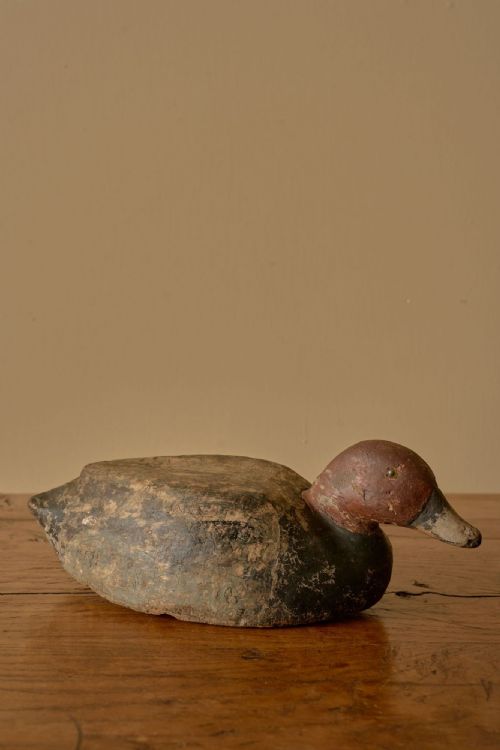
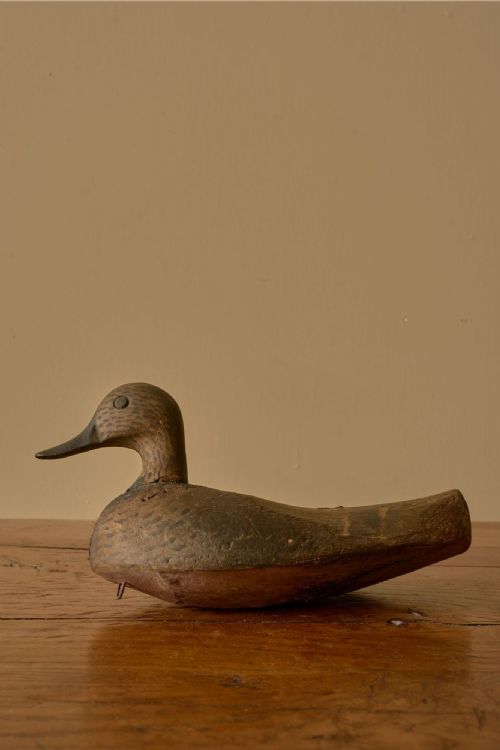
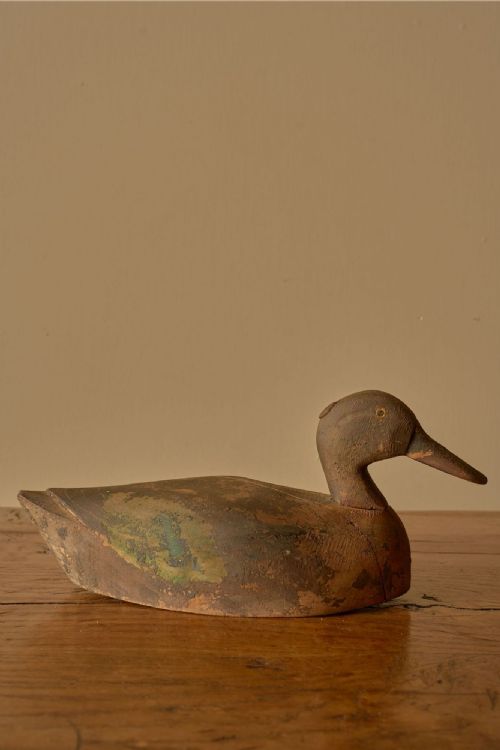
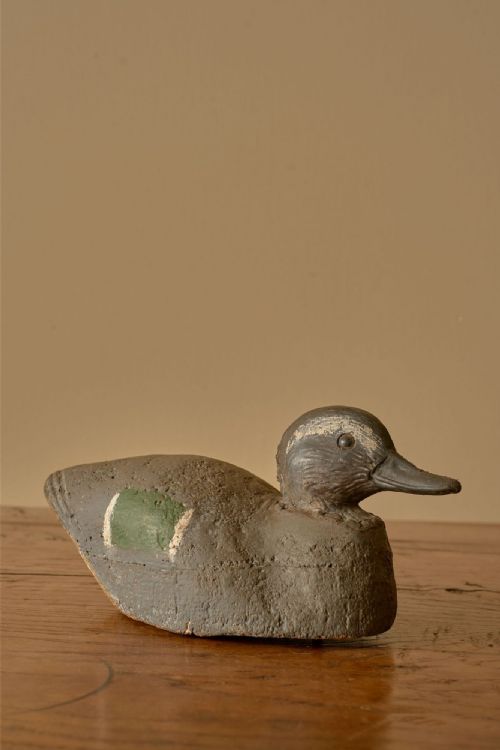
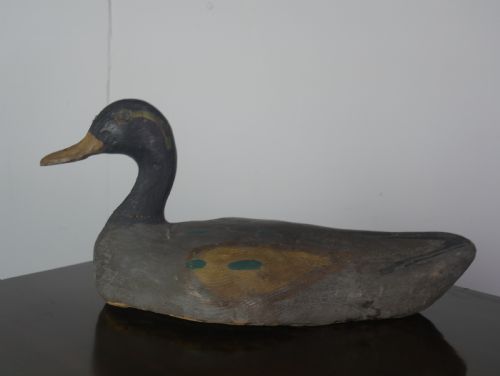


Wooden Decoy Bird
These wooden decoy bird examples bring tactile rustic charm into modern interiors, carved and painted by hand to deceive quarry.
Wooden Decoy Bird
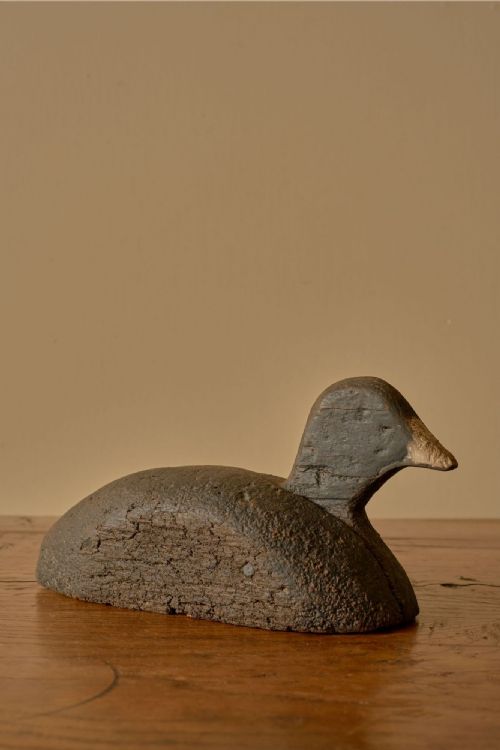
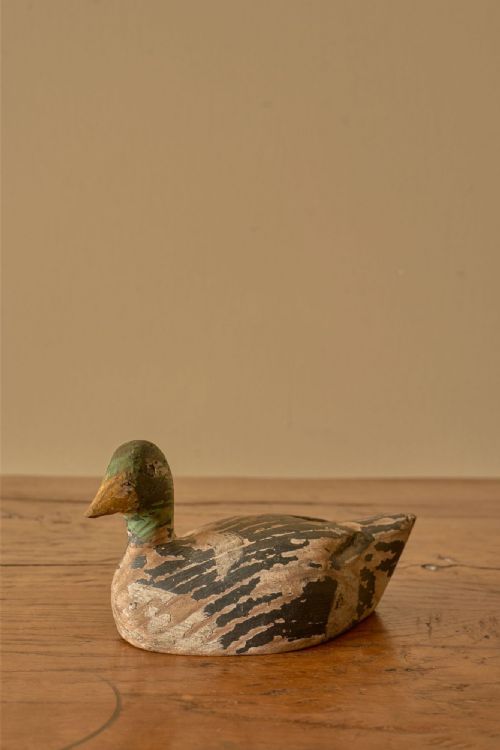
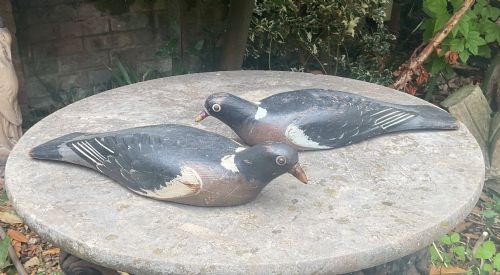
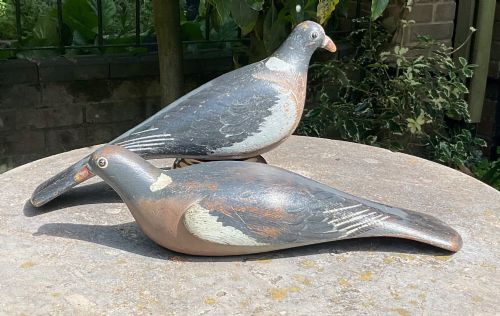
A wooden decoy bird serves as a sculptural folk art object shaped from timber to resemble ducks, pigeons, geese, doves, or waders. Collectors seek these pieces for their unpretentious utility and sculptural presence, originating from working environments where practicality dictated design.
Most examples encountered here date from the nineteenth century through the nineteen-thirties, spanning Victorian and Edwardian periods as well as later folk art interpretations. Duck variants dominate the selection, alongside pigeons, gulls, and shorebirds.
Makers fashioned these sculptures for active deployment on water or land, meaning surviving surfaces bear the marks of weather, use, and successive layers of pigment. Their appeal lies in this authentic working history rather than pristine factory production.
How They Were Made
Artisans carved these bodies from solid blocks of timber or wood, sometimes incorporating bark, iron, or glass for eyes and structural reinforcement. Tool marks remain visible across the surfaces where drawknives, gouges, and chisels shaped the contours.
Makers applied oil-based or lead paint directly to the timber, often layering colours over decades to update visibility in the field. Some specimens also integrate papier mâché and straw within their construction methods.
Wooden Decoy Bird Retail Price Guide 2026
Typical asking prices for wooden decoy bird among the pieces listed under this phrase on Sellingantiques today, from the lower quarter to the upper quarter. They describe what is for sale here now, not the wider market.
The inventory spans the nineteenth century through the nineteen-thirties, featuring materials including wood, paint, glass, iron, and bark.
What Varies in Quality
The strength of the original carving determines the visual balance of the silhouette, separating competent utilitarian objects from more expressive folk art sculptures. Bold, simplified forms often command greater visual interest than overly detailed attempts at realism.
The condition and character of the painted surface dictate the piece's decorative impact, with untouched original patination holding the greatest appeal. Wear, weathering, and remaining traces of early pigment enhance the textural depth of the object.
The Wooden Decoy Bird Glossary
- Folk art
- Objects created by self-taught or traditional makers outside academic traditions. These pieces prioritise practical utility and regional style over formal academic training.
- Treen
- Small handmade wooden objects designed for domestic or utilitarian use. The category encompasses carved items produced before the advent of mass manufacturing.
- Dovecote
- A structure or enclosure designed to house pigeons or doves. Decoys associated with these sites were utilised to attract birds towards established enclosures.
- Papier mâché
- A composite material consisting of paper pieces or pulp bound with glue or paste. Makers occasionally utilised this medium alongside straw for lightweight sculptural studies.
Wooden Decoy Bird: Frequently Asked Questions
How do I display a wooden decoy bird?
Place them on bookshelves, sideboards, or mantels where their sculptural silhouettes and weathered surfaces can be appreciated up close.
They pair well with natural materials and neutral backgrounds, allowing the aged paintwork to stand out within a room.
Are these decoys waterproof for outdoor use?
These historical pieces were originally built for working outdoors, but surviving examples now function primarily as interior decorative objects.
Exposing antique timber and historic paint layers to modern weather will damage the patination and accelerate deterioration.
How can I tell the period of a decoy?
Dating relies on observing tool marks, the composition of the timber, and the chemical nature of the remaining paint layers.
Nineteenth-century examples often display hand-hewn axe or drawknife marks, whereas nineteen-twenties pieces may show smoother mechanical shaping.
What species of birds do these decoys represent?
The selection includes ducks, pigeons, geese, godwits, loons, and doves shaped by makers to match regional quarry.
Duck variants are the most frequently encountered type, alongside pigeons originally deployed in agricultural settings.