
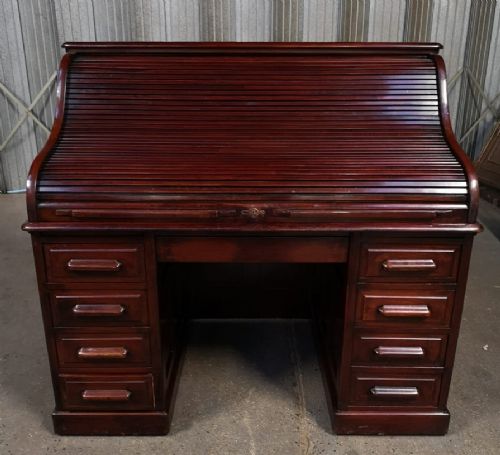
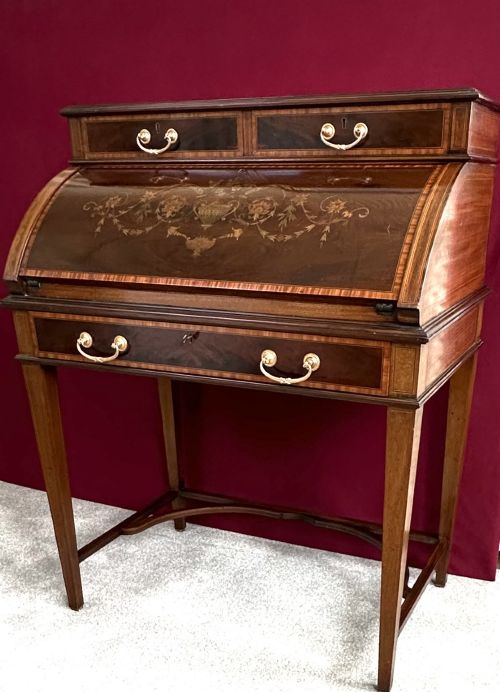
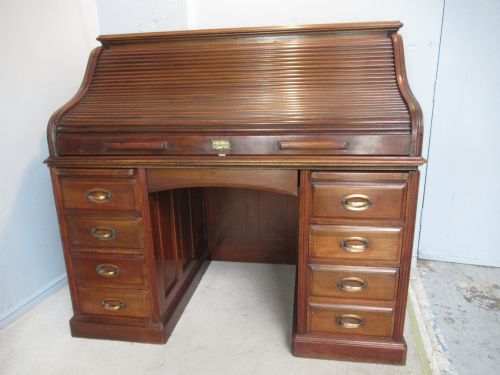
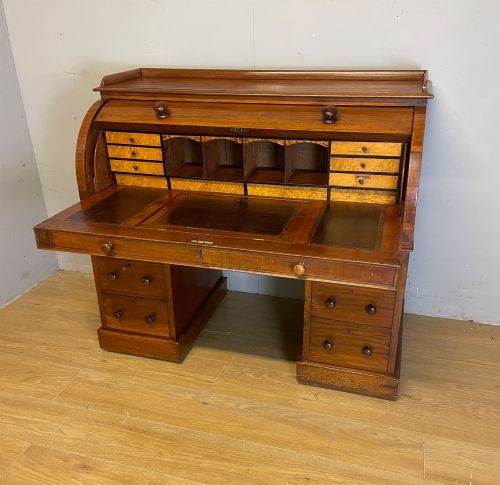
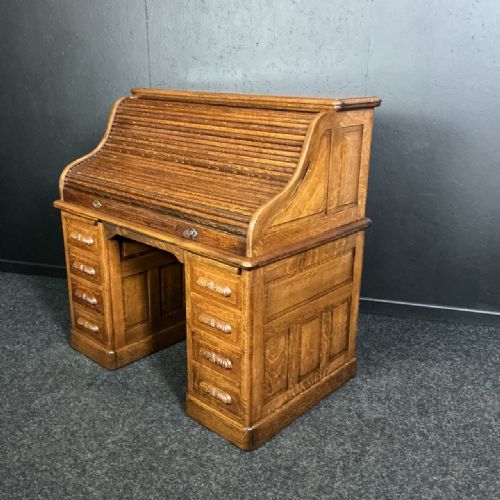
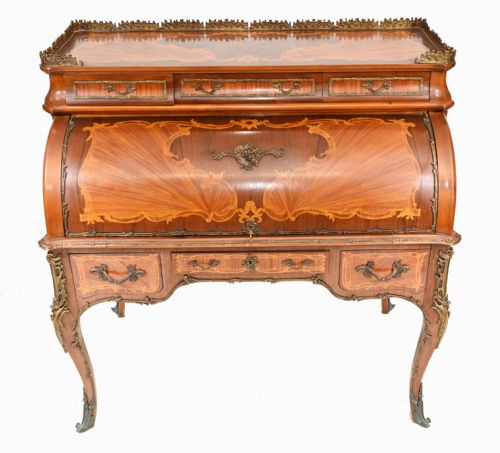


Wooden Cylinder Top Bureau
These wooden cylinder top bureau desks offer ingenious sliding covers to conceal private correspondence, combining practical workspace with polished period elegance.
Wooden Cylinder Top Bureau
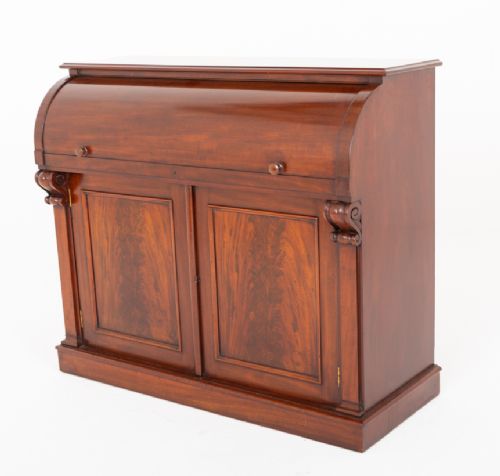
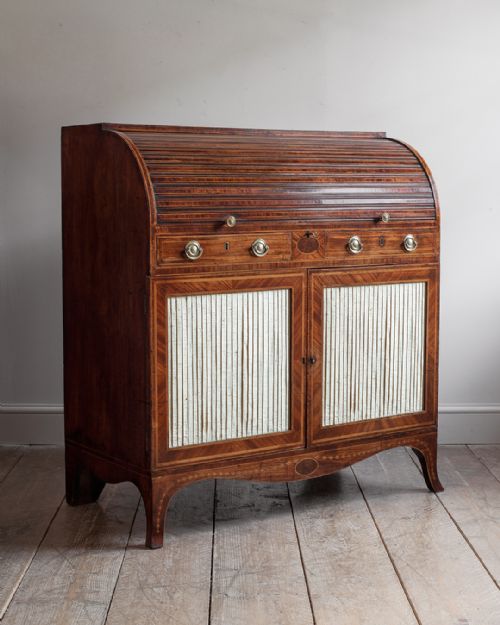
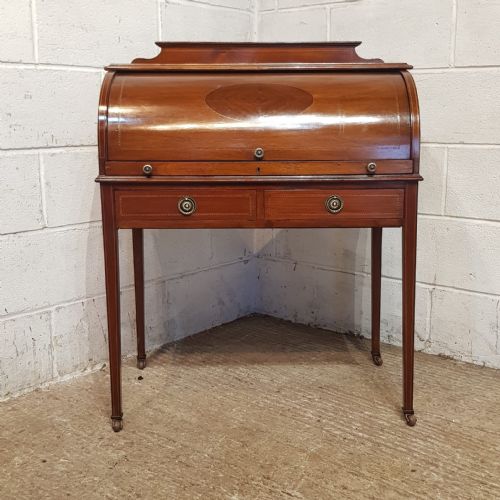
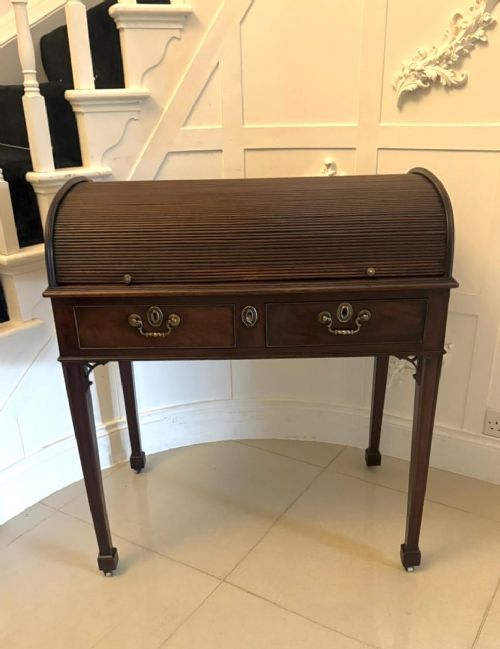
When you search for a wooden cylinder top bureau, you encounter sophisticated writing furniture designed with a curved, rotating shutter that conceals the writing surface and internal compartments. These pieces range from compact Edwardian and Victorian examples to generous Georgian and 19th Century masterworks.
The form appears in various stylistic interpretations across these listings, including English Regency, Louis XVI Revival, and even Japanese Yosegi work. Most pieces you meet on this page rely on pedestal configurations or fitted cabinet superstructures.
Makers adapted the basic mechanism to suit changing domestic needs, resulting in variations like barrel fronts, tambour panels, and three-part twin pedestal constructions. Each version provides a secure method for hiding paperwork while maintaining a tidy room.
What varies in quality
The sophistication of the cylinder mechanism dictates much of the distinction across these desks, where smoother rotation and precise alignment of the slats reflect superior carpentry. High-grade specimens operate silently and track cleanly within their built-in grooves without binding.
Selection of timber grain and the precision of inlaid decoration set apart the standard commercial pieces from exhibition quality works. Master craftsmen matched wood figures carefully across drawer fronts and cylinder curves, creating a harmonious surface pattern.
The furniture styles represented span Georgian, Victorian, Edwardian, English Regency, and Louis XVI Revival designs.
Wiggers
The Wooden Cylinder Top Bureau Glossary
- Cylinder top
- A curved wooden shutter that slides back in a track to reveal the desk interior. It provides a solid barrier when closed.
- Tambour
- A flexible sliding shutter constructed from narrow strips of wood glued to canvas or leather backing. This allows the cover to follow tight curves.
- Pedestal
- A support structure containing banks of small drawers set beneath the main desk top. Twin pedestal desks use two such stacks.
- Marquetry
- Decorative patterns formed by fitting together thin veneers of various coloured woods. Artisans assemble these like a puzzle before applying them to the carcase.
Wooden Cylinder Top Bureau: Frequently Asked Questions
How do cylinder desks work?
A curved wooden shell rotates on tracks to open or close over the writing surface. When pushed back, it disappears into the body of the desk.
This movement usually connects to an internal mechanism that automatically unlocks or locks the writing slide below.
What is the difference between a roll top and a cylinder desk?
A cylinder desk uses a solid curved panel made of bent wood or slats forming a smooth arc. A roll top typically uses narrow tambour slats.
Cylinder desks generally present a cleaner, more continuous curve when closed compared to the ribbed texture of traditional tambour surfaces.
Where were these desks placed?
Owners positioned these pieces in studies, libraries, and private offices for managing correspondence and financial records. The lockable covers kept sensitive documents secure from household staff.
Larger versions with integrated bookcases also served as display and storage cabinets in principal rooms.
How do I care for the timber surface?
Keep wooden cylinder desks away from direct heat sources and strong sunlight to prevent timber warping and veneer cracking. Regular dusting with a soft cloth preserves the polish.
Apply quality beeswax sparingly when the wood appears dry to maintain the natural lustre of the mahogany or oak.