





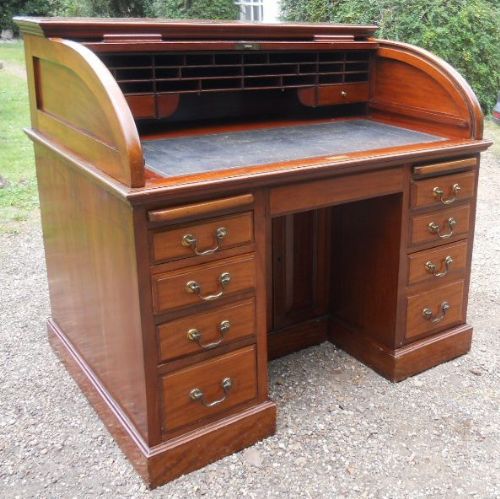
Mahogany Rolltop Pedestal Desk
These mahogany rolltop pedestal desk examples combine concealed workspace with solid timber construction, offering a practical workspace for any study.
Mahogany Rolltop Pedestal Desk
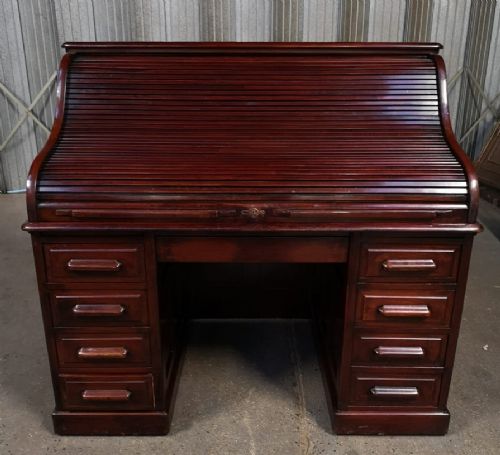
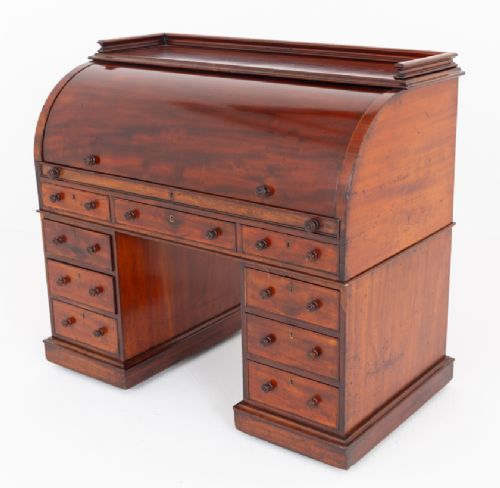
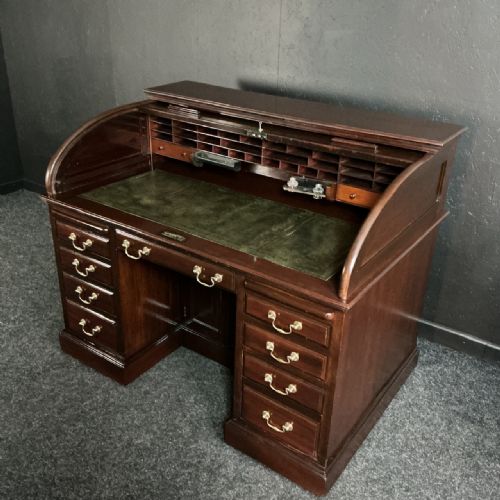
A mahogany rolltop pedestal desk is a traditional workspace defined by a tambour or cylinder shutter that slides down to conceal the writing surface and interior compartments. Buyers searching for a mahogany rolltop pedestal desk encounter forms spanning the Victorian and Edwardian eras, alongside Sheraton Revival and Georgian interpretations.
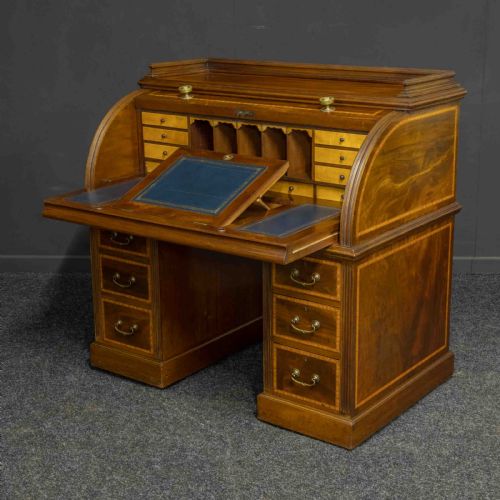
The layout typically incorporates pedestals of drawers flanking a central kneehole, with variations including cylinder desks and bureau bookcases. Examples range from compact nineteenth-century pieces to large kneehole configurations designed for extensive paperwork.
Originating in periods such as eighteen hundred and nineteen ten, these desks serve as both functional furniture and substantial statement pieces for home offices. The most common variants on this page date from the Victorian and Edwardian periods, constructed in rich timber.
How they were made
The defining tambour or cylinder mechanism requires precise woodworking, allowing flexible wooden slats or solid curved panels to glide smoothly within hidden tracks. Joinery techniques from the nineteenth century ensure the structural integrity of the heavy pedestals and writing drawers.
Listings feature mahogany timber supplemented by brass, leather, satinwood, and glass across Victorian and Edwardian periods.
What varies in quality
The standard of timber selection and colour largely dictates the distinction between ordinary and exceptional pieces. Rich, well-figured mahogany with a deep natural hue elevates a desk above those made from plain or faded wood.
The precision of the rolltop or cylinder mechanism separates fine cabinetwork from simpler construction. Smooth operation of the sliding tambour and neatly fitted internal satinwood stationery compartments indicate superior craftsmanship.
The Mahogany Rolltop Pedestal Desk Glossary
- Rolltop
- A flexible sliding cover made of narrow strips of wood glued to canvas, allowing it to curve over the desk top. This mechanism conceals the writing surface and pigeonholes when closed.
- Pedestal
- A structural column of drawers supporting one side of the desk top. Two pedestals typically flank a central kneehole space.
- Cylinder desk
- A desk featuring a solid, quarter-circle rotating cylinder rather than a slatted tambour shutter. It serves the same function of enclosing the writing area.
- Kneehole
- The open recess beneath the desk centre designed for the user's legs. Large pedestal versions incorporate generous kneehole clearances.
Mahogany Rolltop Pedestal Desk: Frequently Asked Questions
How do I maintain the leather writing surface?
Keep the leather clean by dusting it gently with a dry cloth and avoid applying harsh chemical cleaners that might strip the dye.
Condition the leather periodically with a specialist balm to prevent cracking and preserve the supple finish over years of daily use.
How do I tell a Victorian desk from an Edwardian one?
Victorian examples tend to feature denser, darker mahogany timbers and heavier proportions, often reflecting mid-nineteenth-century manufacturing standards. Edwardian pieces, dating from around nineteen hundred, frequently exhibit lighter scaling and occasional Sheraton Revival decorative influences.
Examining the internal drawer construction and secondary woods often provides clearer clues regarding the exact period of manufacture.
Can I fit a modern laptop inside the rolltop?
Most historic desks were built before the advent of computers, meaning interior depth and clearance vary considerably between individual pieces. Measure your equipment carefully against the internal writing surface dimensions before attempting to close the tambour shutter.
Compact nineteenth-century variations may require storing modern technology separately when the desk is locked.
What is the difference between a cylinder desk and a rolltop?
A rolltop utilises a flexible tambour shutter made of many small wooden slats joined on canvas to curve around a track. A cylinder desk uses a single solid curved piece of wood that rotates on a pivot.
Both forms achieve the same purpose of enclosing the desk interior, but the engineering of the movement differs significantly.