



Wooden Cane Barrel
A wooden cane barrel brings tactile warmth to a hallway, housing wet umbrellas and walking sticks in sturdy coopered oak or mahogany.
Wooden Cane Barrel
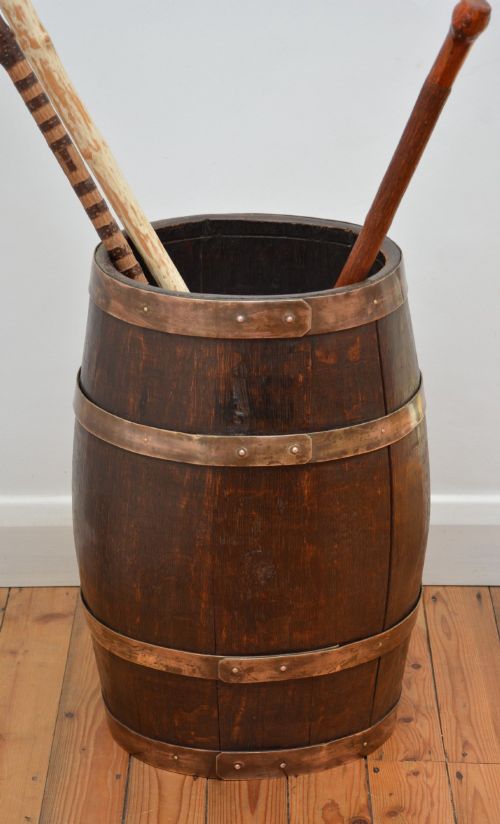
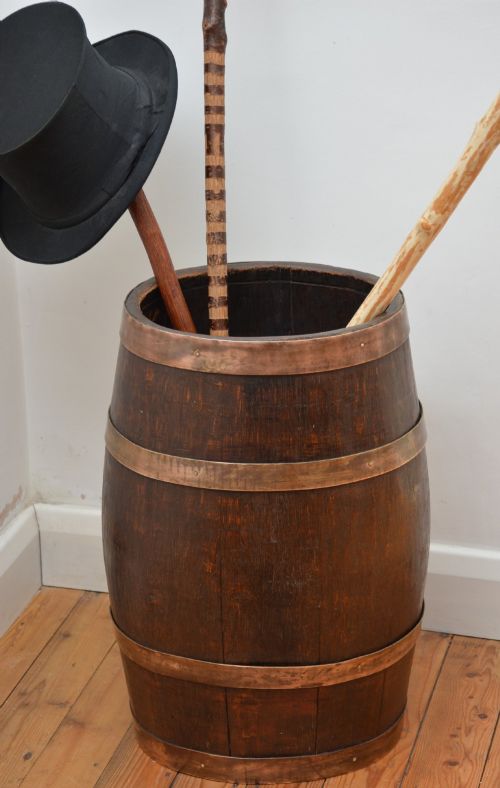
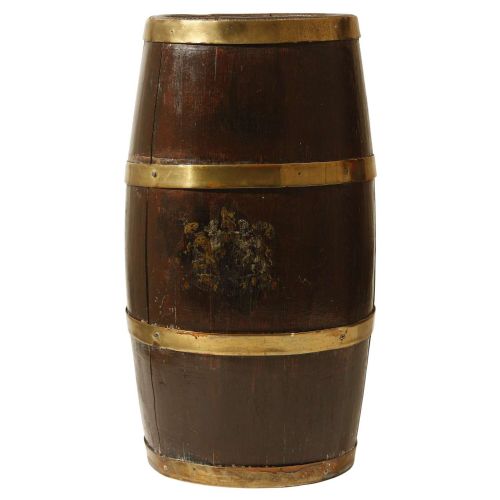
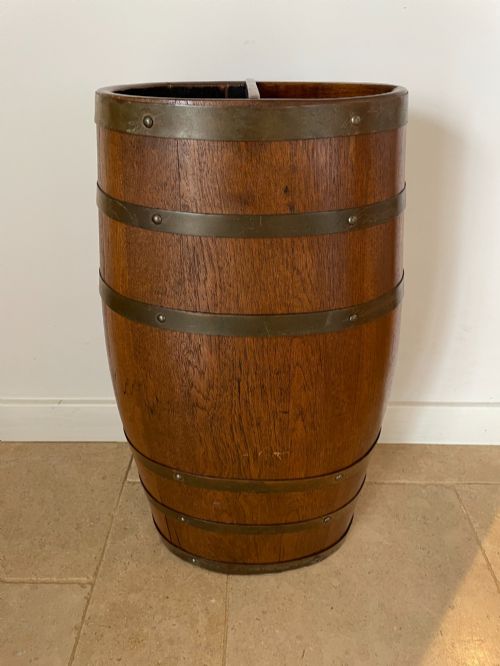
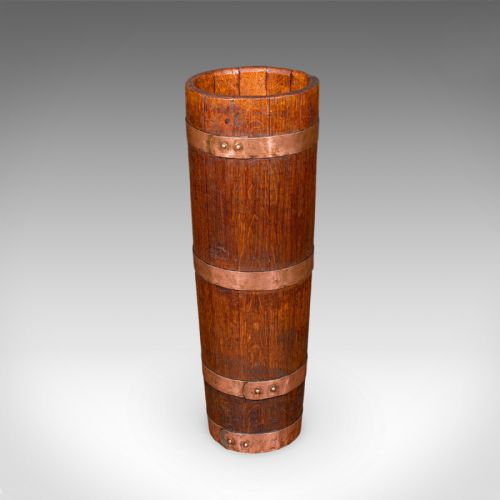
The wooden cane barrel serves as a practical vessel for hallway organisation, appearing most frequently in the form of coopered umbrella stands and stick stands. These vessels draw on country house traditions, designed to hold heavy walking canes and wet umbrellas without tipping.
Examples on this page span the Victorian and Edwardian eras, utilising solid timber construction shaped into round or oval bodies. Most pieces date to the nineteenth century, reflecting the domestic habits of the period when walking sticks were everyday outdoor attire.
Alongside dedicated barrel forms, the selection includes related seating such as tub chairs, armchairs, and musician's chairs. These seating forms share the rich timber palettes and period aesthetics of the storage barrels.
Materials and construction methods
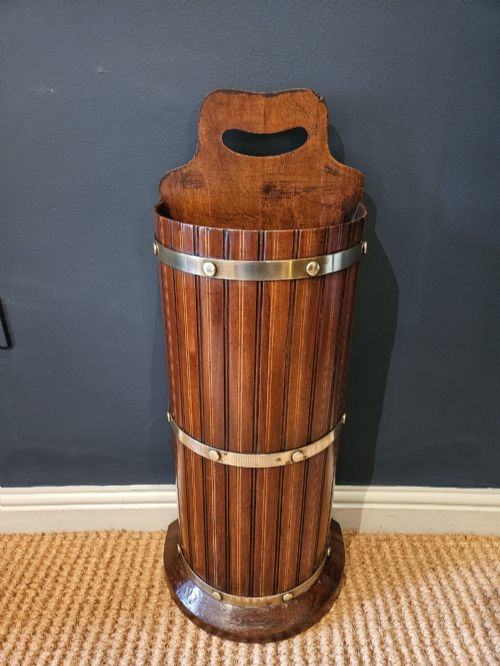
Construction relies heavily on traditional coopering techniques, where narrow wooden staves of oak or mahogany are fitted together to form a watertight or sturdy cylindrical body. Metal bands of brass, iron, or copper encircle the timber to hold the staves under constant tension.
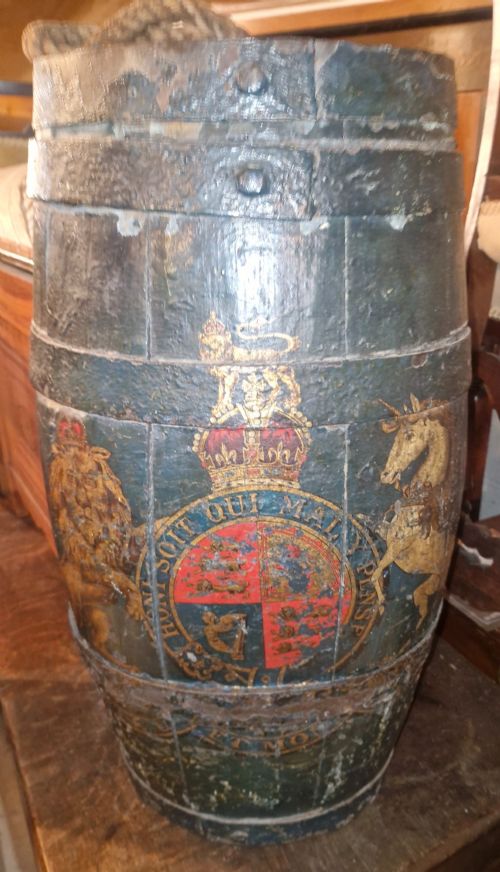
Selected pieces incorporate metal hanging loops or brass braces to keep canes upright and separated. Timber surfaces are finished to highlight the natural grain of the oak or mahogany, occasionally accented with applied crests such as an English coat of arms.
Wooden Cane Barrel Retail Price Guide 2026
Typical asking prices for wooden cane barrel among the pieces listed under this phrase on Sellingantiques today, from the lower quarter to the upper quarter. They describe what is for sale here now, not the wider market.
Some barrels double as quiet witnesses to muddy village strolls, holding centuries of damp British weather within their wooden staves.
Judging build quality and materials
Quality rests in the tightness of the coopered joints and the weight of the timber used for the staves. Solid oak and mahogany examples with thick walls demonstrate superior longevity compared to lighter timber constructions.
The choice of metalwork dictates visual distinction, with heavy brass bands and secured brass loops providing a more finished appearance than plain iron. Original oval shapes and well-preserved surface patinas elevate the standing of an individual piece.
The Wooden Cane Barrel Glossary
- Coopered
- A method of construction where curved wooden staves are bound together with metal hoops to form a cylindrical vessel. This technique originates from barrel-making traditions.
- Stave
- One of the narrow vertical strips of wood that form the sides of a barrel or tub stand. Staves are edge-jointed to create the curved body.
- Bergere
- A closed upholstered armchair with a wooden frame and woven cane panels on the back and sides. This style appears in library and parlour seating.
- Tub chair
- An armchair featuring a continuous curved back and arms that form a deep, rounded seating enclosure. The compact form suits traditional parlour settings.
- Patina
- The surface sheen and colour developed by aged timber through handling and exposure over decades. This quality indicates genuine age.
Wooden Cane Barrel: Frequently Asked Questions
What is a wooden cane barrel used for?
These vessels serve primarily as hallway receptacles for walking sticks, umbrellas, and parasols. Their deep cylindrical design keeps wet items contained while allowing them to dry.
Historically, they sat in country house vestibules to accommodate guests and residents arriving from the outdoors. Today, they function in entryways both as practical storage and as decorative interior elements.
How do I care for antique oak or mahogany?
Maintain the timber by keeping it away from direct heat sources and sudden humidity changes to prevent wood movement. Occasional application of appropriate wax polish helps nourish the grain.
Ensure metal liners, if present, are kept dry to protect the interior base from moisture damage over time.
How can I tell a Victorian barrel from a later piece?
Victorian examples frequently display heavier oak staves, hand-beaten or cast brass bindings, and darker patination developed through prolonged use. Construction details often show individual hand-fitting of the staves.
Later twentieth-century iterations tend to feature standardised machine-cut components and lighter timber finishes with less surface wear.
Are all wooden cane barrels waterproof?
While coopered barrels borrow techniques from liquid storage casks, many antique umbrella stands were designed primarily to hold dripping items rather than hold standing water. The timber staves rely on tight joints to contain moisture.
Many period pieces utilise internal metal drip pans at the base to protect the wooden floor from direct water contact.