

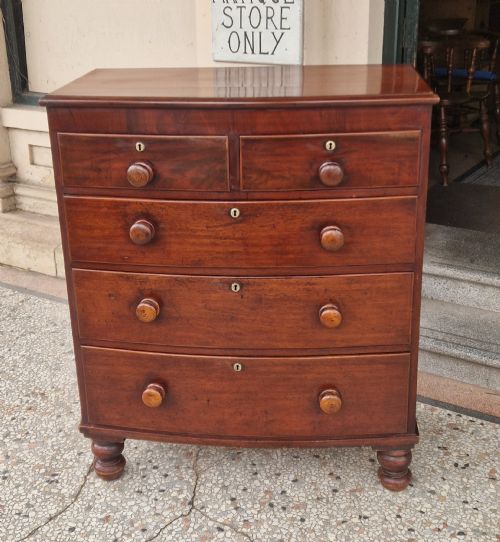
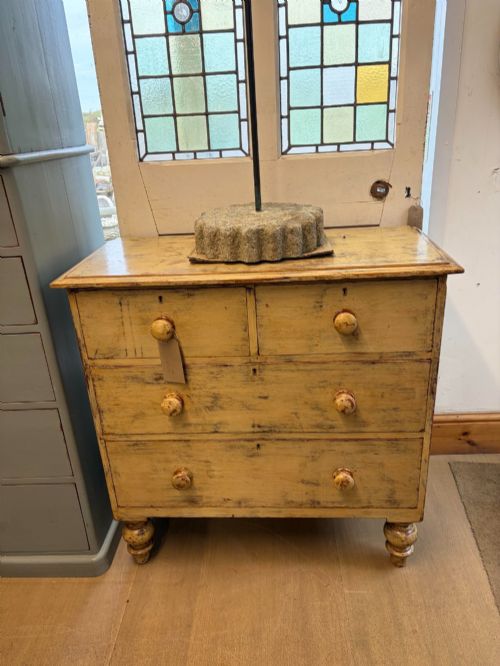
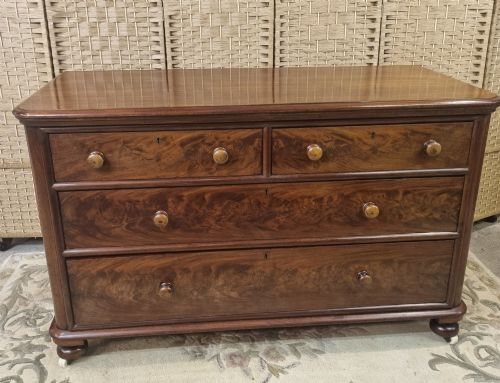
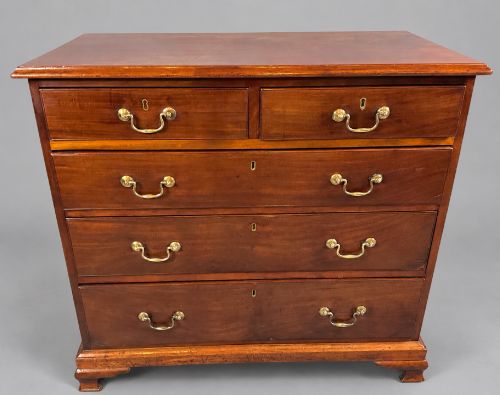
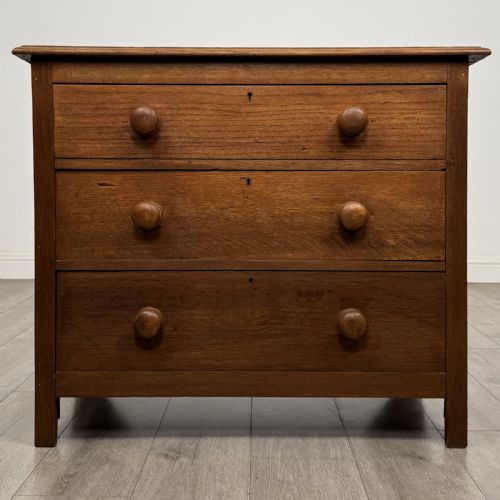
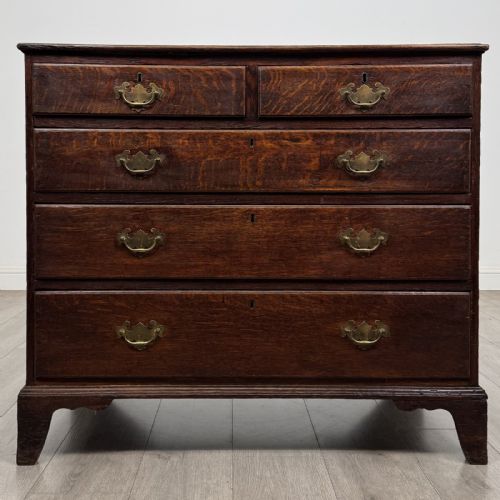
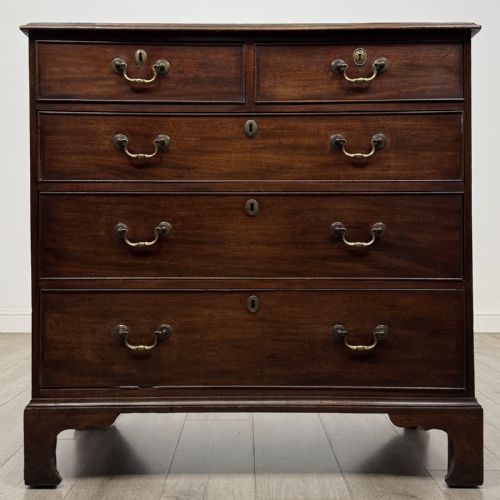
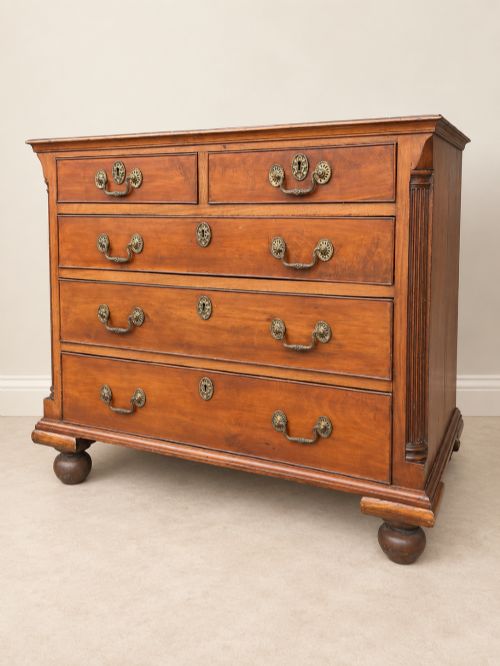
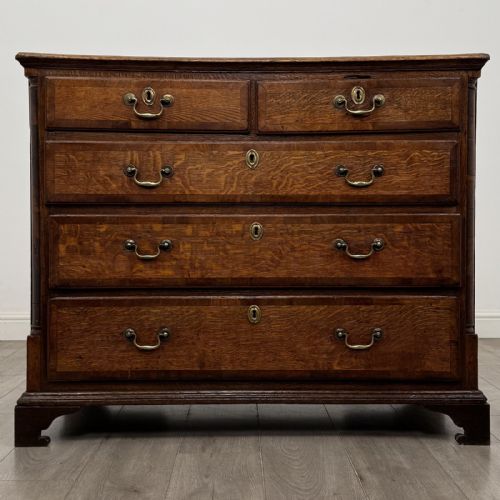
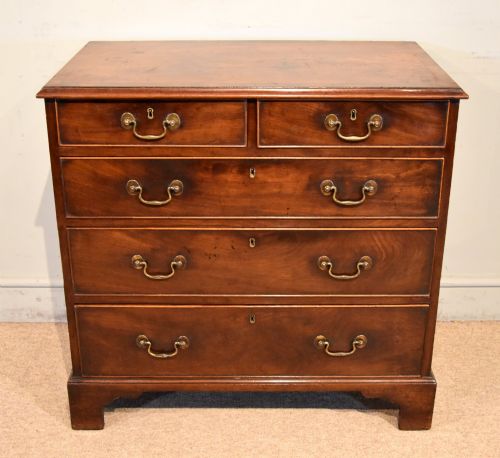
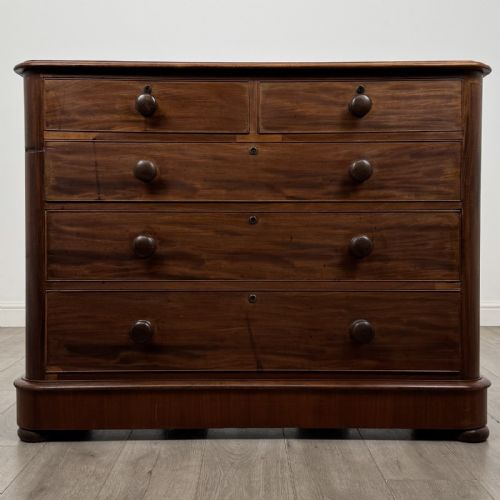
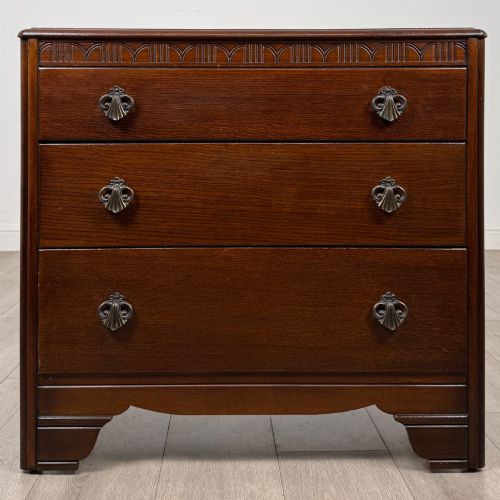
Wooden Bureau with Drawers
A wooden bureau with drawers brings working surface and hidden compartments together, offering the timeless utility of a drop-front desk combined with deep storage.
Wooden Bureau with Drawers
The materials span native and imported timbers including mahogany, walnut, oak, satinwood, burr elm, and pine, occasionally detailed with brass hardware and leather inserts. Surviving examples range from compact 1900s variations to grander Georgian and 18th-century cabinetry with fitted interiors.
Buyers encounter everything from plain oak country pieces to highly figured walnut or mahogany designs featuring parquetry, feather-banding, and inlaid decoration. The selection covers standalone writing desks and taller bookcase hybrids that merge library storage with enclosed writing compartments.
Assessing quality in writing furniture
Quality rests in the choice of timber and the complexity of the internal arrangement, distinguishing standard utility pieces from master cabinet work with figured veneers and elaborate secret compartments. The integrity of the fall-front hinges and the smoothness of the drawer runners indicate the skill invested in the original construction.
The preservation of original surface finishes, brass hardware, and internal pigeonhole structures elevates an example far above one with replaced components or stripped timber. Finer pieces demonstrate meticulous attention to secondary woods, dovetailing, and subtle details like feather-banded borders or inlaid parquetry.
Wooden Bureau with Drawers Retail Price Guide 2026
Typical asking prices for wooden bureau with drawers among the pieces listed under this phrase on Sellingantiques today, from the lower quarter to the upper quarter. They describe what is for sale here now, not the wider market.
Some Edwardian writing desks still retain their tiny original keys, designed to lock away private correspondence from curious houseguests.
Heals of London
The Wooden Bureau with Drawers Glossary
- Bureau
- A writing desk featuring a sloping fall-front flap that opens to reveal internal compartments above a set of drawers.
- Fall-front
- The hinged writing flap that drops down to provide a horizontal surface for correspondence and closes to conceal the desk interior.
- Secretaire
- A piece of furniture incorporating a concealed writing drawer or drop-front desk section disguised as standard drawer fronts.
- Feather-banding
- A decorative inlay technique using small strips of veneer arranged in a herringbone pattern to frame drawer fronts or panels.
- Parquetry
- Geometric wood inlay work used to create decorative patterns on cabinet surfaces and writing flaps.
- Pigeonhole
- A small open compartment within the interior desk fitment designed for sorting letters and papers.
Wooden Bureau with Drawers: Frequently Asked Questions
What is the difference between a bureau and a desk?
A bureau specifically relies on a hinged fall-front flap to cover its internal writing compartments and paper slots when not in use.
Other desks typically provide an open writing surface or drawers without the enclosing vertical slope of a traditional bureau.
How do I identify a Georgian bureau?
Georgian writing furniture typically displays rich mahogany, walnut or oak timbers, often featuring hand-cut dovetails and solid brass hardware.
Internal fittings usually include modest pigeonholes and small drawers surrounding a central locked compartment rather than elaborate Victorian innovations.
What are secret drawers?
Secret drawers are concealed compartments hidden behind removable panels, sliding pigeonholes, or dummy book spines inside the writing interior.
Cabinetmakers built these compartments to safely store valuables, sensitive letters, or family currency.
How do I care for antique wood furniture?
Protect antique timber by placing the piece away from direct sunlight, heating vents, and rapid fluctuations in household humidity.
Apply traditional beeswax periodically to nourish the surface finish and maintain the natural lustre of the aged grain.