




Wooden Blanket Stand
These wooden blanket stand selections bring together standing rails, chests on stands, and clothes racks spanning the eighteenth, nineteenth, and early twentieth centuries.
Wooden Blanket Stand
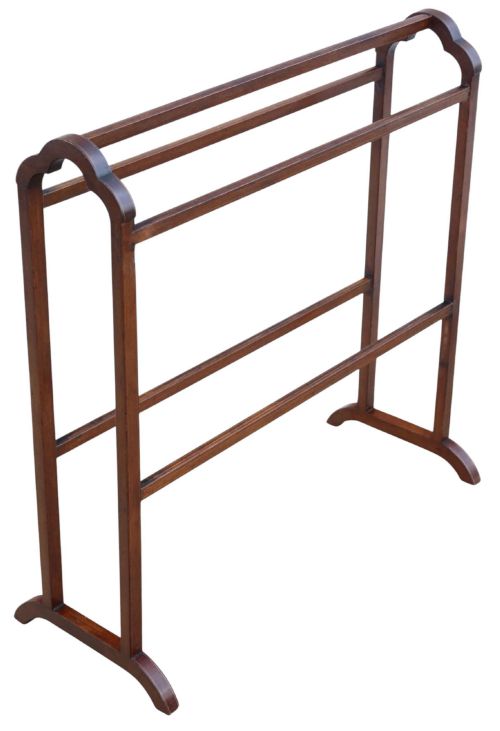
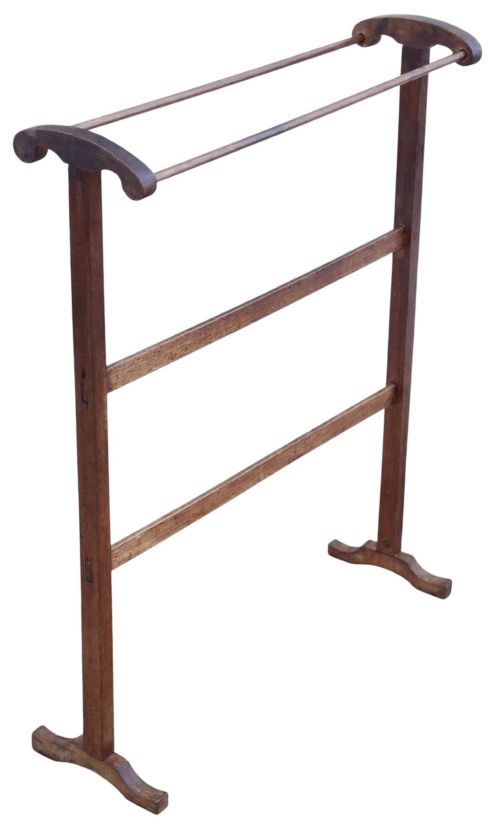
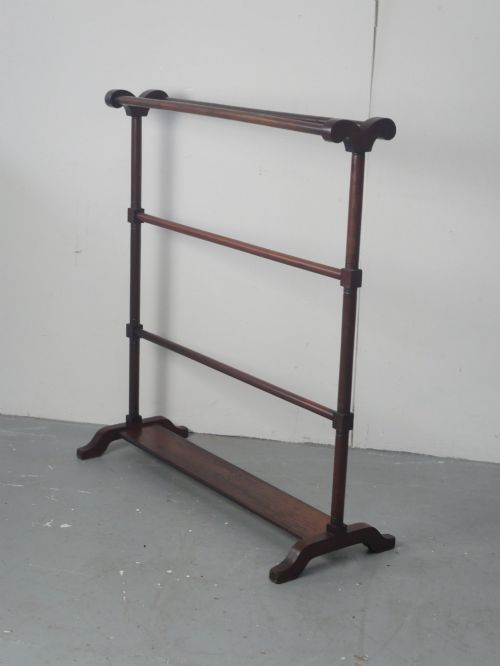
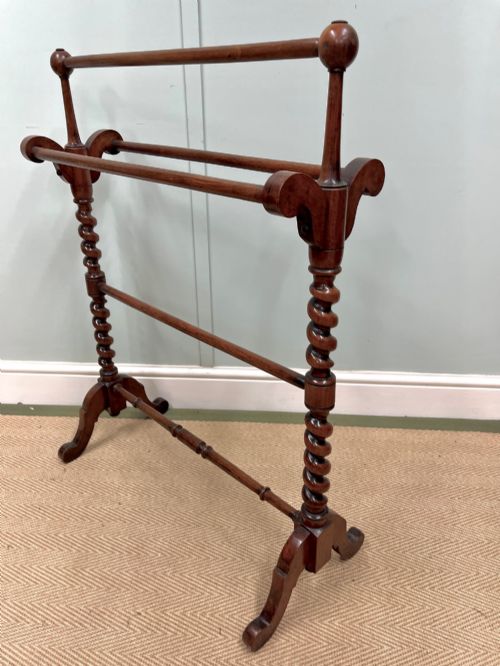
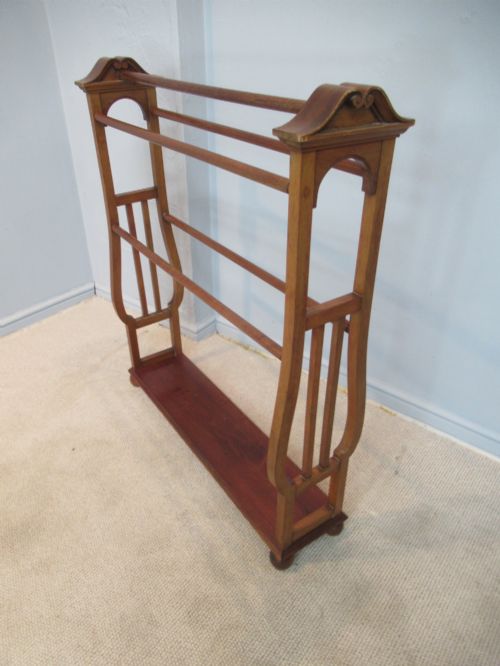
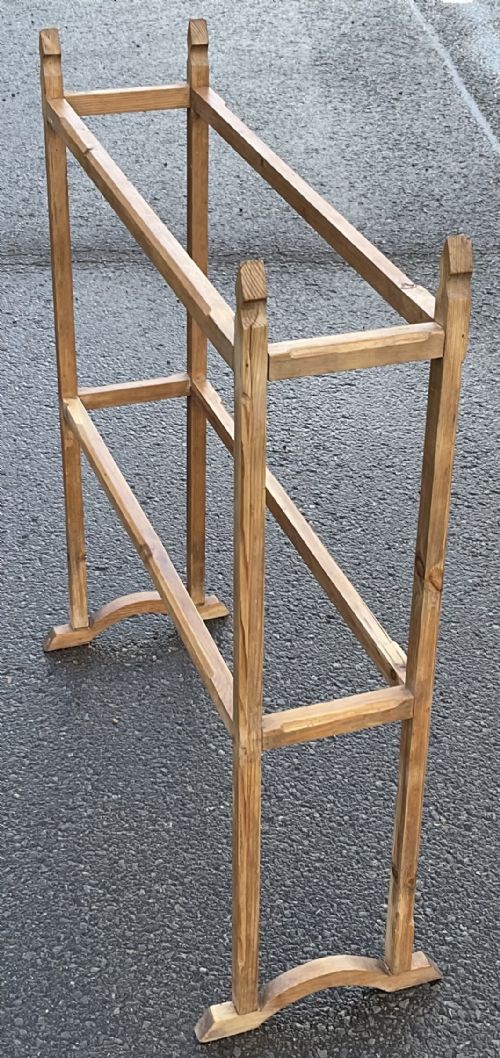
The most common forms on this page are standing towel rails from the nineteenth and early twentieth centuries. These rails utilise mahogany, oak, walnut, and pine across varying heights and rail counts.
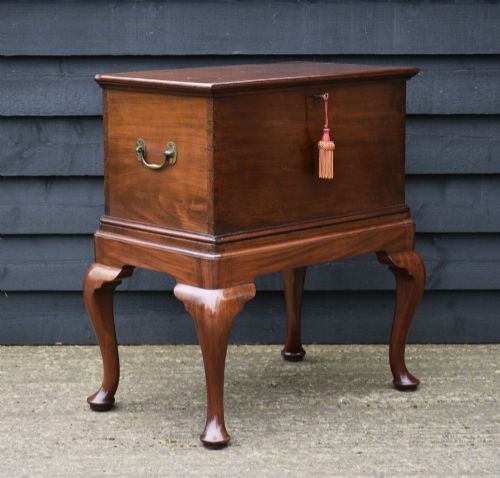
Beyond standard rails, the evidence shows larger furniture pieces such as coffers, trunks, and silver chests raised on stands. These heavier items combine deep storage compartments with elevated frames in mahogany, oak, teak, and lacquer.
Materials and construction methods
Joinery relies on solid hardwoods including mahogany, oak, and walnut, alongside pine for secondary elements. Craftsmen shaped these timbers into standing frames, panelled chests, and multi-rail structures.
Surface treatments range from clear polish to black ebonising, lacquer, and pigment decoration. Brass mounts and campaign-style hardware appear on select chests, while inlay techniques ornament Edwardian and Georgian examples.
Materials documented across the catalogue include mahogany, oak, walnut, pine, teak, brass, lacquer, and pigment.
Distinctions in craftsmanship and design
Quality reveals itself in the selection of timber and the precision of the joinery. Finer pieces employ dense hardwoods with balanced grain, sturdy mortise and tenon joints, and carefully fitted stands.
Decorative detailing separates standard utility items from superior examples. Inlaid banding, brass corner mounts, carved elements, and applied lacquer or ebonised finishes indicate higher ambition in the workshop.
The Wooden Blanket Stand Glossary
- Coffer
- A large wooden chest used for storage, often raised on a separate stand in older examples. These pieces provide deep internal capacity.
- Ebonised
- Wood treated with a dark stain or pigment to imitate ebony. This finish appears on nineteenth-century frames.
- Inlay
- Pieces of contrasting timber or shell set into the surface of a primary wood for decoration. Edwardian pieces frequently utilise this technique.
- Campaign chest
- A split-carcass chest designed for transport by military officers. They incorporate brass hardware and flush handles.
- Robe stand
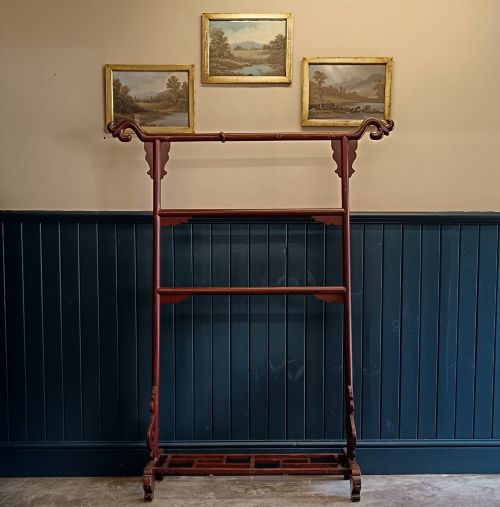
- A vertical frame intended for hanging garments. These freestanding pieces serve a similar domestic function to tall towel rails.
Wooden Blanket Stand: Frequently Asked Questions
What is a wooden blanket stand used for?
These items serve primarily to hold blankets, towels, or garments in domestic settings. Freestanding rails keep fabrics aired and accessible in bedrooms and bathrooms.
Elevated chests and trunks combine surface-level stands with deep internal storage. They accommodate linens and clothing while lifting the main compartment off the floor.
How do I date a wooden blanket stand?
Dating relies on timber choice, construction style, and decorative motifs. Georgian and eighteenth-century items often feature heavy oak or figured walnut with traditional panel construction.
Victorian, Edwardian, and early twentieth-century pieces commonly utilise mahogany or pine with lighter proportions. Inlaid stringing and ebonised finishes point toward the later nineteenth and early twentieth centuries.
Where were these pieces made?
The inventory reflects English workshops alongside international influence through Chinese Export, Anglo-Indian, and Dutch colonial pieces. Regional styles appear across different manufacturing centres.
European pieces demonstrate standard Georgian, Regency, and Victorian cabinetmaking traditions. Export and colonial pieces integrate exotic timbers like teak with traditional European forms.
How do I care for antique wood?
Maintenance requires stable indoor humidity and protection from direct sunlight. Excessive heat causes timber to dry and split.
Regular dusting with a dry cloth preserves the finish. Natural wax can be applied periodically to nourish older wood surfaces.