
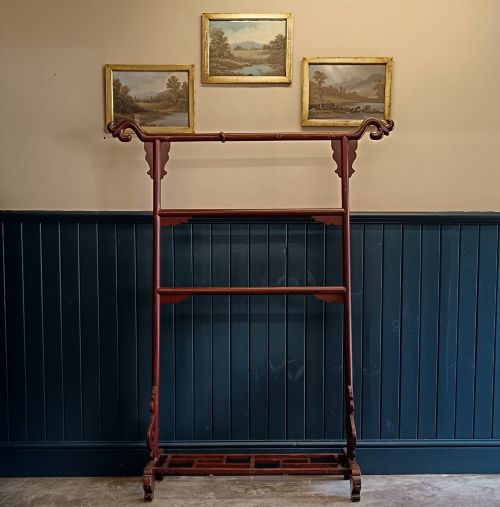
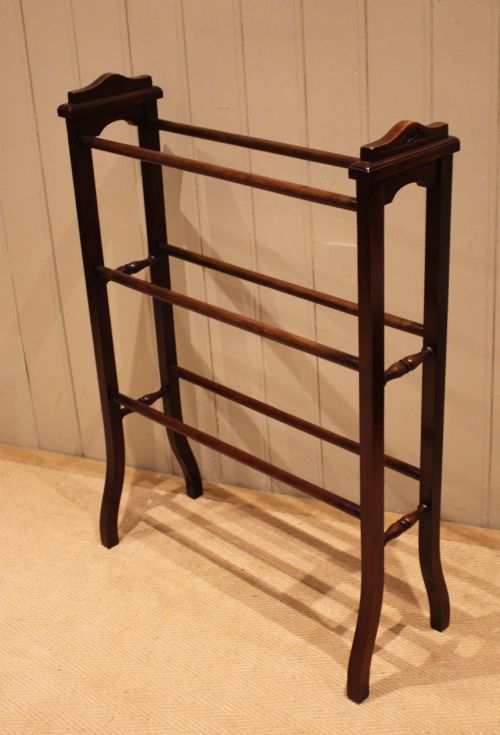
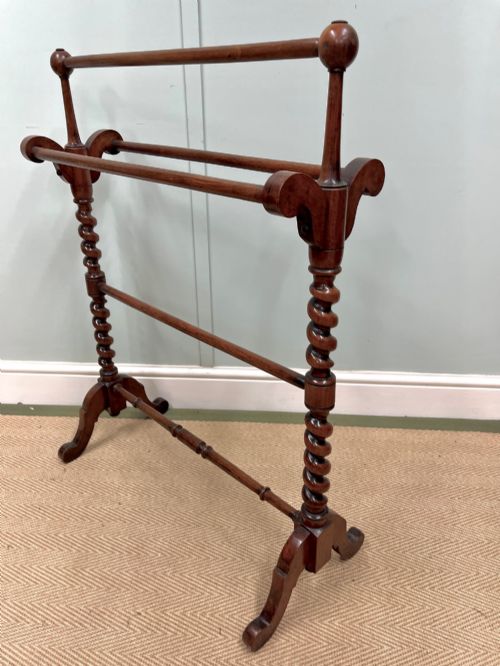
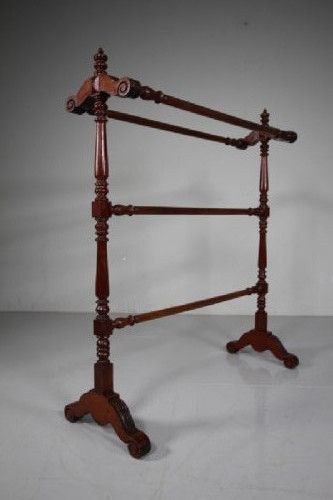

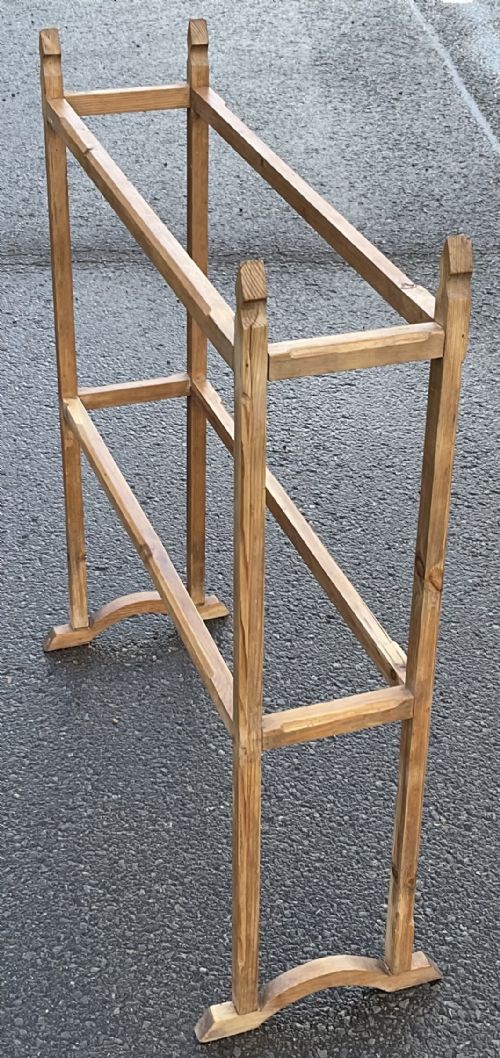


Freestanding Clothes Rack
A freestanding clothes rack brings practical utility and period character to a dressing room or bedroom.
Freestanding Clothes Rack
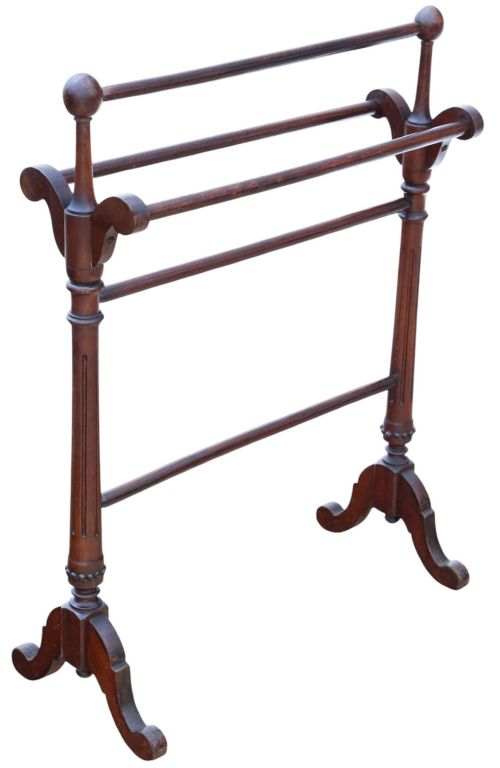
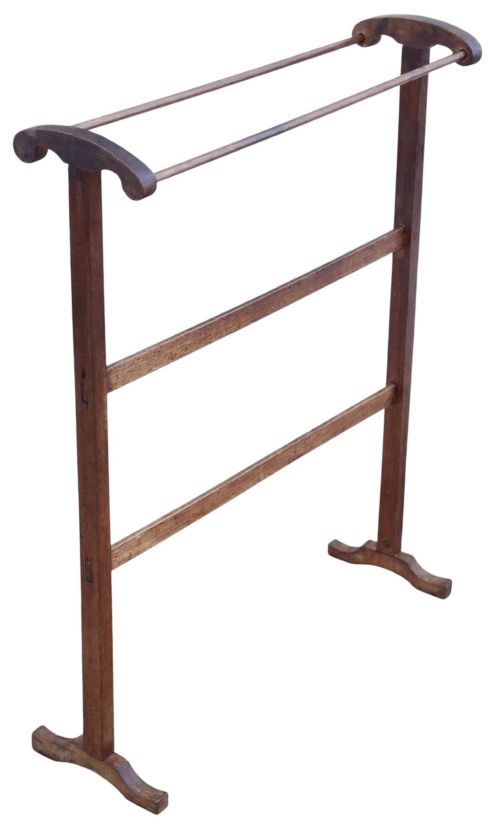
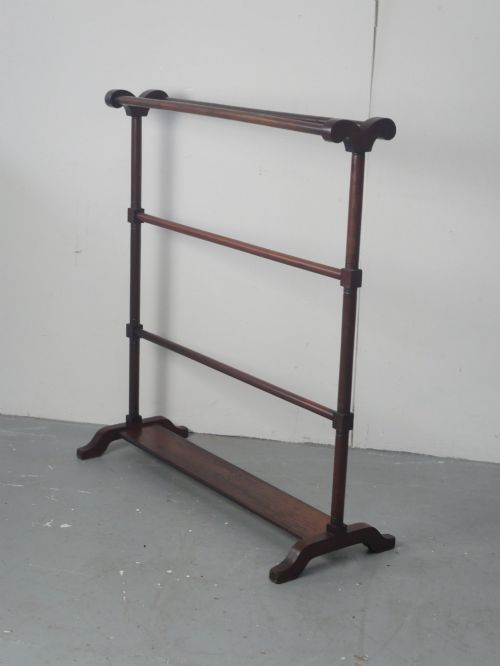
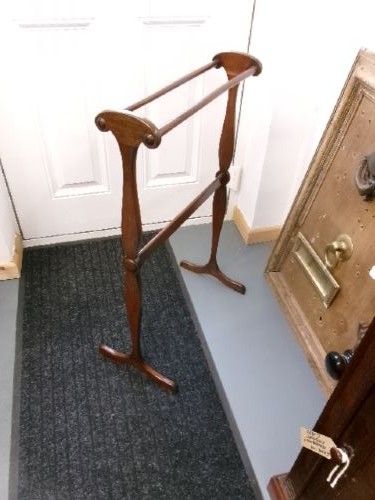
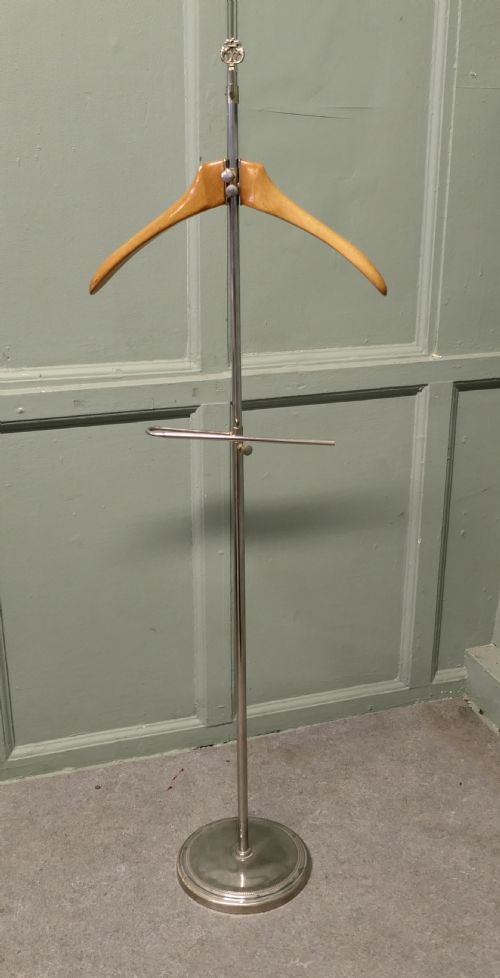
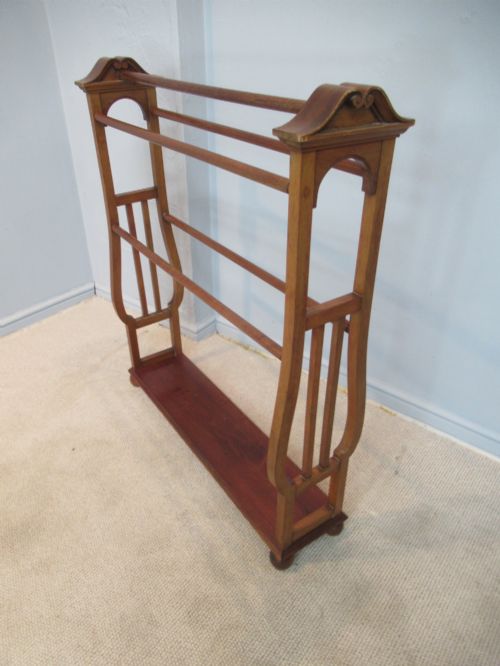
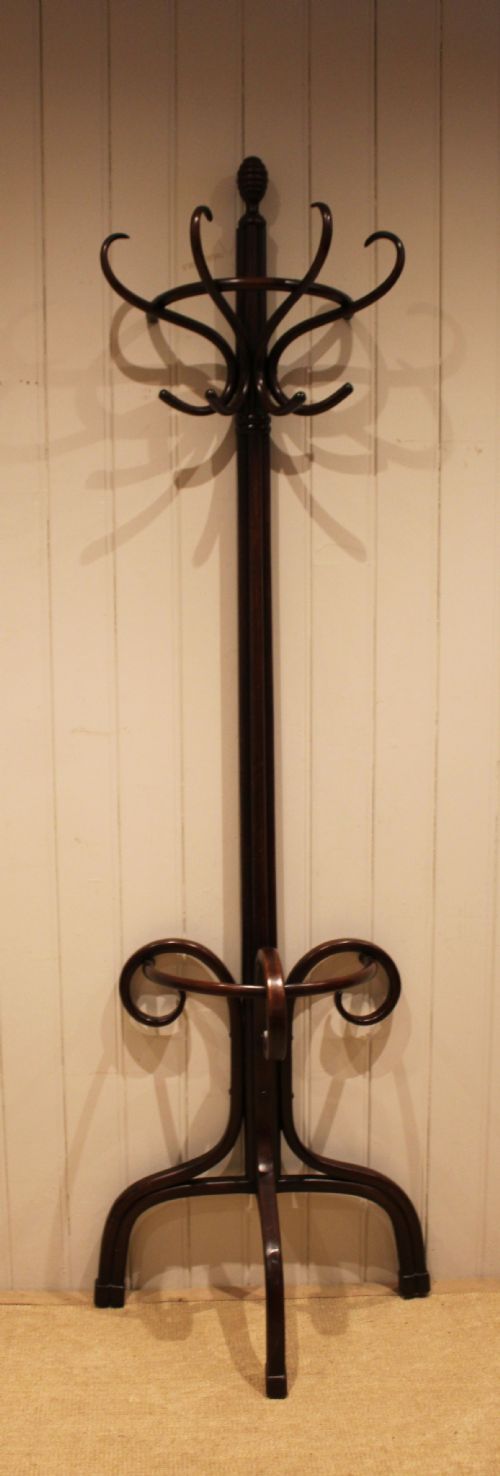
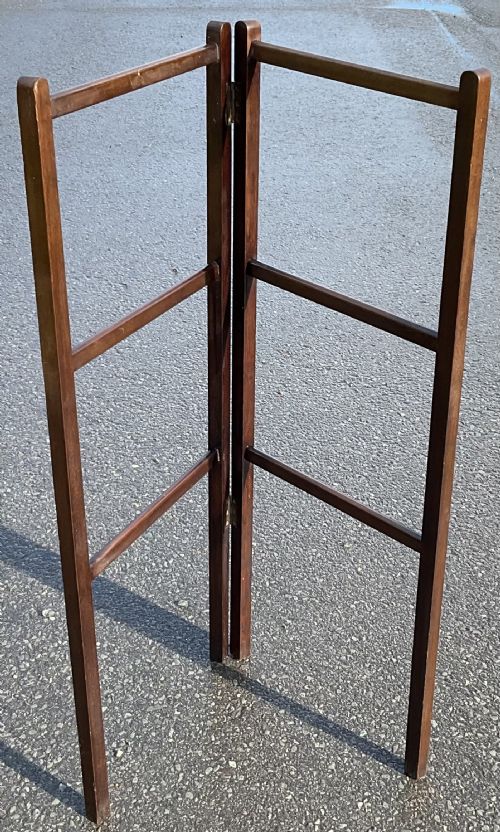
When you search for a freestanding clothes rack, you encounter a practical category spanning several centuries of domestic utility. These pieces include towel rail stands, folding clothes rails, clothes and robe stands, and valet stands designed for bedrooms and dressing rooms.
The versions you meet most frequently on this page are nineteenth-century and early twentieth-century mahogany and pine towel rails or clothes stands. They offer versatile hanging space without requiring wall fixings, retaining their original domestic purpose.
How they were made
Cabinet makers utilised dense hardwoods such as mahogany, walnut, and oak alongside softer timbers like pine and beech. Joints were typically pegged, dovetailed, or tenoned to withstand the daily weight of garments and damp textiles.
Turned wooden uprights, brass fittings, and bentwood techniques provided both structural integrity and decorative form. Many examples incorporated folding mechanisms or multiple rails connected by hinged joints.
Some Victorian towel rails fold up like concertinas to hide away when the morning dressing routine finishes.
What varies in quality
The distinction between ordinary utility items and superior pieces rests on the choice of timber and the crispness of the turning. Selected mahogany with rich grain and substantial gauge timber separates fine workshop production from basic vernacular joinery.
Proportion and stability determine the success of the design, particularly in folding and multi-bar configurations. Hardware quality, such as original brass hinges and castors, also indicates the standard of the original commission.
The Freestanding Clothes Rack Glossary
- Cheval towel rail
- A freestanding floor-standing rail mounted within a frame that allows the rails to swing or tilt. This form provides greater hanging capacity while occupying a compact footprint in the room.
- Bentwood
- Wood softened by steam and bent into curved structural shapes under pressure. This technique produced lightweight yet resilient frames, particularly popular in the early twentieth century.
- Valet stand
- A specialised piece of bedroom furniture designed to hold a suit, tie, shoes, and pocket items. These often combine coat hangers, trouser bars, and small compartments.
- Ebonised
- Timber treated with a dark stain or finish to imitate ebony. This treatment was common on Victorian and Edwardian furniture to achieve a formal, uniform appearance.
Freestanding Clothes Rack: Frequently Asked Questions
Where should I place a freestanding clothes rack?
These pieces suit bedrooms, dressing rooms, and bathrooms where portable hanging space is useful. Their freestanding nature allows you to move them easily without installation.
Ensure the room has adequate clearance if you choose a folding or multi-fold design that expands when loaded.
How do I care for a vintage wooden clothes rack?
Maintain the timber by applying a traditional beeswax polish occasionally to nourish the surface and protect against dryness. Avoid placing damp items directly onto untreated wood for prolonged periods.
Keep the rack away from direct heat sources and strong sunlight to prevent the timber from warping or the finish from fading.
Are these racks sturdy enough for heavy coats?
Sturdiness depends on the construction and the timber used, with heavy hardwoods like mahogany and oak offering robust support. Lighter pine or bentwood versions suit lighter garments, shirts, and towels.
Check the base stability and joint tightness to ensure the rack can bear the intended weight safely.
How do I identify a Victorian towel rail?
Victorian examples often feature turned mahogany, walnut, or pine uprights with deep, rich patination acquired through decades of handling. Details such as ceramic castors, pegged joints, and Gothic Revival mouldings point to this period.
Construction methods typically rely on traditional joinery rather than modern mechanical fasteners.