



Vintage Towel Airer
These vintage towel airer pieces bring practical nineteenth and early twentieth century laundry drying into the home with traditional timber construction.
Vintage Towel Airer
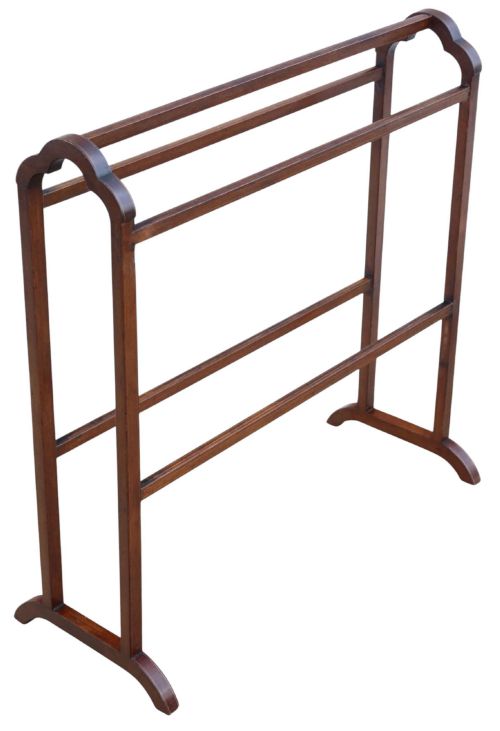
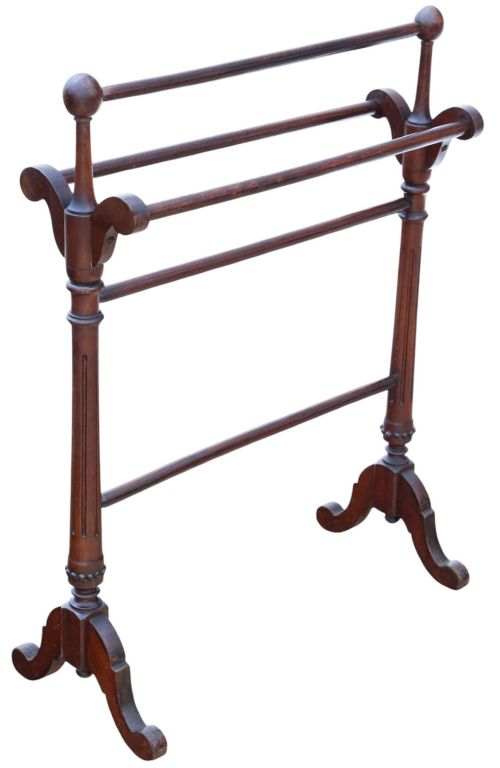
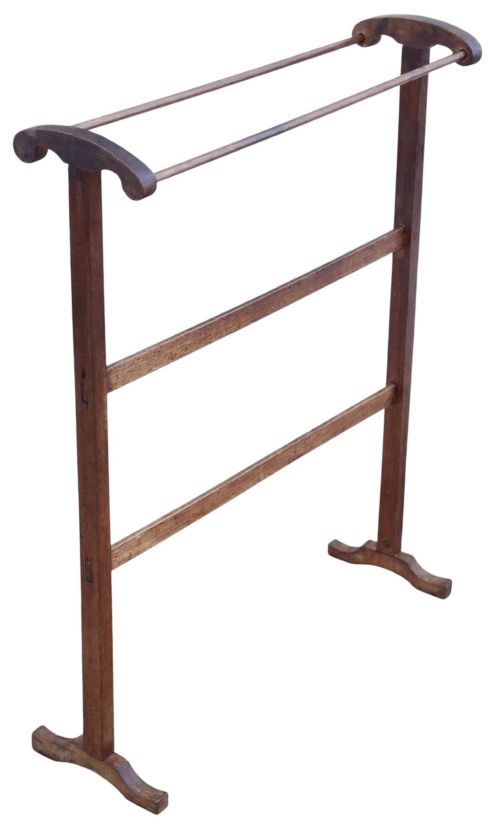
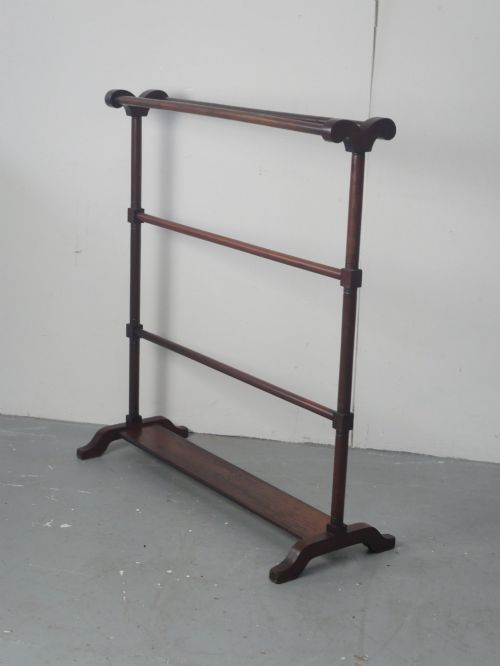
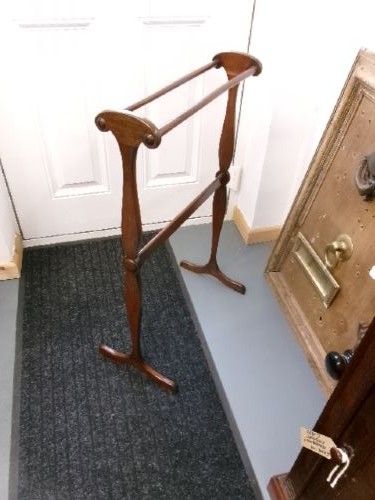
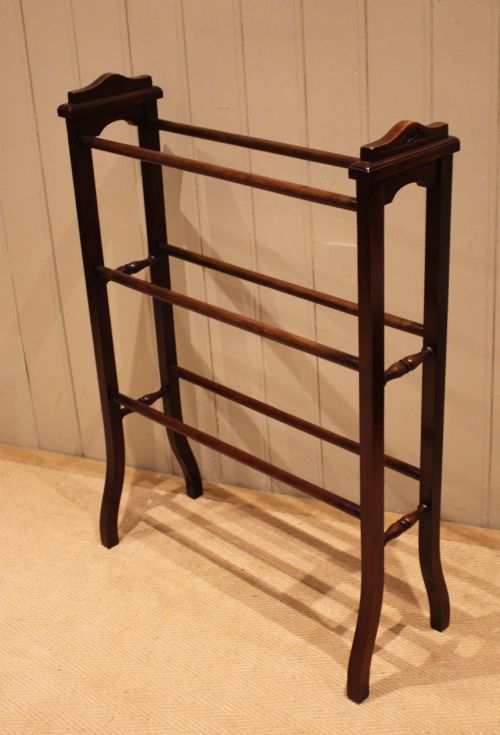
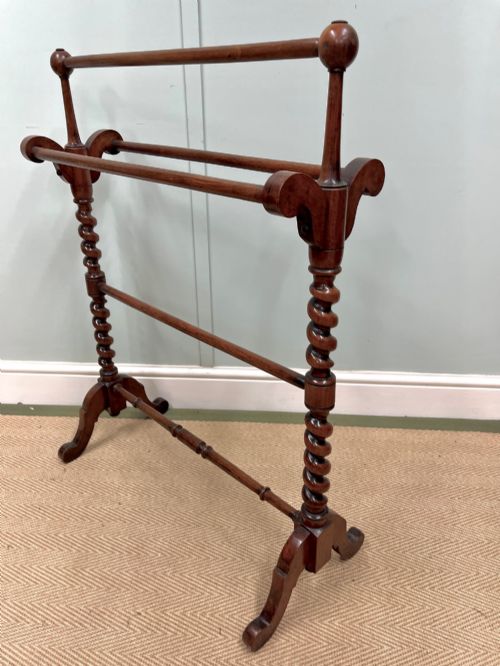
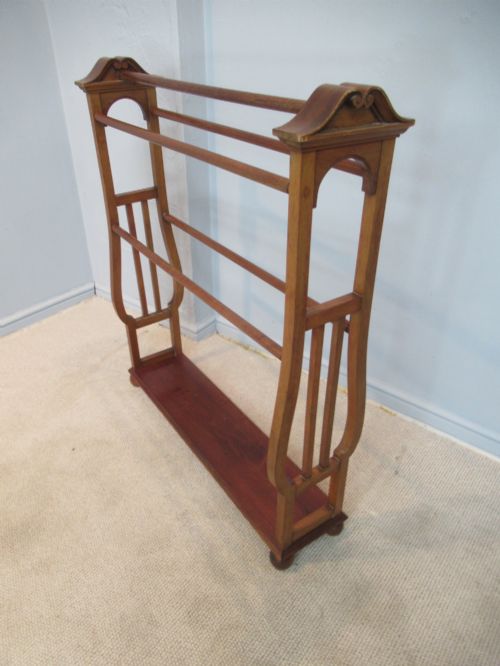
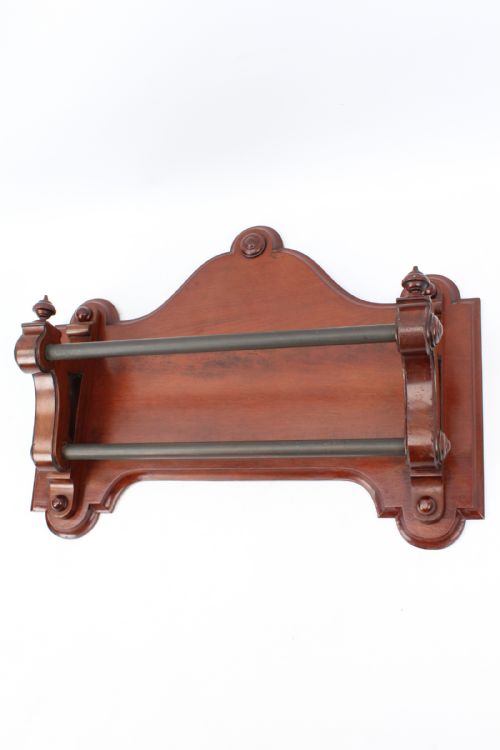
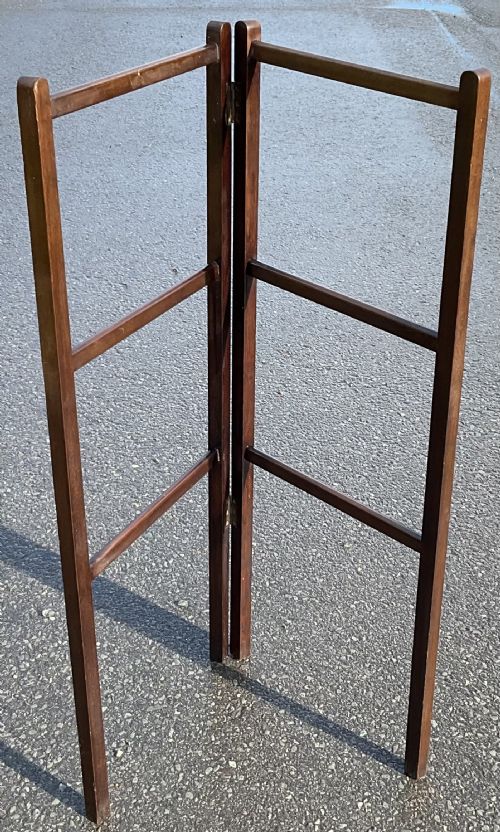
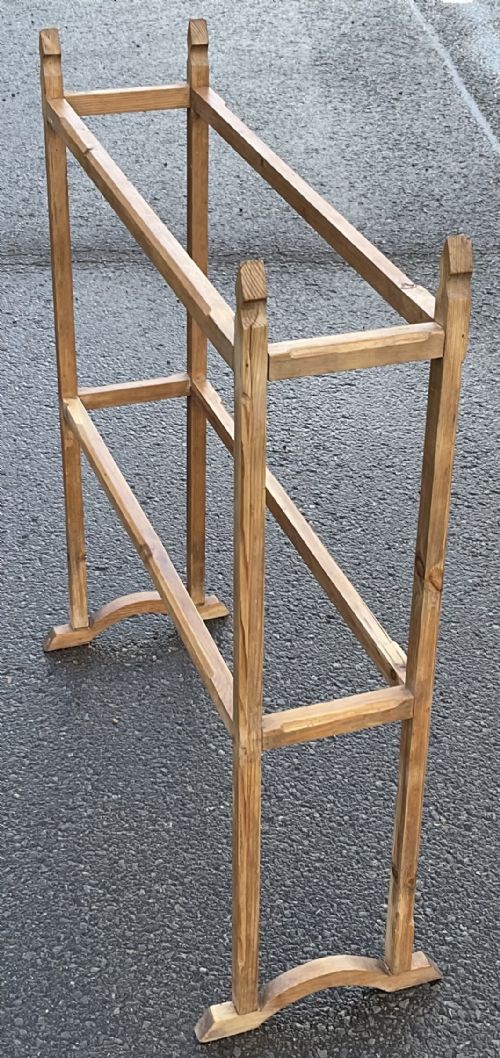
A vintage towel airer is a functional domestic frame designed to hold damp linens and towels, appearing here in forms ranging from compact wall-hanging double rails to large multi-fold floor-standing timber stands. When you search for a vintage towel airer, you encounter freestanding wooden frames from the Victorian, Edwardian and Regency periods, constructed to stand near a hearth or in a dressing room.
The most common examples on this page are mahogany floor-standing models with multiple rails, often featuring folding sections or cheval designs. Alongside mahogany, you find pieces constructed from pine, oak, walnut and ebonised wood, spanning various nineteenth-century and early twentieth-century domestic styles.
Judging quality in these pieces
Quality in a vintage towel airer rests primarily on the choice of timber and the sophistication of its joinery, distinguishing utilitarian laundry furniture from more decorative domestic pieces. Finer examples display select mahogany or walnut, delicate satinwood inlay, and robust framing that remains rigid across multiple rails.
Proportion and scale also separate standard utility models from exceptional items, such as large Regency frames or Arts and Crafts country house pieces. The integrity of the hinges on folding and multi-fold versions indicates the original standard of manufacture.
The selection includes wall-hanging double rails alongside large multi-fold floor-standing stands.
The Vintage Towel Airer Glossary
- Cheval towel rail
- A freestanding frame designed to swing or pivot on vertical supports, similar to a cheval mirror. This construction allows the rails to angle outward for better air circulation.
- Ebonised wood
- Timber treated with a dark stain or finish to imitate ebony. This technique was popular in Victorian furniture to achieve a formal, high-contrast appearance.
- Satinwood inlay
- A decorative technique where contrasting light satinwood is inserted into recesses cut into a darker primary wood like mahogany. It appears on finer Edwardian and Victorian pieces.
- Gothic Revival
- A nineteenth-century architectural and decorative style that revived medieval forms. In towel rails, this appears through pointed arches, heavy timbers and ecclesiastical detailing in walnut or oak.
Vintage Towel Airer: Frequently Asked Questions
What is a folding towel airer?
A folding towel airer is a hinged wooden frame with multiple rails that opens out like a screen or folds flat for storage. This design allowed households to dry several linens at once near a heat source.
Most folding examples on this page date from the Victorian and Edwardian periods, utilising mahogany or pine construction.
How do I date a wooden towel rail?
Dating relies on timber choice, construction methods, and stylistic details associated with periods like the Regency, Victorian or Edwardian eras. Mahogany and heavy proportions often suggest nineteenth-century origin, while lighter inlaid Edwardian pieces point to the early twentieth century.
Examination of the joinery and any brass hardware provides further clues to the manufacturing decade.
Where were these used in the home?
These pieces were typically placed in bedrooms, dressing rooms, or near kitchen hearths to dry damp household linens and towels. Freestanding floor models could be moved easily around the house as needed.
Larger multi-bar versions served demanding household laundry routines before the invention of electric tumble dryers.
Can I use an antique airer today?
Yes, these frames remain entirely functional for hanging and drying towels or displaying textiles in a bathroom or bedroom. Their sturdy wooden construction suits daily domestic use provided the timber is not subjected to excessive moisture.
Many buyers choose them as much for their decorative traditional aesthetic as for practical utility.