


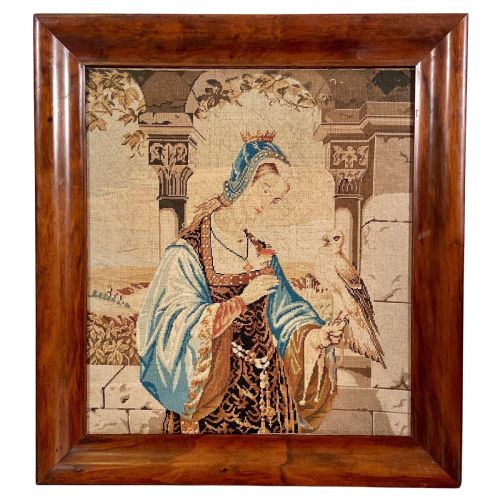


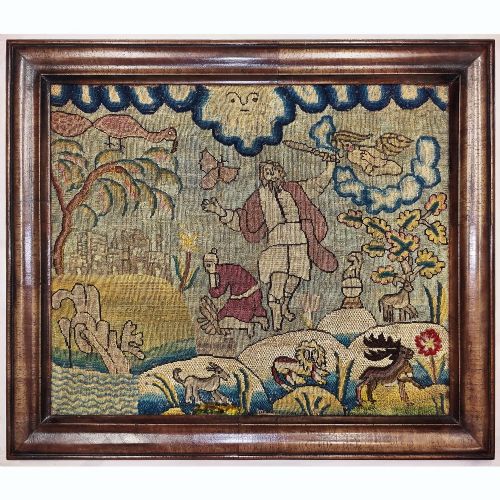


Wood Framed Tapestry
These wood framed tapestry pieces combine timber structure with needlework skill, bringing texture and period character into a room.
Wood Framed Tapestry
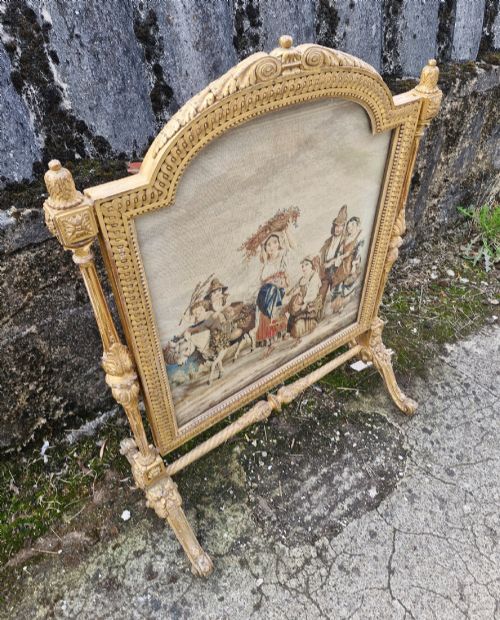
When you search for wood framed tapestry, you encounter a varied group of objects ranging from wall art and samplers to upholstered seating and firescreens. The selections span multiple centuries, uniting wooden structures with needlepoint, wool, and silk textiles.
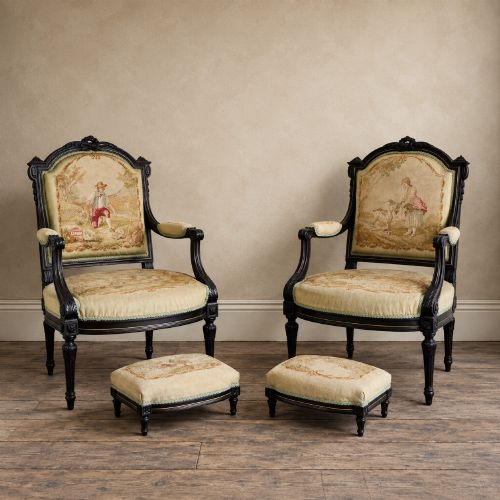
You are most likely to meet 19th century and Victorian examples on this page, including framed pictures, footstools, and armchairs with original needlework. These domestic items demonstrate how textile art was integrated into everyday furnishings.
Earlier pieces from the 17th and 18th centuries appear alongside Arts and Crafts and 1920s creations, offering distinct stylistic windows into past decorative tastes. The timber frames vary from oak and mahogany to walnut and rosewood, enclosing the textile work securely.
Materials and construction
Makers utilised sturdy woods such as oak, mahogany, walnut, rosewood, and beech to build structural frames for wall hangings, firescreens, and seating. These timbers were carved, polished, or painted depending on the prevailing style of the period.
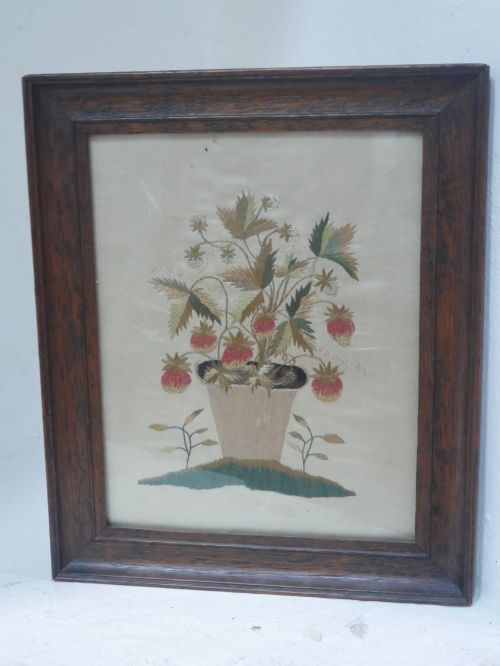
The textile components combine wool, silk, and canvas materials, often worked in needlework, embroidery, or wool work techniques. Detailed pictorial scenes, botanical subjects, and samplers were stitched by hand before being mounted within the wood surrounds.
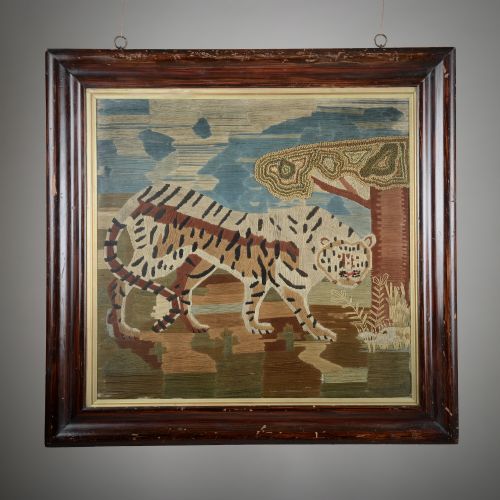
A tiger peers out from one 19th-century wool work panel, reminding us that Victorian needlework extended well beyond floral arrangements.
Assessing quality and execution
The distinction between ordinary and exceptional pieces lies in the precision of the needlework and the finesse of the timber framing. Finer specimens display intricate stitching, balanced colour palettes, and well-proportioned carved wood surrounds.
Condition and originality dictate the standing of a piece within the range. Items retaining their original textile work and matching wood frames hold greater integrity than those altered or re-stitched in later years.
The Wood Framed Tapestry Glossary
- Sampler
- A piece of needlework produced as a demonstration or test of skill, often featuring alphabets and figures. These exercises record the maker's name and date in many instances.
- Firescreen
- A moveable piece of furniture designed to shield a person from the direct heat of a fireplace. They frequently feature framed tapestry panels supported on wooden stands.
- Needlepoint
- A type of canvas work embroidery stitched with a needle, commonly using wool or silk threads. It forms the primary decorative surface in many framed textile objects.
- Stumpwork
- A raised form of embroidery popular in the 17th century where padding creates a three-dimensional effect. Figures and motifs project outward from the flat background fabric.
- Toile de Jouy
- A type of cotton or linen fabric featuring printed repeating pastoral scenes, usually in a single colour. Fragments are occasionally preserved behind glass within decorative frames.
Wood Framed Tapestry: Frequently Asked Questions
How do I hang a heavy wood framed tapestry?
Heavier framed pieces require secure wall fixings suited to the weight of the timber and glass. Ensure the hanging wire and brackets are rated to support the load safely.
Position the piece away from direct sunlight and moisture to protect the wool and silk fibres within the frame.
What periods do these pieces come from?
The selection includes items spanning from the 17th century through to the 1920s. Victorian and 19th-century examples appear most frequently.
Earlier pieces feature 17th-century stumpwork and 18th-century needlework pictures, while later periods are represented by Arts and Crafts and 1920s works.
Were these tapestries made for furniture?
Many tapestries and needlework panels were made specifically to upholster chairs, sofas, and footstools. Others were created as standalone pictures or wall hangings.
Frames were constructed to house flat textiles or to serve as stretchers during the stitching process itself.
How should I clean wood framed needlework?
Dust the wood frame gently with a dry, soft cloth and avoid chemical polishes that might seep onto the textile. Keep glass-fronted panels clean with standard glass cleaner applied to a cloth rather than the surface.
Protect the fabric by keeping pieces out of humid areas and direct heat sources to prevent the fibres from drying out or degrading.