
Antique Embroidery in Frame
These antique embroidery in frame pieces span centuries of needlework, offering textile art preserved behind glass in period surrounds.
Antique Embroidery in Frame
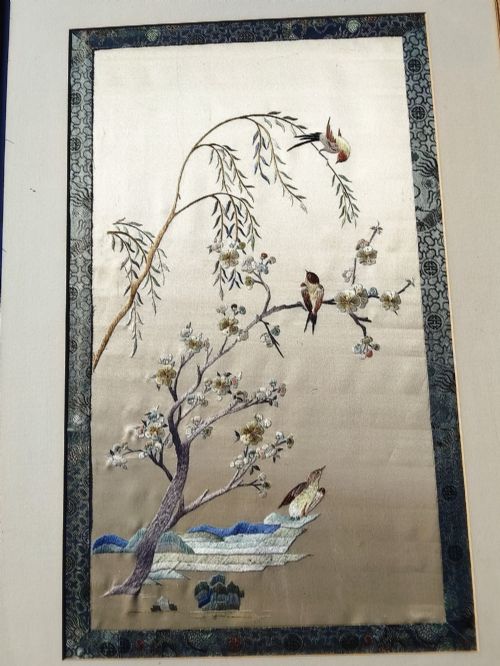
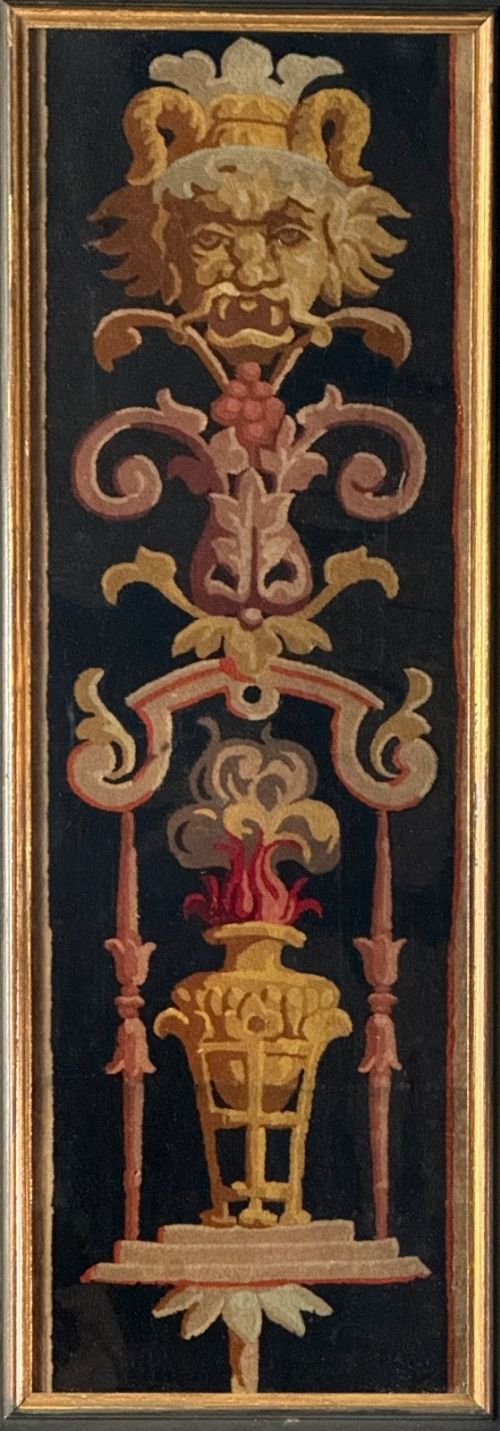
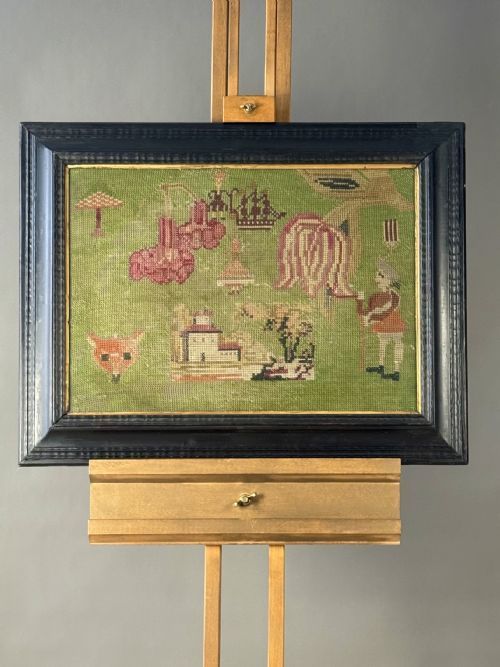
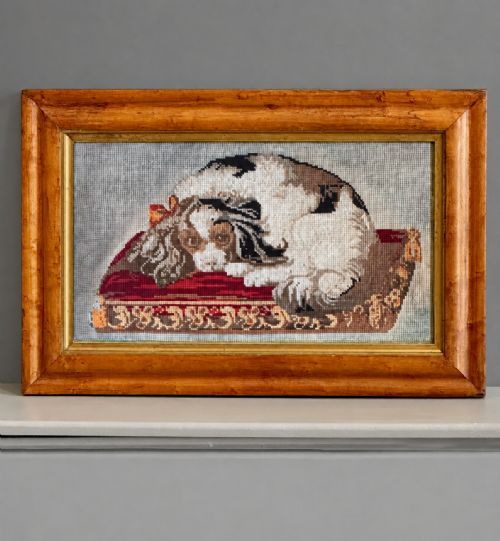
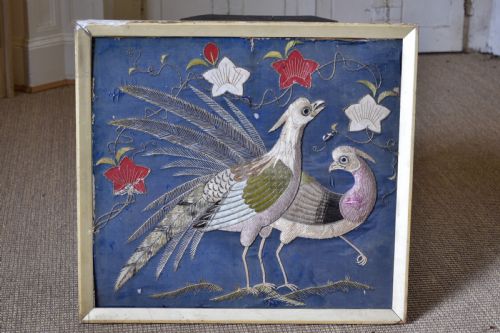
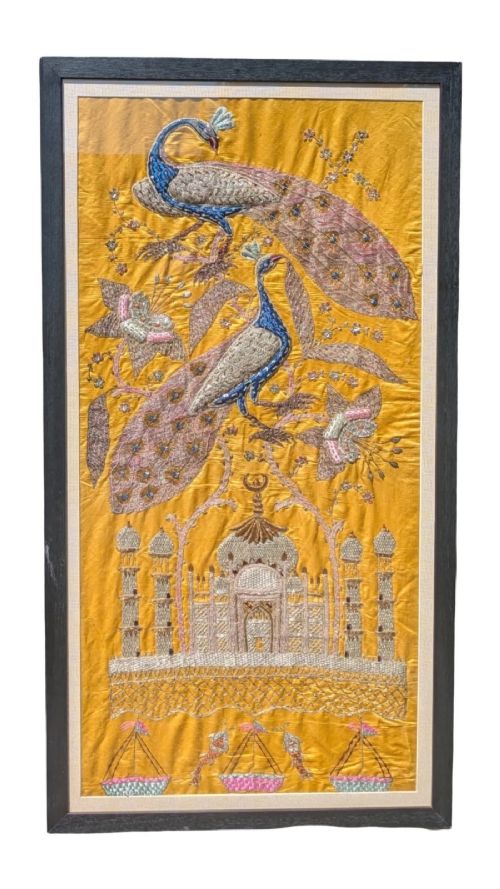
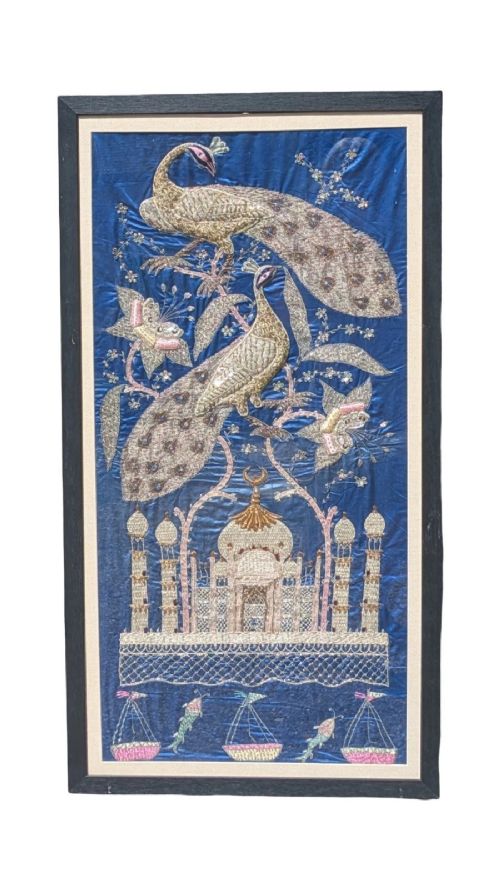
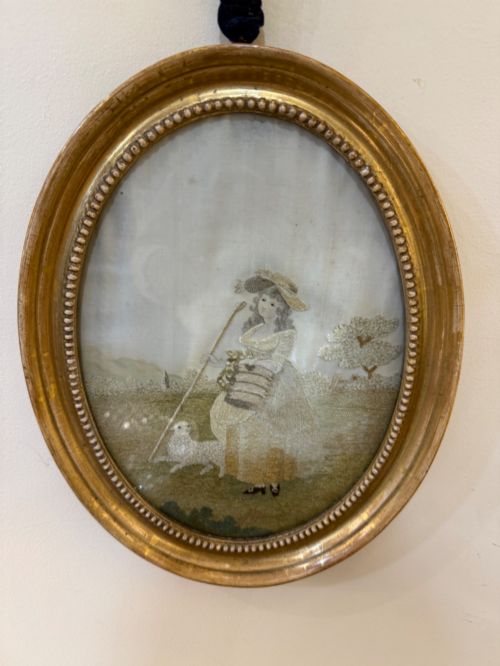
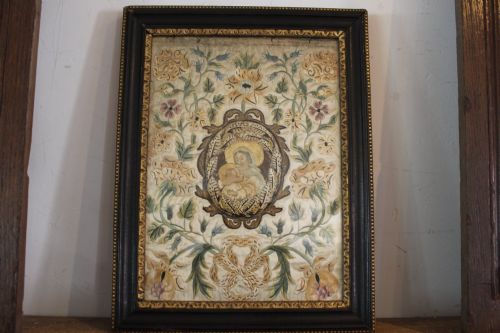
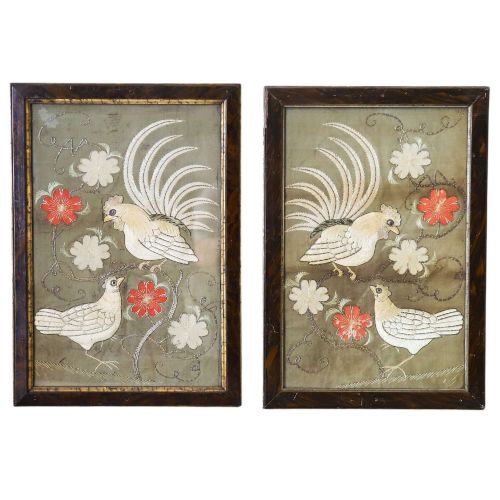
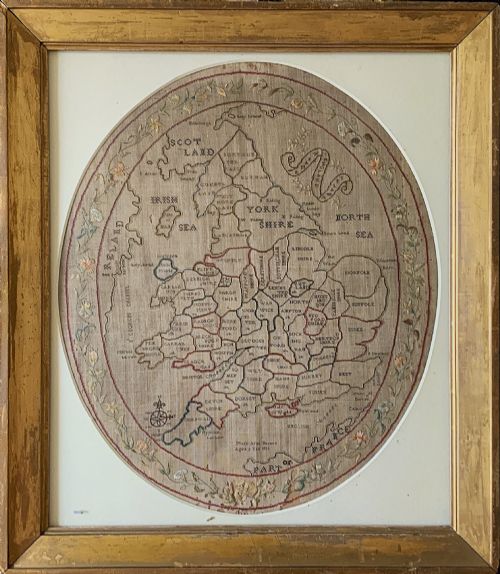
When hunting for antique embroidery in frame, buyers encounter needlework pictures, samplers, and embroidered panels spanning the seventeenth century through to the Edwardian period. The selection frequently includes Victorian woolwork pictures, Georgian silk maps, and intricate Chinese silk panels.
Framed textile art ranges from domestic samplers worked by young girls to elaborate pastoral scenes, portraits, and mythological depictions. Pieces arrive protected by glass, housed within burr maple, giltwood, oak, or faux tortoiseshell surrounds.
Origins stretch across England, France, China, Italy, Greece, and Uzbekistan, encompassing styles from Stuart stumpwork and Berlin work to Ottoman fragments and Indian silk embroidery.
How they were made
Needlework pictures and samplers rely on silk, wool, and linen threads worked onto canvas or linen grounds using a variety of stitches, occasionally augmented by metallic thread and hand-painted silk details.
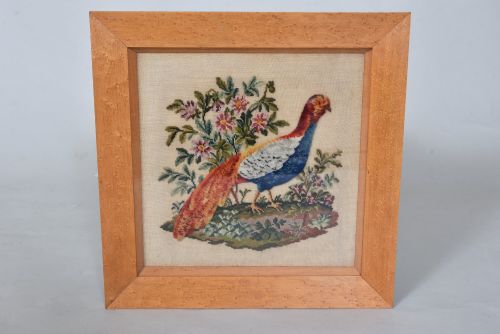
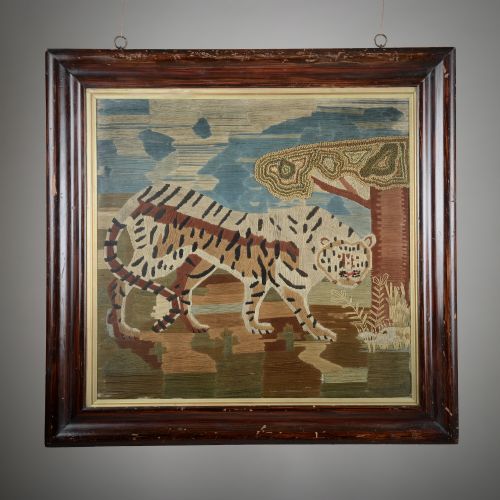
Stumpwork involves raised, padded elements built up over wooden moulds or wire foundations, whilst plushwork and Berlin work utilise dense wool loops or charted canvases to create textured subjects.
Makers housed these fragile textiles behind protective glass within timber frames, employing burr maple, giltwood, walnut, and oak to complete the wall hanging or panel.
Listings feature textile art from the 17th century to the 19th century, incorporating silk, wool, linen, glass, and giltwood.
What varies in quality
Quality rests upon the fineness of the stitching, the complexity of the design, and the integrity of the surviving materials. Tightly executed silk floss and well-defined woolwork maintain their visual impact more effectively than loose or faded stitching.
The relationship between the textile and its original housing dictates desirability, particularly when an antique embroidery in frame retains its contemporary burr maple or giltwood surround and protective glass.
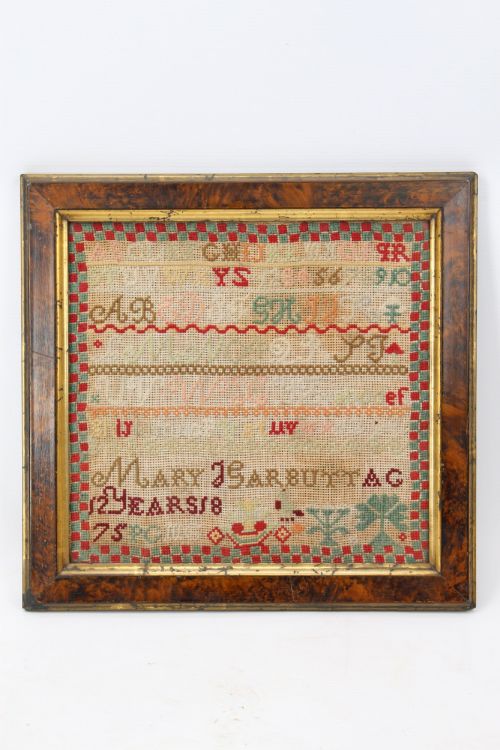
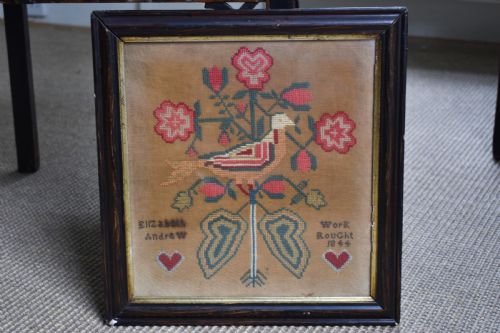
Provenance and documentation elevate examples, such as signed and dated samplers bearing the maker's age and year, or panels retaining historical attribution.
Stevens of Coventry
The Antique Embroidery in Frame Glossary
- Sampler
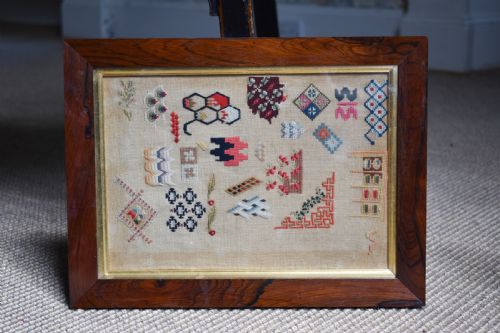
- A piece of needlework produced as a demonstration or test of skill in various stitches, frequently displaying alphabets, numerals, and motifs. These exercises often record the maker's name and age.
- Stumpwork
- A raised embroidery style popular in the seventeenth century featuring padded, three-dimensional figures, animals, and architectural elements. Silk and metallic threads build up the relief work.
- Berlin work
- A style of needlepoint embroidery using brightly coloured wools worked onto a patterned grid or canvas. The technique gained immense popularity during the nineteenth century.
- Plushwork
- A tactile embroidery method employing cut loops of wool to create a raised, velvety pile resembling fur or feathers. Animals depicted in this manner gain a realistic texture.
- Rank badge
- An embroidered square insignia worn on the robes of officials in imperial China to denote civil or military status. These panels feature detailed silk and metallic thread work.
Antique Embroidery in Frame: Frequently Asked Questions
Where should I hang these framed textiles?
Display antique needlework away from direct sunlight and damp environments to protect delicate silk and wool threads from fading and rot. Stable indoor temperatures preserve both the fabric and the wooden frames.
Positioning the pieces at eye level on interior walls allows the fine details of the stitching and the character of the original glazing to be appreciated.
How do I date a sampler?
Many samplers include embroidered dates, makers' names, and ages, providing a direct record of their creation. Stylistic clues such as alphabet fonts and pictorial motifs also help narrow down the decade.
Georgian and Victorian examples often display distinct border patterns and framing materials that correspond to the period of their manufacture.
What is the difference between a sampler and a picture?
Samplers function primarily as practice pieces showcasing alphabets, numerals, and a repertoire of stitches executed by learners. They serve as a catalogued display of needlecraft skills.
Needlework pictures depict complete pictorial scenes, such as landscapes, portraits, or historical narratives, designed specifically for wall display rather than skill demonstration.