

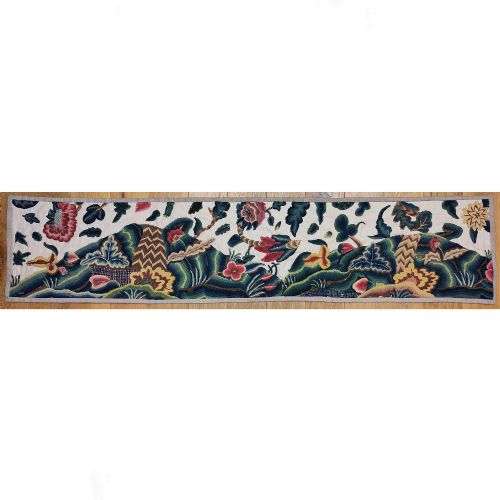


Wool Needlepoint Tapestry
These wool needlepoint tapestry pieces bring historic hand-stitched imagery, from pastoral scenes to classical portraits, directly into modern interiors.
Wool Needlepoint Tapestry
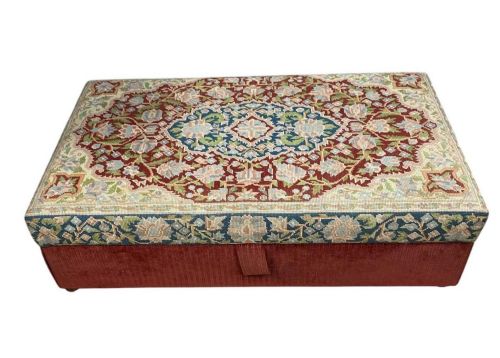
When searching for wool needlepoint tapestry, collectors encounter everything from substantial wall hangings and framed pictorial panels to decorative cushions, footstools, and firescreens. These items span multiple centuries, showing how domestic needlework evolved from early European panels into domestic furnishings.
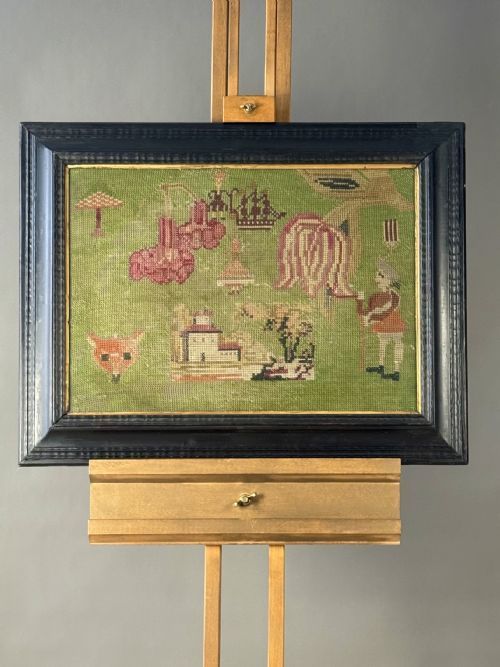
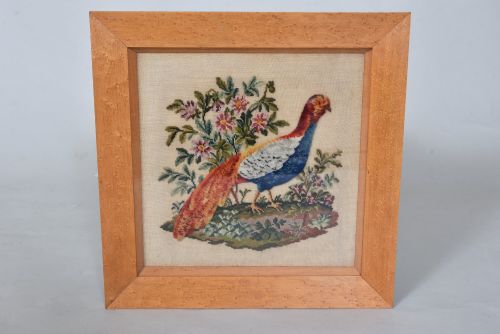
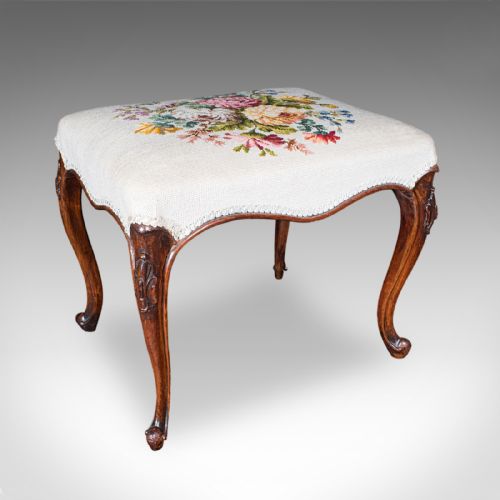
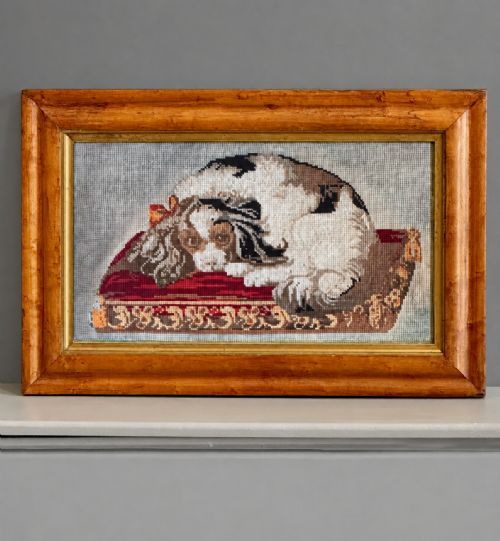
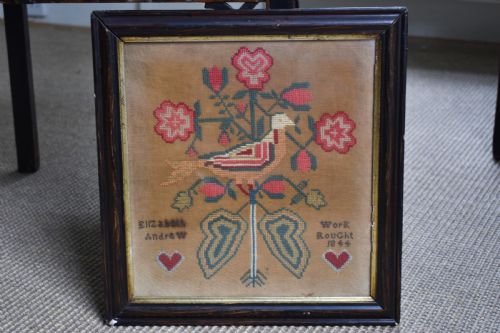
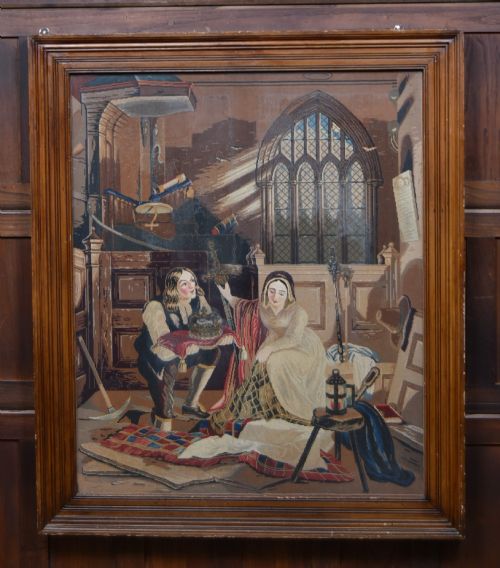
The pieces appearing most frequently range from detailed nineteenth-century Berlin work pictures and plushwork depictions to eighteenth-century framed panels and samplers. Domestic objects such as firescreens, footstools, and cushions integrate historical stitching techniques into functional furniture.
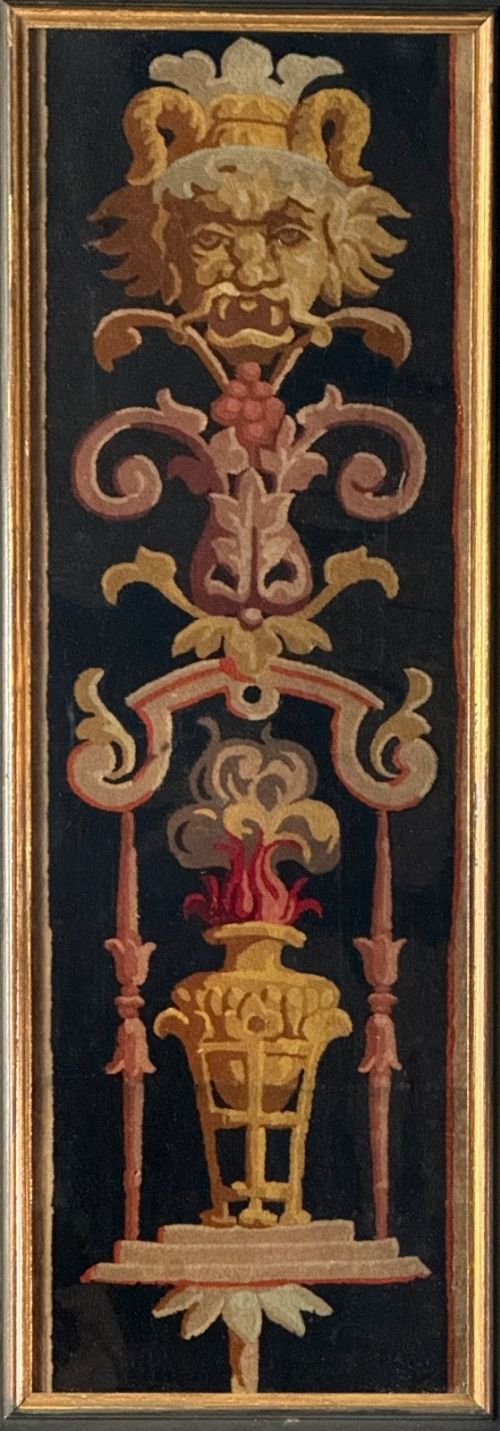
Origins stretch across Britain, France, Italy, Portugal, and Sweden, incorporating styles from the Baroque and Rococo to Victorian folk art. Whether viewing a large European wall hanging or a small framed woolwork portrait, each piece reflects the prevailing aesthetic of its period.
Materials and technique
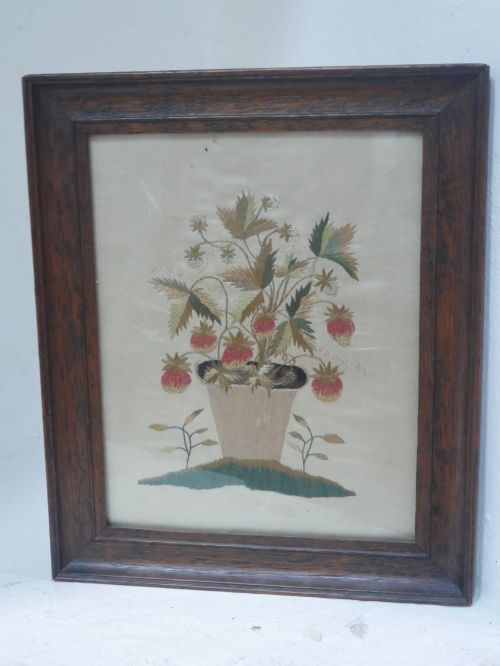
Techniques range from standard needlepoint and gros-point to specialised styles like Berlin work, plushwork, and crewelwork. Glass frequently protects framed pieces, sometimes appearing as decorative verre églomisé panels surrounding the textile.
The selection includes utilitarian objects such as cushions, footstools, and firescreens alongside framed textile wall art.
What varies in quality
Quality depends largely on the precision of the stitching, the complexity of the polychrome palette, and the fidelity of the pictorial design. Finer examples display meticulous control over tension and shading, bringing depth and expression to human figures, animals, and botanical motifs.
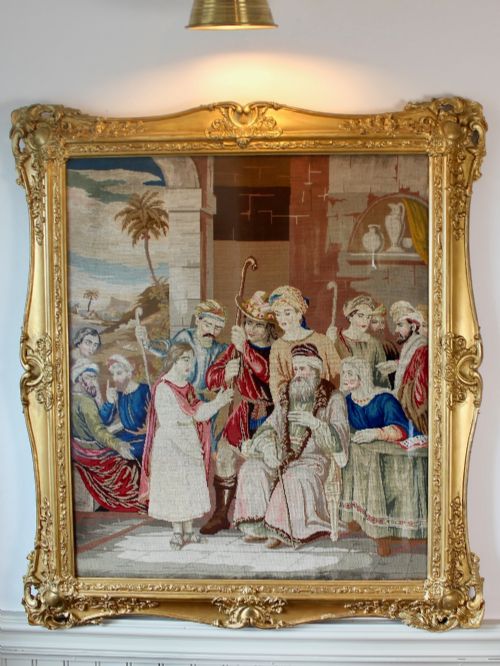
The preservation of the original materials dictates desirability, particularly the integrity of the wool fibres and the stability of the backing canvas. Original frames, such as period burr maple or gilt wood surrounds, enhance the overall cohesion and historical standing of the textile.
The Wool Needlepoint Tapestry Glossary
- Berlin work
- A popular nineteenth-century style of needlepoint stitched from charted coloured patterns on squared paper. This method allowed makers to create vivid pictorial scenes and portraits with rich tonal gradations.
- Plushwork
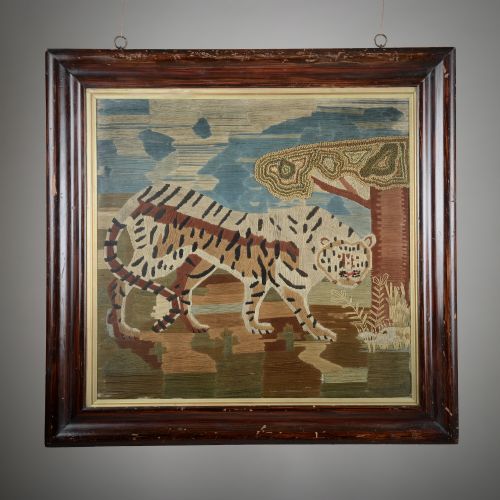
- A textile technique utilising raised, cut-pile loops to create a tactile, three-dimensional surface effect. It frequently appears on Victorian animal and floral motifs.
- Gros-point
- A coarse needlepoint stitch worked on canvas, providing a durable texture suitable for upholstery, carpets, and heavy cushions. It often forms the background or primary structure of larger tapestries.
- Firescreen
- A moveable piece of furniture designed to shield occupants from the radiant heat of an open fireplace, frequently featuring a mounted tapestry panel. These items combine carved wood stands with decorative needlework.
- Verre églomisé
- A process of applying design and gilding to the reverse side of glass panels, often used as decorative borders on nineteenth-century frames.
Wool Needlepoint Tapestry: Frequently Asked Questions
How should I clean an antique tapestry?
Historic textiles require gentle care to preserve delicate wool fibres and old canvas foundations. Professional surface dusting or specialist textile conservation is advised rather than standard washing.
Avoid placing these pieces in direct sunlight or damp environments, as humidity and UV rays cause wool colours to fade and fibres to weaken over time.
What is the difference between needlepoint and tapestry?
True tapestry is woven on a loom using warp and weft threads, whereas needlepoint is stitched by hand directly onto an existing woven canvas mesh. Most items described colloquially as tapestries in nineteenth-century domestic contexts are actually needlework.
Needlepoint allows for individual stitches to build up pictorial images using wool and silk yarns, resulting in a heavier, more rigid textile compared to a woven wall hanging.
How do I date an old woolwork picture?
Dating relies on examining the framing materials, canvas type, subject matter, and stitch style. Early pieces from the seventeenth and eighteenth centuries often feature distinct needlework samplers or classical motifs, while Victorian examples frequently include bright Berlin work wools.
Accompanying frames, such as burr maple or gilt wood styles typical of the mid-nineteenth century, provide additional clues to the era of manufacture.
Were these panels always framed?
Many wool needlepoint pieces started as functional furnishings, upholstery for footstools, cushion covers, or inserts for fire screens before later being mounted behind glass as wall art. The transformation from domestic utility to framed picture occurred frequently during the Victorian period.
Examining the edges and reverse of the textile reveals whether it was originally stretched over a furniture frame or prepared specifically as a wall hanging.