







Wood Framed Needlework
Wood framed needlework pieces are historic stitched pictures and textiles preserved behind glass in timber mouldings, offering a tactile connection to domestic artistry.
Wood Framed Needlework
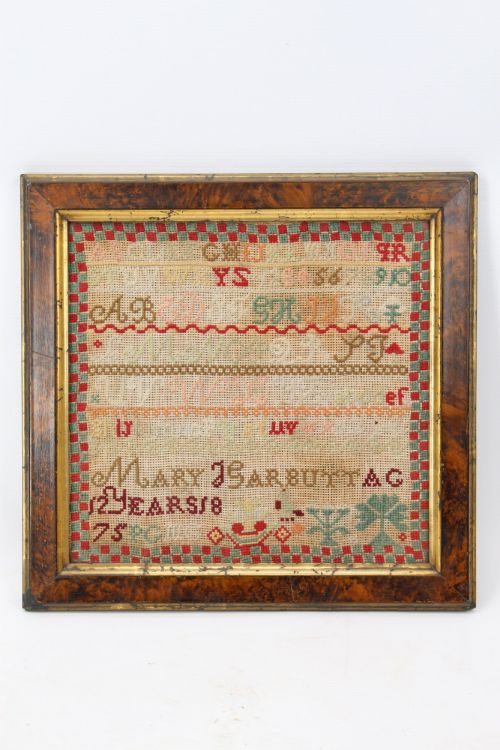
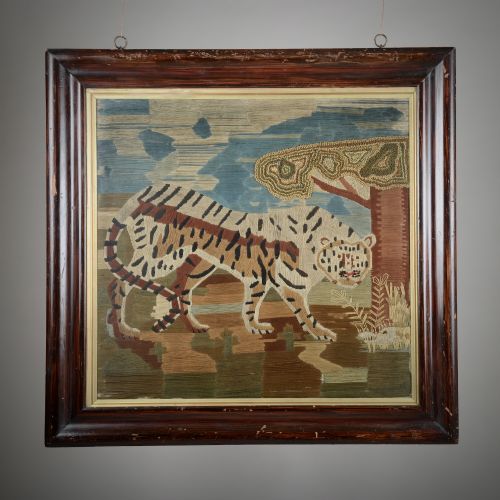
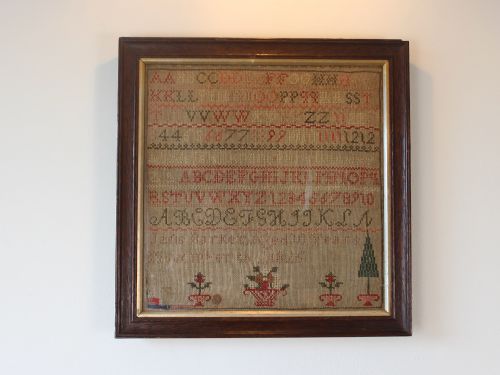
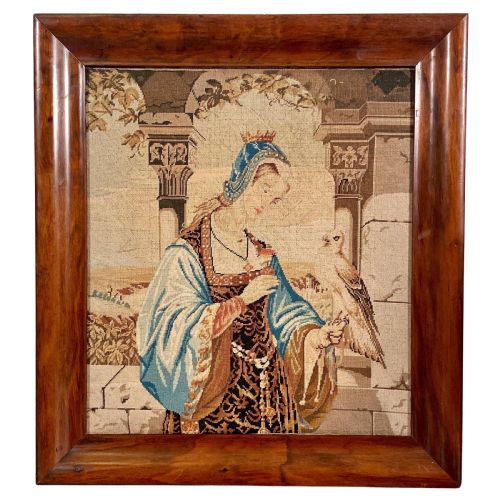
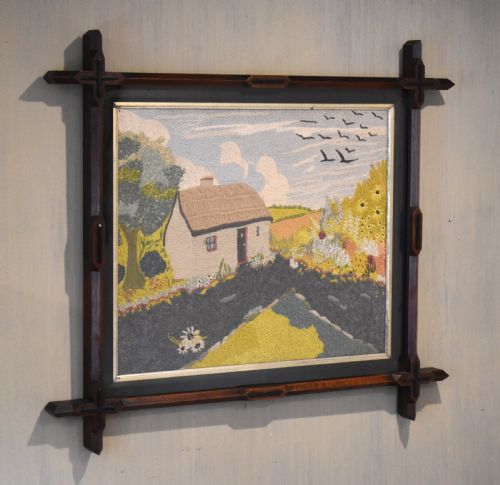
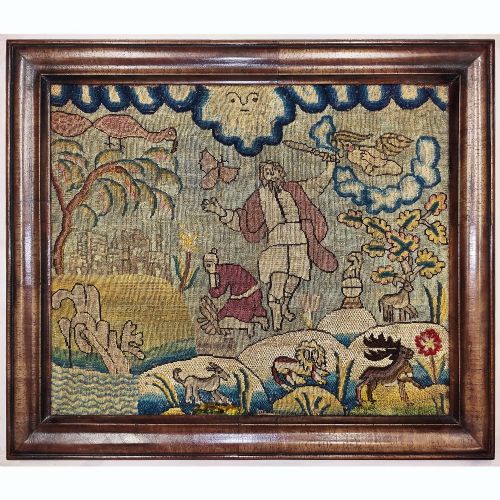
When you search for wood framed needlework, you encounter everything from schoolgirl alphabet samplers to elaborate embroidered pictures depicting classical scenes, animals, and religious subjects. The selections span multiple eras, with Victorian pieces, Georgian examples, and earlier seventeenth-century works appearing frequently across the inventory.
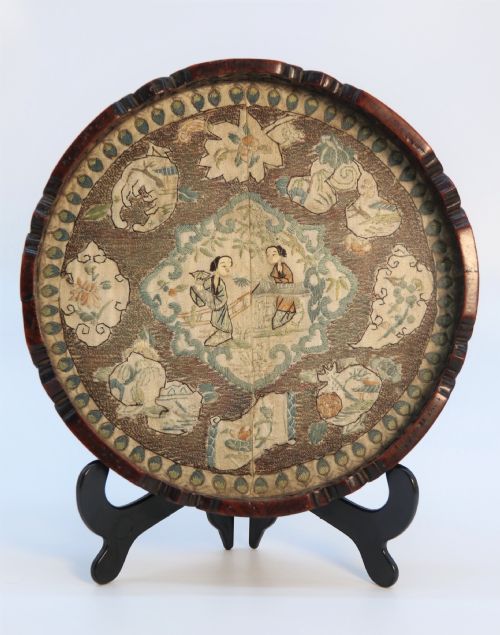
The objects take diverse physical forms beyond standard wall art, including firescreens, serving trays, and upholstered furniture elements like stools and sofas. Wall-hanging framed pictures and samplers dominate the available selection, preserved in timber frames that range from simple oak mouldings to gilt wood and carved rosewood.
How they were made
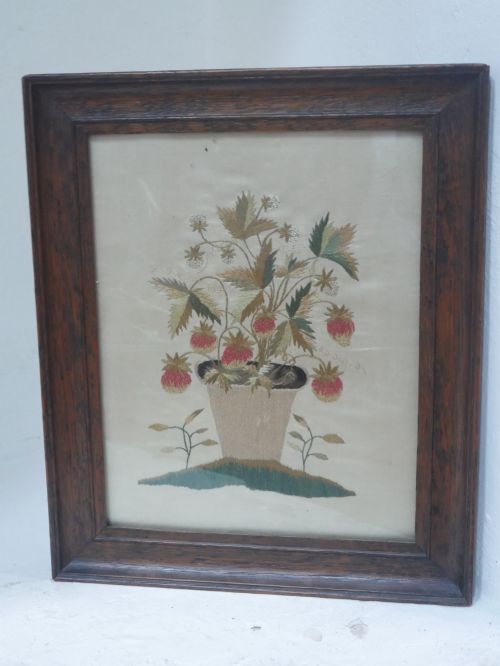
Makers worked wool, silk, and silk thread onto a foundation of linen, canvas, or plain cloth using various stitching techniques. Seventeenth-century examples feature raised stumpwork embroidery, while nineteenth-century pieces employ detailed wool work and fine silk embroidery.
Finished textiles were stretched and mounted within timber frames, often protected by glass and backed with paper or board. Frame materials include mahogany, oak, rosewood, and carved hardwood, occasionally paired with black glass surrounds.
Wood Framed Needlework Retail Price Guide 2026
Typical asking prices for wood framed needlework among the pieces listed under this phrase on Sellingantiques today, from the lower quarter to the upper quarter. They describe what is for sale here now, not the wider market.
Stitchers occasionally recorded family pets alongside biblical figures, ensuring beloved household dogs joined king and court in enduring wool.
What varies in quality
Execution and detail set individual pieces apart, seen in the precision of the needlework and the complexity of the pictorial composition. A finely rendered subject, such as a portrait or narrative scene, displays greater technical skill than a standard repetitive alphabet.
The integrity of the original materials influences the standing of a piece, particularly the preservation of the textile colours and the quality of the timber frame. Contemporary framing diminishes historical authenticity, whereas original period wood surrounds and intact glass enhance the integrity of the object.
The Wood Framed Needlework Glossary
- Sampler
- A piece of needlework produced by a beginner or child to demonstrate proficiency in various stitches and lettering alphabets. These often include dates and the maker's age.
- Stumpwork
- A raised or embossed embroidery style popular in the seventeenth century where padding and wooden moulds create three-dimensional figures. It frequently depicts historical or biblical scenes.
- Firescreen
- A standing piece of furniture featuring a framed panel designed to shield a person's face from the direct heat of an open fireplace. Many incorporate mounted tapestry or needlework.
- Tapestry
- A form of textile art traditionally woven on a loom, though the term also describes heavy needlepoint worked on canvas. These panels depict pictorial scenes or decorative motifs.
- Mezzotint glass
- A type of darkened or black glass border used in framing prints and silk embroideries during the Georgian and Regency periods. It provides a contrasting dark margin around the artwork.
Wood Framed Needlework: Frequently Asked Questions
How do I date an old sampler?
Makers often embroidered their names, ages, and specific dates directly into the canvas, providing a clear point of origin. Stylistic markers such as the lettering font, border motifs, and fibre types offer further clues when a date is absent.
Examining the backboards, nails, and timber frame construction helps confirm whether the mounting dates to the same period as the stitching.
Where should I hang these textiles?
Needlework pictures require placement away from direct sunlight to prevent the silk and wool threads from fading over time. Stable indoor humidity levels protect both the fragile fibres and the antique wooden frames from warping.
Choose walls with indirect light where the detailed stitching can be appreciated without risking environmental damage to the antique materials.
What is the difference between a sampler and a picture?
A sampler serves as a functional exercise in mastering alphabets, numerals, and repetitive geometric borders. A needlework picture focuses entirely on pictorial representation, depicting landscapes, portraits, or historical narratives.
Pictures employ varied pictorial stitching techniques to achieve shading and perspective, whereas samplers prioritize structured rows of utility stitches.