



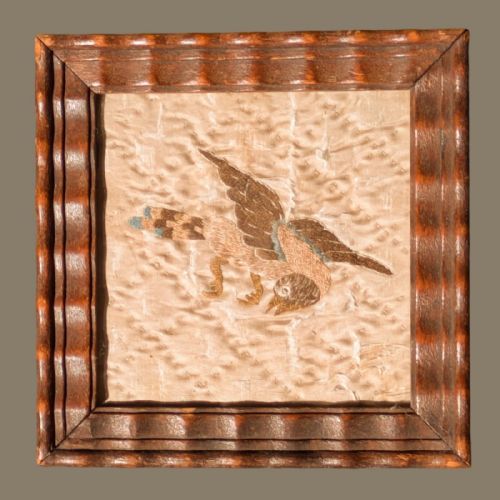


Framed Silkwork Picture
These framed silkwork picture examples bring centuries of textile art into your rooms, offering pastoral scenes and botanical studies rendered in fine threads.
Framed Silkwork Picture
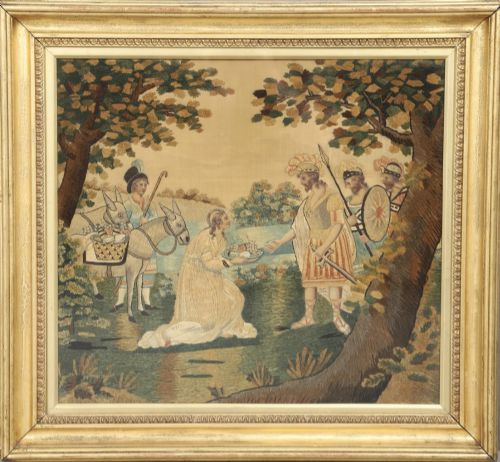
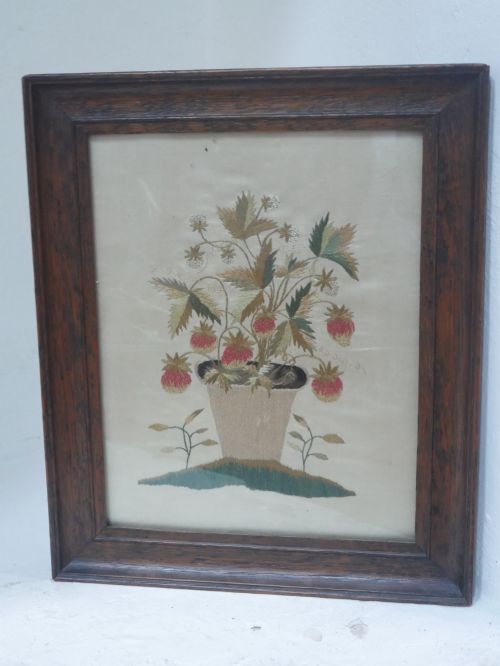
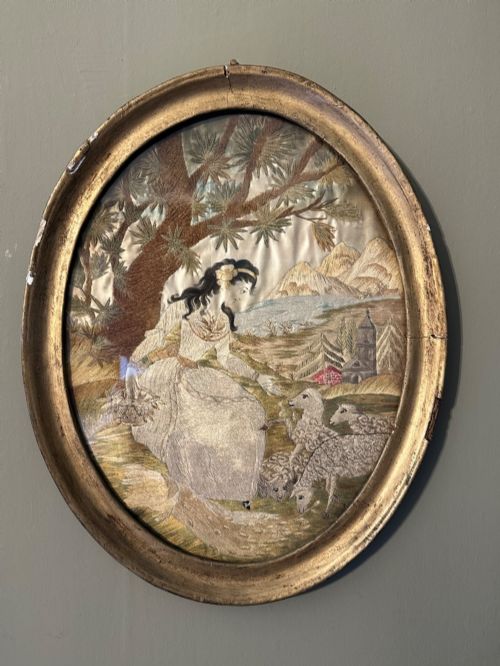
A framed silkwork picture combines fine textile art with period framing, spanning the eighteenth and nineteenth centuries. When searching for this phrase, buyers encounter wall art ranging from pastoral farming depictions to botanical studies and oval woolwork portraits.
The pieces on this page originate predominantly from the Georgian, Regency, and Victorian eras, taking the form of framed embroidery, panels, and textile artwork. English country house aesthetics frequently appear alongside grand Regency and Victorian Baroque revival styles.
Buyers most commonly meet examples mounted in glass-fronted timber enclosures, including giltwood and verre églomisé frames. These historic textile works capture domestic and pastoral subjects through detailed needlework.
How they were made
Artisans constructed these works using silk, wool, and cotton threads stitched onto textile grounds to build pictorial depth and texture. Silk thread provides fine tonal shading for figures and foliage, while wool adds heavier texture to pastoral landscapes.
Makers housed the completed embroideries within timber surrounds, frequently utilising water-gilded wood, gold leaf, and specialised glass methods such as verre églomisé. These protective enclosures preserve the delicate organic fibres from environmental degradation over centuries.
Framed Silkwork Picture Retail Price Guide 2026
Typical asking prices for framed silkwork picture among the pieces listed under this phrase on Sellingantiques today, from the lower quarter to the upper quarter. They describe what is for sale here now, not the wider market.
Stitched centuries ago by patient hands, a stray knot preserves the exact moment a maker paused for tea.
What varies in quality
Quality in these textile works rests upon the precision of the needlework and the survival of the original materials. Finer examples display meticulous control of silk and wool threads, creating realistic facial expressions and botanical forms that weaker pieces lack.
The housing contributes significantly to the overall merit of the object, with water-gilded timber and verre églomisé glass panels indicating superior workshop production. Original period frames that match the date of the embroidery elevate the integrity of the piece.
The Framed Silkwork Picture Glossary
- Silkwork
- Embroidery executed primarily with silk threads on a textile ground. This technique allows for subtle colour gradations and a lustrous surface finish.
- Verre Églomisé
- A process of applying gold or silver leaf to glass and engraving a design through the metal before backing it. This creates a reflective, decorative border around the central picture.
- Giltwood
- Timber that has been coated with a thin layer of gold leaf or gesso and gold paint. It provides a bright, reflective frame for historic artworks.
- Pastoral
- A style of art depicting rural life, shepherds, and farming scenes in an idealized manner. These subjects are common in eighteenth-century needlework.
- Woolwork
- Embroidery created using wool threads rather than silk, yielding a heavier and more matte texture. It appears frequently in nineteenth-century depictions of figures and gardens.
Framed Silkwork Picture: Frequently Asked Questions
How do I date a silkwork picture?
Dating relies on the stylistic clues within the textile, such as costume details, subject matter, and framing methods. Eighteenth-century pieces often feature pastoral themes, while Victorian examples lean toward botanical studies or baroque revival tastes.
The materials and framing also offer guidance, as Georgian and Regency works frequently utilise specific giltwood or verre églomisé surrounds that match the period of the embroidery.
Where should I hang these pictures?
These textile artworks suit drawing rooms, studies, and hallways where lighting can be controlled. Because silk and wool are sensitive to light, placement away from direct sunbeams preserves the original thread colours.
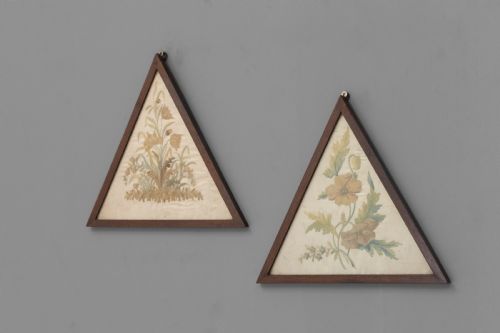
Grouping pairs or matching panels, such as theatrical or botanical subjects, creates a balanced display on traditional wall surfaces.
How were these pictures originally used?
Gentlewomen created many of these needleworks as accomplished domestic pastimes, displaying them in parlours and drawing rooms to demonstrate artistic skill. They served as decorative wall art within English country houses, reflecting fashionable tastes from the Georgian to the Victorian eras.
The frames were chosen to complement contemporary interior decoration, ranging from simple timber mouldings to ornate water-gilded surrounds.