
Wood Bedroom Drawers
Wood bedroom drawers bring traditional craftsmanship and substantial storage to sleeping quarters through centuries of diverse domestic design.
Wood Bedroom Drawers
When searching for wood bedroom drawers, buyers encounter a diverse selection ranging from compact bedside tables to towering chests and linen presses. The inventory spans multiple eras, capturing the architectural shifts of Georgian, Regency, Victorian, Edwardian, and Art Deco periods.
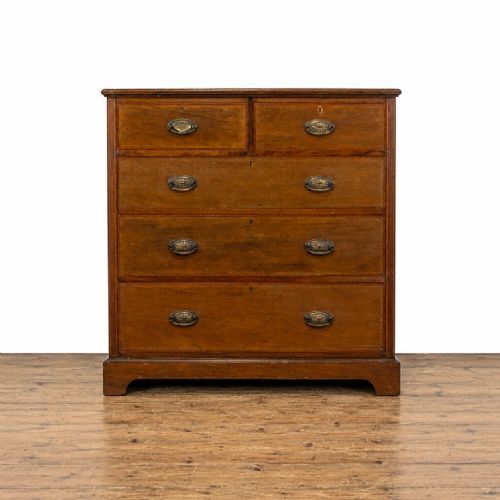
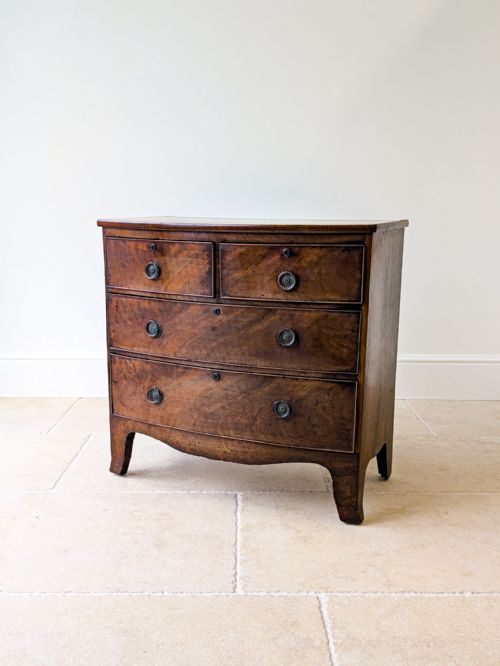
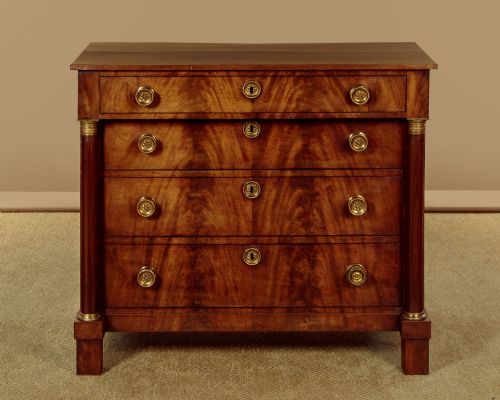
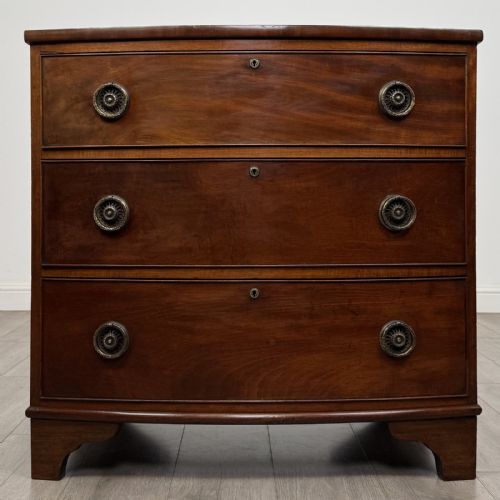
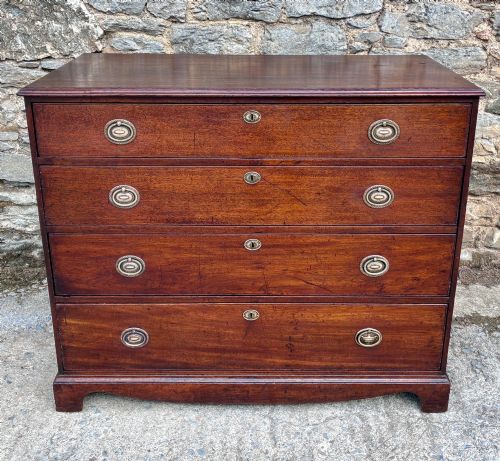
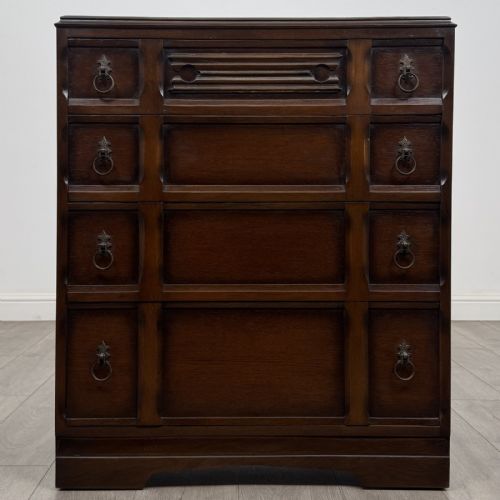
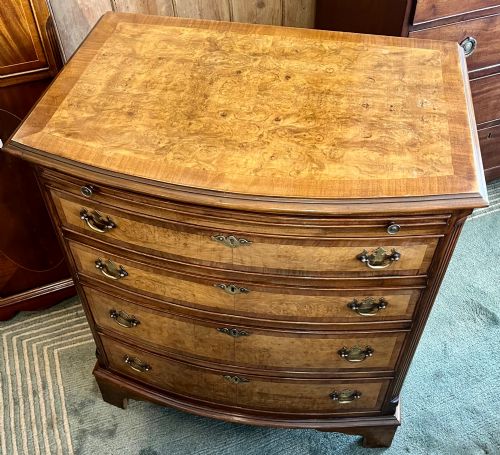
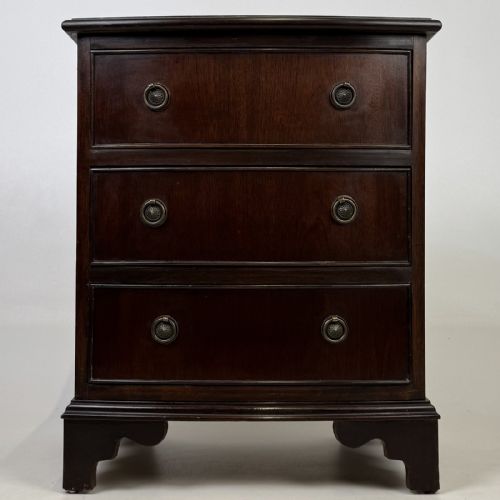
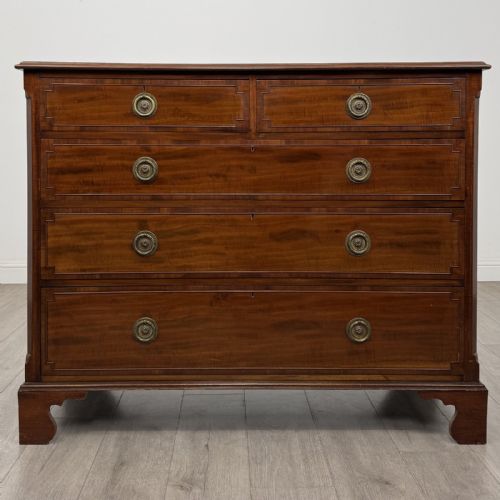
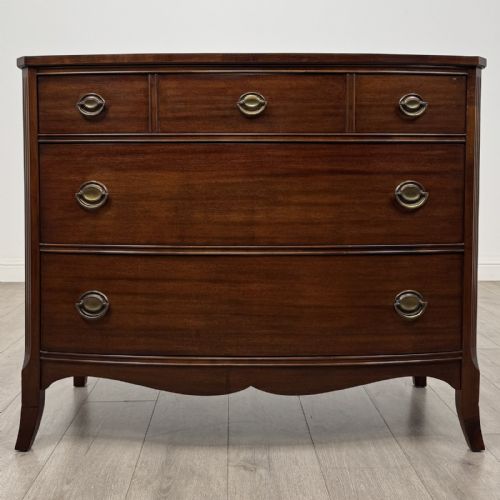
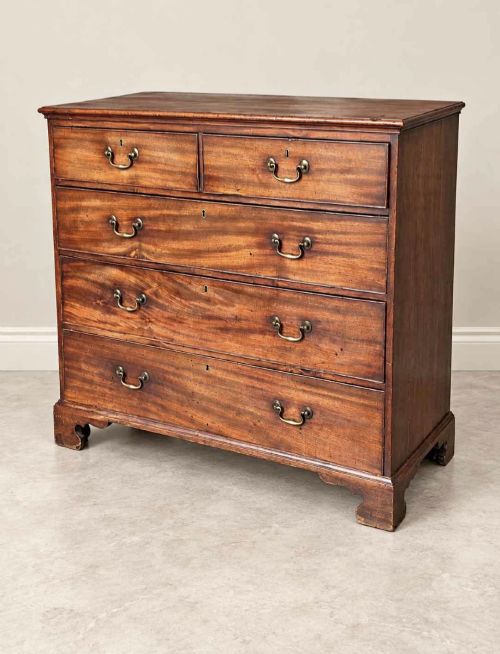
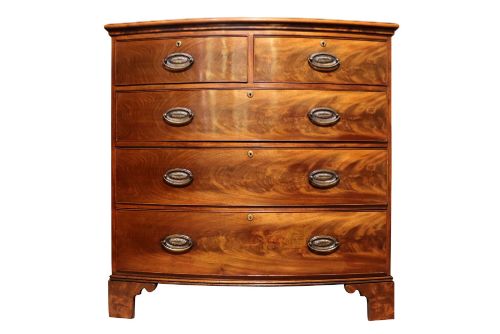
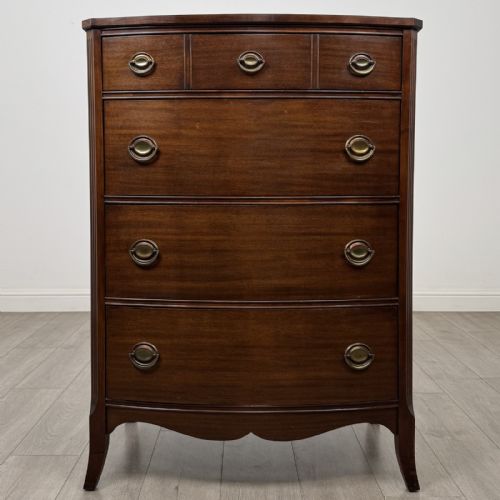
The most common forms on this page are chest of drawers configurations, frequently appearing in mahogany, walnut, or pine. Pieces range from straightforward utilitarian four-drawer formats to elaborate serpentine and bow front designs equipped with brass handles.
Originating from British, French, and Scottish workshops, these furnishings reflect distinct regional joinery traditions and stylistic preferences. Buyers select these items to anchor a room with practical storage while incorporating historical character.
Materials and Construction
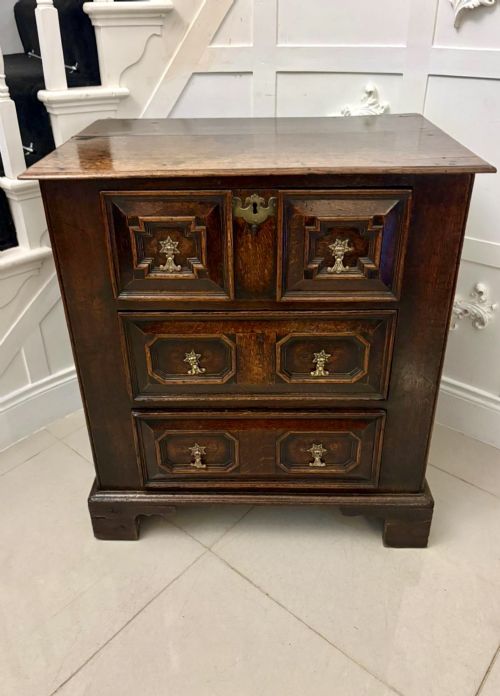
Cabinet makers relied predominantly on dense hardwoods such as mahogany, walnut, and oak, often applying figured veneers to create striking surface patterns. Secondary timbers like pine appear frequently in internal framing and drawer linings.
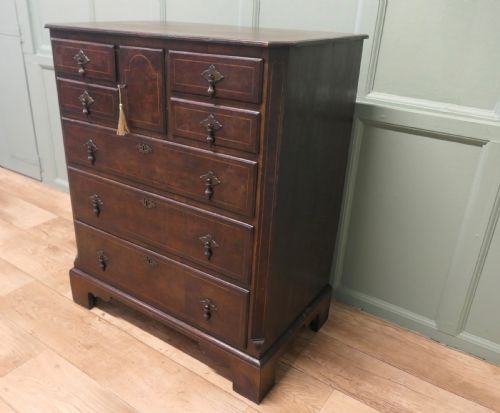
Brass hardware, including cast drop handles and escutcheons, provides functional contrast to the dark timber surfaces. Joinery techniques involve precise dovetailing on drawer boxes and tongue and groove boarding on backing panels.
Surface finishes rely on traditional polishing methods that highlight the grain structure of the wood without masking its natural colour variation.
Certain Victorian chests feature discreet candle sconce mounts, illuminating the bedroom long before the advent of bedside electric lamps.
Assessing Quality
The standard of a piece rests heavily on the selection of timber and the dexterity of the veneer work. Superior examples display symmetrical flame or figured grain patterns carefully matched across drawer fronts.
Construction methods distinguish standard workshop output from premier commissions, visible in the tightness of dovetail joints and the thickness of secondary woods. Original brass handles and sound structural integrity further elevate a piece within its period.
Whytock And Reid·T And G Seddon·Maple And Co·Hille
The Wood Bedroom Drawers Glossary
- Bow front
- A cabinet front that curves outward in a convex shape, popular in Regency and Georgian designs.
- Serpentine
- A furniture front characterised by a wavy outline featuring a convex centre flanked by concave curves.
- Brushing slide
- A pull-out shelf integrated into the upper section of a chest, historically used for folding garments.
- Wellington chest
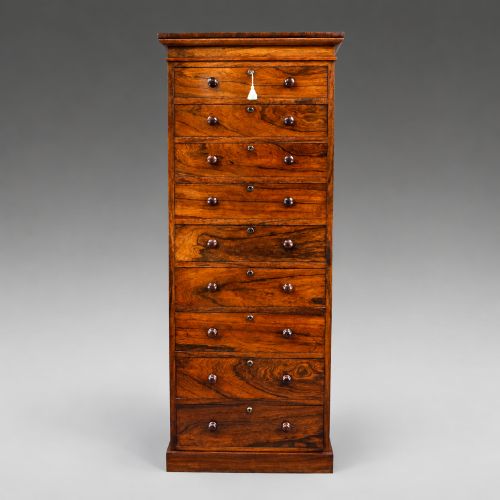
- A tall, narrow chest of drawers secured by a hinged locking side stile that fastens with a key.
- Semainier
- A tall seven-drawer chest originating in France, traditionally intended to hold a week of daily garments.
- Dovetail
- An interlocking wood joint formed by fan-shaped tenons and mortises, ensuring robust drawer construction.
Wood Bedroom Drawers: Frequently Asked Questions
How do I date a wooden chest of drawers?
Dating relies on examining construction methods, timber choices, and hardware styles. Hand-cut dovetails, secondary woods like pine or oak, and original brass handles offer clear chronological markers.
Cabinet proportions and decorative motifs such as satinwood banding or marquetry align pieces with specific design eras from Georgian to Art Deco.
What is the difference between a tallboy and a chest on chest?
A chest on chest consists of one distinct chest stacked directly on top of a larger lower chest, typically emerging during the Georgian period. Both units are designed to maximise vertical storage while maintaining proportion.
Tallboys often combine wardrobe compartments with drawers, whereas traditional chests on chest consist solely of multiple graduating drawer tiers.
How should I care for antique bedroom drawers?
Maintenance involves keeping wooden furniture away from direct heat sources and rapid humidity fluctuations to prevent timber splitting. Regular dusting with a soft, dry cloth preserves the polish without introducing moisture.
Applying traditional wax polish occasionally nourishes the hardwood surface and maintains the natural lustre of the grain over time.
Are bedside tables matched to the main chest?
Bedside tables and smaller lamp cabinets often complement rather than identically match the primary chest of drawers. Suites from the Victorian and Edwardian eras sometimes included matching dressing tables and wardrobes, but standalone pieces are common.
Pairing items across similar timber species and historical periods creates a cohesive bedroom interior without requiring uniform sets.