



William IV Tea Chest
A William IV tea chest is a sophisticated storage piece designed for valuable leaf tea, bringing period elegance and craftsmanship into a modern room.
William IV Tea Chest
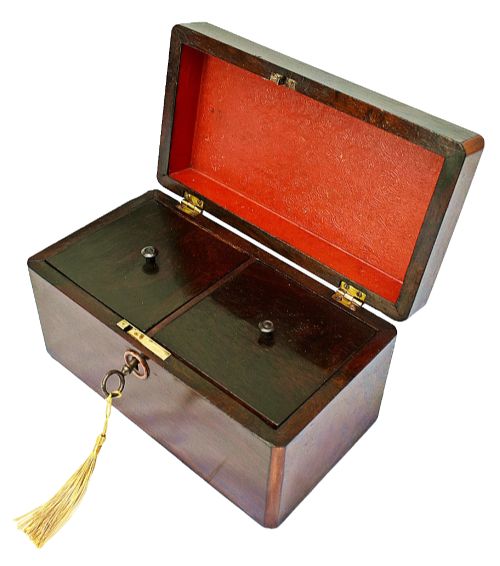
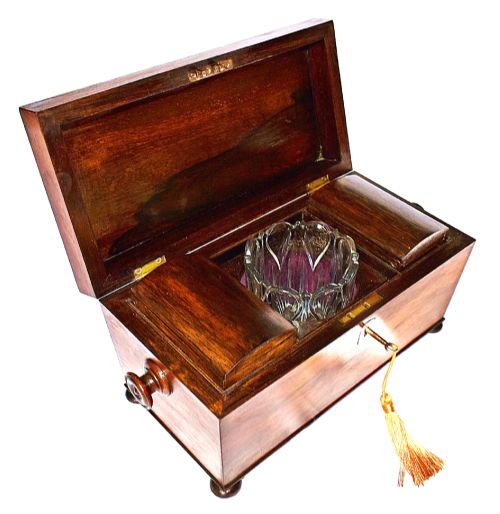
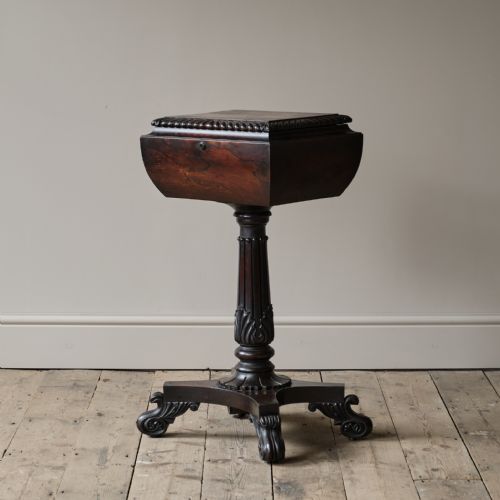
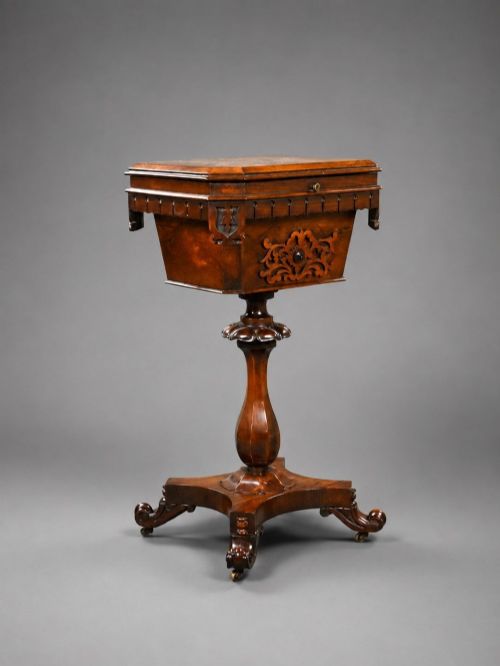
A William IV tea chest takes the form of a lidded wooden box or teapoy, designed to securely house and preserve dry tea leaves during the 19th century. These pieces emerge predominantly from the 19th century and the Georgian period, often showcasing distinct sarcophagus shapes or standing upon carved feet.
The materials and construction reflect the high status of tea in historical households, incorporating rich timbers like rosewood, mahogany, and flame mahogany. Interiors frequently feature loose leaf cases and compartments alongside fitted work box elements.
How They Were Made
Cabinetmakers utilised dense tropical hardwoods such as rosewood and mahogany, often selecting flame mahogany veneers to create striking surface figures on the exterior. Solid timber and specialised panels formed the sturdy carcase of each chest or teapoy.
Decoration relied on precision craftsmanship, incorporating delicate boxwood stringing, bone accents, and intricate mother of pearl bird and foliate inlay. Internal compartments often utilised velvet linings and fitted cases to protect fragile tea caddies and loose leaf contents.
William IV Tea Chest Retail Price Guide 2026
Typical asking prices for william iv tea chest among the pieces listed under this phrase on Sellingantiques today, from the lower quarter to the upper quarter. They describe what is for sale here now, not the wider market.
Materials appearing alongside the main timber include brass, bone, boxwood, and velvet.
What Varies in Quality
The choice of timber and veneer selection dictates the visual impact of the piece, with figured flame mahogany and burr walnut sitting at the upper end of cabinetmaking output. Expert matching of wood grain across the lid and sides demonstrates superior workshop standards.
The intricacy of decorative detailing separates standard examples from exceptional ones. Finely executed mother of pearl inlay, precise bone stringing, and robustly carved feet elevate the overall execution.
Gillows·Strahan
The William IV Tea Chest Glossary
- Teapoy
- A pedestal table or standing box designed specifically for holding tea caddies. These freestanding pieces often feature internal compartments for loose leaf tea.
- Sarcophagus
- A box shape featuring a domed or steeply sloped lid resting on a rectangular base, frequently utilised in early 19th century tea chest design.
- Flame mahogany
- A highly decorative veneer cut from timber where the grain creates a distinctive flickering, flame-like pattern across the polished surface.
- Mother of pearl
- An iridescent inner layer of mollusc shell used by artisans to cut small, luminous geometric or floral inlay motifs into the wooden surface.
William IV Tea Chest: Frequently Asked Questions
What is a William IV tea chest?
A William IV tea chest is a specialised wooden container built to store expensive loose leaf tea securely during the 19th century.
These pieces often double as decorative work boxes and feature fitted internal compartments for multiple caddies.
How were tea chests used?
Households used these chests to keep precious tea leaves dry, secure, and fresh away from household moisture and pests.
The key holder would dispense the leaf tea for daily use, keeping the valuable commodity safely locked away.
Where should I place a teapoy?
A teapoy sits well in a living room or study as a freestanding accent table with built-in historical storage.
Keep the piece away from direct sunlight and strong heat sources to protect the delicate rosewood or mahogany polish.
How do I identify the period?
Look for characteristic architectural proportions, sarcophagus silhouettes, and specific timber choices such as rosewood and flame mahogany.
Details like mother of pearl inlay and carved wooden feet also point toward early 19th century manufacturing techniques.