

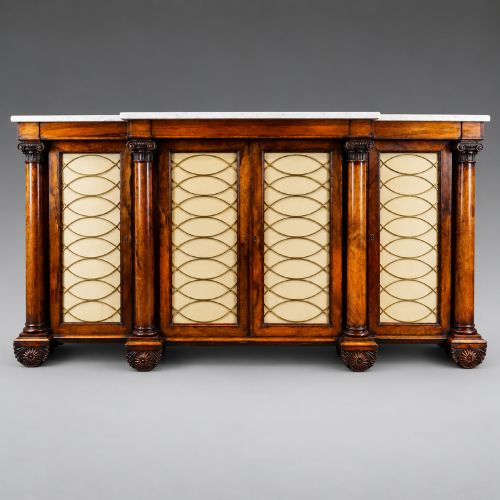


William IV Rosewood Sideboard
A William IV rosewood sideboard delivers heavy timber and classical restraint, grounding a dining room with rich grain and architectural presence.
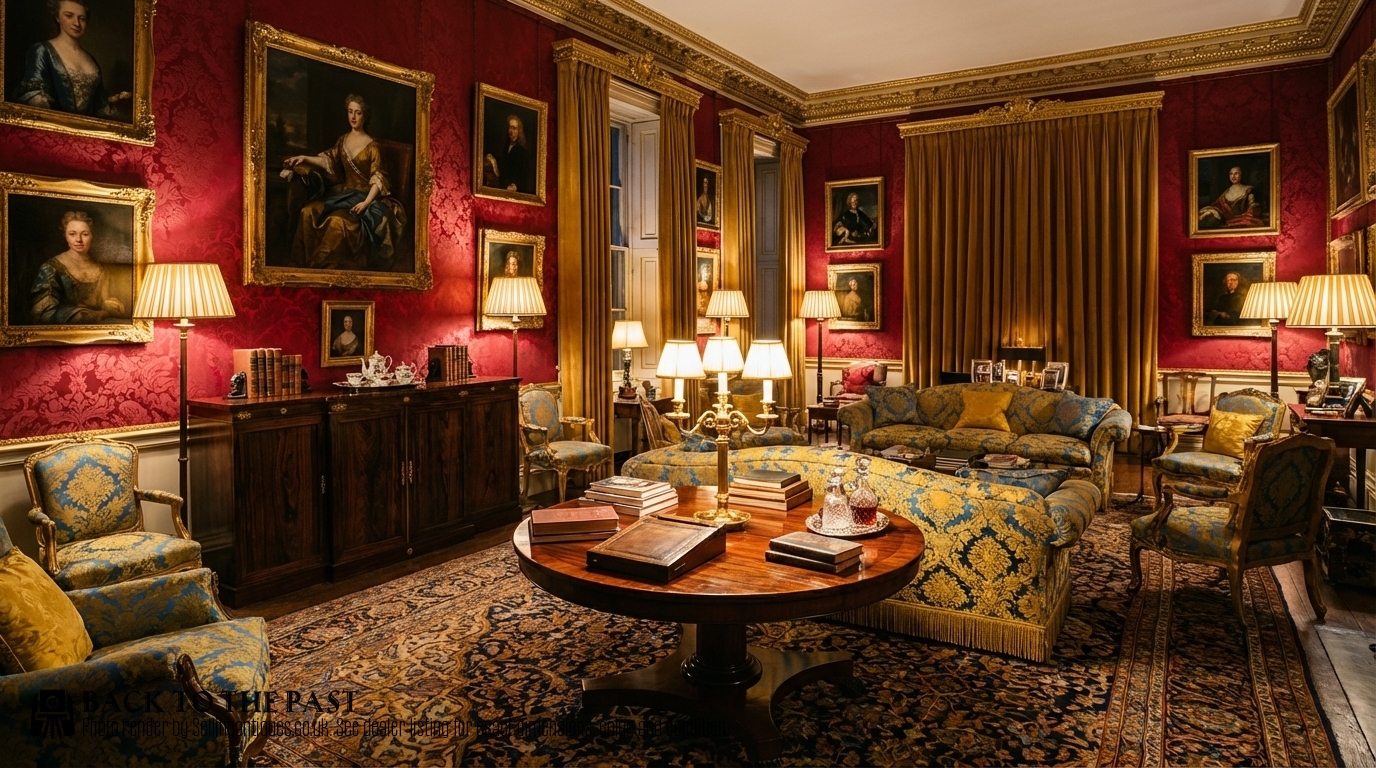
William IV Rosewood Sideboard
A william iv rosewood sideboard brings together deep-toned timber and substantial proportions, serving as a functional storage piece and a formal focal point in a room. These items appear across the nineteenth century, with specific examples spanning from the early part of the century through to eighteen sixty.
Buyers encounter several related forms under this description, including chiffoniers, breakfront side cabinets, and bookcases combined with sideboard elements. The most common iteration on this page is the nineteenth-century chiffonier or side cabinet, often topped with marble.
Origins tie closely to the Regency and William IV stylistic traditions, showing a clear preference for dark exotic timber. Pieces range from straightforward four-door cabinets to smaller chiffonier sideboards with integrated mirror backs or glass doors.
How they were made
Cabinetmakers constructed these forms using rosewood veneer applied over solid secondary timbers, creating rich surface patterns across large expanses like doors and panels. Selected pieces incorporate brass inlay to accent the dark grain and structural outlines.
Interiors and upper sections integrate functional elements such as mirror glass, silk panels, and heavy marble tops. Construction methods rely on traditional joinery suited to heavy hardwoods, supporting the weight of marble slabs and shelved interiors.
William IV Rosewood Sideboard Retail Price Guide 2026
Typical asking prices for william iv rosewood sideboard among the pieces listed under this phrase on Sellingantiques today, from the lower quarter to the upper quarter. They describe what is for sale here now, not the wider market.
Listings feature items dated from nineteen hundred back to the early nineteenth century, constructed primarily in rosewood with brass, marble, and glass.
What varies in quality
The distinction between standard examples and finer pieces rests on the selection of timber figures and the integration of secondary materials like brass and marble. Superior items demonstrate tighter grain matching in the veneer and precise execution of classical mounts or inlay.
Proportion and form also separate ordinary production from the top of the range, where balanced breakfront layouts and fitted interiors show greater ambition from the maker. The quality of the original marble top and the clarity of any fitted mirror glass further distinguish higher-tier examples.
The William IV Rosewood Sideboard Glossary
- Chiffonier
- A low cabinet equipped with doors enclosing shelves, frequently surmounted by a shelf or mirror on a low back. This form appears often in nineteenth-century dining spaces.
- Breakfront
- A cabinet design where the central section projects forward from the flanking outer sections. This architectural arrangement creates depth and shadow on large wall pieces.
- Regency
- A stylistic period spanning the early nineteenth century characterised by classical motifs inspired by ancient Greece and Rome. Pieces from this era often utilise brass inlay and restrained, formal lines.
- Rosewood
- A dense, heavily figured dark timber valued for its rich colour and polished finish. It forms the primary visual surface across these sideboards and cabinets.
William IV Rosewood Sideboard: Frequently Asked Questions
What is a chiffonier?
A chiffonier is a compact sideboard or low cabinet typically fitted with enclosed lower storage. Nineteenth-century examples often include a raised back with a shelf or mirror.
These pieces served to store dining silver, linen, or glassware while displaying decorative objects on the upper tiers.
How do I clean rosewood?
Rosewood surfaces require gentle dusting with a soft, dry cloth to prevent micro-scratching on the polished finish. Avoid using modern silicone sprays or heavy liquid polishes.
Occasional application of traditional beeswax feeds the timber and maintains the natural lustre of the grain without buildup.
Where did these go?
Original nineteenth-century sideboards stood in formal dining rooms and large parlours to support entertaining and meal service. They held serving dishes, bottles, and tableware close to the dining table.
Today, buyers place them in living rooms, hallways, and modern dining spaces as statement storage units.
Are marble tops original?
Many nineteenth-century side cabinets and chiffoniers were manufactured with fitted marble slabs to provide a durable, heat-resistant surface. These slabs sit directly on top of the timber framing.
Matching the stone type and edge profile to the cabinet construction helps confirm the integrity of the piece.